A Tale of Two Playing Cards

The Museum Ethnographers Group conference is being held on Monday and Tuesday at the excellent Powell-Cotton Museum in Kent. The theme is ‘Nature and Culture in Museums’, and the relationship between the two.

I am a zoologist by background, but for the last three years I have been immersed in a different world, working on a review of the Anthropology collections at the Horniman Museum and Gardens. I have learned an enormous amount about material culture from all over the world, seen some incredibly stunning objects, and been surprised by how relevant my Natural History knowledge has been. Many of our objects are made of animal materials, and it’s been a great opportunity to learn new skills in identifying ivories, bone, and antler. Only a few weeks ago I was very excited to be able to identify an Inuit flint-sharpening tool as being made of mammoth ivory!

I have also been asked to add taxonomic data to some Anthropology object records in our Collections Management System, so that we can record the species that are represented by objects. This provides richer contextual data, and links between objects that can be navigated on our website.

Victorian playing cards featuring exotic species (Horniman Museum & Gardens)

Victorian playing cards featuring exotic species (Horniman Museum & Gardens)

One such group of objects is this set of Victorian playing cards. They are cute: on one side is a cryptic clue to the identity of an animal, and on the other is an illustration of that animal. I didn’t anticipate how much the taxonomic information would add to our understanding of the objects, or that it would enable them to tell a story about discovery and extinction…

Two cards in the pack, together, tell this tale. The first is the ‘Black-diver’:
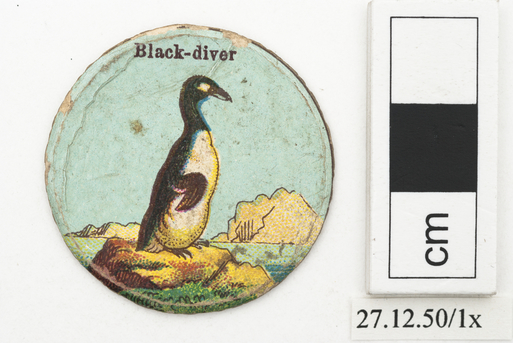
Black-diver playing card (Horniman Museum & Gardens)

Black-diver playing card (Horniman Museum & Gardens)

Mounted Great Auk specimen (Horniman Museum & Gardens)

Mounted Great Auk specimen (Horniman Museum & Gardens)

Which is actually a Great Auk (Pinguinus impennis). I have never heard ‘black diver’ used as a common name for this bird, but the likeness is unmistakable. The last recorded sighting of this species is from 1852, following the death of the last individuals to be shot, in 1844. I was intrigued to see this species represented in the pack, and was left wondering whether any of the Victorian children who played with the cards had ever actually seen a live Auk.

A second card could potentially hold the clue to this:


Reverse of animal playing card (Horniman Museum & Gardens)

Reverse of animal playing card (Horniman Museum &Gardens)

Gorilla playing card (Horniman Museum & Gardens)

Gorilla playing card (Horniman Museum & Gardens)

The Eastern Lowland Gorilla (Gorilla beringei) was not described until 1903, so it seems much more likely that this card represents the Western Gorilla (Gorilla gorilla), described in 1847.

The date of the discovery of the Western Gorilla, combined with that of the extinction of the Great Auk, could potentially narrow down the date at which these cards were made enormously: there is only a five-year period in which both species were known to exist together, between 1847 and 1852. However, the actual date of manufacture could be much later: following their discovery, gorillas were incredibly popular with the public for many years, particularly in the 1860s after the publication of Darwin’s Origin of Species in 1859, and the first live specimen reached a European zoo in 1876. ‘The Auk’ was taken as the title of the American Ornithologists’ Union’s journal, founded in 1884. So the Great Auk was clearly still in the public consciousness long after its extinction. Given this information, it seems quite possible that the original owners of the playing cards may never have seen either species in the flesh!

But that is as far as my research has taken me for now. This is a story that I hadn’t expected to find in these objects. As museum professionals, we are custodians of more than just collections: we are the keepers of specialist knowledge that we use to interpret our collections, to tell stories that will engage our audiences. Sometimes, to find their stories, you need to look at objects from more than one perspective. By working across disciplines and sharing our expertise, we can find new tales and new ways to tell them.


Rachel Jennings
Documentation Assistant, Horniman Museum and Gardens

Let’s Not Forget the Old Ways

Museums Unleashed is the conference to get to in 2015. The theme, as the title suggests, is unleashing your collections: getting them out ‘there’ using social media, blogs, TV, and newspapers. With an excellent programme of speakers, the conference will discuss inspiring new ways of sharing our collections, both to familiar audiences and new ones.

The conference will be an excellent opportunity to hear case studies on what other museums are up to and how different methods are being used. This is where wonderful, new, and exciting ideas are thought up, leading to the birth of outrageously different projects (this often happens in the pub).

As Viscardi (2012) writes, advocacy is essential for survival of the sector as a whole. We all do it, and more than we think. Probably eight or nine times a week. We talk to our colleagues and friends about our collections, or a cool specimen that we are working on. We get on the radio and talk about projects. This is great advocacy. Exciting discoveries or research in our store rooms are often accompanied by media reports highlighting the awesome museum collections.

Capricorn Beetle (Cerambyx cerdo)

Capricorn Beetle (Cerambyx cerdo) found at Plymouth University in 2007. Specimen is the first sighting of this species since 1947, and was donated to the museum. A short article was written for the local newspaper (http://www.plymouthherald.co.uk/Giant-beetle-time-Plymouth-city-native/story-23139707-detail/story.html)

As museum professionals, we should embrace new communication media without forgetting the old ways. One of the most effective means of letting staff at other museums know about your work or your collections is by writing an article for the Journal of Natural Science Collections. The Journal is fully peer-reviewed, and is written by those working with natural science collections for those working with natural science collections. This is a great way of sharing your expertise, your knowledge, and your passion for your collections with your colleagues.

All of the published articles are also made freely available online. The first two Volumes of the Journal are already available, with interesting and useful articles about conservation, collections reviews, education and the history of different collections. Some articles will be useful to your everyday work as a reference, others may spark ideas for future collaborative projects. We are now seeking contributions for Volume 3. If you have something you’d like to share, get in touch and send in an article!

The deadline for the next Volume is 15th July 2015. Please contact the Editor, Jan Freedman, for further information (editor@natsca.org). Guidelines for authors are available here, and are currently being updated.


Jan Freedman
Curator of Natural History, Plymouth City Museum and Art Gallery

Bringing the Dead Back to Life, with Paolo Viscardi

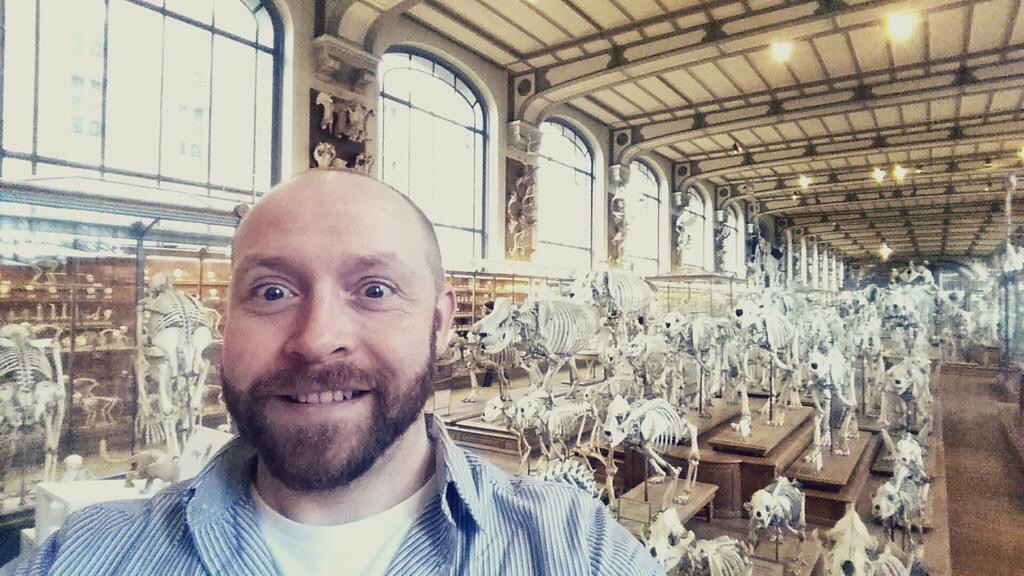
Paolo at the Museum of Comparative Anatomy, Paris

Last week saw the first PubSci talk by NatSCA Chair Paolo Viscardi since we moved venues to the King’s Arms near London Bridge. The subject, Bringing the Dead to Life, is less a Frankenstein manual and more of a description of his role as Deputy Keeper of Natural History at the Horniman Museum and Gardens. He works with dead things every day and he does so for the public’s benefit, because these collections are yours: both yours as a national collective, and yours as an individual if you want to do something with them.1

A large part of the reason we have these amazing collections is due to massive amount of world exploration by wealthy industrialists, tradesmen, and philanthropists. Frederick John Horniman was a tea trader, and collected all sorts of things in his travels. The stuff he brought back captured the public imagination because it introduced them to international cultures they would otherwise have no idea about. We take global information for granted today because we all have access to internet resources in our pockets, so it is hard for us to grasp how unusual it must have been for people in 1948 to see frescoes from Ceylon temples for the first time.

One of the fun side effects of this close encounter with the unusual is that oftentimes people preparing the specimens from overseas were only going by descriptions, and were not at all familiar with the species they were working on. A great example of this is the iconic Horniman Walrus, who was overfilled until he was wrinkle-free – in the style of a seal. There is an exhibit at the Grant Museum of Zoology at the moment discussing this phenomenon and featuring a lovely Stubbs painting of a kangaroo that resembles a giant mouse. Knowing how meticulous Stubbs was about his animal anatomy, one has to believe that this is exactly how he understood them to look and is not in any way an accident of the proportions.

The topic of proportions and measurement brings me on to a study done by Paolo et al. in 2010, looking at the variation in measurements taken of a section of owl bone, so naturally the paper was titled How long is a piece of Strix. Comparative measurement is a fundamental part of species identification, so naturally one would assume a consensus of readings taken by professionals. The results were somewhat different: when working alone, the measurements were accurate. When working as part of a team, the measurements strayed, and the more people collaborating, the greater the disparity between measurements.

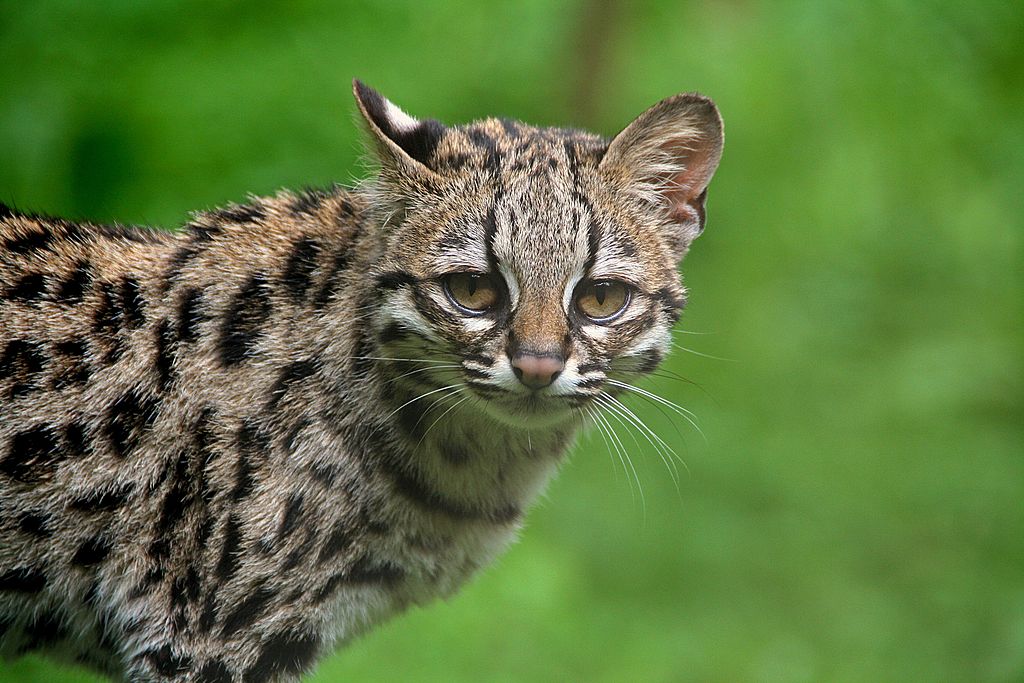
As a science communicator both at the museum and through his blog, Paolo has had the opportunity to work on some interesting projects: he has advised BBC television series such as our patron Ben Garrod‘s Secrets of Bones and he has been interviewed for The One Show to explain why cats get stuck up trees (they can’t rotate their ankles). This allowed Paolo to introduce the viewing audience to the Margay (Leopardus wiedii): a cat that can rotate its ankles. He has shared his love of osteology with 13-year-old fellow-blogger Jake McGowan-Lowe, which led to Jake publishing a book on the subject! To promote a recent Horniman exhibition on extreme animal adaptations, Paolo was subjected to the harshest elements in nature, which earned him the title ‘Extreme Curator’, and his very own Lego action figure.

Margay

Margay. By Clément Bardot (Own work) [CC BY-SA 3.0 (http://creativecommons.org/licenses/by-sa/3.0)%5D, via Wikimedia Commons

Where next for Paolo’s science communication? You’ll have to ask him at the next PubSci with Professor Ian Barnes. If you’re a fan of pleistocene megafauna (and, let’s face it, who isn’t), I wouldn’t miss it.

Sam Barnett, NatSCA Blog Editor

1. Depending on what it is you want to do with them and how run-ragged the museum staff are.

Unidentified, Not Unloved: On New Species and Stewardship

There are hundreds of millions of specimens held in natural history collections in museums worldwide, collected over centuries by thousands of experts and enthusiasts. It should come as no surprise, then, to learn that new species are ‘discovered’ in museums on a regular basis. These discoveries generally fall into two categories:

  1. Specimens that have never previously been identified
  2. Specimens that have been re-identified

All museums have unidentified and misidentified material in their collections. It is inevitable, given the enormous number of specimens and species that are involved. These are all potential new species, just waiting to be described.

Since I took on the voluntary role of Facebook Editor for NatSCA last year, I’ve read a lot of news stories while searching for content to share on the page, many of them about new species being found in museum collections. And I’ve been more than a little disappointed at the language chosen by the journalists to describe the specimens. The words ‘forgotten’ and ‘overlooked’ crop up frequently in headlines, and stories often describe specimens as having been ‘ignored’, ‘languishing’ in collections, or left ‘sitting in boxes’. This choice of words adds drama to a story for the papers, but it reflects poorly on the museums involved, and the inherent implications of neglect are both unfair and untrue. Having unidentified or wrongly identified specimens in a collection does not imply a failing on the part of the curatorial staff; nobody can be an expert in everything, and to identify one specimen among thousands as belonging to a previously unknown species requires an enormous amount of specialist knowledge and lots of research (often taking years). The important thing is that the specimens are preserved and cared for, so that experts are able to come in and examine them.

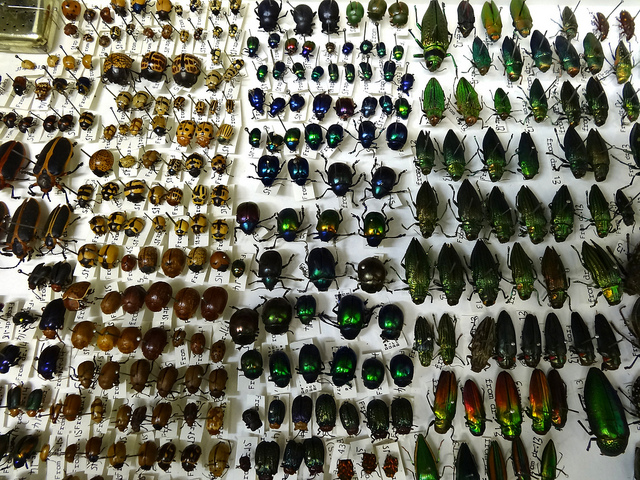
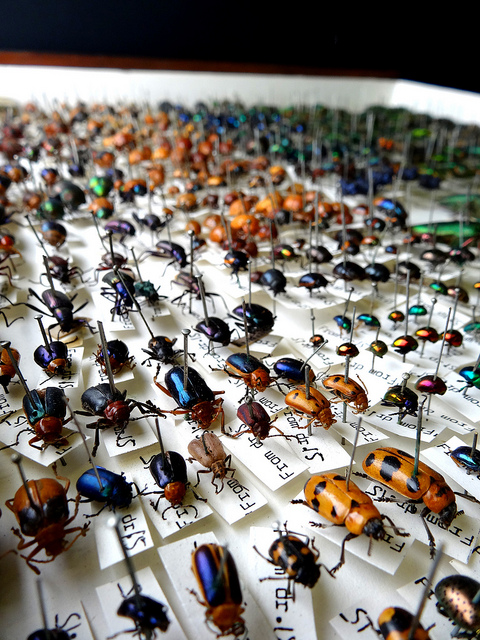
Drawer of various brightly coloured beetles, organised in neat rows with labels

Things Organised Neatly: Stewardship is fundamental to curatorship

Stewardship is the fundamental responsibility of the curators in charge of their collections. An unidentified specimen has not been forgotten. The average ‘shelf life’ of a specimen belonging to a new species, from discovery to publication, is over 20 years, and can be more than 200 years! This is due to the sheer volume of material that is collected in the field and donated to museums every year, and the expertise needed for identification. As the study of biodiversity (and the loss thereof) becomes more important to conservation efforts, more academics are turning to museums for data on population trends over time. The negative language used in these news articles could harm this relationship, and possibly deter specialists from engaging with museums. And with budget cuts increasingly affecting museum resources, curators want to engage with academics, artists, and other users, now more than ever.

The good news is that this problem is not entirely universal: recent news coverage of the discovery of a new species of ichthyosaur in Doncaster Museum was generally very positive about the value of natural history collections, mainly due to the enthusiasm of the researchers, which came across strongly in their quotes.

Rachel Jennings
NatSCA Facebook/Blog Editor

Collections at Risk

The biggest problems facing collections today are almost certainly posed by reductions in funding. The financial support for museums of all sizes has been decreasing every year, with jobs being lost and stored collections often bearing the brunt of cuts, since they are usually out of sight and therefore out of mind for many decision makers.

Hidden treasurers? Specimens in storage can be overlooked by decision makers in favour of public-facing elements of museum business.

Hidden treasurers? Specimens in storage can be overlooked by decision makers in favour of public-facing elements of museum business.

NatSCA has been to trying to keep track of threats to collections and offer our support in an effort to make the vital role of collections, and the people with the skills to care for them, more clearly recognised by management. Much of this work in the UK has been alongside our colleagues in the Geological Curators Group.

The first issue of our new online publication NatSCA Notes & Comments provides a case study of decline from the Midlands, written by Geoffrey Hall. Although the picture painted is bleak, there have been some small wins, as Ludlow have since acknowledged the importance of maintaining a geologist to manage their globally important geology collection.

We have also been looking at the wider societal role of collections and have been working to raise their profile at a variety of levels, including internationally, alongside the Society for the Preservation of Natural History Collections. Our message about the importance of collections is being heard by a wider and more influential audience, something that is reflected in this week’s Nature, which features an article about the importance and decline of collections.

If you know of any collections that are at risk from staff loss or disposal, please let us know by editing our Natural History Near You map or emailing us at advocacy@natsca.org