NatSCA Digital Digest

ChameleonYour weekly round-up of news and events happening in the world of natural sciences

Jobs

Curator, Grant Museum of Zoology, UCL. It’s here! The job I’m sure you’ve all been waiting for. Just make sure you get your applications in by 3rd August 2015!

Interpretation Producer, Kew Gardens. Closing date: 5th July 2015.

Conservation and Documentation Manager, Bristol Museums, Archives and Galleries. Closing date: 19th July 2015.

See the job page of the NatSCA website for more exciting opportunities!

News

The deadline for submissions to the next issue of the Journal of Natural Science Collections is 15th July 2015. Get writing! Guidelines for authors are available online, and please send your submission and any queries to Jan Freedman (editor@natsca.org).

Around the Web

Donna Young of Liverpool Museums has been busy digitising Brendel plant models.

A look inside the collections of National Museums Scotland.

North America’s herbarium collections are under threat due to funding cuts. The article is also a nice piece of collections advocacy for herbaria.

New research from the American Museum of Natural History shows that the teeth of Smilodon fatalis grew rapdily, but took years to mature.

The rise and fall of the barbary lion. Could it help to save other species from beyond the grave?


Lyme Regis Fossil Festival and collections advocacy: 10 years on since the birth of the greatest rock festival in history

When I say I’m going to a fossil festival, the reaction of friends who aren’t natural history geeks is often somewhat quizzical. It’s not exactly Glastonbury, is it? But I would argue that those of us who care passionately about museum collections, and return to Lyme Regis every year, are just as rock ‘n’ roll as the line-up at Glastonbury.

Lyme Regis Fossil Festival is one of the most successful examples of collections advocacy that I have seen, and it meets a wide variety of audiences over four days, working with Primary and Secondary schools and the general public. The fossil festival this year celebrated its 10th anniversary, and I wanted to share some examples of the good practice I’ve seen.
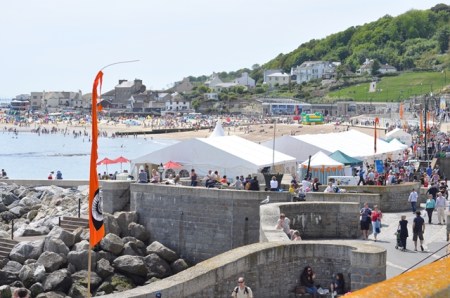
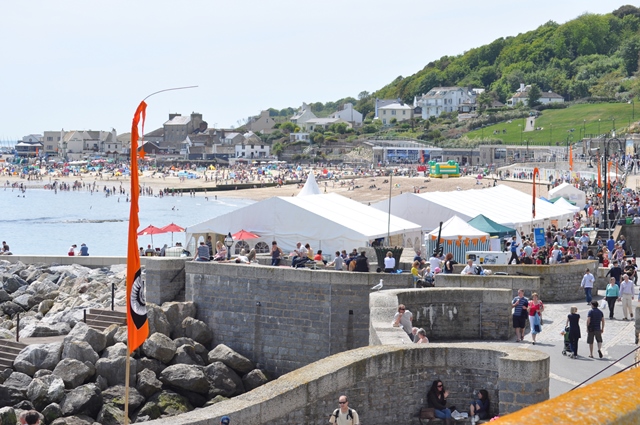
Lyme Regis Fossil Festival in full swing (Image: Anthony Roach)

Lyme Regis Fossil Festival in full swing (Image: Anthony Roach)

Museums are just history, right?

Luanne Meehitiya from Birmingham Museums reminded us, in her collections advocacy summary at the 2014 NatSCA conference, that the public may perceive museums as places of history, not as custodians of scientifically and culturally important collections. The surge in social media and targeted events means visitors are increasingly aware of the scientific research that takes place in museums. The Natural History Museum (NHM) and other regional museums presenting at Lyme Regis can engage audiences who don’t visit them regularly, or who see museums as simply about preserving history.

Prof. Paul Smith from Oxford University Museums also emphasised that natural science and historical collections can and should contribute to 21st century debates within society. The fossil festival doesn’t just celebrate palaeontology, and the Life Sciences team have a strong presence at Lyme, actively engaging the public with research that contributes to debates around climate change, invasive species, and the loss of biodiversity.

Myself and colleagues from the Angela Marmont Centre for UK Biodiversity spent time talking about a new citizen science project called ‘Orchid Observers’, which inspires visitors to look for 29 of the 56 species of orchids in the UK. By encouraging the public to record their sightings, we hope to build a dataset to see how orchids are adapting to climate change, and how this is affecting flowering times. Using original herbarium sheets, we explained how the problems of over-collecting and environmental degradation have contributed to the decline of orchids.
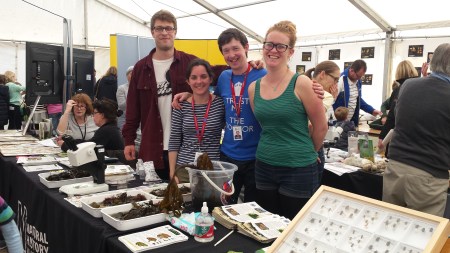
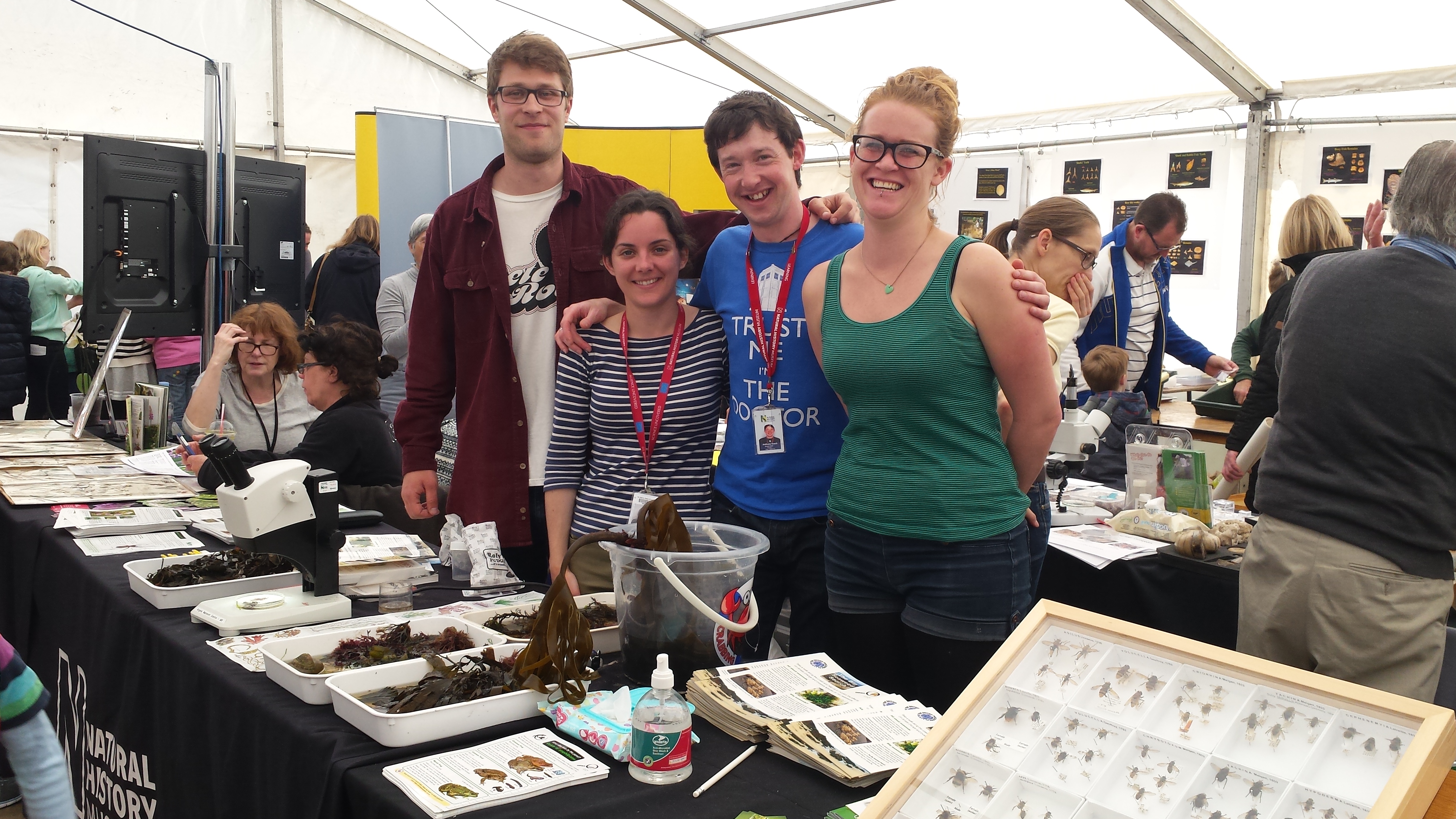
Members of the AMC team

Members of the Life Sciences team from the AMC from left to right Mike, Jade and Chloe on the stand (Image: Anthony Roach)

What do people in museums actually do?

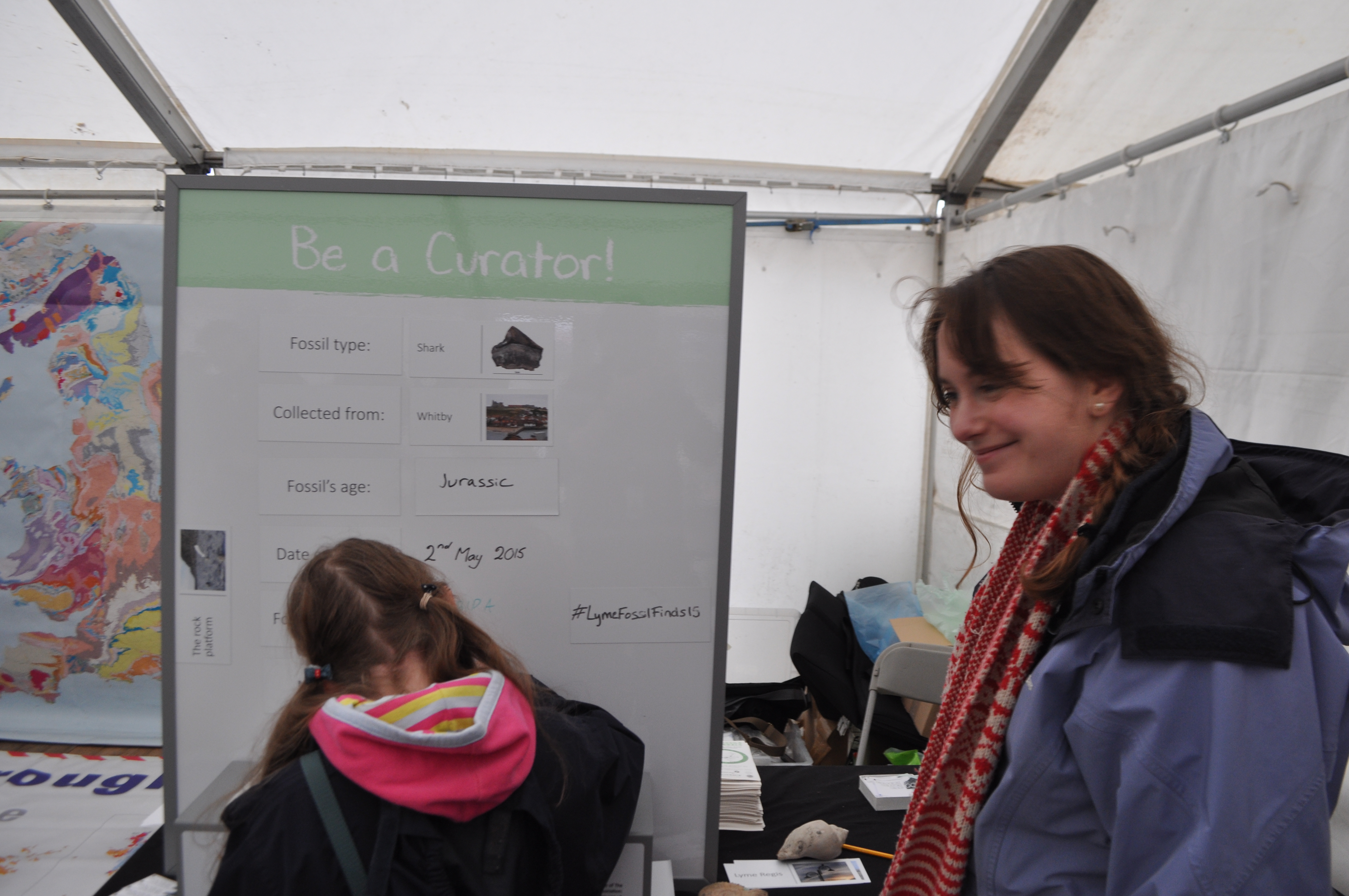
The fossil festival is great at highlighting the amazing work of curators, researchers and scientists, and promotes careers in the museum sector. An excellent example this year was Luanne and Isla Gladstone’s ‘Be A Curator’ activity, where visitors chose a specimen and then had to label it with the age, locality, date, and scientific name. Not only do young people get to meet real curators, they gain an understanding of their work too!
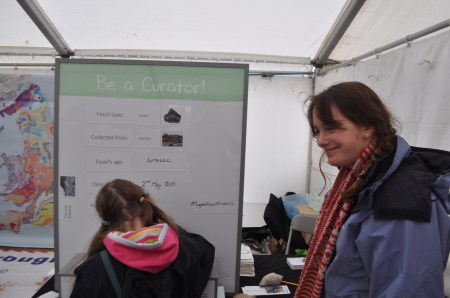
Luanne Meehitiya exploring curation with a young visitor to the festival

Luanne Meehitiya exploring curation with a young visitor to the festival (Image: Anthony Roach)

How can we learn more about museum specimens?

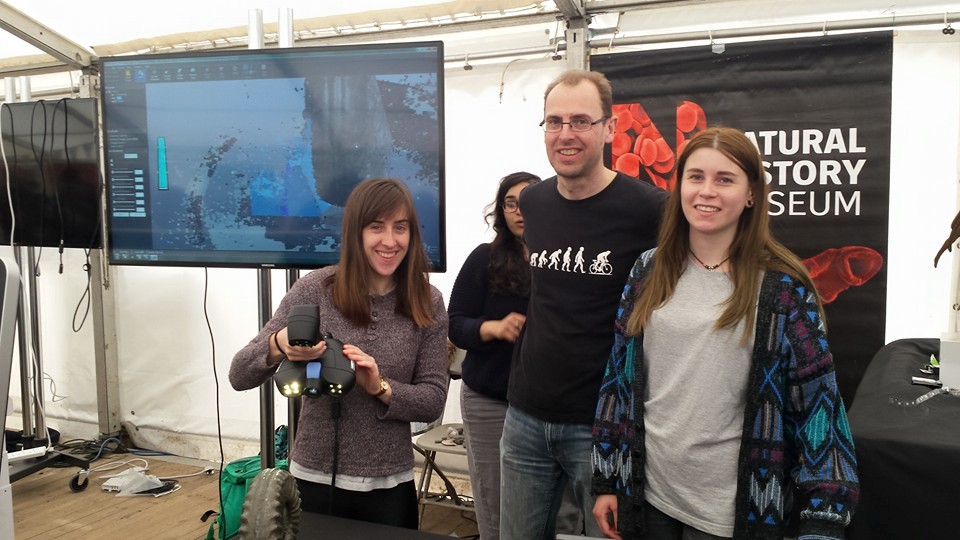
Alex Ball from the Imaging and Analysis Centre at NHM probably has the coolest job I know. He spends his days using chemical, CT, and other scanning technologies to explore natural history specimens. Alex is a continual presence at the festival, and this year he was using a structured light 3D scanner to scan museum specimens for visitors. It scans the object with several cameras and constructs a 3D model that can be examined from different angles.

CT-scanned museum objects were also displayed on screens for visitors to investigate. This technology has enabled conservators to better conserve the beautiful Blaschka glass models, because they can understand how they were made. Researchers can also learn a wealth of information – from the morphology of mummified cats to the structure of meteorites – in a way that is non-invasive and keeps the specimen intact.
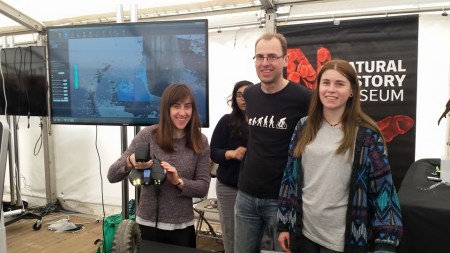
Alex Ball and his team from the Imaging Lab with the structured light 3D scanner

Alex Ball and his team from the Imaging Lab with the structured light 3D scanner (Image: Anthony Roach)

These are just some of the examples from a fossil festival that places museum collections, curators, and scientists at the forefront of the visitors’ experience. The festival clearly exposes the past, present, and future use of collections and current scientific research. It also continues to remind us of the amazing scientific discoveries of people like Mary Anning and William Smith, to inspire future generations of scientists, geologists, naturalists, and artists. Long may it continue!


Anthony Roach
Angela Marmont Centre for UK Biodiversity, NHM

NatSCA Digital Digest

NatSCA polar bear

Jobs

Education Assistant – National Museum of Ireland – Natural History

Duration: Permanent

Closing date: 5th June 2015

To apply, click here

Conferences and Workshops

A few exciting talks are coming up at the Natural History Museum soon, which I thought would be worth highlighting for you. The first is the Annual A. R. Wallace Lecture which this year will take place on the 2nd June 16:30-17:30. The subject is ‘Wallace, Darwin, and Spiritualism: The Trial of the Spirit-Medium Henry Slade, 1876’. For more information, click here.

On the 24th July at 16:30, the SciFri Seminar series brings to you ‘The Greatest Living Naturalist- The Life and Conflicts of Professor Richard Owen’, in celebration of Richard Owen’s birthday. It will be in the Neil Chalmers Seminar Room. For more information, click here.


Exhibitions

The long awaited ‘Power of Poison’ exhibition has opened at the Old Truman Brewery in London. The website invites you to ‘discover the alluring, seductive and terrifying role of poison and how it affects our everyday lives through nature, myth, medicine and healing’ and of course, will contain spiders, snakes, and other lovelies. For more information, click here.

Content assembled by Emma-Louise Nicholls

Museums Unleashed #NatSCA2015

Next Thursday NatSCA will be holding our annual conference in Bristol. This meeting tends to be the highlight of the year for many natural history collections staff – a chance to catch up with colleagues, make new contacts and help shape the direction of our sector.

NatSCA conference attendee group photo from 2012. Image by Rachel Jennings, 2012

NatSCA conference attendee group photo from 2012. Image by Rachel Jennings, 2012

This year the conference is called Museums Unleashed, and the theme is sharing collections using a variety of media – from the traditional television, radio and print to newer digital and social media. This topic has a much broader relevance to the museum sector than the usual NatSCA theme and so there will be a broad diversity of speakers from broadcasting, journalism and a variety of different museum disciplines – check out the full programme and list of abstracts.

Museums Unleashed #NatSCA2015

This broader focus of the meeting will allow the NatSCA membership to learn lessons in engaging audiences from different perspectives and really make the most of our collections in order to advocate for the ongoing use and support.

Of course, this broad speaker base will also allow non-natural-science-specialist to benefit more from the meeting, providing an opportunity for the increasing number of generalist museum staff to break the ice with specialists who can help support them in their role – be it collections focussed or more outwards-facing.

If you haven’t booked a space there is still time, as bookings close on 19th May – although spaces are running out! Just head to the NatSCA website and book online.

If you want to attend the conference meal you’d better be quick though – orders need to be with the restaurant by Wednesday.

We hope to see you there, but if you can’t makes it, be sure to follow the hashtag #NatSCA2015 to keep updated!

How ‘The Beetles’ Changed my Life

Beetles are one of the most successful groups of organisms on the planet. In the UK there are over 4000 species, compared to fewer than 600 wild bird species and around 90 mammal species. Beetles are critical to the health of many habitats, through their roles as feeders on plants and fungi, recyclers of animal and plant debris, and as predators.

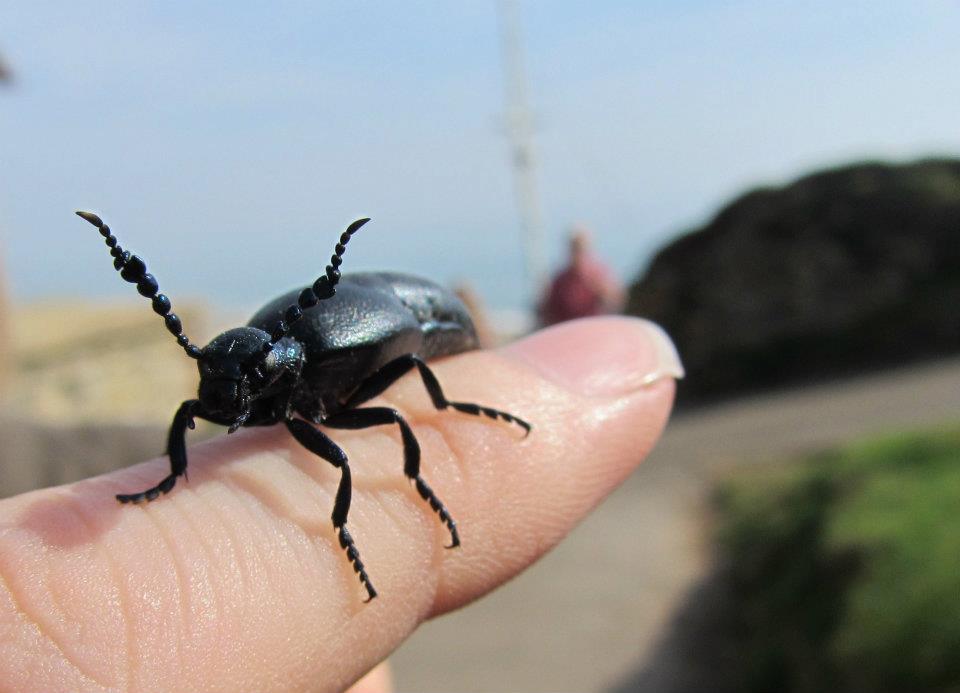
When I first began volunteering with natural science collections at Plymouth City Museum, I occasionally assisted local entomologist Peter Smithers of Plymouth University, who regularly ran ‘Bug Hunts’ with schools around the Devon and Cornwall area. It was here that I came across some of my first beetles. In 2010, whilst walking along the South West Coast Path near the chalk cliffs at Beer, I found a black beetle with a vinyl-like sheen. It was beautiful, but unlike anything I had seen before. I later discovered that it was from a distinctive group called Oil Beetles (Meloidae), which possess one of the most extraordinary life cycles of any UK insect: they are nest parasites of solitary mining bees such as Andrena, Anthopora, and Lasioglossum.

After a female Oil Beetle lays her eggs in a nest hole, the larvae (known as triangulins) wait on a plant until they can attach themselves to a passing bee, using hooks on their feet. The larvae then eat the stored pollen and nectar in the bee’s nest. The strategy means minimal effort from the adult female in raising her young, and the larvae have all the food they need.

Black Oil Beetle (Meloe proscarabaeus)

Black Oil Beetle (Meloe proscarabaeus)

At the time of my discovery, Buglife was leading the way in trying to understand the state of Oil Beetle populations in the UK, which had suffered severe declines over the past 100 years. With four species believed to be extinct already, there was an urgent need to understand the distribution of the remaining Black, Violet, Rugged and Short-necked Oil Beetles. Buglife launched an Oil Beetle Recording Scheme to map their distribution and engage people of all ages through citizen science.

The survey results have enabled Buglife to learn more about the habitat preferences and hosts of the remaining species, and gain a better understanding of the health of the UK landscape, as Oil Beetles are restricted to wildflower-rich habitats, unimproved coastal grasslands, and woodland edges. Two species of Oil Beetle that were believed to be extinct in the UK have been re-discovered. The Short-necked Oil Beetle was found in South Devon in 2006, before a much larger second population was found on the Isle of Coll in Scotland in 2010. The rare Mediterranean Oil Beetle was found on the same Devon site in 2012, having been last recorded in Kent in 1906.

The efforts of Buglife, local recorders and naturalists have produced valid records to create time series of biodiversity data. Museum collections can also provide useful time series data for conservation efforts, based on specimen label data in terms of location and distribution in a given year. Where a species has been recorded in a particular place and time, we can perhaps find relic populations or sites for reintroduction.

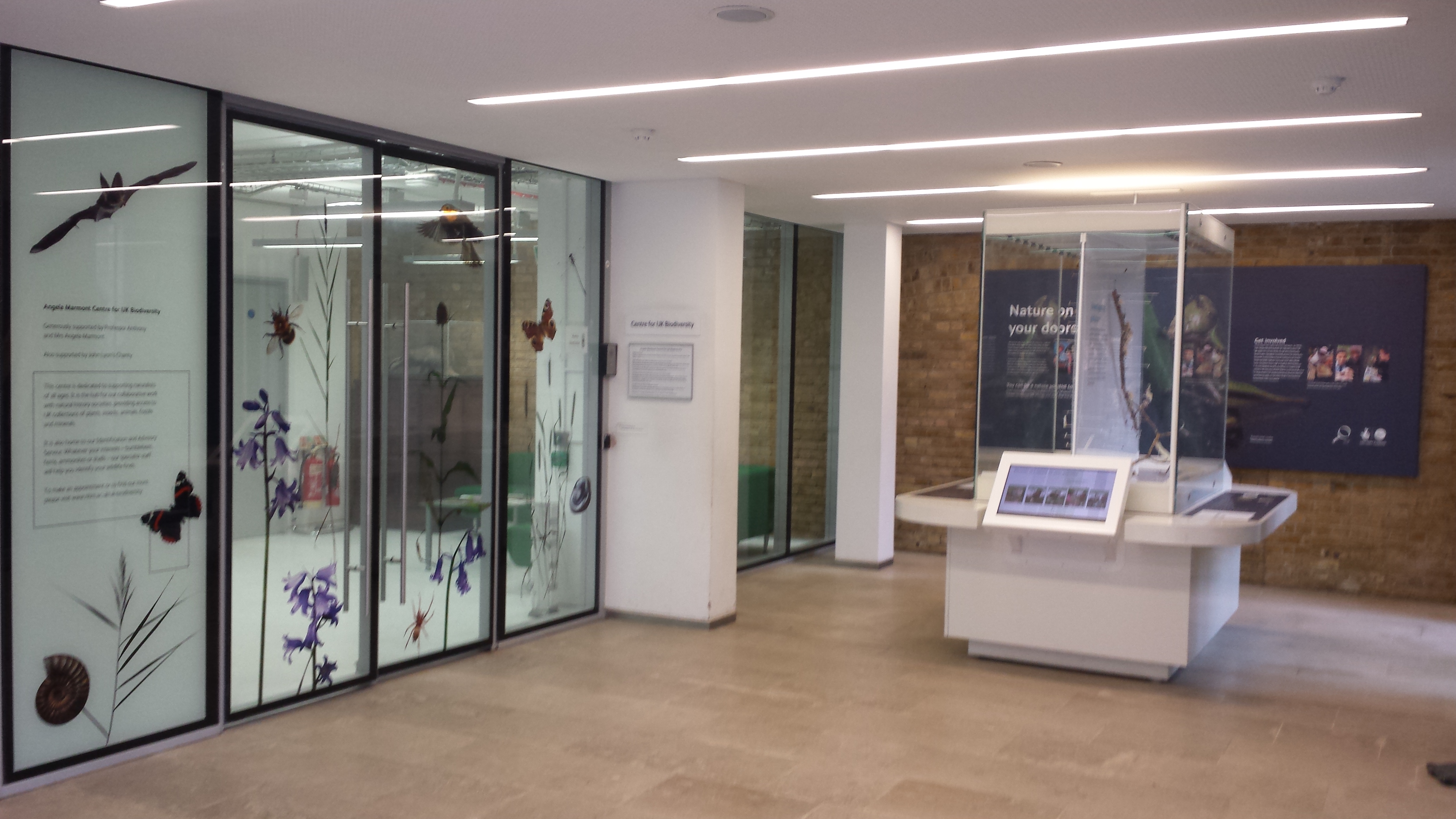
Interior of the Angela Marmont Centre, NHM

Angela Marmont Centre, NHM

It was my interest in Buglife’s Oil Beetle recording scheme that led me to recently join the Natural History Museum’s Angela Marmont Centre for UK Biodiversity (AMC) as an Identification Trainee. The AMC provides world-class facilities in the museum’s Darwin Centre for citizen scientists, as well as expert and amateur naturalists, to enable them to identify UK species using the AMC’s extensive reference collections. Working here is brilliant, and I hope to be trained to identify the key UK biodiversity groups, gain more practical experience of surveying UK wildlife, assist the AMC team in developing citizen science projects based around museum collections, and continue to develop collections management experience through curatorial projects.


Anthony Roach
Skills for the Future Trainee & Science Educator
NHM