
Written by Emma Winnard, Sixth form student studying A-level Biology, Chemistry, and Geology, with a strong interest in zoology, botany, and museum collections.
The okapi (Okapia johnstoni) is one of the most distinctive large mammals in the world, yet it remains one of the least well understood. Endemic to the dense tropical forests of the Democratic Republic of the Congo, the okapi occupies an ecological niche that is both geographically restricted and extremely difficult to study directly. As a result, much of what we know about the species has been built not only from limited field observations, but also from museum specimens, archival records, and associated botanical and habitat material held in natural science collections.
This is what makes the okapi such a useful example for thinking about collections. When an animal is rarely seen, difficult to survey, and increasingly threatened, preserved specimens and older records can become far more than historical curiosities.
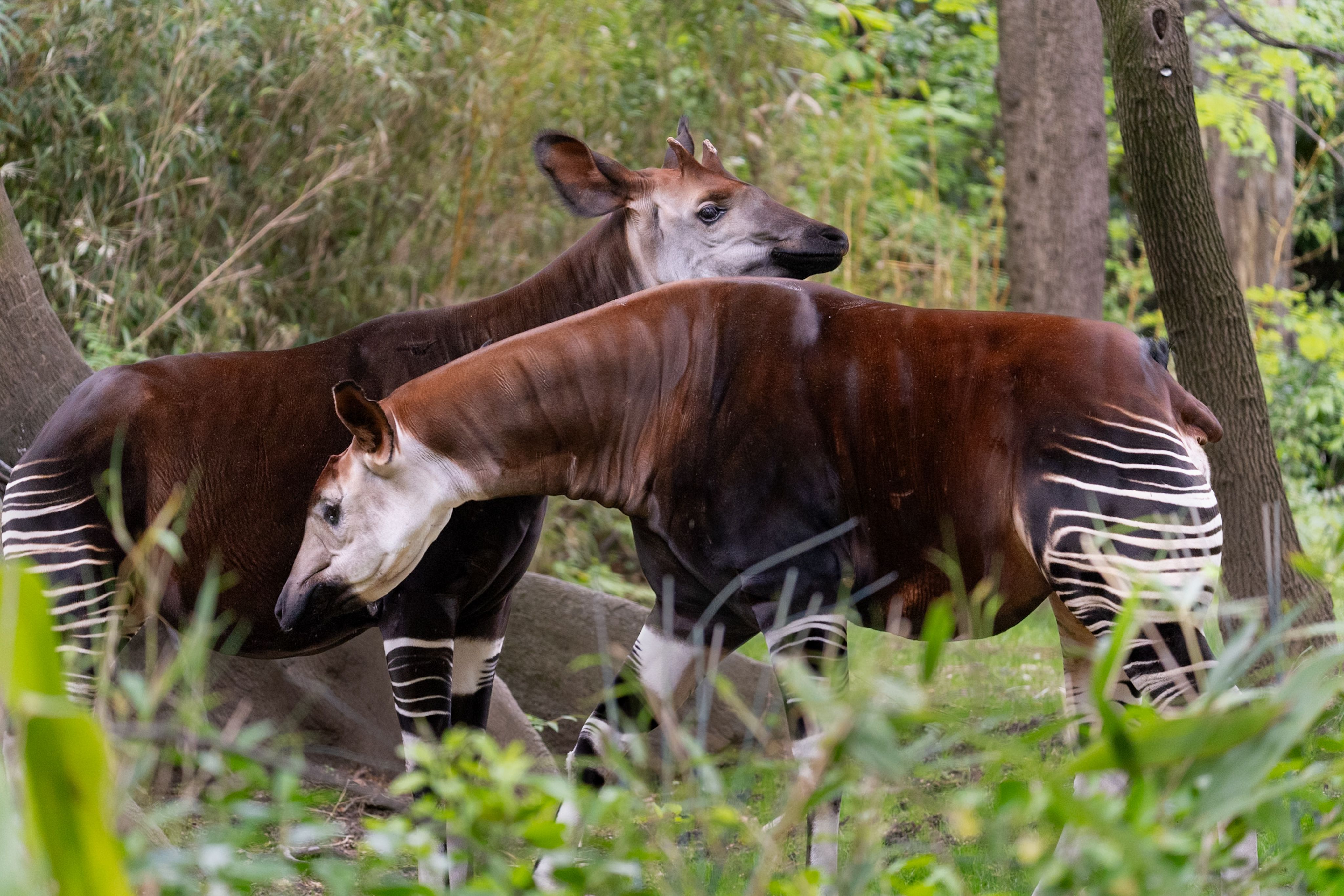
A pair of okapi in a lush forest setting. The species’ striped legs and dark coat help break up its outline in the dappled light of dense forest habitat.
© Photo by Brett Aukburg, via Pexels. Pexels Licence.
An unusual evolutionary history
Although often mistaken for a relative of the zebra due to its striking striped legs, the okapi is in fact the closest living relative of the giraffe. Both species belong to the family Giraffidae, a lineage that was once far more diverse and widespread than it is today. The okapi represents a surviving branch of this ancient group, retaining a more compact body plan adapted to life in closed-canopy forest rather than open savannah.
The species’ anatomy reflects this specialised lifestyle. Okapi possess a long, prehensile tongue used to strip leaves and buds from understory vegetation, as well as large, sensitive ears that aid in detecting predators and conspecifics in dense forest. Their coat pattern provides camouflage in dappled light, breaking up the outline of the body among foliage and shadow. These adaptations have allowed the okapi to persist in a challenging environment, but they also make direct behavioural observation exceptionally difficult.
Much of the early anatomical and taxonomic understanding of the okapi came from preserved specimens collected in the early twentieth century, following the species’ formal description in 1901. Skeletal material, skins, and mounted specimens held in museum collections played a key role in establishing its relationship to giraffes and distinguishing it from superficially similar ungulates.
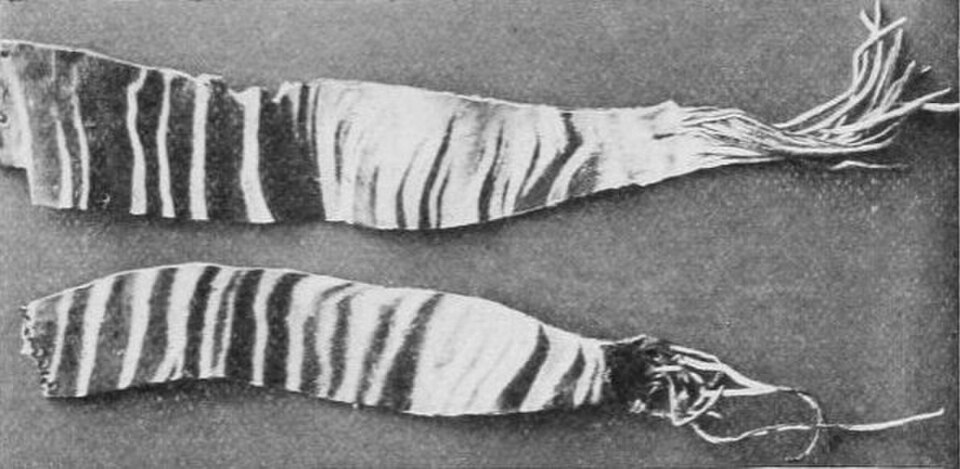
Early photographic evidence of okapi skin pieces obtained by Sir Harry Johnston. The striped pieces were initially thought to come from a new kind of zebra, reflecting the early uncertainty around the okapi’s identity. © Edwin Ray Lankester, Extinct Animals, London: Archibald Constable & Co., Ltd., 1905. File: Pieces from Okapi leather, obtained by Sir Harry Johnston (crop).jpg, via Wikimedia Commons. Public domain.
Conservation status and current threats
Today, the okapi is classified as Endangered by the IUCN. Its population is thought to be declining, although precise numbers are difficult to obtain due to the species’ secretive nature and the inaccessibility of much of its range.
The primary threats to okapi survival are habitat loss and fragmentation, driven by logging, mining, and agricultural expansion, as well as armed conflict within the region. In some areas, okapi are also vulnerable to snaring intended for other wildlife. These pressures are compounded by the fact that okapi rely on intact forest ecosystems with specific plant communities, making them particularly sensitive to environmental disturbance.
A recent study by Tatoutchoup (2025) attempted to tackle a key problem in okapi conservation: how do you estimate population change, and the relative pressure of different threats, when field data are sparse and uneven? Using a modelled population reconstruction and comparing it against proxy measures such as primary forest extent and the number of artisanal mining sites, the paper reports a strong negative association between artisanal mining expansion, loss of primary forest, and okapi decline. The headline figures are model-based and should not be treated as direct counts, but the broader conclusion is hard to ignore: mining-driven habitat damage appears to be a major accelerant of recent declines, partly because it pushes forest loss and fragmentation in exactly the areas okapi depend on.
Because sustained field studies are challenging under these conditions, historical data preserved in collections become increasingly valuable. Museum specimens provide fixed reference points for morphology, body size, and health, allowing comparisons across time that would otherwise be impossible.
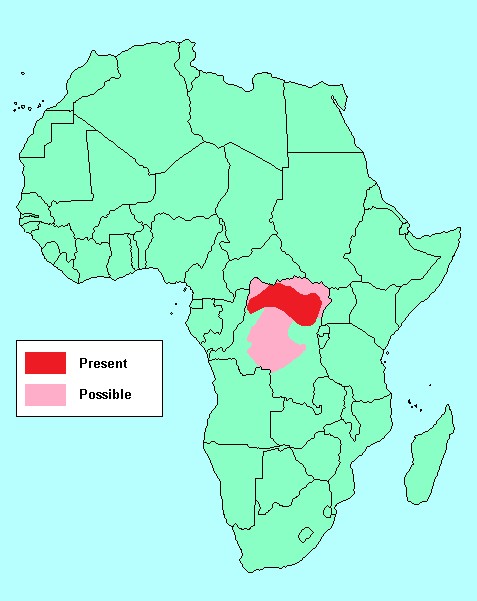
Distribution map showing the native range of the okapi (Okapia johnstoni) on the African continent. Its restricted range helps explain why habitat protection is so important for the species’ survival. © User:Danny~commonswiki, via Wikimedia Commons. Licence: CC BY-SA 3.0.
What collections contribute to okapi knowledge
Although okapi specimens are not abundant in collections, those that do exist are scientifically significant. Skeletal material, skins, and archival records housed in natural history museums have contributed to anatomical studies, taxonomic clarification, and broader discussions of giraffid evolution. Even a small number of well-documented specimens can hold disproportionate value when a species is rarely encountered alive.
Beyond the animal itself, associated botanical material is also crucial. Herbarium specimens from okapi habitat regions help reconstruct forest composition, dietary preferences, and ecological relationships. Understanding which plant species dominate okapi range areas, and how these communities change over time, supports more informed conservation planning.
Archival materials, including field notes, correspondence, and early expedition records, add further context. These sources document historical distributions, collecting practices, and environmental conditions, offering insight into how both landscapes and scientific understanding have changed. For species like the okapi, whose modern study is constrained, such records form an essential part of the evidence base.
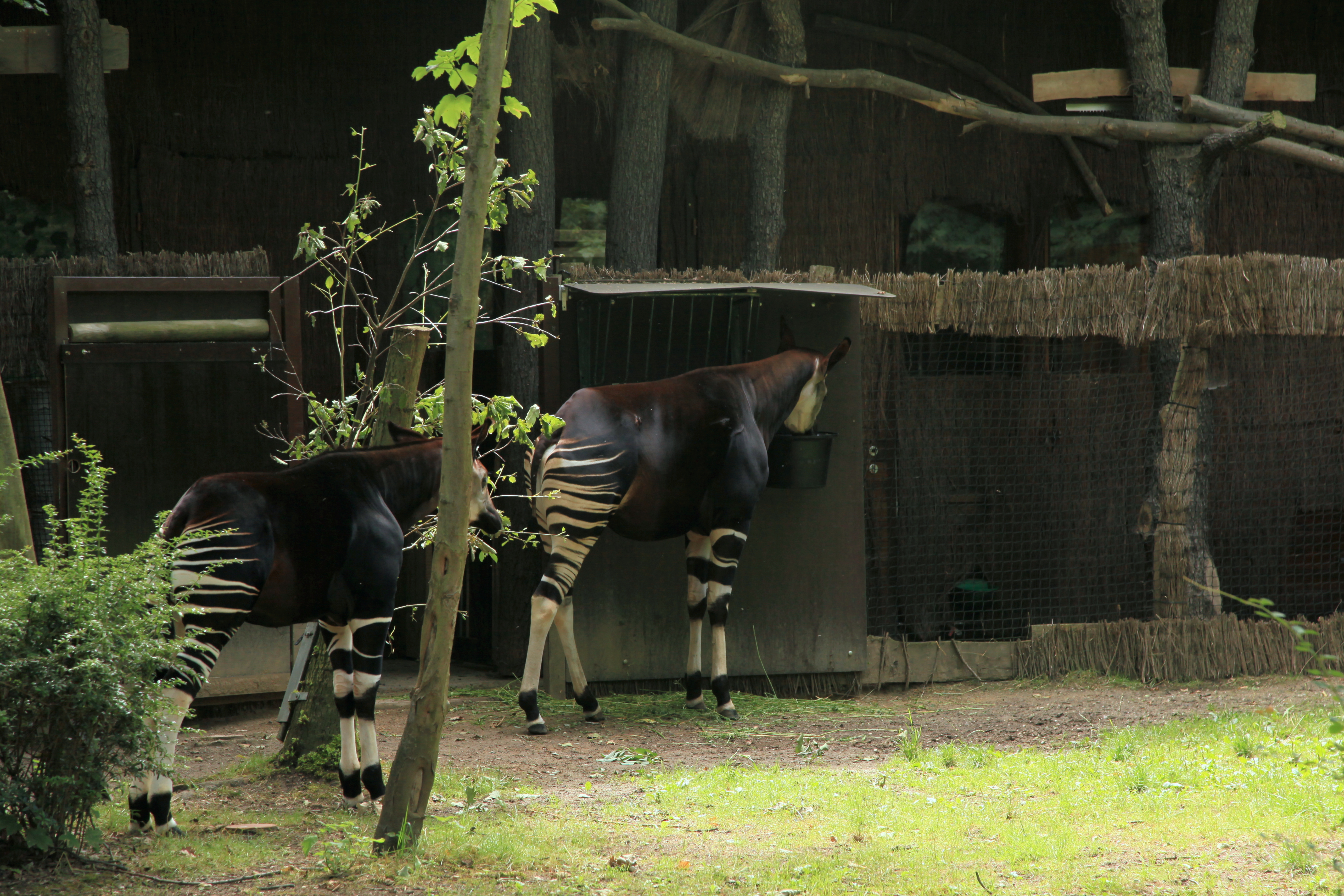
Okapi (Okapia johnstoni) at Leipzig Zoo. Images of living individuals can help audiences connect museum-based knowledge with the biology and conservation of the species today.
© Frank Vincentz, via Wikimedia Commons. Licence: CC BY-SA 3.0.
Public engagement and education
Okapi also play an important role in public engagement. As a visually striking and relatively unfamiliar species, they often capture attention and curiosity, providing an entry point for discussions about rainforest ecosystems, conservation challenges, and the importance of preserving biodiversity beyond more familiar flagship species.
Natural science collections allow museums to tell these stories with depth and accuracy. Specimens and archival materials support interpretation that goes beyond surface-level fascination, helping audiences understand evolutionary history, ecological interdependence, and the real consequences of habitat loss.
Preserving knowledge for the future
The okapi illustrates why collections matter, particularly for species that are difficult to study in the wild and increasingly at risk. Even when specimens are few, their long-term scientific, educational, and conservation value is significant. As habitats continue to change and opportunities for field research become more limited, the role of museums in preserving physical evidence, contextual data, and historical knowledge becomes ever more important.
For elusive species like the okapi, natural science collections do not simply document the past. They provide essential tools for understanding the present and informing future conservation efforts.
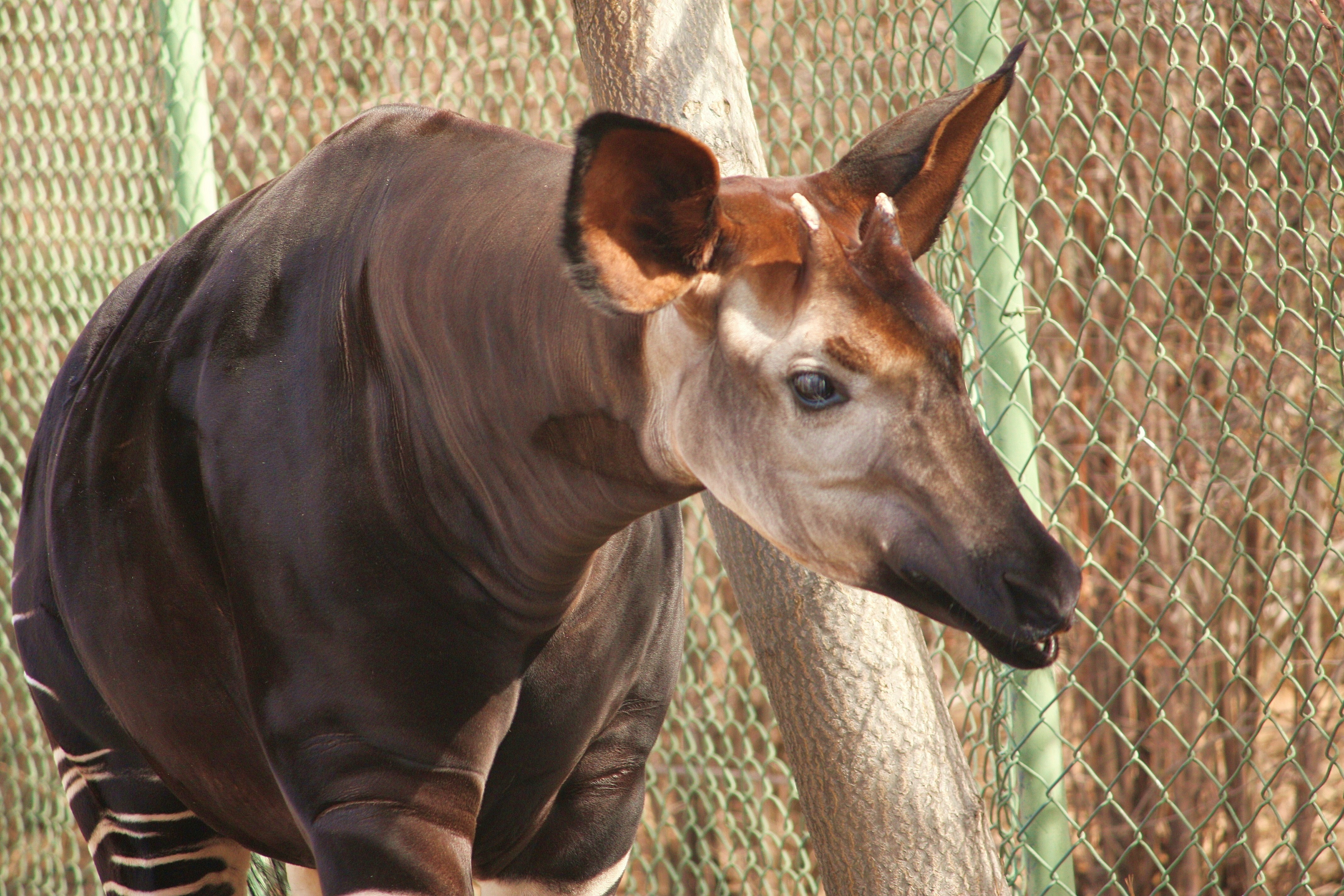
Male okapi (Okapia johnstoni) at Denver Zoo, Denver, Colorado. The okapi’s distinctive appearance makes it a useful species for public engagement around rainforest conservation, evolutionary history, and the value of natural science collections. © Postdlf, via Wikimedia Commons. Licence: CC BY-SA 3.0.

 NatSCA
Pingback: NatSCA Digital Digest – July 2026 | NatSCA