
Written by Lauren Field, Curator of Natural History, Bolton Museum.
In 1895 The Borough of Bolton Botanical Society was formed. This group concerned itself, as the name implies, with botany alone but eventually a feeling emerged among naturalists in Bolton that other aspects of natural history should be covered.
On February 7th 1907 a group of keen local naturalists met at the Chadwick Museum (Bolton Museum’s first building). The group included members of the Botanical Society as well as ornithologists, entomologists and others representing natural history from astronomy to geology – from the heights of the sky to the depths of the earth.
They soon settled on the name Bolton Field Naturalists’ Society.
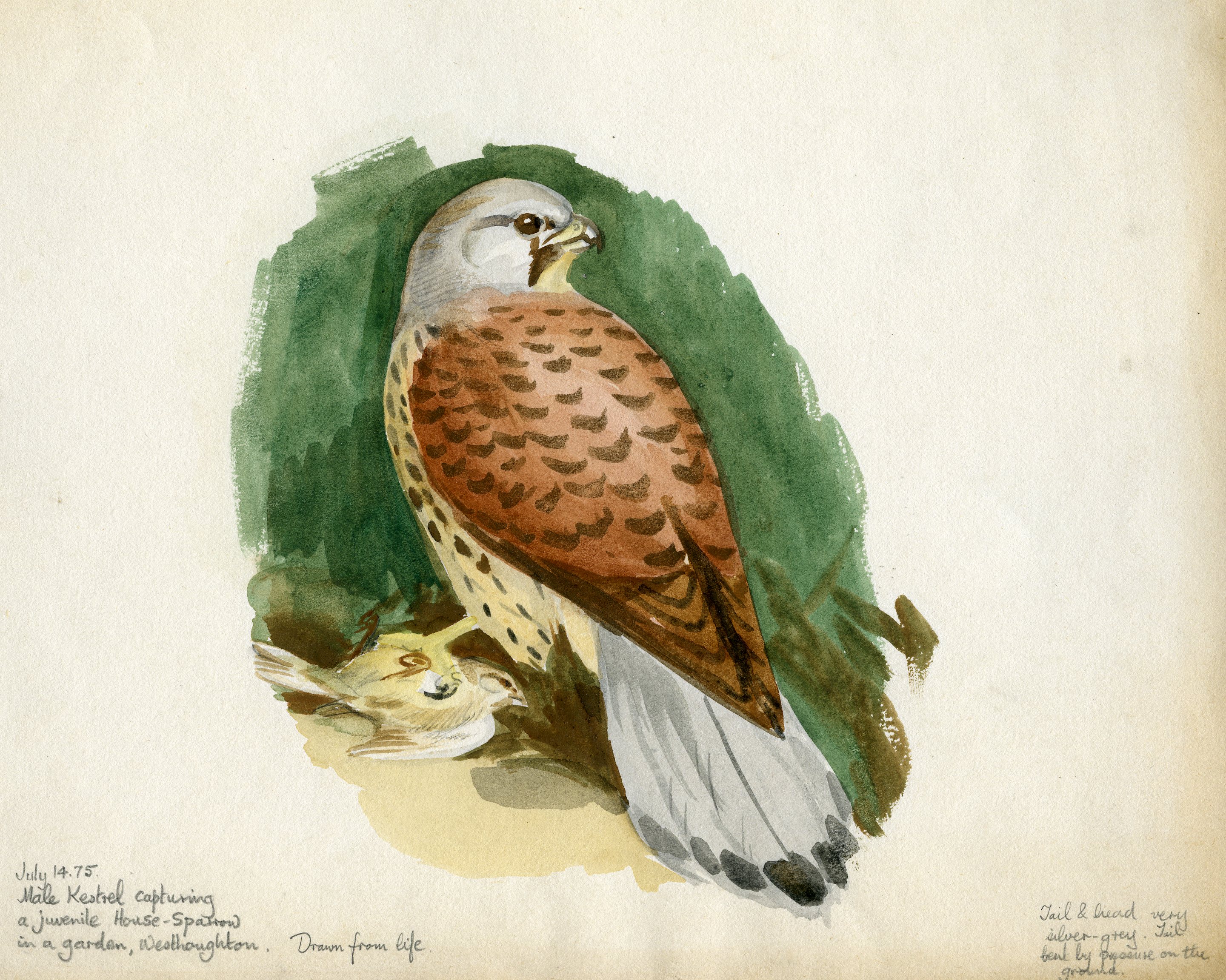
Illustration of a kestrel capturing a house-sparrow, by Eric Gorton. ©Bolton Museum
Over its existence the society had many notable members including many previous members of staff from Bolton Museum’s natural history department including Bolton Museum’s first curators, William and Thomas Midgley, Kathryn Berry, Keeper of Zoology who was Chairman of the society in 1988 and Eric Gorton, who was also an exceptional artist recording wildlife in and around Bolton.
James Lomax, the pioneering manufacturer of thin sections for palaeobotanical study, led the geology section of the society. He was a working miner, and his interest grew from studying the fossils he excavated during his work.
Another notable name, Frank Lowe, was a member and president of the society until his death in 1986. For most of his life he had studied birds and his monograph, ‘The Heron’ was published in 1954 in the New Naturalist series.
The purpose of the Bolton Field Naturalists’ Society was to record the flora and fauna of the Bolton area and educate people on its rich diversity. Many of the society’s meetings were for the study of nature in the field where plants, birds, and other species were listed and mapped, and samples of plants taken for inclusion in the society’s herbarium.
At its peak, the society had over 230 members. However, as numbers fell and costs began to rise, the Bolton Field Naturalists’ Society folded after 110 years in 2017.
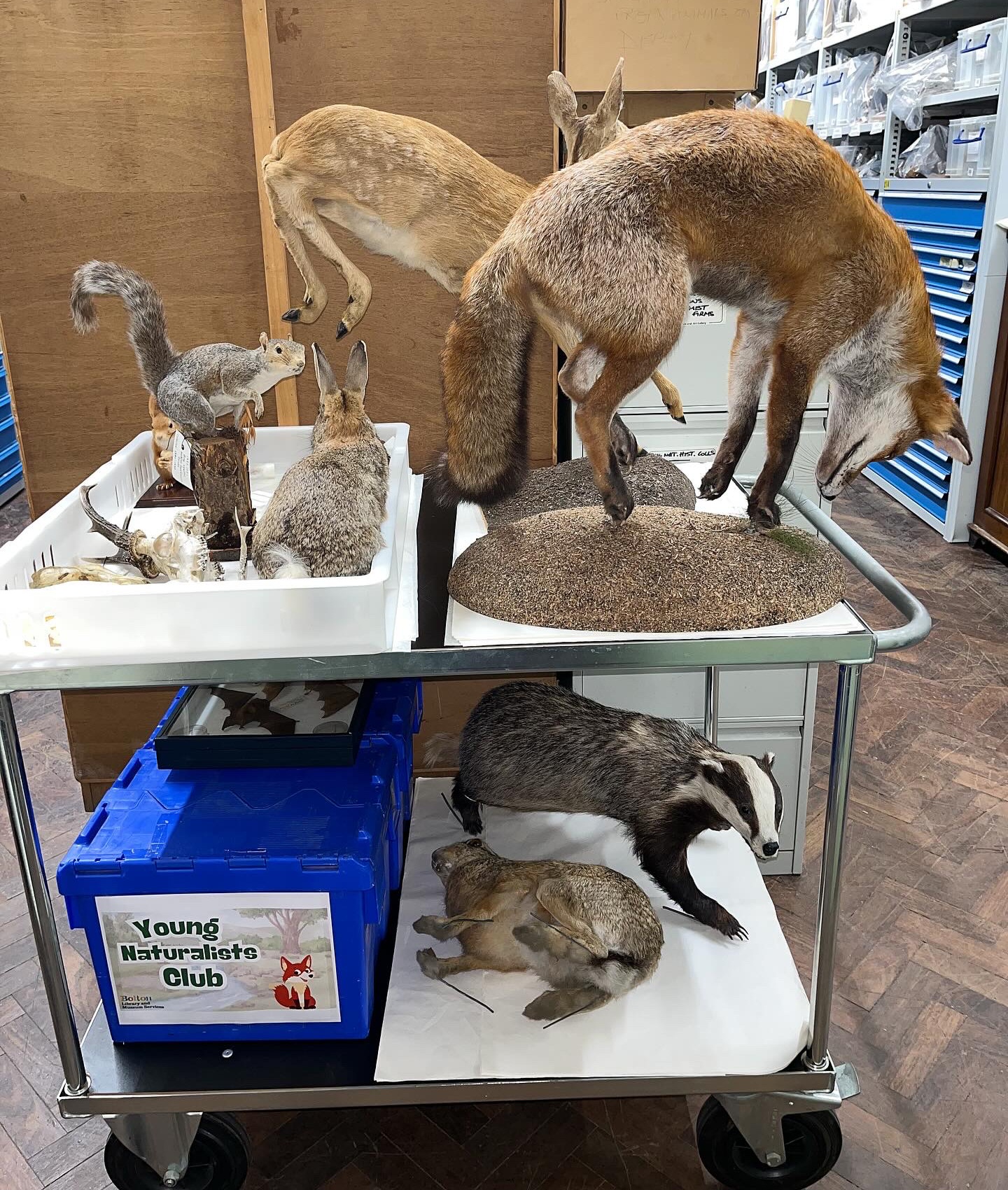
The collections used for the mammal session of the Young Naturalists’ Club. ©Lauren Field
In 2024, the Bolton Field Naturalists were represented in the Birds of Bolton exhibition, which was inspired and built around a collection of sketchbooks belonging to Eric Gorton. Read more about the exhibition here: https://natsca.blog/2025/01/23/birds-of-bolton-museum/.
The popularity of this exhibition highlighted the gap left by the closure of the Bolton Field Naturalists’ Society, and the want for further exploration of the natural world led by the museum as was done so well in the past. Following discussions with previous members of the society who attended the exhibition’s events, and colleagues who supported the busy events programme, Bolton Museum launched the Young Naturalists’ Club in February 2025.
At first, only three sessions of this club were planned to look at birds, mammals, and insects. The purpose of these three sessions was to act as an introduction to wildlife in Bolton, and the concept of a Young Naturalists’ Club led by the museum. Aimed at families and children, it was also hoped to provide direct engagement with the museum’s collection, via the Curator of Natural History, Lauren Field, and the knowledgeable and established Bolton-based naturalist, Russ Hedley.
It was hoped the children would be encouraged to adopt new practical skills to allow them to identify both flora and fauna whilst developing a keen sense of interest in the natural world and green spaces around Bolton specifically. It was hoped the club would be as interactive as possible so participants could interact with each other, and as such support social skills development, and that these sessions, and the membership of a club, would not only increase learning and knowledge, but also wellbeing and confidence.
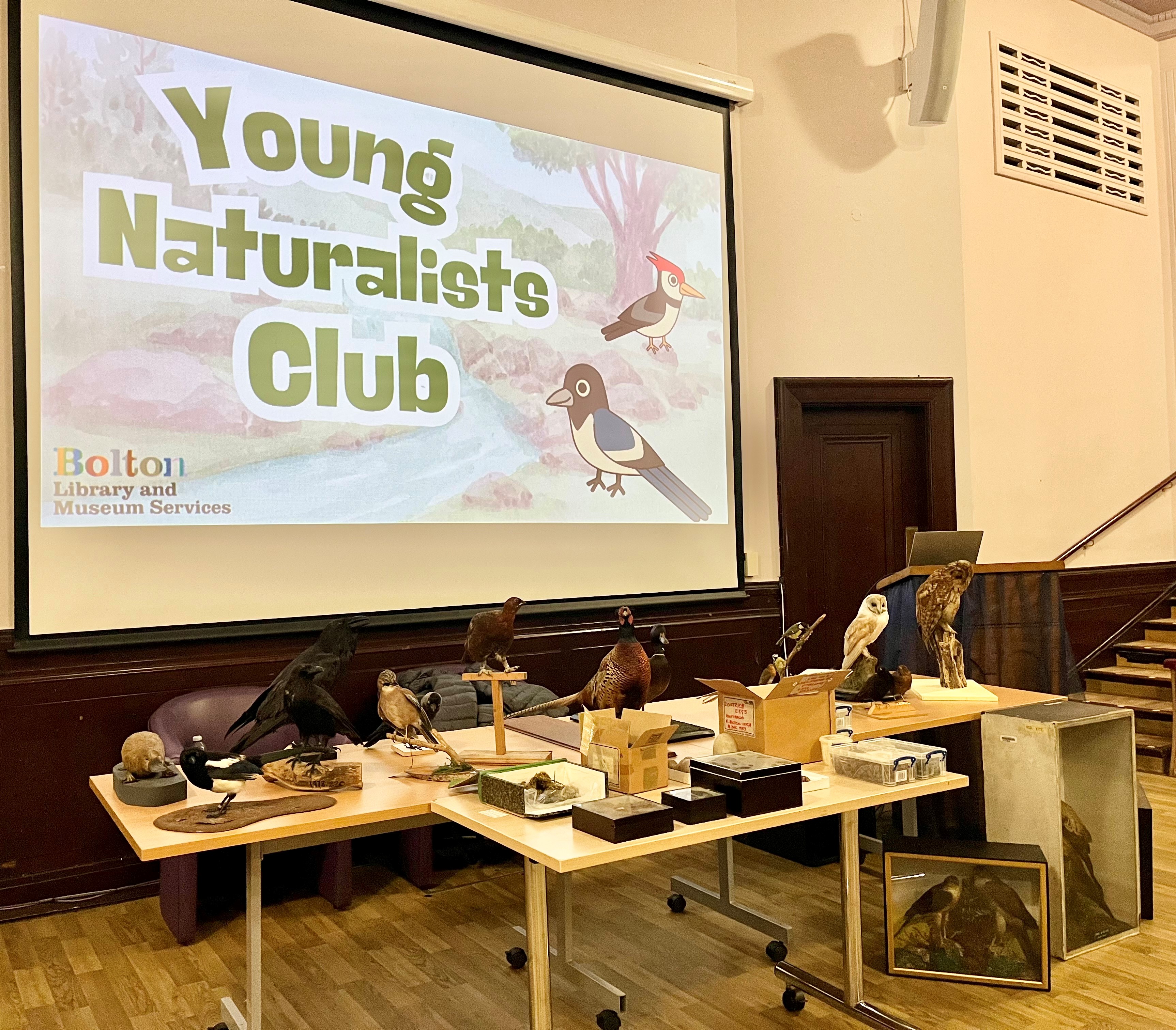
The collections used for the bird session of the Young Naturalists’ Club. ©Lauren Field
Interest in these three sessions was unprecedented, and the number of available tickets had to be increased several times. These tickets were free, but following the initial interest, introducing a booking system was required only due to the amount of people that could fit in the room that the sessions would be held in.
These three sessions alone had 405 attendees.
This had a positive impact on other natural history events across Bolton Museum’s sites. For example, at Smithills Hall, a manor house on the edge of the West Pennine Moors, regular nature walks led by the Natural History Curator increased in attendance with several families from the Young Naturalists’ Club attending to put their new skills – especially bird identification skills – to the test.

Smithills Hall. ©Lauren Field
By June, the sessions were being further developed, and a feedback survey was introduced to identify how families were experiencing the Young Naturalists’ Club and what they would like to see included and explored moving forward.
This led to the next three sessions which covered pollinators, dinosaurs and sea monsters, and “spooky animals” – this final session was during October half-term so couldn’t avoid a Halloween theme, but was an opportunity to introduce the less-loved and talk about the merits of all, and the parts they play in their wider ecosystems, such as spiders, rats, and snakes.
All sessions of the Young Naturalists’ Club included interactive elements so attendees could actively participate in the sessions. Each session is 2 hours long which has been a difficult length of time for some. During each session there have been families that have only stayed for half of the session, but most attendees do complete the full time. This has been especially surprising when you consider that the age of the children attending is generally quite young, ranging between 3 and 9, with young pre-teens (10 to 12) also represented quite well, plus several 14 and 15 year olds attending some of the sessions too.
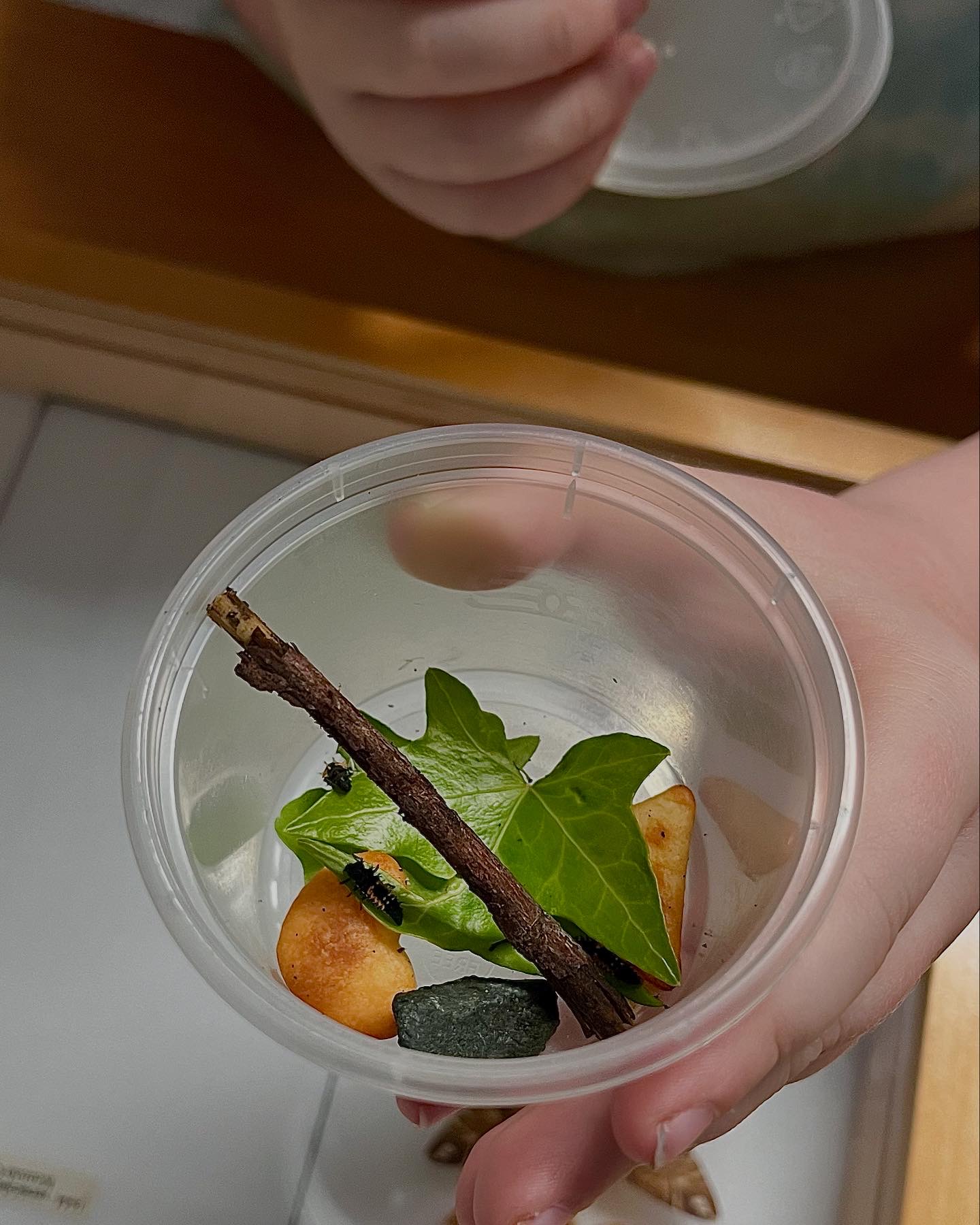
Participants began to show an active interest by the third session; this child wanted some insects identified, before they were released back into the garden. ©Lauren Field
To ensure the skills and interest introduced in the sessions continues, each child was provided with resources to both use in the sessions and to take away, to encourage them to engage with the natural world outside of the museum. This included subject specific cards (the format inspired by Top-Trumps!) that can be collected by attending each session, as well as walking trails, ID kits, and activities to complete.
2026 sees the continuation of the Young Naturalists’ Club, with the next session being held in late February. Furthermore, the success of this format has led to conversations about providing more focused sessions for older aspiring naturalists; this will hopefully be developed as the year continuities. The start of this year also sees several talks to be delivered by the Curator of Natural History for an older audience on the status of wildlife in and around Bolton, and the importance of recording wildlife and plants – with the view of bringing back the Bolton Field Naturalists’ Society one day? It certainly does look like that might be a possibility!

The Nature Gallery at Bolton Museum. ©Bolton Museum

 NatSCA