
Written by Clare Brown, Leeds Museums and Galleries.
Taking a walk through a forest, running through fields of wheat or even just gazing at trees, all a far-cry from dealing with the sheets of pressed, long-dead dried plants you come across in museum collections. Good taxidermy at least looks like the original animal.
Other problems with plant specimens include their need for low light, extremely careful handling and, occasionally, mercuric chloride. Despite being phenomenally important to researchers, for everything from tracking climate change to curing cancer, plant collections are not at the top of many people’s lists when it comes to exhibitions, events and workshops.
So, what public-facing engagement can you do with herbarium specimens? Here I’ve looked at a few great case studies where creative collections are delivering brilliant botany…
Takeaway Trees, National Museums Liverpool
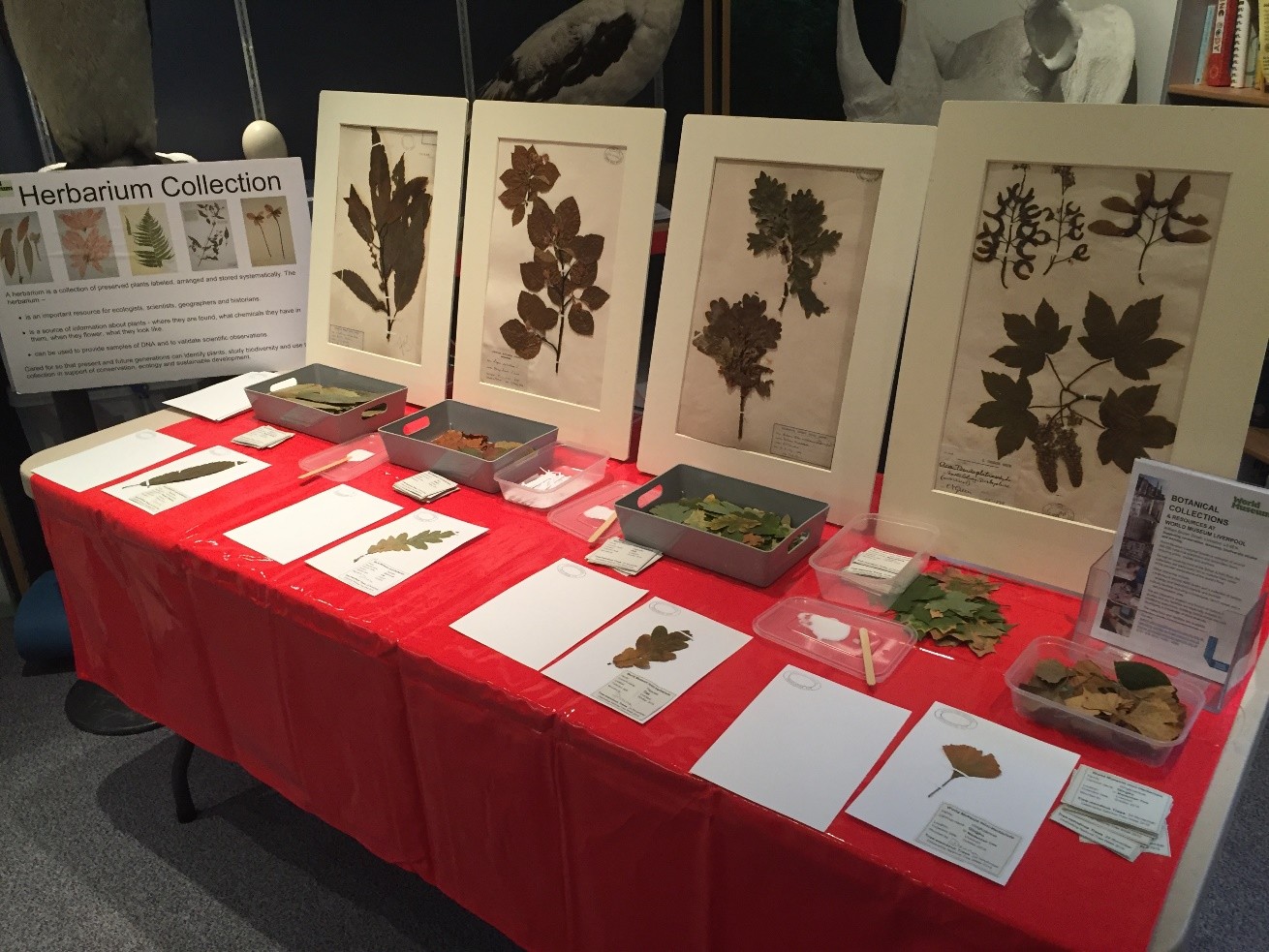
©National Museums Liverpool
National Museums Liverpool use both their herbarium and recently collected tree leaves to run activities for National Tree Week. Visitors can look at the leaves of some common trees and then make a little ‘herbarium sheet’ to take home. I haven’t included the photo of two girls and their sheets, as I don’t have permission, but the smiles on their faces it heart warming.
The curator had pre-pressed lots of leaves for this activity and displayed a herbarium sheet from Liverpool’s collection for each local tree species. It led to simple conversations about the trees around Liverpool, collecting leaves, pressing plants, identifying trees by leaf shape and recording dates and places.
National Tree Week is usually in November and the Tree Council will publicise museum activities on their events page.
Pre-school Seed Lessons, Louisiana State University
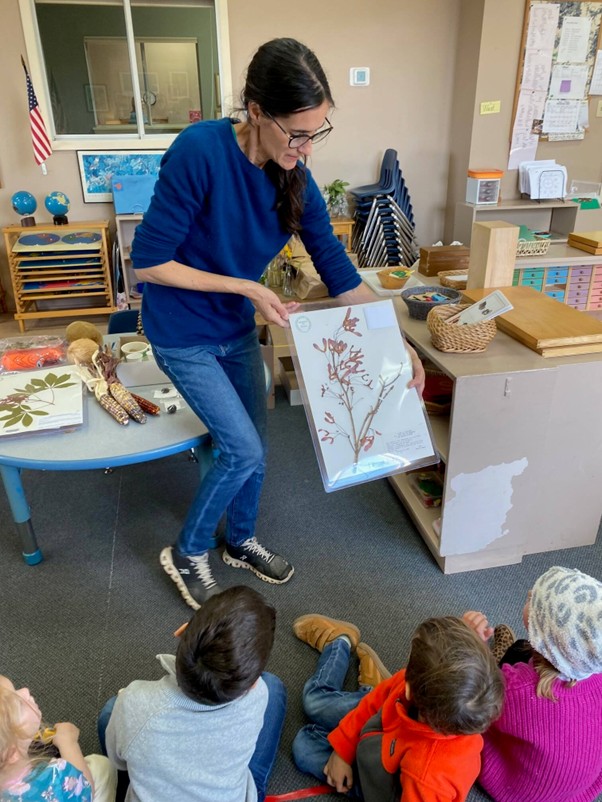
At Laprintanière Montessori Preschool in Baton Rouge, Louisiana, pre-schoolers got the privilege of learning about seed dispersal directly from the herbarium staff of the local university. Christina Doyle, one of the Research Associates in the herbarium at LSU, uses wrapped 2D specimens, as well as material from the seed collection, to tell stories about wind, water, animals and fire.
The specimens are wrapped in rigid PVC pockets (LSU uses these).
As well as bringing along a variety of specimens from the herbarium, Christina also recommends taking lots of plants for kids to pull-apart and investigate. The pre-schoolers were encouraged to look for and touch the seeds with their hands as well as use robust magnifying glasses for a closer look.
Elder and Wiser, The Manchester Museum
The Manchester Museum secured a grant from the 2022 Esmée Fairbairn Collections Fund for a project called ‘Elder and Wiser: reimagining botanical exchange’. The aim was to use the museum’s herbarium as a seedbed (sorry) for an intergenerational ideas exchange.
The result was a series of lovely films about people’s connections, memories and emotions around plants in the collections at Manchester. A particular highlight is Elaine Unegbu chatting about Aruban cacti, Dutch tulips and Nigerian palms. She goes on to reflect about nature, the wild and the future – all whilst choosing to sit in the centre of Manchester’s fabulous herbarium store.
The Dead Plants Society, Leeds Museums and Galleries
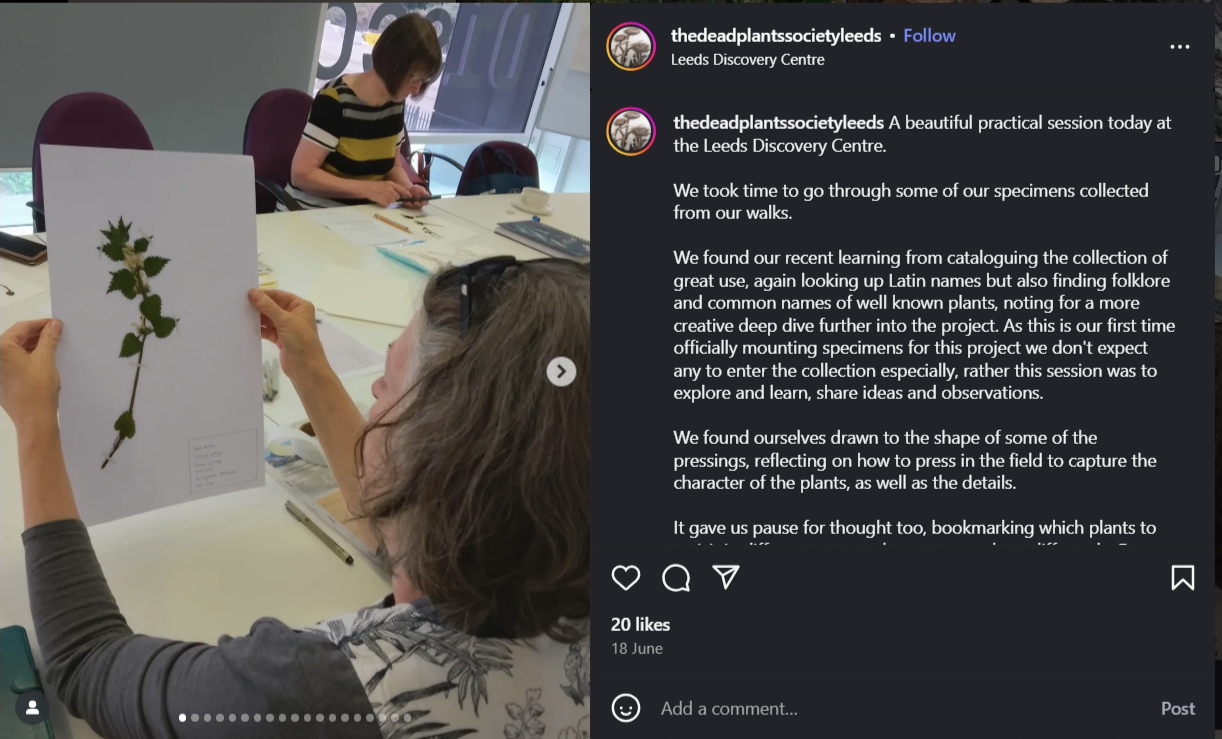
Another case study, and one close to my heart, is the current ‘Dead Plants Society’ project at Leeds. We’ve partnered with an arts and social change charity in East Leeds called ‘Space2’. With funding from the Esmée Fairbairn Collections Fund, Space2 participants are going to mine Leeds’s botany collection for stories, historical connections, herbal and folklore, environmental change records and artistic inspiration.
I’m excited about this project for lots of reasons, not least because it is being driven and directed by a group of people who are not scientists or researchers, which makes a change. Space2 are interested in the collection for what it can tell them about their area – East Leeds – and what connections they can make with local people through the medium of chlorophyll, or the remains of it at least.
One of the great things about this project is that the outcome is not necessarily an exhibition, event or workshop. I’m hoping that we’ll be able to use the herbarium for a huge range of different things, many of which we’ve not done – or even thought of – before.
Lots more information on this, including the application to our funders, here.
Lastly, the newly published Herbarium Handbook is full of ideas and I’d also like to encourage you to read this lovely paper by Krosnick and Moore: Rooting students in their botanical history: A method to engage students in botany and herbaria It’s a good resource but it also provides me with a great quote for the end of this blog:
“We argue that herbarium specimens may inspire interest in plants even more effectively than living collections as a result of the unique historical information they contain.”
Acknowledgements
Many thanks to Christina Doyle, Donna Young and Rachel Webster for their help with this blogpost.

 NatSCA
Pingback: NatSCA Digital Digest – September 2025 | NatSCA
Pingback: Top NatSCA Blogs of 2025 | NatSCA