
Written by Ali Wells, Curator (Herbert Collections), Herbert Art Gallery & Museum.
This blog post details a temporary exhibition at the Herbert, how it was presented, how decolonisation and feedback were integrated into the show. This is an overview, please get in touch if you would like more information on any aspect of the exhibition.
In May 2024 the Herbert launched its latest major temporary exhibition, Collecting Coventry. The display focuses on the history of collecting in Coventry museums and showcasing the breadth of the collections.
The main aims were to
- Present the Herbert’s collections after several years of external or predominately loan-based temporary exhibitions.
- Get out visitor favourites like the Lowry and display stored objects for the first time.
- Look like a museum store.
- Give visitors the opportunity to comment on aspects of museum work and ask questions relating to collections and displays. For example, Collections Development policy, display of human remains, use of technology, future exhibitions, representation.
Decolonisation work
Part way through exhibition development a visiting academic at the University of Warwick offered to work with us on decolonising the collection. We used this opportunity to review the exhibition text with her and actively make statements about how the collection was formed. This was a positive experience for us and resulted in more thoughtful and upfront text tackling some of the colonial actions which have shaped the Herbert’s collections.
Entrance
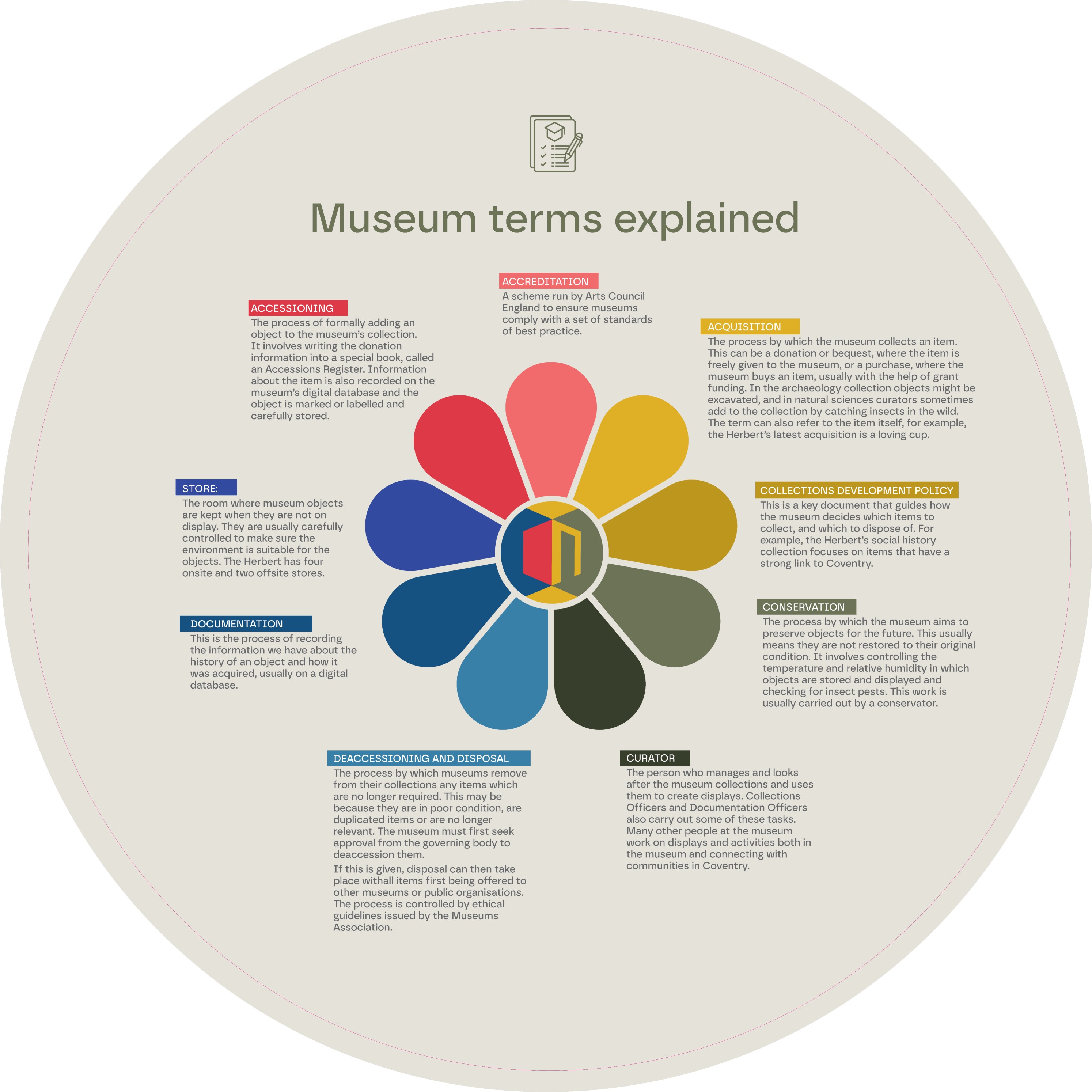
The exhibition is in four consecutive spaces and each room showcases a different collection. The introductory area includes a summary of the history of collecting, the museum’s values, a glossary of museum terms and prompting questions for visitors to think about as they move through the exhibition.
Human History gallery
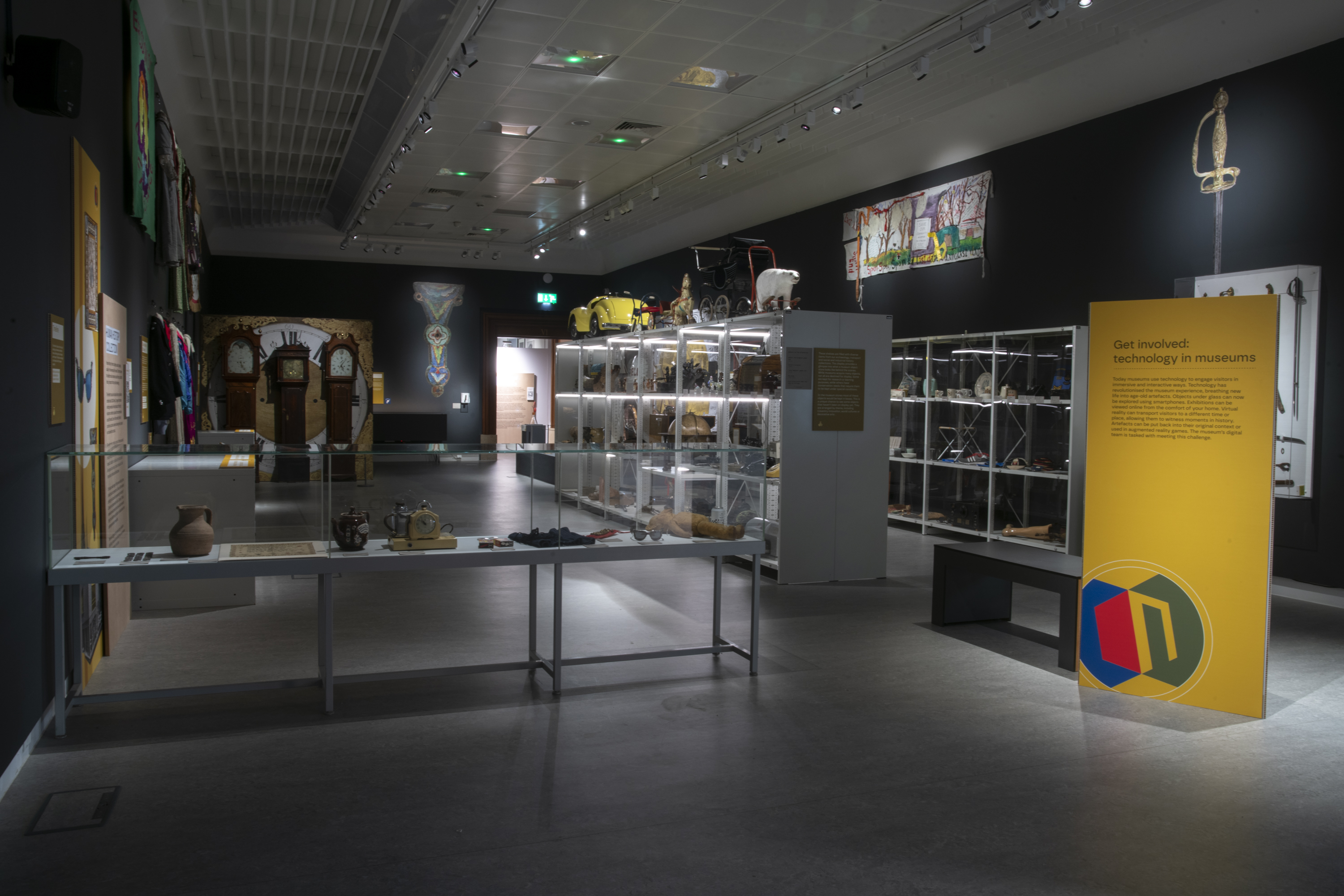
The first gallery is all about the human history collection and includes a timeline of collecting case with one object representing each decade of collecting, shelves filled with objects, rotating costume display and a screened-off area including human remains.
Art galleries
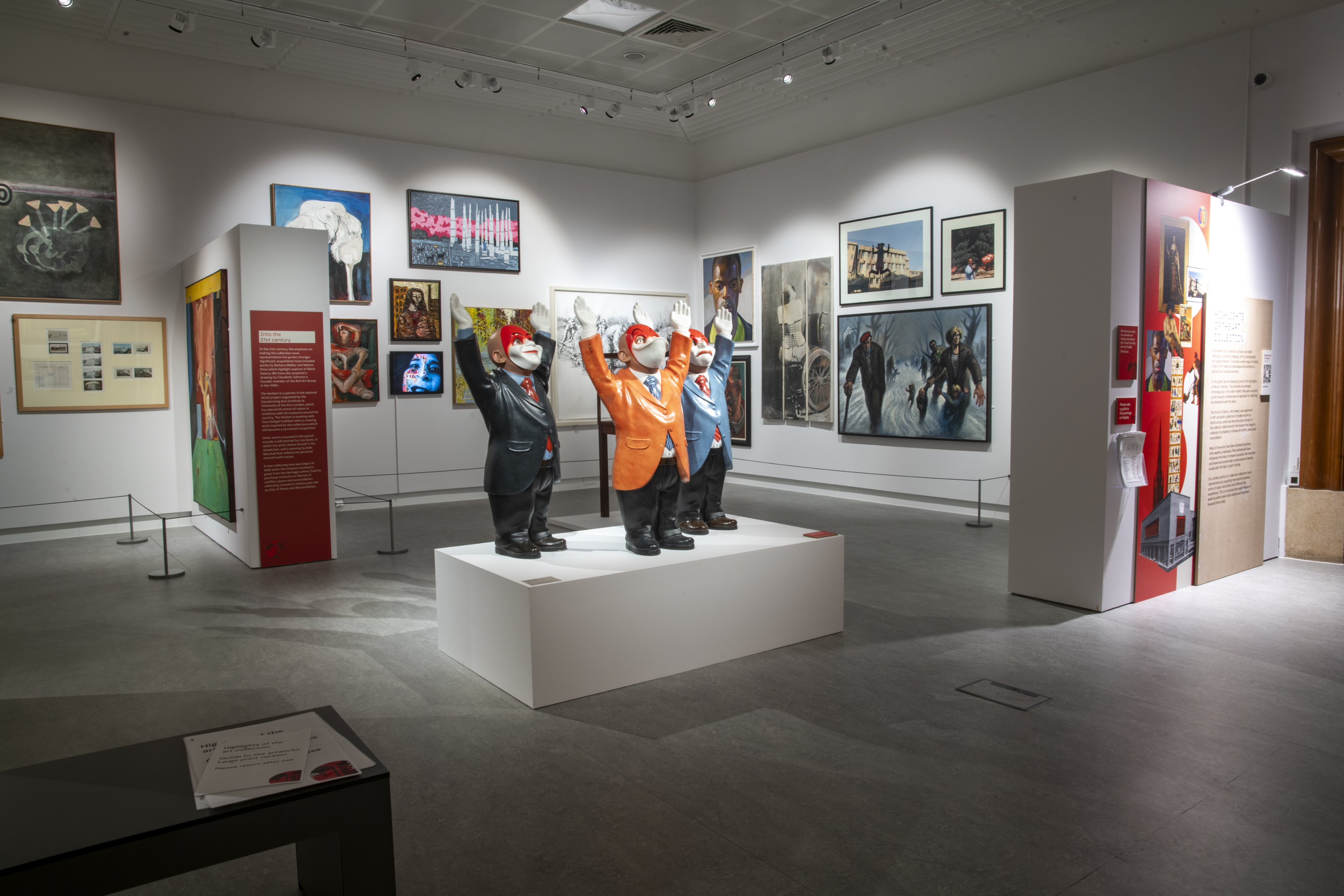
The next two galleries focus on the art collection. One includes the visual arts ‘highlights’ and is hung in order of acquisition to show how collecting themes have changed over time, for example the collection has become more representative from the 2000s. The second art gallery focuses on Coventry art before, during and after the Second World War, and artists with a connection to Coventry. Both are hung floor to ceiling to simulate a museum store.
Natural Sciences gallery
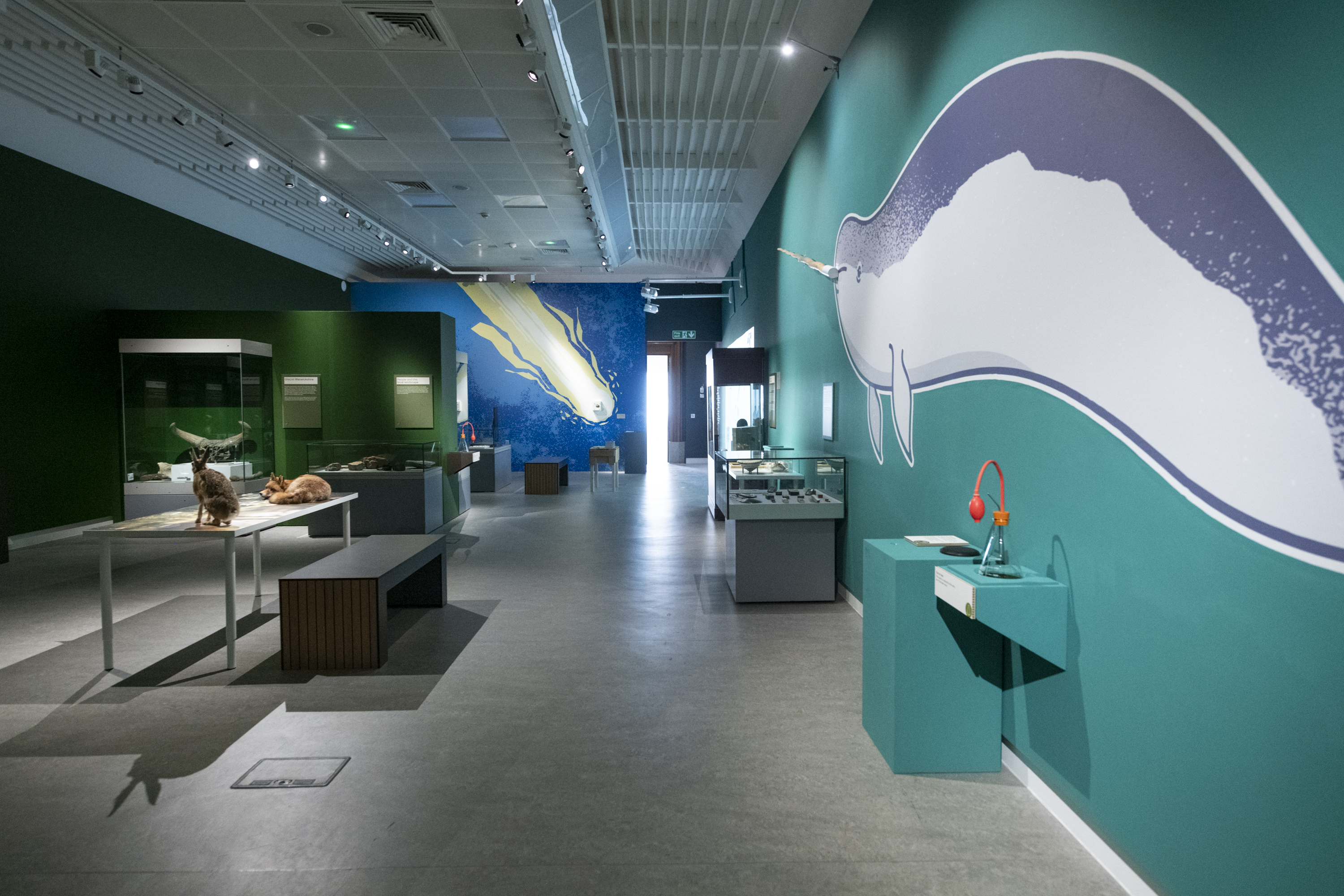
The Herbert’s natural sciences gallery was removed in 2020 to make way for City of Culture temporary exhibitions. Since then we’ve had very little of the collection on display, aside from a some Jurassic fossils complementing our resident dino, Dippy.
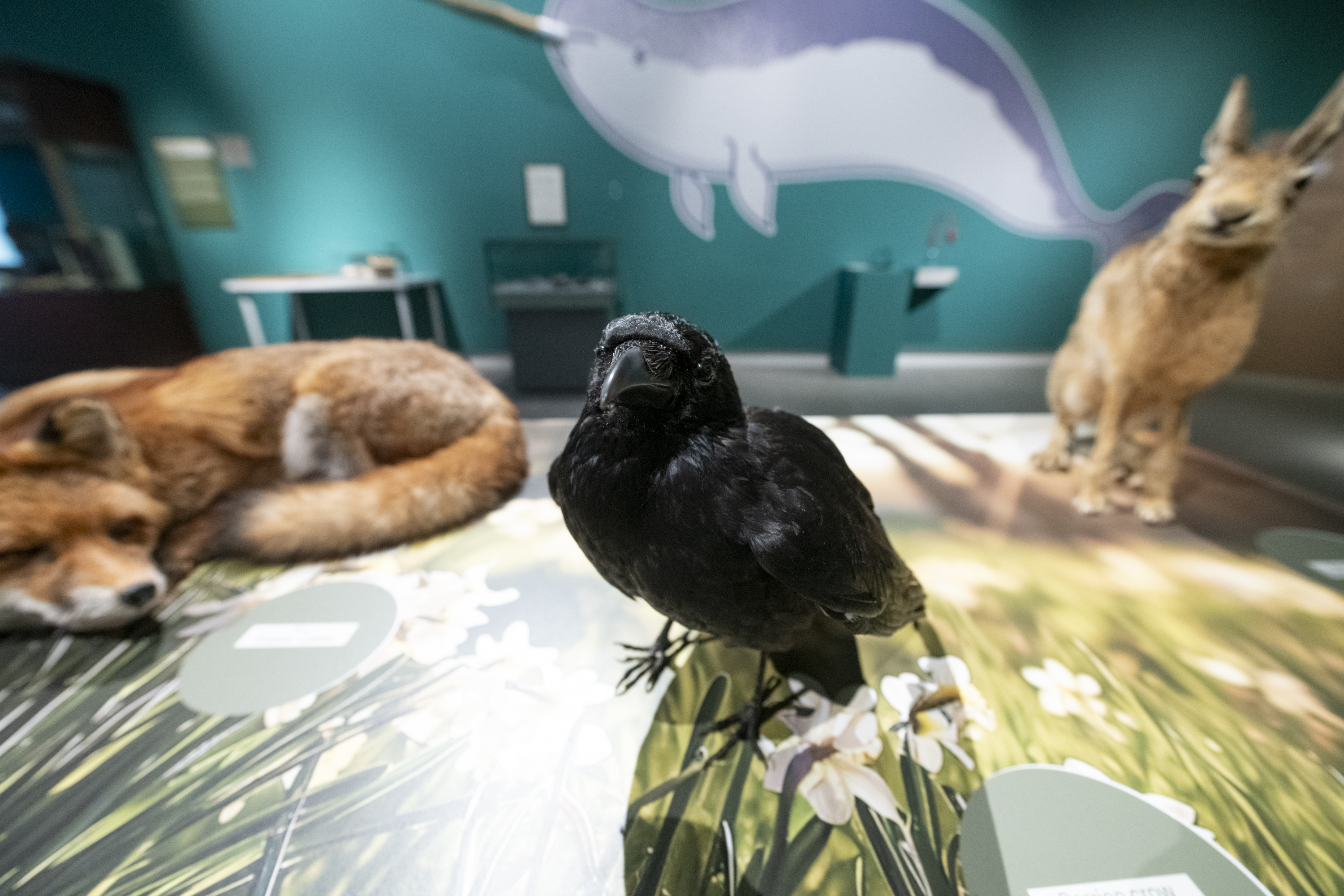
The aim of this space was less about looking like a store, and more a testing ground for themes for a new natural sciences gallery (planned but not yet funded). The themes were collectors, local wildlife and geology and STEM; each area having sub-themes. The taxidermy in particular has been generating a lot of comments, mostly positive.
Also included were two ‘star objects’, a narwhal tusk presented with a full-size narwhal body graphic (affectionately named after the designer, Nigel), and a piece of the Barwell meteorite shown as if falling to earth.
Wellbeing Space
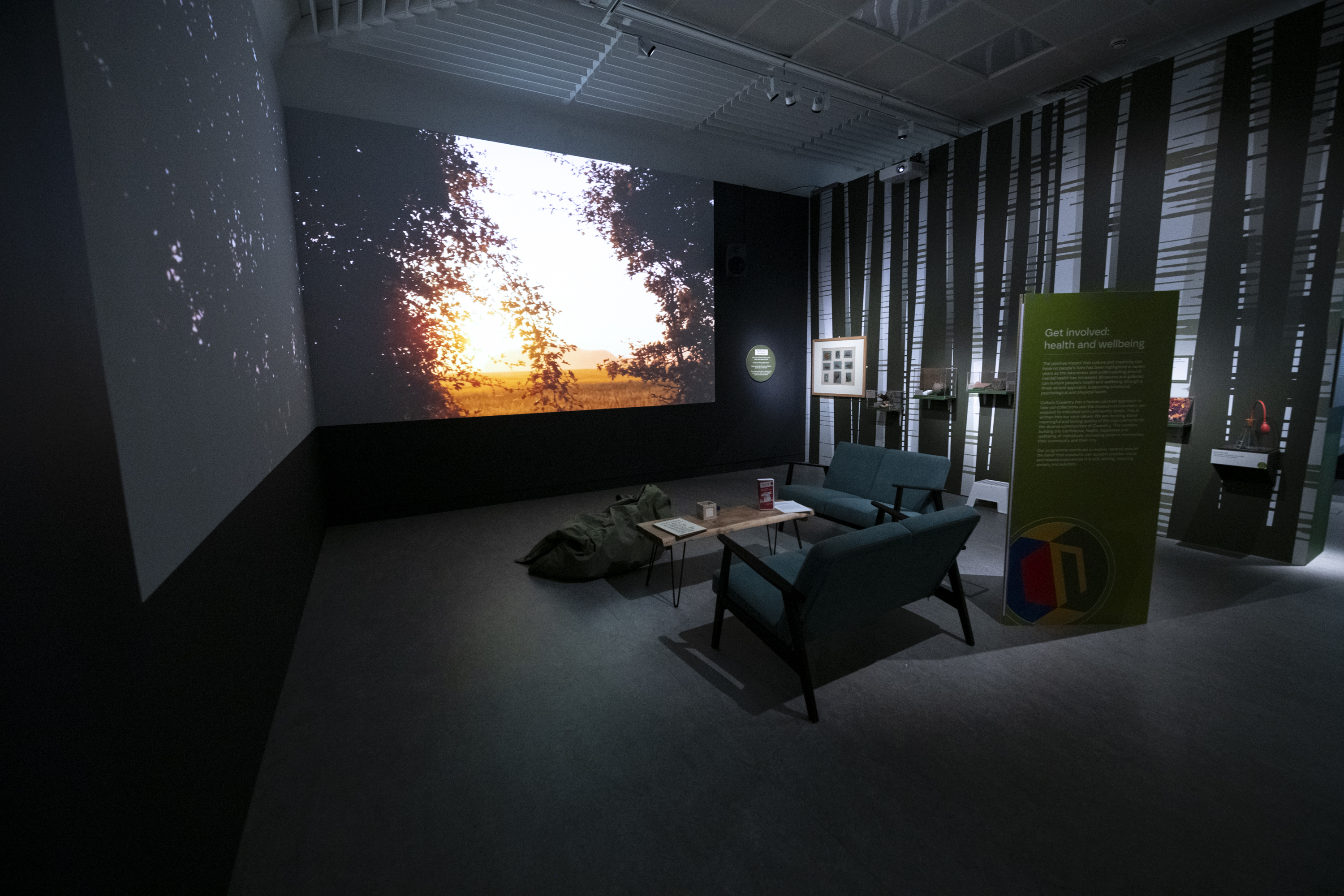
A pre-existing temporary wall in the natural sciences room lent the area to being a wellbeing space and we chose a woodland theme. As well as comfortable seating and a coffee table, a film based on the Warwickshire landscape was commissioned. We included some woodland themed specimens which were set against a silver birch wallpaper.
The space has been very popular with visitors and staff, and it has been promoted through Resting Spaces Coventry. We hope to either create a permanent resting space at the Herbert after the exhibition finishes, or include a space in future temporary exhibitions.
Interactives and feedback
Spaced throughout the exhibition are sound and smell stations. The sounds include a musical response to the meteorite, the recording of an LP on display (announcing VE day) and a football chant. There’s a dressing up area where you can become part of one of the paintings and taxidermy specially commissioned for touch.
Each gallery has at least one way to feedback, either voting with stickers, drawing, writing, sharing stories and sticky notes. Some of these questions have been asked to the curators and used for social media content. A good portion of the feedback has been smiley faces or people’s names, so this data alone is not enough to evaluate the exhibition or achieve our aims of consulting on collecting priorities.
More recently a number of staff members have undergone training in gathering feedback from groups, and we have sessions scheduled to hold open conversations with community members and local organisations.
Learning points (good and bad)
- Focusing on collections held onsite, and not having loans, saved time.
- Having label templates from our designer allowed us to finalise objects at the last possible moment and allows flexibility to change things at short notice without incurring extra charges.
- We saved announcing a newly acquired archaeological find until the exhibition opened, this was partly because announcing finds not on display leads to disappointed visitors. We were lucky that the find went viral – a great start to the show and brought lots of visitors early on.
- The exhibition is minimal in terms of labelling. People have struggled to use the map of artworks to find out more about them, so we have introduced numbers to make it easier to find the object label on pickup sheets.
- To highlight certain objects a story tour was created on Smartify. Feedback from the Technology in Museums section shows that visitors do not want to download another app so we are providing access to the stories through the website and QR codes.
- We intended to create pickup sheets about some objects, but another project has taken priority, so we’ve not made any pickup sheets yet. Never assume there will be time to do that extra work post-exhibition opening!
- There have also been complaints from visitors about not being able to view artwork high on the walls. This was part of the exhibition design and we’ve not been able to have a conversation with those visitors to explain that the solution this would be to include fewer artworks as we don’t have any more space. It would be great to know how they’d feel given that choice.
- We are not sure if the information about what we do as a museum, and how we do it, is being fully absorbed by visitors. Hopefully the feedback conversations will draw out more comments.
- The wellbeing area is the biggest success and local visitors have enjoyed seeing more of their collection in the city. The exhibition overall has enjoyed consistent good numbers, despite being 6 months into a 12 month show. It underscores the importance of locally relevant exhibitions for our audience.
Collecting Coventry is open until 27 April 2025.
Find out more
Herbert podcast on the exhibition: https://www.podbean.com/ew/pb-npqsw-1649088
Stories tour on Smartify: Smartify | Collecting Coventry: Stories Tour
Online exhibition with drone tour and curator Q&A: Collecting Coventry — Culture Space Coventry
Contact Ali: ali.wells@cvlife.co.uk

 NatSCA
Pingback: NatSCA Digital Digest – January 2025 | NatSCA