Advocacy for Collections – SPNHC2014 Day Three

20140705-110102.jpg

Today we have a write-up by Rachel Jennings of the Horniman Museum, London:

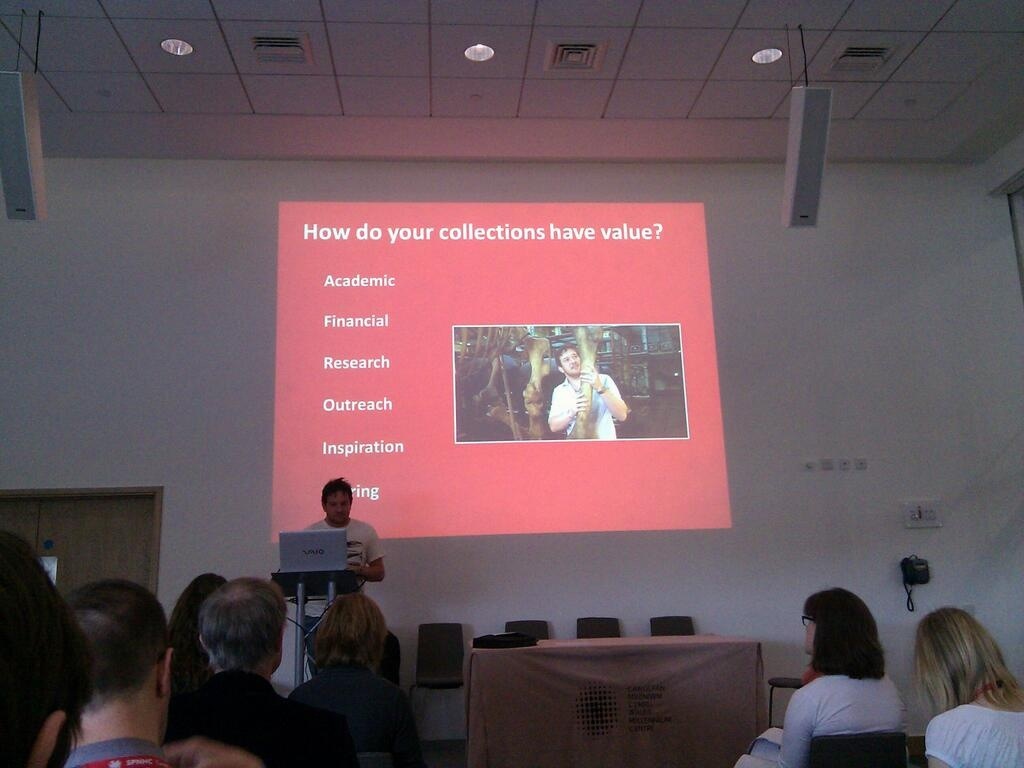
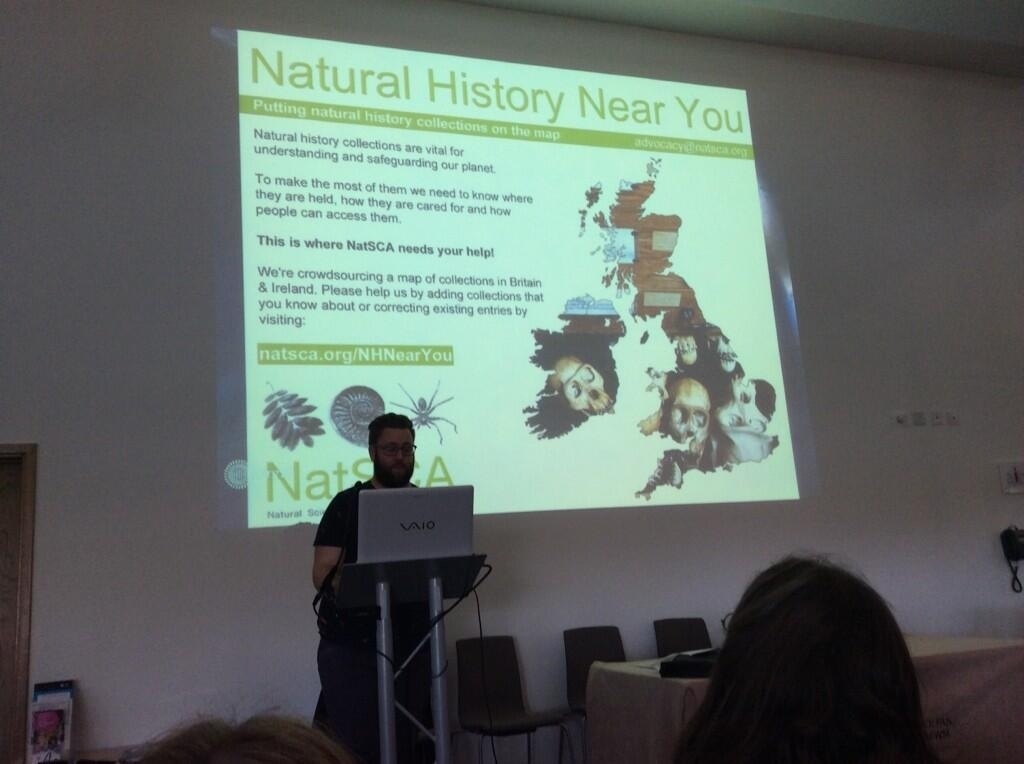
The need to advocate for natural history collections, so that those making decisions about the future of museums can understand their importance, has been a recurring theme over the last few years – and SPNHC 2014 was no exception. The Thursday morning session, chaired by NatSCA, focused on this very topic. Ben Garrod, in his keynote speech, stated that we need to inspire our visitors so that they become our advocates. Luanne Meehitiya of Birmingham Museums argued that advocacy must start with basic concepts, such as ‘What is natural history?’, because, while it is obvious to us, our visitors and colleagues may have a very different idea.

While the afternoon sessions on collections were not overtly advocacy-themed, I still found the thread running through, with many examples of the importance of natural history collections. Bethany Abrahamson of the University of New Mexico (UNM) showed, by looking at publication records, that natural history collections are supporting a much wider range of research now than ever before. J. Tomasz Giermakowski, also of UNM, demonstrated that historic collections data can be used to target hotspots for current conservation efforts. Tiffany Adrain of the University of Iowa showed that historical research can reveal the importance and improve the future research potential of forgotten specimens.

While advocacy is not a new topic, this year I left the conference feeling that there was a new optimism, as colleagues from all over the world came together to share their vision for the future of natural history collections.

20140705-110129.jpg
Photo by Judith C. Price

Collecting biological specimens essential to science and conservation

A letter signed by more than 100 biologists and biodiversity researchers,  published online in Science today (Science 23 May 2014: Vol. 344 no. 6186 pp. 814-815 DOI:10.1126/science.344.6186.814), states why collecting plant and animal specimens is essential for scientific studies and conservation and does not, as some critics of the practice have suggested, play a significant role in species extinctions.

Beetle collection. Image by Paolo Viscardi

The letter is a response to an April 18 Perspectives article in Science arguing that alternative methods of documentation—such as high-resolution photography, audio recordings and nonlethal tissue sampling for DNA analysis—make the field collection of animal and plant specimens unnecessary. As most natural sciences collections professionals are fully aware, this is simply not the case.

“None of the suggested alternatives to collecting specimens can be used to reliably identify or describe animals and plants,” said Cody Thompson, mammal collections manager and assistant research scientist at the U-M Museum of Zoology.

“Moreover, identification often is not the most important reason to collect specimens. Studies that look at the evolution of animal and plant forms through time are impossible without whole specimens. Preserved specimens also provide verifiable data points for monitoring long-term changes in species health and distribution.”

In addition, specimens from museum collections and their associated data are essential for making informed decisions about species management and conservation now and in the future, the authors state.

“Photographs and audio recordings can’t tell you anything about such things as a species’ diet, how and where it breeds, how quickly it grows, or its lifespan—information that’s critical to assessing extinction risk,” said Luiz Rocha of the California Academy of Sciences, who organized the response to the Science article.

And contrary to statements made in the April 18 Science article titled “Avoiding (Re)extinction,” collecting biological specimens does not play a significant role in species extinctions, according to the rebuttal authors.

In the April article, Arizona State University’s Ben Minteer and three co-authors cite several examples of species extinctions and suggest that the events were linked to overzealous museum collectors.

Not so, according to authors of the rebuttal letter, who reviewed the evidence and found that none of the cited extinctions—including the disappearance of flightless great auks in Iceland and Mexican elf owls on Socorro Island, Mexico—can be attributed to scientific collecting.

Millions of great auks were harvested for food, oil and feathers over the millennia, and only about 102 exist in scientific collections. Mexican elf owls were common when specimens were collected between 1896 and 1932, and the most likely reasons for extinction around 1970 were habitat degradation and predation by invasive species.

At the same time, Minteer and his colleagues failed to point out any of the valuable services that museum biological collections have provided over the decades, according to the rebuttal authors.

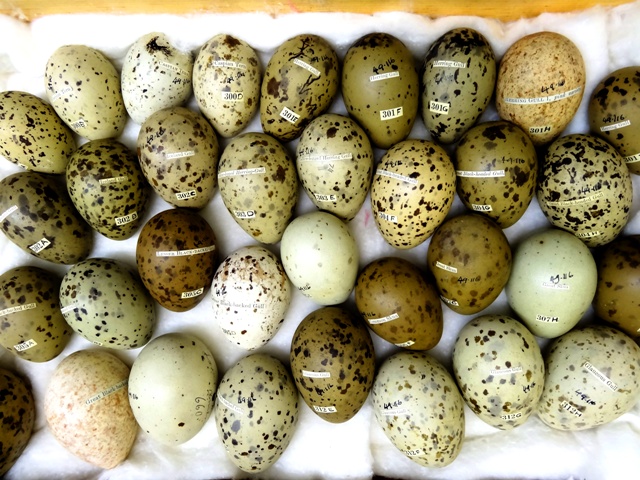
Both historical and new collections played a key role in understanding the spread of the chytrid fungus infection, one of the greatest current global threats to amphibians. The decision to ban DDT and other environmental pollutants was based on the discovery of thinning bird eggshells collected over an extended period. And the declining body size of animals, one of the negative effects of climate change, was discovered using body-size data from museum specimens.
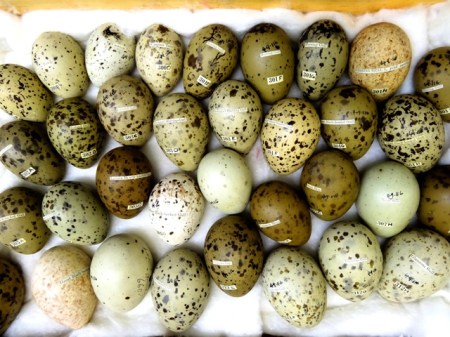
Egg collections like this helped identify the harm done by DDT. Image by Paolo Viscardi

In other cases, genetic data from decades-old scientific specimens has even been used to “de-extinct” species. One of these, the Vegas Valley leopard frog, was thought to have gone extinct in the wake of Las Vegas development. However, a study published in 2011 compared the genetics of specimens from the extinct population to individuals from surviving populations of similar-looking frogs elsewhere in the Southwest and found them to be the same species.

These types of discoveries are “the hallmark of biological collections: They are often used in ways that the original collector never imagined.” And with the continuing emergence of new technologies, this potential only grows.

That potential, combined with the increasing number of threats species face and the need to understand them, suggests that the need to collect specimens—and to share the information they hold—has never been greater.

In their April article, Minteer and his colleagues erroneously portray scientific collecting in a negative light that distracts from the primary causes of modern extinctions: habitat degradation and loss, unsustainable harvesting and invasive species.

“Halting collection of animal and plant specimens by scientists would be detrimental not only to our understanding of Earth’s diverse biota and its biological processes, but also for conservation and management efforts,” said Diarmaid O’Foighil, director of the U-M Museum of Zoology and a co-author of the rebuttal letter.

“That detriment in understanding would only increase with time because having museum specimens available for future generations of scientists will allow their study using research methodologies that have yet to be invented.”

A pre-publication pdf version of the letter can be read here.


Do you want to train to be Natural Science Curator?

Heritage Lottery Fund ‘Skills for the Future’

Natural History & Social History Training Opportunities

Support from the Heritage Lottery Fund ‘Skills for the Future’ programme and Natural Sciences Collections Association (NatSCA) has created opportunities for four individuals to train in curatorial skills with a partnership of regional museums and heritage sites.

We are looking for people who are passionate and enthusiastic about Natural History/Sciences or Social History. These traineeships are available to anyone who might not have qualifications in the subject area, or are not from museum background, or are wanting a career change.

  • ·         One Natural History traineeship based at The Manchester Museum The University of Manchester
  • ·         One Natural History traineeship based at Leeds Museum Discovery Centre
  • ·         One Natural Science  traineeship based at Thinktank Science Museum, Birmingham Museum Trust
  • ·         One Social History traineeship based at The Herbert Art Gallery & Museum, Coventry

Full information and application forms can be found within the job packs

Please follow link   www.bmag.org.uk/about/vacancies

Closing date is: 20 March 2013 at 10.00 AM   Proposed dates for interviews: W/C 14 April 2014
If you have any enquiries about these traineeship opportunities, please contact Paulette Francis-Green Project Manager by email projmangctrainee@aol.co.uk

Bill Pettit Memorial Project – Conservation of historic Taxidermy

Ann Ainsworth (Colchester and Ipswich Museums)

Hannah Clarke (Freelance Conservator)

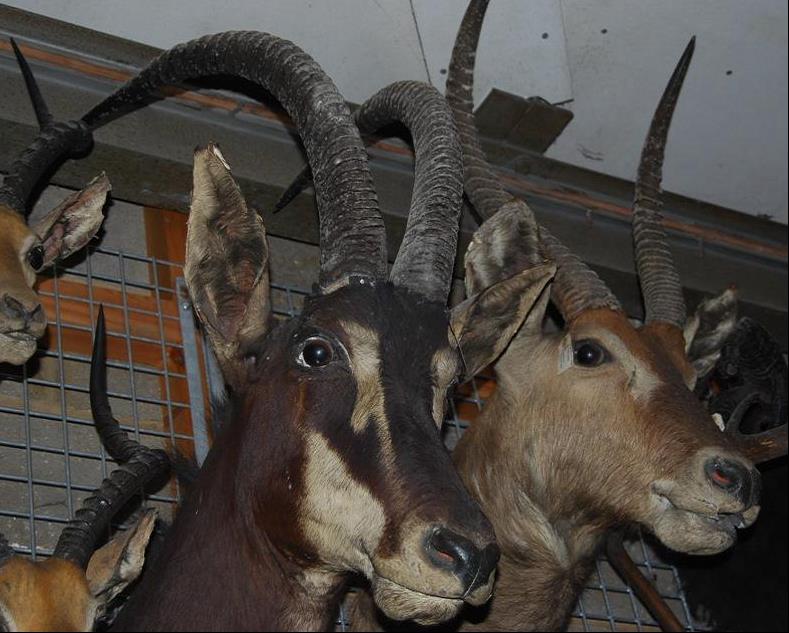
Ipswich Museum has an important historic collection which dates back to its opening in 1847. A recognised strength of the natural history collection is the historically important Victorian and Edwardian taxidermy of animals from across the globe.

The taxidermy collection is stored in an old building which used to be an old coach depot and later a garage. The space had become very dusty and dirty and a significant mould problem had developed.

one

We followed a very simple methodology of light dusting with soft brushes using a vacuum containing a HEPA filter. This was followed by swabbing with an alcohol/water solution to remove the mould and kill the spores. Where possible specimens were covered or wrapped in polythene to act as a protective cover to protect from dust, provide an external surface for mould to grow on, and to prevent pest damage which is also a potential problem within the stores.

two

The variety of conservation problems, meant that many different treatment processes needed to be used by Hannah. Some of the processes included dry cleaning, wet cleaning, re-adhering, colour matching, re-inserting feathers, removing old varnish with solvents, mitring, sealing with brown gum tape, and applying and buffing wax. New panels of glass and sections of beading had to be sourced and cut to size.

The top panel of the pike case had warped and bowed, as the glass side panels had been broken previously. There were no structural supports on the front inside edges of the case either, meaning that the top of the case was unsupported from the front. The existing beadings on the rear inside edges were not secure, and the metal tacks used to hold the mitred sections of wood in place were very loose. New beading was sourced to match as close to the original as possible and was then colour matched and held in place using new tacks.

Cygnet before conservation

Cygnet before conservation

Cygnet after conservation

Cygnet after conservation

The Bill Pettit Memorial funding went towards payment for the freelance Conservator in terms of time and travel expenses and the purchase of replacement glass and beading for the cases where broken or damaged.

It was agreed that conserved cases would not be returned to store until the planned repair work had been successfully completed. As many of the conserved cases as possible were put on public display in the museum galleries. This has enabled part of the collection not normally seen by visitors to be on display. It has also helped to present a strong message of the Museum Services’ wish to improve the condition of specimens and its storage facilities and helped to raise the profile of the project.

Spicer platypus case after conservation

Spicer platypus case after conservation


Caring for Entomology Collections

The following post is from Emma-Louise Nicholls of the Grant Museum of Zoology who attended our recent Caring for Entomology Collections Workshop

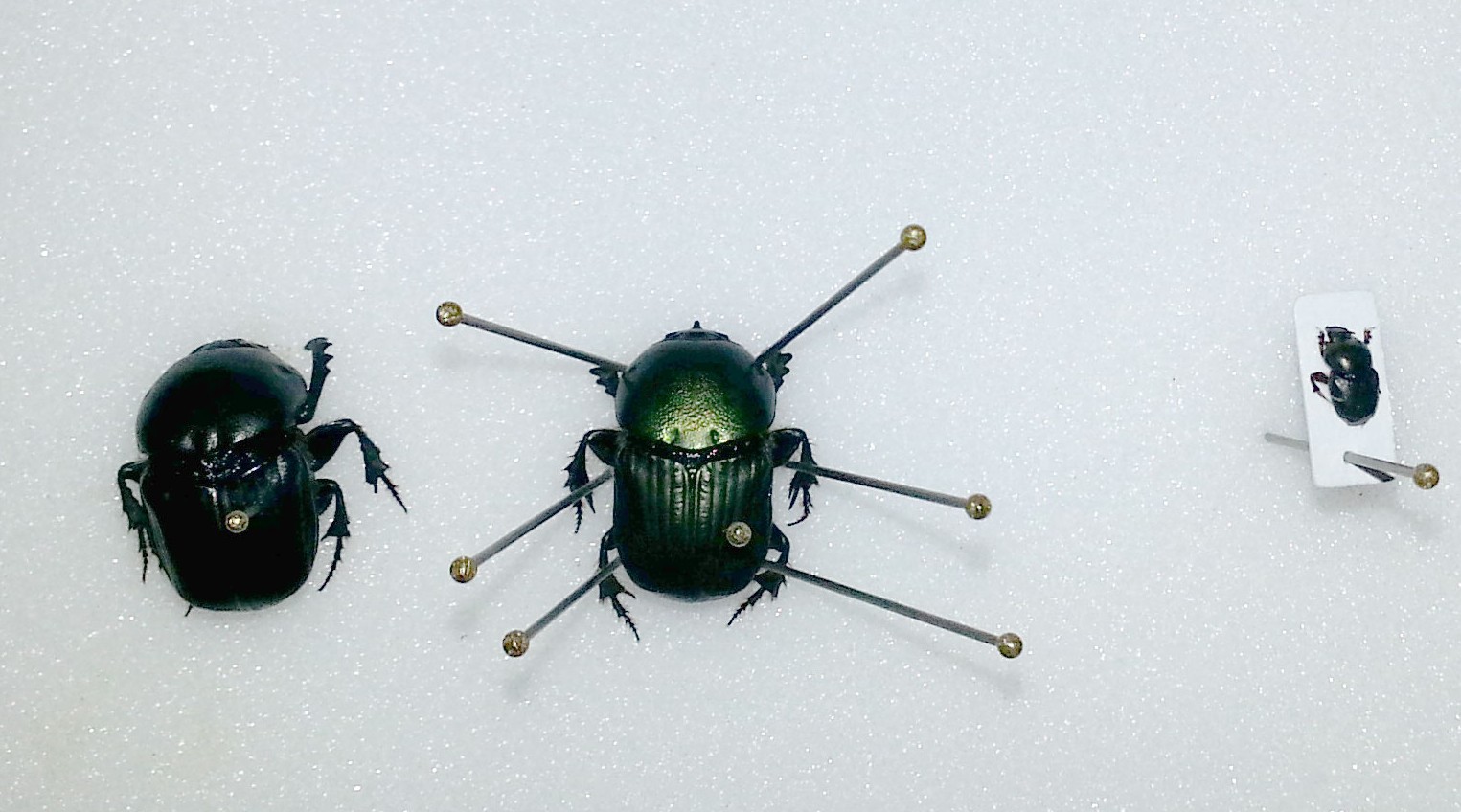
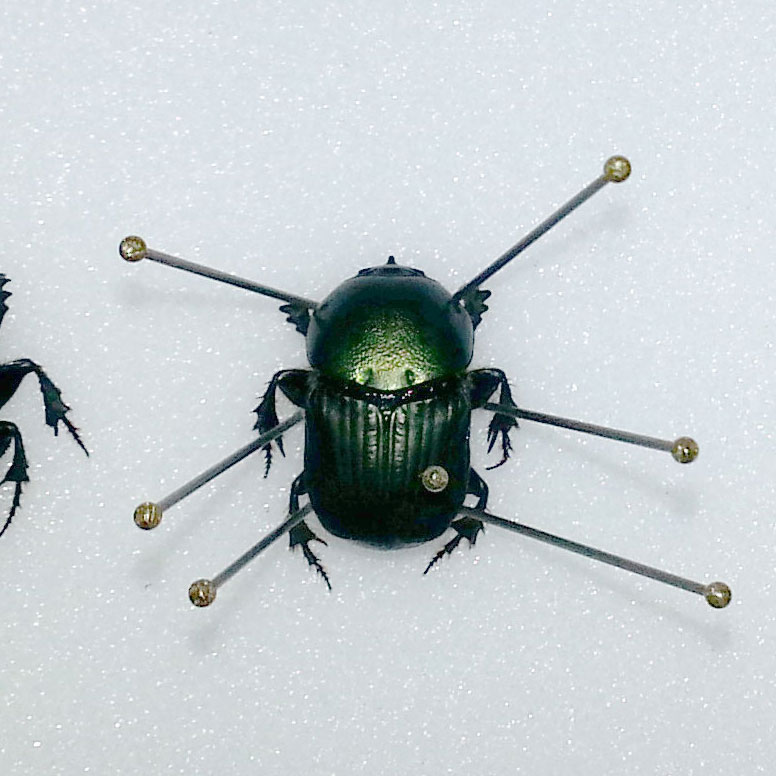
The scarab beetle shows how pins are used to manipulate the legs whilst the specimen is drying, after which it will maintain its shape.

At the NatSCA course Caring for Entomology Collections held at the NHM in London, I not only got to salivate over the swanky slide cabinets that the Natural History Museum now houses, but I also got to pin a scarab beetle from scratch, peer into a liquid nitrogen freezer at minus 196 degrees, see a grasshopper eating a mouse, eat amazing food (not from the nitrogen freezer), and was even rewarded for my endless questions* with a free gift in the form of a rubber gasket. All in all it was a stupendous day and a course definitely worth attending.

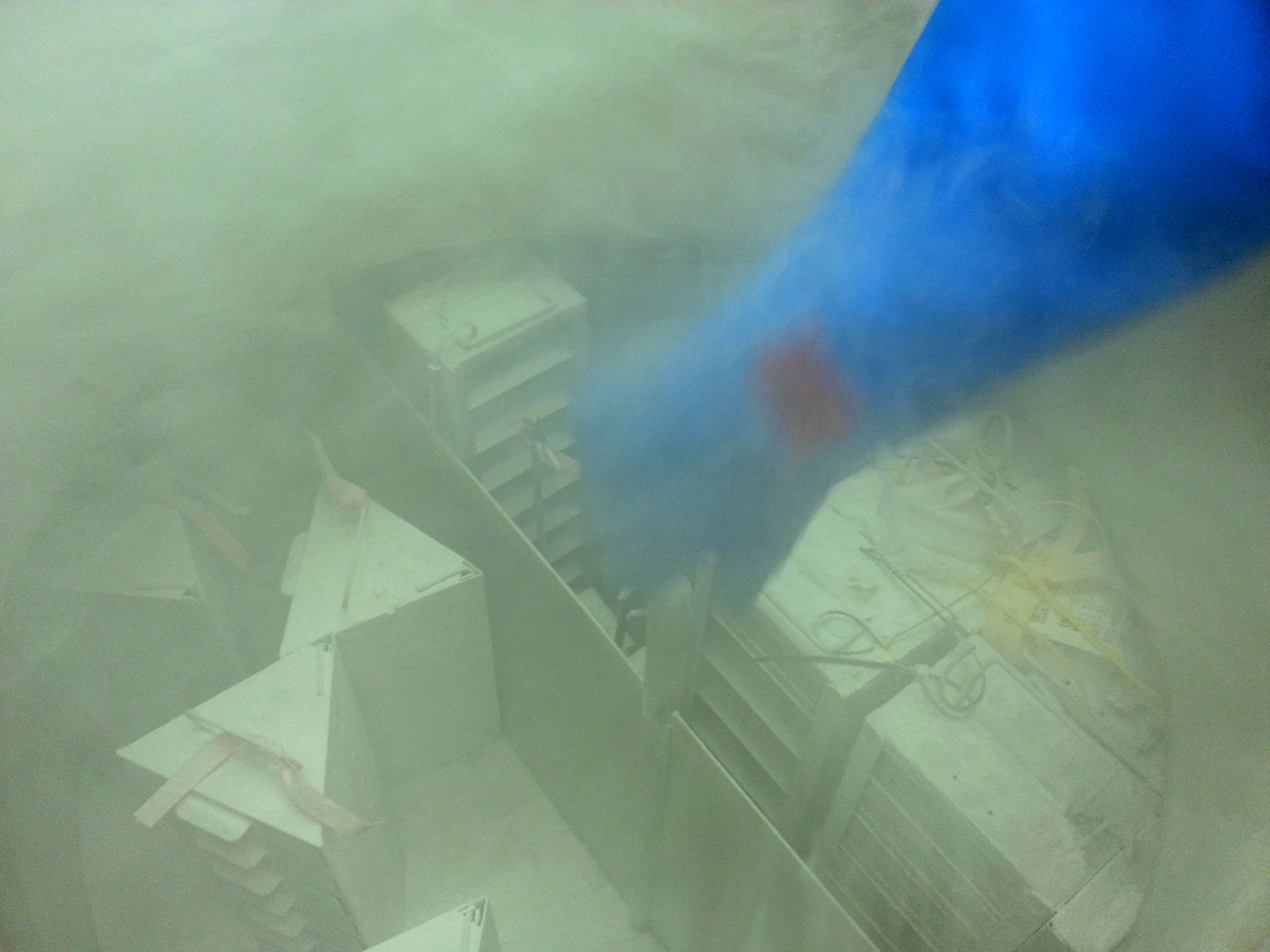
This liquid nitrogen freezer is used to store organic material that would degrade at higher temperatures.

This liquid nitrogen freezer is used to store organic material that would degrade at higher temperatures.

The day was split into eight sections that covered how to prepare your specimens, care for and store your collections, and lots of inspiration for what you can subsequently do with your specimens to make them available to a wider audience. We also talked about how to deal with insects that are not so much the specimen type, but more of the wild roaming, likely to eat your specimens variety. Although there is much to say, here are some highlights.

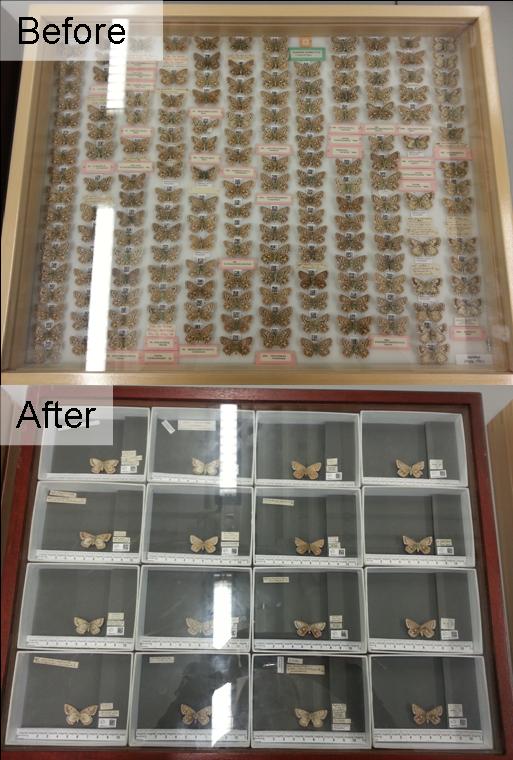
The Digitisation Project is working to re-house entomology collections and give each specimen an individual QR code for fast and efficient data extraction.

The Digitisation Project is working to re-house entomology collections and give each specimen an individual QR code for fast and efficient data extraction.

We were shown an impressive digitisation project that involved taking a drawer of entomological specimens in need of some TLC, applying both remedial and preventative conservation techniques and then photographing each specimen with a unique QR code. The idea is that in the future, the code can be scanned and will link to metadata on the Museum’s database. Knowing how troublesome paperwork for loans can be, this has exciting implications in terms of simplifying the process and decreasing both the time required and the potential for human error in filling out forms and in transcribing the specimens’ labels.

Integrated Pest Management (IPM) is an essential part of any museum staff members’ knowledge base. Even if a full blown IPM plan is not logistically feasible in your building (as it isn’t in the museum where I work), a knowledge of how and why it works is integral to writing a pest monitoring programme that suits your collection. Housekeeping is, of course, the most important part of keeping museum pests at bay, but even in the best kept collection, pests can and do still occur, and knowing how to monitor and effectively eradicate any outbreaks is integral to preventative conservation of your specimens. It was both interesting and very useful to compare and contrast the problems and protocols that are used by the Natural History Museum with those from my own museum and I came away some useful tips.

The scarab beetle in the centre of this image shows how pins are used to manipulate the legs whilst the specimen is drying, after which it will maintain its shape.

The scarab beetle in the centre of this image shows how pins are used to manipulate the legs whilst the specimen is drying, after which it will maintain its shape.

The element of the course I most enjoyed was the opportunity to both pin an insect specimen, and ask endless questions of the suitably enthusiastic entomologists demonstrating the techniques. There are many more methods used in pinning insects and other invertebrates than I had ever imagined, and being able to have a go myself solidified the information as well as making for an exciting day. I can proudly tell you that the scarab I pinned lost no legs and the metal pin was at a (near) perfect 90 degree angle to the base. It’s all in the teaching no doubt.

Despite both the obvious and more subtle differences between the Natural History Museum and other natural history collections and museums, I felt the information given at the course was delivered in a way as to be directly relevant to all collections represented. Having spoken to the other delegates present, it was unanimously agreed to be a thoroughly useful and interesting day.

– Emma-Louise Nicholls is the Curatorial Assistant at the Grant Museum of Zoology

* May have been an attempt to silence me