Caring For Entomology Collections

Seminar series to explore basic entomology collections management, curation and conservation techniques.

NHM (Natural History Museum), South Kensington, London 9.30am – 4.30pm Friday 1st November 2013

Cost £34 for members or £49 for non-members (remember that becoming a member is just £15 a year!).

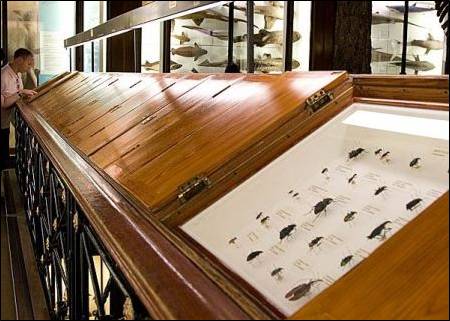
This course will cover all basic aspects of collections management for entomological collections, including storage and handling of specimens, loans and legislation, and specimen preparation.

There will be specialist sessions including Integrated Pest Management, storage facilities, spirit curation, specimen pinning, molecular collections, basic slide preparation, documentation and databasing. Tours of the collection areas will also occur.

The course will be both theory and practical supported by a booklet covering both aspects.

Schedule (TBC):

9:30 -10:00 Introduction and Coffee

10:00 -10:30 Entomological Storage

10:30 -11:00 IPM

11:00 – 11:30 Morning Coffee

11:30 – 12:00 Digitisation

12:00 – 12:30 Data-basing

12:30 – 2:00 Lunch

2:00 – 2:30 Specimen pinning

2:30 – 3:00 Slide preparation

3:00 – 3:30 Afternoon Coffee

3:30 – 4:00 molecular collections

4:00 – 4:30 Spirit collections

Download booking form

Contacts:

For further information: Erica McAlister – e.mcalister@nhm.ac.uk

For booking & payment: Holly Morgenroth – holly.morgenroth@exeter.gov.uk

To become a member: Maggie Reilly – maggie.reilly@glasgow.ac.uk

The Role of Museums and Collections in Biological Recording

SOURCE: The Role of Museums and Collections in Biological Recording

The Plenary meeting of the Linnean Society’s Taxonomy and Systematics Committee

Wednesday 18th September 2013 11.30-5pm, followed by a wine reception

Museum_Taxonomy and Systematics Gen contNatural science collections have a lasting and irreplaceable value and are highly relevant when defining national biodiversity and conservation goals today. By housing type specimens, vouchers and reference material they are a resource that enables recorders to produce more accurate and reliable data. However, funding for museums is at a critical point, with cuts, closures and the loss of curatorial expertise jeopardizing appropriate care for collections and access for researchers. Without overt use there is a very real possibility that collections will be lost, to the detriment of all. This open plenary meeting will draw on the experience of The Tullie House Museum in Carlisle and the Angela Marmont Centre for UK Biodiversity at the NHM as well as the NBN and NFBR to debate how museums can more effectively engage with recorders and taxonomists for the benefit of all.

Click here to view the programme

Registration for this event is essential, please click here to register now. Please note that lunch is included in the registration fee.

Margaret Gatty’s algal herbarium in St Andrews

In February 2013, NatSCA kindly granted me the Bill Pettit Memorial Award in order to assess and describe the algal herbarium of Margaret Gatty in the St Andrews University Herbarium.

Detail of: Chorda filum (Linnaeus) Stackhouse. Collected in Filey (Yorkshire. UK), August 1871. MG0079 in the Margaret Gatty herbarium, STA.

Detail of: Chorda filum (Linnaeus) Stackhouse. Collected in Filey (Yorkshire.
UK), August 1871. MG0079 in the Margaret Gatty herbarium, STA.

Margaret Gatty (1809-1873) started collecting seaweeds in 1848 when she spent some months convalescing at Hastings. She built up a large herbarium of her own collections, supplemented by local and foreign specimens sent to her by phycologists such as William Henry Harvey, Catherine Cutler and Jacob Georg Agardh. Margaret Gatty and her daughter Horatia carefully organized the herbarium in albums, following Harvey’s taxonomical insights. In 1863, Margaret Gatty published a two-volume book on British seaweeds.

The bulk of Margaret Gatty’s herbarium was donated to the Gatty Marine Laboratory in St Andrews in April 1907, by her daughter Horatia Eden. The collection was initially kept at the Gatty Marine Laboratory, which was named after its benefactor Charles Henry Gatty (1836-1903), a distant cousin of Margaret Gatty’s husband, the reverend Alfred Gatty. The collection was later incorporated in the St Andrews University Herbarium (STA) and moved to the Department of Botany. The STA collections are currently housed at the St Andrews Botanic Garden.

Detail of: Bellotia eriophorum Harvey. Collected by F. von Mueller, Phillip Island (Australia). MG0053 in the Margaret Gatty herbarium, STA.

Detail of: Bellotia eriophorum Harvey. Collected by F. von Mueller, Phillip
Island (Australia). MG0053 in the Margaret Gatty herbarium, STA.

Margaret Gatty’s herbarium was curated by Dr Helen Blackler (1902-1981), who started working in St Andrews in 1947. Dr Blackler published several short notes regarding the collection, but a comprehensive description of the whole collection was never made. My assessment of the collection started by locating and counting specimens and plates in the Margaret Gatty herbarium, which were retrieved from many different shelves and cabinets in the St Andrews Herbarium.

More than 8,825 specimens and 500 plates belonging to the Margaret Gatty herbarium have now been found in STA. Some 4,250 specimens in the collection are still mounted in the original albums, approximately 2,975 specimens were kept in folders or in unsorted stacks or packages. Around 1,600 specimens were taken out of the original albums and were mounted by Dr Blackler on herbarium sheets.

The collection shows a great deal of variation: some specimens are very nicely preserved, other specimens are in poor condition. Some specimens specify the collector, taxon name, collection date and location, whereas other specimens have no associated data at all. In her notes, Dr Blackler suggested that at least 500 specimens in the collection should be designated as type material. Although the full taxonomic scope of the collection has not yet been assessed, it is apparent that the collection contains several type specimens.

Following the retrieval and assessment of specimens, the STA collections were reorganised to allow the specimens in the Margaret Gatty herbarium to be stored together. Further curation is ongoing and includes numbering and databasing of selected specimens.

Detailed results of my findings will be described in a forthcoming paper in NatSCA News. I would like to thank NatSCA for providing this fantastic opportunity to promote and safeguard a very interesting and important historical collection.

Dr Heleen Plaisier, St Andrews University (Visiting Scholar, School of Biology)

Looking to the future

As some of you may be aware, NatSCA is the Subject Specialist Network (SSN) for natural science collections.

That means we are recognised by organisations like Arts Council England (ACE) as supporting the understanding, development and care of collections across the UK and beyond.

At the moment NatSCA are undertaking several projects to consolidate our role and to improve advocacy for natural science collections. We want to establish better communications between ourselves and other SSNs in order to share expertise and improve collaborative frameworks within the museum sector. We are also addressing public perceptions of the natural sciences and developing plans for improving that perception.

By laying this groundwork, NatSCA hopes to safeguard natural science collections for the future, by demonstrating their relevance now.

ACE have been very supportive of our aims and we have received funding to appoint a consultant to help us achieve them. Please see below for a description of the post and details on how to apply.

If you would like to support our efforts yourself then why not contact the fantastic Maggie about becoming a member?

NatSCA Project Coordinator Post Advert

Dead Interesting

palaeosam's avatarPalaeosam's Blog

What would you do if you had a year to identify and evaluate the contents of your natural history collection? A quarter of a million specimens spread over two sites, that’s an average 2 minutes and 6 seconds per specimen. If you must insist on eating, sleeping, travelling from one site to the other… that time per item rapidly dwindles.

These are the issues facing the Horniman Museum’s Russell Dornan and the Bioblitz team. Despite his daunting schedule Russell still found time to come and talk to us for three hours. That gives the PubSci audience a collective value of 85.7 museum specimens. I’m very flattered by that!

The issues that face the Bioblitz process are numerous: in the liquid stores you have a giant fan running in the background that prevents you thinking when it’s on and stops you breathing when it’s off; Elsewhere, the drawers and storage units…

View original post 426 more words