Uses of Natural History Collections – NatSCA2014 Meeting

20140714-084406.jpg

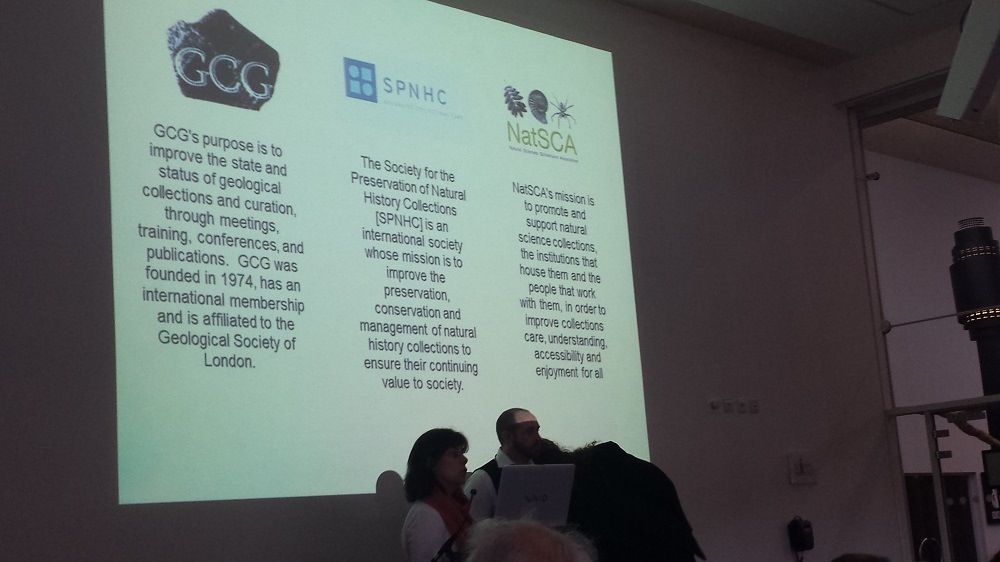
Day three of SPNHC2014 kicked off with the NatSCA conference! Clare Brown introduced the session with a brief account of the importance of NatSCA. Many non-specialist museums do not have access to staff with an understanding of science, and so NatSCA can provide support to these institutions as well as demonstrate the importance of advocating collections and the many different uses that can be made of them.

The NatSCA conference continued with a series of (strictly!) five minute presentations.

Henry McGhie, of the Manchester Museum, discussed how natural history collections are under-appreciated and underused, and how an informal partnership of museums in the North West has formed in order to aid advocacy.

Rob Huxley, Natural History Museum, London, showed that museums could be used much more by a range people, such as molecular biochemists, vets, geneticists or medical practitioners. We need to think of strategies for reaching out to many more people that could make use of the collections.

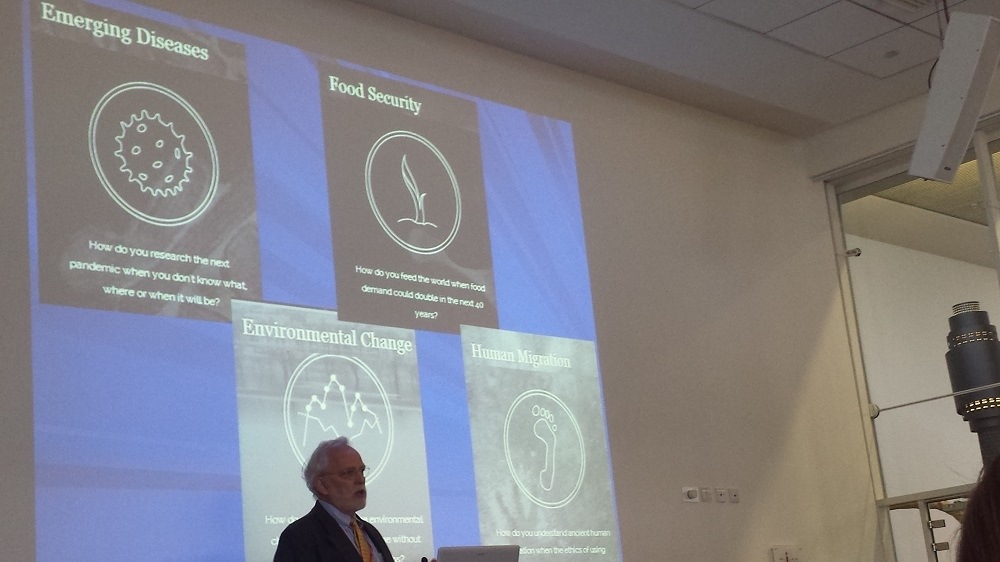
David Schnidel from the NMNH Smithsonian Institution suggested we focus on what others might want from the collections, and the new uses that could be discovered for data. Scientific collections could hold answers for research in a range of fields such as the food shortage crisis, disease research and climate change. In addition to scientific research, collections could be used for inspiration for artists, fashion designers, or even architects. With millions of objects across the UK, the opportunities for expanding the usage of our collections could be endless!

Glenn Roadley, Natural Science Curatorial Trainee

20140714-084334.jpg

Data-less Natural Science Specimens are Useless to Science. Aren’t they?

Here we have Clare Brown, of the Leeds Museum, telling us about some devilishly exciting research:

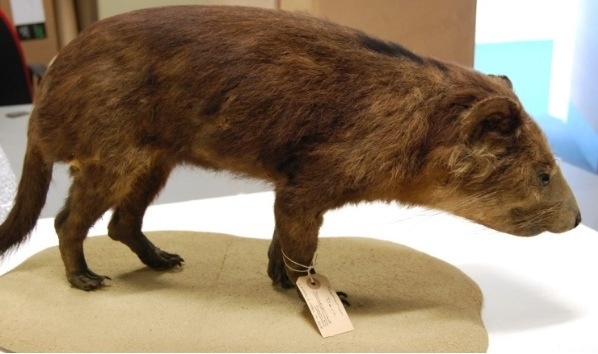
Tasmanian Devil specimens in UK museums, with no data whatsoever, have been used in cutting edge research on devil facial tumour disease as part of the effort to save these incredible animals.
Data – when and where a specimen was collected – is vital to the usefulness of natural science collections. It is crucial for so many aspects of research that these collections are commonly used for: climate change work; biodiversity research; distribution mapping etc.
Specimens without data are usually much more problematic. At Leeds we have thousands of objects that don’t have any record of where they came from or when they were collected. The information has either been lost or never noted down in the first place. Even our scrappiest, most moth-eaten bits of taxidermy are elevated above the rest of the collection if they have associated data.
I was therefore delighted when Jeremy Austin at the University of Adelaide asked whether we had any Tasmanian Devil Sarcophilus harrisii material collected in the last 200 years. Crucially, he didn’t need an exact date or location – just a two century timespan. We’d been collecting since 1821.
Leeds, a large, rich, Victorian industrial city, spent most of the 19th century collecting scientific material from around the world. We had a ‘purveyor of Australian wildlife’ and acquired, amongst other things, two Devil mounts and a skeleton. The specimens were duly sampled and sent to Australia.

20140707-083844.jpg

The study, also using specimens from Oxford, looked at genetic diversity in a group of molecules in cell membrane proteins called the ‘major histocompatibility complex’. Low diversity in this complex has been linked to the emergence and spread of devil facial tumour disease. The team needed samples of historical and ancient Devil DNA to see how diverse the populations were before European settlement and after. The article, published in Biology Letters, can be read here.

This is a great example of how natural science specimens, whatever their ‘data status’, can contribute to scientific research at the forefront of species conservation.

NatSCA Digital Digest

Welcome to the weekly digest of posts from around the web with relevance to natural science collections. We hope you find this useful and if you have any articles that you feel would be of interest, please contact us at blog@natsca.org

1. Blog: The Importance of Natural Sciences

Jack Ashby, Manager of the Grant Museum

Synopsis

Comparing attitudes across the Atlantic

The importance of natural sciences

2. Training: Interpretation Planning

Friday 18th July, Museum of London

Synopsis

‘Nick Poole from Collections Trust will be delivering an add on session from 1-1.30pm on digitisation and the potential of using your collections on line through various platforms’.

Interpretation Planning

3. Museum and Heritage Awards

Advisor- the team behind the M and H show and awards

Synopsis

A review of this year’s award winning projects

Museum and Heritage Awards

Compiled by Emma-Louise Nicholls, NatSCA Blog Editor

Autism and Museums

Today we have Claire Madge, museum volunteer and mum of three, who kindly agreed to let me interview her about autism and museums.

Claire Madge's blog - Tincture of Museum

Claire Madge’s blog – Tincture of Museum

Q. How aware were you of autism before your daughter was diagnosed?

A. I wasn’t really aware of autism before my daughter was diagnosed in 2012, certainly not the way it affects individuals and the impact it has on the whole family.

It took a year from first asking for help to receiving a diagnosis. For many years I just thought my daughter was ‘difficult’ and I was a ‘bad mother’ for struggling to cope. She is my eldest, so I had nothing to compare her to, I certainly wasn’t aware of the signs. I remember buying many books like ‘How to raise a happy toddler’, desperately trying to find out what I was doing wrong.

Q. She has Aspergers is that right? How does this differ from other forms of autism?

A. She officially has a diagnosis of Autistic Spectrum Disorder or ASD, sometimes this is also referred to as Autistic Spectrum Condition or ASC. It is a lifelong developmental disability that affects how she communicates and relates to other people, it also impacts on how she makes sense of the world. Because it is a spectrum condition it affects individuals in very different ways. They can be non-verbal with profound learning disabilities needing full time care, whilst some can lead relatively independent lives.

Aspergers is a form of autism, individuals can have average or above average intelligence with no delay in language development but may struggle with social communication, interaction and social imagination.

Q. What sort of challenges does a parent of an autistic child face when taking them out for the day?

A. Autistic children take comfort from routine and familiar surroundings. Going anywhere new, or changing that routine can be challenging and cause anxiety. If we are going out to a museum we haven’t visited before, if we are going on holiday or anything different we have to prepare my daughter by talking about what we will be doing and, where possible, showing her pictures of where we are going and what we will see when we get there.

Autistic children often have sensory sensitivities including sounds, sights and smells, this can also make getting out and about very difficult and stressful.

It can be hard to anticipate problems, which can make planning a successful day out really hard. We took a trip to a museum that had a faint tweeting bird song sound track, my daughter started screaming that it was hurting her ears, and she had a panic attack. We hadn’t really experienced anything like that with her before and it was very frightening.

Sometimes if she is anxious it seems to heighten these sensory sensitivities, which can makes life very unpredictable.

Q. You have said in the past that most museums often don’t cater for the needs of autistic visitors. Is that specifically children or do you feel that they are not catering for adults with autism either?

A. Museums in general don’t really cater for adults with autism. There may be the occasional specialist event or programme, but not a consistent approach, even within museums that run these events. Autism is a lifelong condition, children will not grow out of autism, they become adults with autism who need support, help and opportunities to live their lives to the full. According to a recent study, over 600,000 people are in the UK are living with autism, more than 1% of the population and they are not being catered for in museums1.

Q. What could museums be doing better for these visitors?

A. Basic, simple steps can make a massive difference for autistic visitors, so awareness and understanding of how autism affects the visitors to your museum is a great first step. It is not about radically changing your gallery spaces and the programmes that you run. It is about preparing autistic visitors with visual stories on your website, warning visitors if exhibitions have bright lights or loud noises. Providing quiet spaces with minimal sensory stimulation.

It is not just about autistic visitors, but volunteers too. Only 15% of people with autism are in full time employment, despite the fact that 79% of people with autism who are on out of work benefits want to work2. Welcoming autistic volunteers is one way museums can help, providing fantastic opportunities for individuals to get work experience in a supportive environment.

People with autism often have obsessions. Common examples include: computers; trains; cars; historical events; dates; and science. Obsessions often provide order, structure and predictability, they can be a route to relaxation and a conversation starter that aids social interaction. Ultimately I would like to see museums thinking creatively about using their collections to actively engage with autistic visitors who will often know more about collections than the curators!

Q. Which museums, if any, are getting it right?

A. There were a number of museums mentioned recently in the Museums Association Journal article3 who are running great programmes to engage autistic visitors and volunteers, including the Mary Rose Museum, the Museum of London and the Museum of Oxford.

From my own experience the Science Museum run a fantastic ‘Early Birds’ programme, where they open up the museum at 8.30am, exclusively for autistic children and their families. Many families are visiting the Science Museum for the first time because of the Early Birds events, they are reaching families who are isolated and feel they can’t visit museums during normal opening hours. We went together as a family and it was the first time we had all been to the Science Museum, it was a wonderful, memorable morning that my children won’t forget.

I have spent time talking to staff who run and work the Early Birds events and what impresses me is that they want autistic visitors to feel welcome and relaxed in the museum environment. It is not an event that ends and families have to leave, they are encouraged to stay, as the museum opens to the public, if they want to. It is a truly inclusive approach that I really admire.

I can’t explain how important it is to be able to go out as a family and visit a museum. It seems like a simple thing, but to have a day out together, in a supportive environment, is important not just for my 10 year old autistic daughter but for my 6 year old and my 3 year old too who so often miss out on the kind of experiences that other families take for granted.

Science Museum by Christine Matthews, 2008

Science Museum by Christine Matthews, 2008

Q. What do you think is the biggest obstacle to making improvements in this area?

A. The mistaken belief that it will cost a lot of money to welcome autism into your museum. The Science Museum do receive funding to run their Early Birds programme but not all museums are as busy as the Science Museum. Sometimes it can be as simple as putting up on the museum website when the quiet times are or which are the quieter galleries.

Putting a visual story on your website is not an expensive exercise but can really benefit autistic visitors. Some good examples are listed below4.

Ultimately there seems to be a fear of the unknown – autism is a wide spectrum and it can be hard to tailor events to cater for everyone. The reality is that you can’t cater for everyone with one event. You can only consult with local autism groups, listen to what they need, see what you can do. If you do run events, evaluation is absolutely crucial and the best way to see what works and what doesn’t.

If you just share with your staff information about what autism is and how it affects individuals, the problems they can face when visiting your museum, then that is a massive step forward. Awareness really helps, a bit of understanding goes a long way and costs absolutely nothing.


I’d like to thank Claire for taking the time to talk to us about this subject. I highly recommend her blog for more on this and her museum volunteering adventures. I’d also really like to hear from you all: does your museum have any interesting autism-related projects that we should know about?

References

  1. http://www.lse.ac.uk/newsAndMedia/news/archives/2014/06/Autism.aspx
  2. http://www.autism.org.uk/Working-with/Employment-services.aspx
  3. http://www.museumsassociation.org/museums-journal/features/01022014-welcoming-autistic-visitors (requires Museums Journal subscription)
  4. V&A Museum of Childhood Making SENse pre-visit booklet; London Transport Museum Social Story

Night at the Museum, Uni Week

“Every night all the specimens in the museum come alive and instantly drown in industrial methylated spirits or silently scream without flesh”

Mark Carnall, Grant Museum.

Most people’s experiences of museums after dark differ to Ben Stiller’s. Mine last night was no exception. I visited the Natural History Museum, London, to see what science’s next generation are doing with our natural science collections.

It didn’t take long to wade past the cultural historians and robot musicians to find a relevant stand:

The University of Leicester

These guys have been studying the process of organic decay. Their stand, titled “Rotten Fish and Fossils – Resolving the Riddle of our Earliest Vertebrate Ancestors”, showcased photographs of a series of exquisitely preserved fossils – many from the Royal Ontario Museum, Toronto. I was shown a 300 million year old relative of the lamprey who stared lifelessly back at me from deep time. His modern counterpart lay equally lifeless in a nearby vacuum bag.

As part of their research, the team have been deliberately decaying various modern vertebrates in an attempt to better understand the process. One thing their team found was that the order in which structures decayed seemed to be a reverse mirror of the order in which they evolved. The implication: if you don’t identify how far along something is in the rotting process, its evolutionary relationships could very easily be misdiagnosed. You can read more about this on their site. This includes citations of published material (£).

The University of Cardiff

Project Splatter is a relatively new endeavour to track the location, variation, and frequency of road kills around the UK. Roadkills are a daily occurrence and form an important part of the corvid and fox diet. The University of Cardiff are asking for your help using social media to crowd source the data.

Most of the time all they want is the species, location, and date but, if it’s a bird of prey or an otter, they need the carcass too. As we know all too well from the DDT egg shell research, if there’s toxins in the environment it’s the top predators who get the most concentrated dose. Here’s the best part: after they have finished analysing the specimens, their remains are sent to the National Museum, Scotland to contribute to their natural science collection. With around 200 otter fatalities on the road per year, the NMS is fast becoming the best place to go for otter variation studies.

You can help out via Twitter, Facebook. They even have an Android app.

Middlesex University

Andrew Greenhargh has been playing with some fun toys involving biomechanics. While his current research is predominantly aimed at humans, the technology has been used to analyse obstacle avoidance techniques in running guineafowl during his stint at the Royal Veterinary College.

Andrew was squeamish until he met John Hutchinson: one elephant dissection later and he was a new man. One thing I learned talking to Andrew is that, when you have to euthanise a sick elephant, it is important to do it in front of the remaining elephants and give them time to grieve. They are very emotional and social animals. If you don’t do this, the other elephants can often become violent. He also talked about the keepers sitting vigil with the deceased elephant: despite recent tabloid stories to the contrary, most zoos care deeply for the animals in their care.

That’s all for my round-up of natural science university research. I did take a look at the other stands ad am happy to talk about what those institutions are up to. If you missed it and want to know more, do ask.