NatSCA Digital Digest

mothdigest
Jobs
There is a temporary Curatorial Assistant position going in Sheffield. For more details about the spec, see here.
Be sure to check the NatSCA jobs board regularly, we don’t want you to miss out.
Exhibitions 
A new exhibition on the Bates specimens has just opened up at the Oxford Museum of Natural History, put together by our very own Gina Allnatt. You can read more about the exhibition here and of course visit the new display in the top hall of the museum.
The Cornell Lab of Ornithology are commissioning a new  wall of birds – the wall will feature over 260 species painted to scale and I for one will definitely need to go and see it!
Cool stuff on the Internet
You may know him from his phylogenetic silhouette site Phylopic. If you’re really ancient, you’ll know him from a great site called the Dinosauricon. Now T. M. Keesey has embarked on a new Palaeocene comic, which looks fantastic and you can read it here.
The people from Palaeocast are working on a virtual natural history museum. It will be a way for people to access digitised resources like never before. It’s early stages yet but do check it out.
Papers and Blogs about Papers
Chris Stringer raises some issues with exactly where Homo naledi sits on the hominid family tree in this piece for eLife.

NatSCA Digital Digest

NatSCA

(Image by Ton Rulkens, in public domain)

Good morning all, I’m recently back from volunteering on the Orchid Observers project, working on determining the effect of climate change on the UK’s orchid species. I’m going to talk about that in a bit more detail later but let’s see what’s been happening this week:

In the News

The Natural History Museum, London, will be reprising its Human origins permanent exhibition next month. Anyone who remembers the old exhibition in the upper gallery and then attended the temporary One Million Years exhibition will know that much of the research of the last decade was missing from the old one. This relaunch comes as welcome news to many.


Speaking of Welcome news, the Wellcome Collection will soon be launching its exhibition on Tibet’s Lukhang Palace. One may not ordinarily think of cultural structures as coming under the remit of Natural History but it’s amazing how much geology there is in stone work, not to mention all the nature-inspired tapestries and decorations, andthe animal-skin boats used to reach the palace.

11-year-old nature enthusiast Zach has just finished a year of daily nature blogging. Check out the fruits of his impressive work here.


News from NatSCA

Don’t forget that the final entries for a Bill Pettit Memorial Award grant are due in on the 12th December 2015 – get submitting here.


From the Blogosphere

Oxford’s Mark Carnall has written a must-read piece in the wake of the Museums Association conference on the role of the Subject Specialist. You can find it here.

If your local museum is up to something interesting, do get in touch.

Society of Vertebrate Paleontology (SVP) 2015

NatSCA Digital Digest

Hello and welcome to an SVP conference-themed edition of the NatSCA blog. Before we get started, I’d like to introduce you to two very special lion cubs: These two are from the species Panthera leo spelaea, the now-extinct cave lion. They are at least 10 000 years old and they look like they died yesterday. Here’s a link to Brian Switek’s story of the find.

The Society of Vertebrate Paleontology (SVP) conference this year was an avalanche of information, not only for those who attended but for those of us following the live tweets too! I won’t be able to recount the entire thing and you’re probably best off taking a look at the Storify but I’ll mention a few of the highlights for me.

There were non-avian dinosaurs with blue eggs, as well as research on the basal condition of archosaur parenting based on extant bird and croc behaviour.

Bob Bakker presented a view of Dimetrodon as a “Permian bear”: an opportunistic feeder, pulling burrowing animals out of their tunnels by the face some days – while shark-wrestling and taking chunks out of other Dimetrodon the next. I look forward to further studies of these claims but it’s great to see pre-mesozoic behaviour getting an airing.

Nanotyrannus lancensis has been sunk by Dr. Thomas Carr as a juvenile Tyrannosaurus rex. For many this will not be ground-breaking news and there are still questions surrounding its outsized forelimbs that need addressing. Carr compared it to Jane, the Burpee’s spectacular sub-adult specimen and saw clear transitional features from sleek juvenile to hefty adult. Here’s the press release from the SVP.

Paul Sereno gave a frustrating talk on the poor swimming abilities of Spinosaurus aegyptiacus which, given its recently revised body plan, left people wondering what exactly Spinosaurus did well. This could not have come at a worse time for our dear old sailed theropod, as a recent review – published in the PeerJ – of the material associated with Spinosaurus has reattributed much of it to a separate genus of spinosaurid, Sigilmassasaurus. While we wait for Ibrahim et al’s much-anticipated monograh, here’s a recap of the story so far by Mark Witton.

Traces of weening behaviour may hold clues as to the cause of mammoth extinction. By studying nitrogen isotopes in the tips of mammoth tusks, Michael Cherney of the University of Michigan discovered that calves were coming off their mother’s milk younger and younger leading up to their extinction. Shortened weaning can be caused by the stresses of over-hunting in modern elephants and points to over-hunting by our ancestors as the probably cause of their demise. This, combined with John Alroy’s work on the Australian megafauna extinction – also pointing to the spread of humans as primary cause – made this year’s SVP an awkward time to be an human.

Next year’s SVP will be held in Salt Lake City, I can’t wait to hear what this year’s “zomg $8 beer” brigade make of that one (dry town, folks. Dry. town).

Finally, don’t forget to book your Tetzoocon tickets – it is right around the corner!

Sam Barnett, NatSCA Blog Editor

NatSCA Digital Digest

NatSCA

Conferences and Workshops

Last weekend a number of people attended our workshop. We’re looking forward to hearing from any of those who attended so do please get in touch if you’d like to send us a write-up. On a related subject, there is a very good write-up of the previous NatSCA workshop, on all things osteological, here.

Coming up on the 15th October 2015, we’re really excited about the Identification of Natural Materials workshop – it’s going to be great!

We are just over a month away from the Tetrapod Zoology Conference, held at the London Wetland Centre on the 15th November 2015. There will be numerous NatSCA members there so do come and say hi.


Exhibitions

Glass Delusions at the Grant Museum is the new display by resident artist Eleanor Morgan, which explores the natural world through the medium of glass. There are a lot of associated activities, such as last week’s screening of 20 000 Leagues Under the Sea (which I missed :(). Do check it out.
News from the Journals

Unless you’ve been living in a cave for the past two months, you’ve probably heard the name Homo naledi before. This is the new and well-represented member of the human genus that was recently found during the Rising Star expedition. A brain about the size of a gorilla’s but who hints at ritual burial, it’s all very cool but it gets better: in a rare departure, the second and third papers on this specimen follow hotly on the heels of the first. There is one specifically focussing on the hand of H. naledi and another dedicated to the foot. Having seen casts of the hands and feet at the Natural History Museum’s Science Uncovered event, there’s certainly plenty to write about.


News from the Blogosphere

It’s Mark week this week it seems. We have two blog posts to share with you: the first is some heartfelt venting by Oxford’s Mark Carnall on his personal blog on the over-use of certain Natural history tropes. Here’s the link.

The second is an artistic representation of a topic that was raised at SVPCA this year: Apatosaurine neck fighting by Mark Witton. Here’s the story.

Caring for your Bones – No Calcium or Exercise Required!

In our modern, health-conscious society, just about everyone knows that properly caring for one’s own bones involves adequate ingestion of certain nutrients (calcium, vitamin D, vitamin K) and maintaining bone mineral density through exercise – or so the common wisdom goes, anyway. What about caring for someone else’s bones, however? When that “someone else” turns out to be vertebrate animals whose bones have wound up in a museum collection, the answer involves neither mineral supplements nor resistance training exercises, although saliva might come into the picture (more about this below)!

I learned all about the basics of curating an osteological collection at the NatSCA event entitled ‘Bone Collections: Using, Conserving and Understanding Osteology in Museums’, held at the University Museum of Zoology in Cambridge on September 8, 2015. The day involved a workshop focused on cleaning bone specimens, talks touching on osteology from both biological and museological perspectives, and a series of posters presenting various case studies concerning the treatment of skeletal material (ranging in nature from modern to sub-fossil and fossil) that required cleaning and repair.
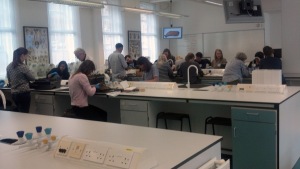
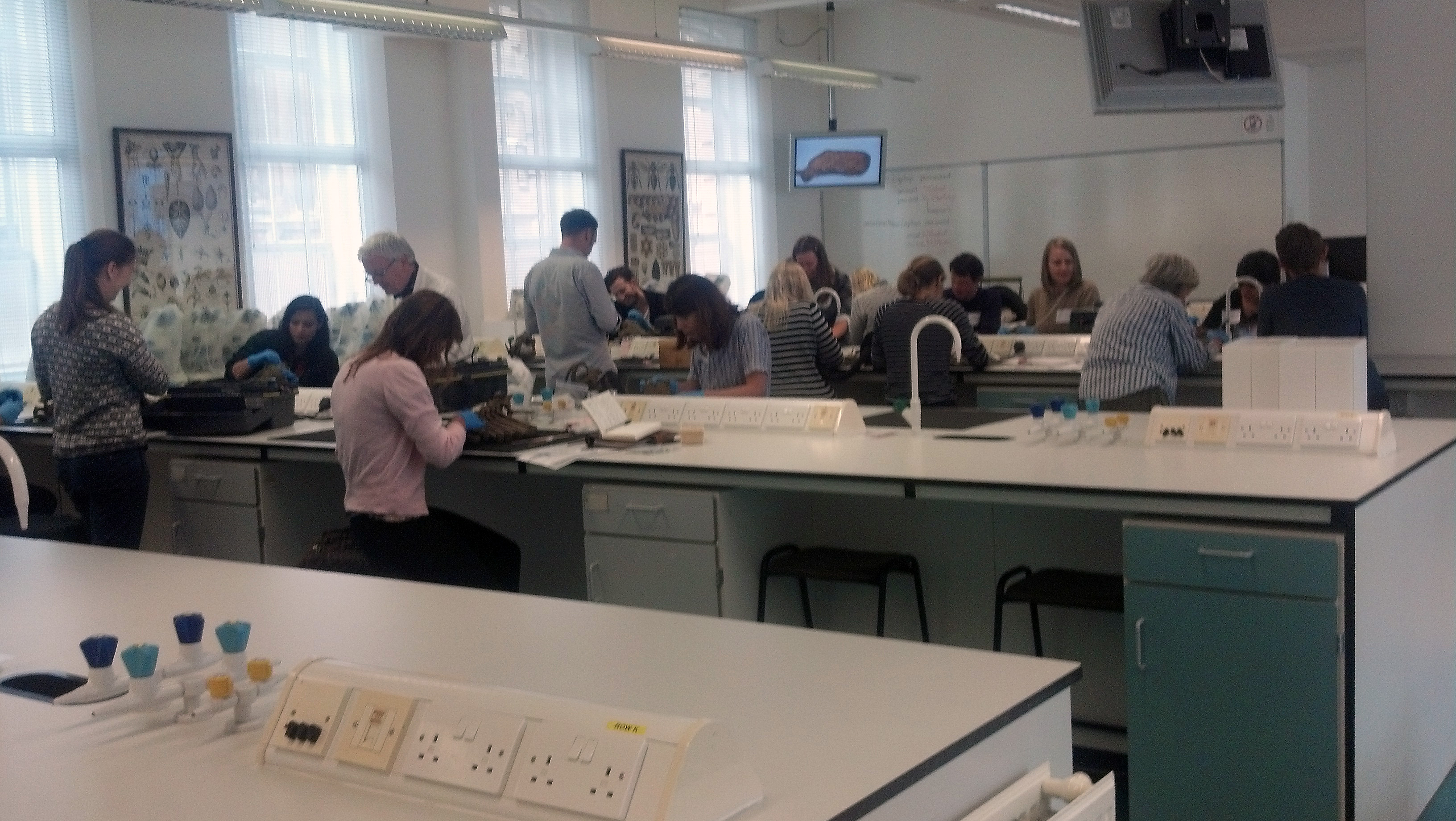
Workshop participants busily trying out various techniques for cleaning osteological specimens that had just been demonstrated on the monitors seen overhead.

Workshop participants busily trying out various techniques for cleaning osteological specimens

At the Canadian Museum of Nature (CMN), where I am employed as a research assistant and collections manager, we have an extensive osteological collection that was established through the collaboration of the museum’s vertebrate zoology staff and the researchers who operated the now defunct Zooarchaeology Identification Centre (ZIC). Use of our osteological comparative material has declined greatly since ZIC ceased to operate in 1996, and relatively few zooarchaeologists working in Canada are aware of our holdings, which is a shame as the osteology collection represents a great national resource that would benefit archaeological research in the country. I am setting out to change this situation.

Having a research background in zooarchaeology – something I have in common with Kathlyn Stewart, head of the CMN Palaeobiology Section – I would love to see the rebirth of an active zooarchaeology programme at the museum. Kathy and I are joining forces to foster growth of the osteology collection in several directions, including expanding the number of specimens to include taxa that are currently underrepresented, increasing knowledge of the collection as a comparative research tool in the archaeological community, and developing CMN-based zooarchaeological research projects.

The Bone Day in Cambridge was therefore the perfect opportunity for me to gain hands-on experience in the care and maintenance of osteological collections.  I spent many years working with osteological collections as a research aid, but I have had little experience in curating such collections. Supported in part through a generous NatSCA bursary, I was able to attend the workshop and conference, affording me the occasion to investigate several topics in greater depth with osteology experts and fellow museum workers. Most important for my goals was learning about techniques for the care of bone and the preparation of skeletal specimens from carcasses.

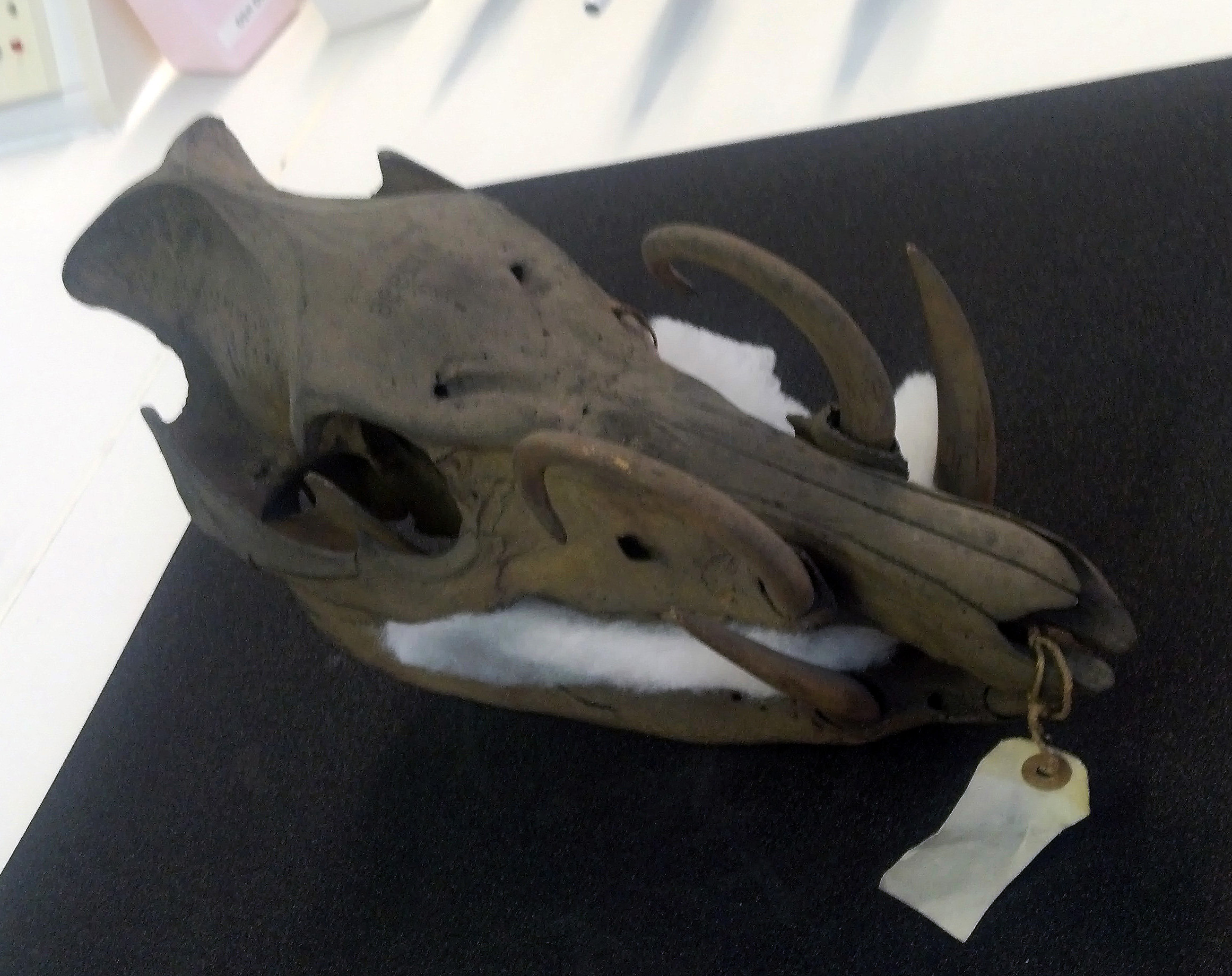
The skull of a babirusa, and Indonesian wild pig, used in the workshop to test cleaning methods.

The skull of a babirusa, and Indonesian wild pig, used in the workshop to test cleaning methods.

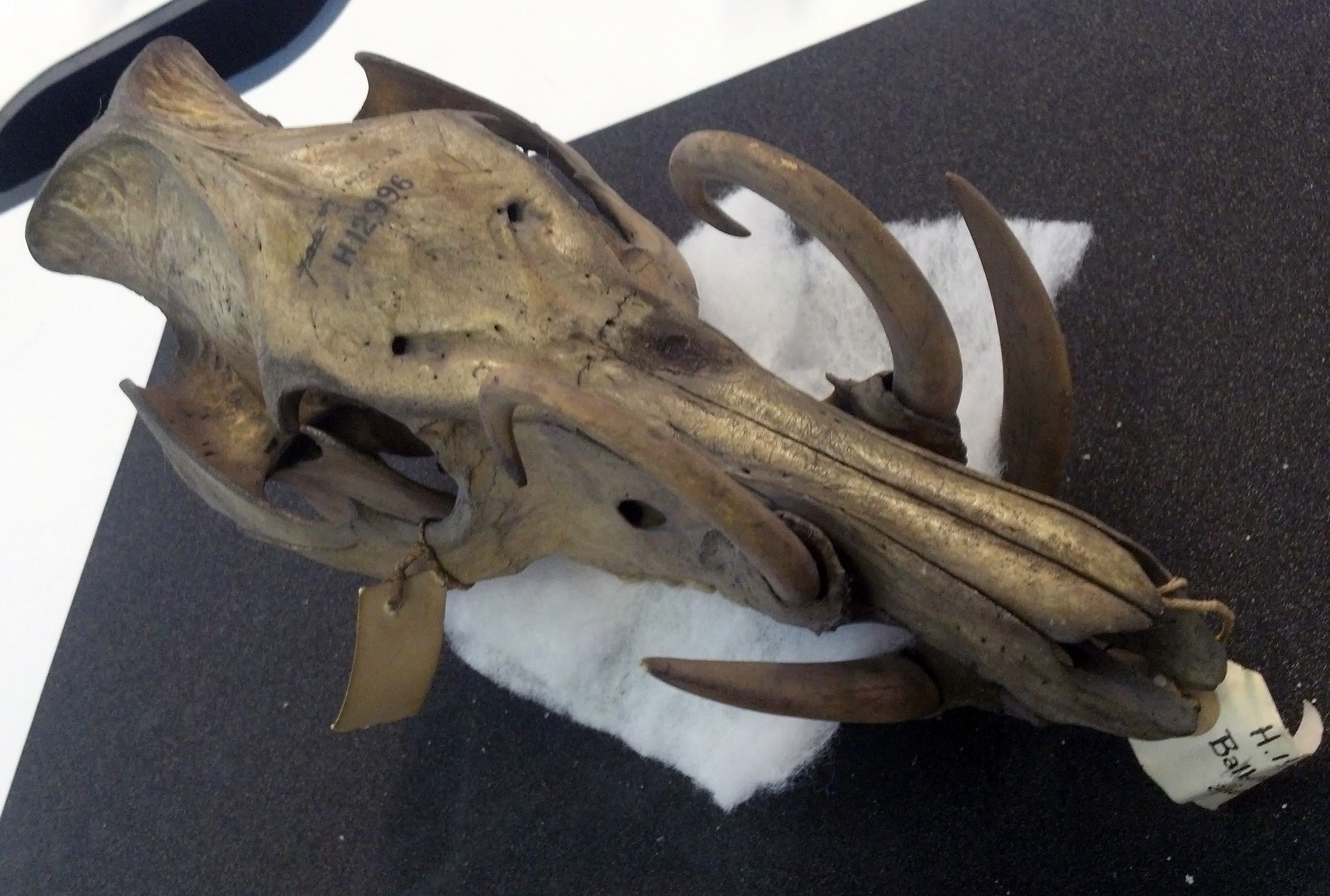
The babirusa skull after a cursory cleaning using brushes, smoke sponge, swabs dipped in Synperonic A7, and yes, even some spit.

The babirusa skull after a cursory cleaning using brushes, smoke sponge, swabs dipped in Synperonic A7, and yes, even some spit.

The day began for me with the morning bone cleaning workshop, where we were introduced to some of the safest and most effective ways of removing deposits that accumulate on the surface of bone specimens, ranging from dust and dirt to bone grease and adipocere (a waxy substance that develops from fats such as bone grease under certain conditions). Gentle brushing and vacuuming, combined with the use of products such as smoke sponge and Groom/Stick natural rubber, remove a significant amount of particulate matter from the surface of bone. For stubborn accumulations, especially those involving bone grease, ethanol solutions and surfactants such as Synperonic A7 (an alcohol ethoxylate) work wonders. Surprisingly, saliva is also an effective cleaning agent, the enzymes in human spit serving quite well to loosen up agglomerations of dust and oil!

The afternoon talks, which included an overview of the importance of osteological collections for archaeological work as well as a discussion concerning an enzyme-based method for skeletonising carcasses, were particularly relevant for me with regard to resurrecting zooarcheological research at the CMN. I believe that several of the presenters from the conference’s slate of lecturers, as well as the leaders of the workshops, are considering submitting blog posts about their contributions to the osteology event, so I will refrain from providing any additional details here. Rather, I will encourage you to stay tuned for future entries concerning the care of bone.

I learned a great deal during the NatSCA Bone Day and made several fruitful contacts with NatSCA members, making it well worth the time and effort of “crossing the pond” from Canada to the UK. I certainly look forward to continuing my association with NatSCA into the future.  Many thanks to the organisation for sponsoring the osteology event and kindly providing support for my attendance, and I hope that I will be able to work with NatSCA to hold a similar ‘bone day’ here in North America sometime soon—I know it would be well received!

Scott Rufalo, Canadian Museum of Nature