NatSCA Digital Digest

Welcome to the weekly digest of posts from around the web with relevance to natural science collections. We hope you find this useful and if you have any articles that you feel would be of interest, please contact us at blog@natsca.org

1. Blog: Lyme Regis Fossil Festival

Lil Stevens, Natural History Museum, London

Synopsis

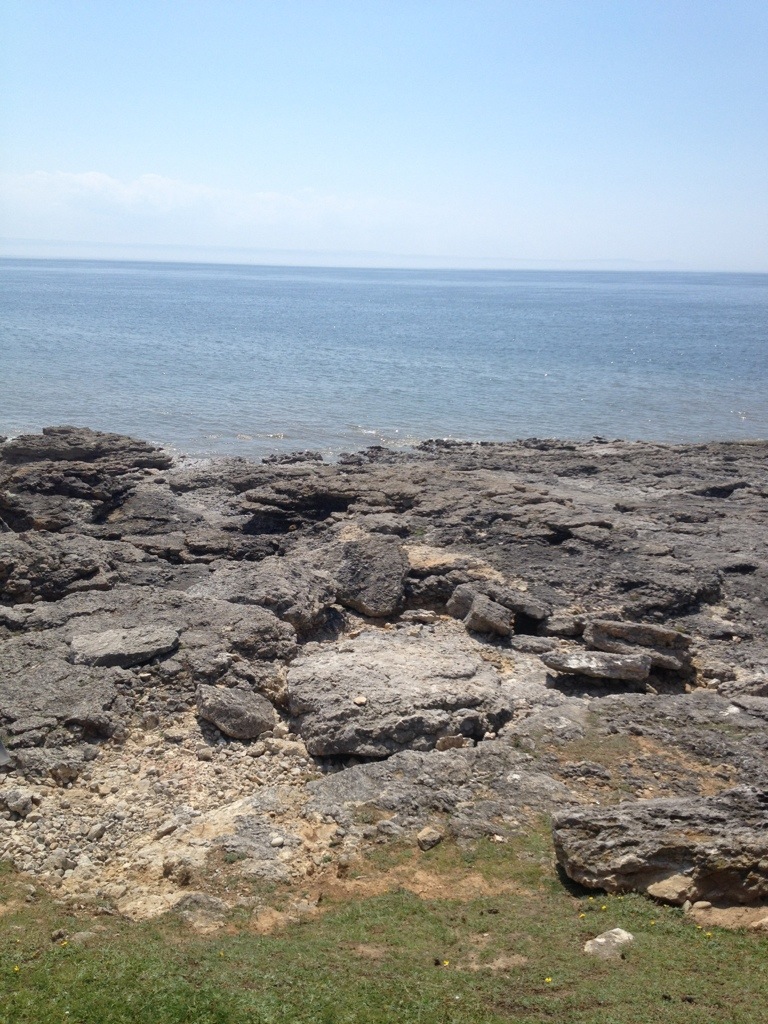
The Lyme Regis Fossil Festival took place in Dorset on 2-4 May 2014. Our palaeontologists Lil Stevens and Zoe Hughes report back from a weekend of sun, sea, fossils and fun.

On the right hand side of this page, you will find links to two other blogs, Lyme Regis Fossil Festival Day 1 and Day 2, which outline the activities of the weekend.

Lyme Regis Fossil Festival

2. Conference: Woodward 150 Symposium: Fossil Fishes and Fakes

Natural History Museum, 21st May 2014

Synopsis

‘Arthur Smith Woodward contributed widely to our knowledge of fossil fish, extinct animals and regional geology. This symposium considers his influence on palaeontology and the legacy of his work at the Museum.’

Woodward 150 Symposium

3. Exhibition: Nature, not just ‘red in tooth and claw’

Manchester Museum, Now until September

Synopsis

‘We have an exhibition, ‘From the War of Nature’ that revisits the idea of a ‘struggle for existence’, a very widely misunderstood and misapplied phrase. The exhibition links to the WW1 centenary, and explores whether nature is cruel, nice or anything else. The answer is that it’s not one thing- it’s lots of things. Sometimes animals co-operate, collaborate or divide resources up between them. The old idea of nature red in tooth and claw is a very misleading one- and does a real disservice to the complexity of nature. The exhibition runs until September. It was very rewarding to work on.’

Nature, not just ‘red in tooth and claw’

Compiled by Emma-Louise Nicholls, NatSCA Blog Editor

NatSCA Digital Digest

Welcome to the weekly digest of posts from around the web with relevance to natural science collections. We hope you find this useful and if you have any articles that you feel would be of interest, please contact us at blog@natsca.org

1. Blog: ARKive’s Top Ten Eggs

Kathryn Pintus, ARKive

Kathryn Pintus
Kathryn Pintus

Synopsis

For those of us with a public programme to fill each holiday season, ideas and inspiration from other sources can never be too much or too numerous. I for one know first hand what it is like to keep trying to deliver a programme that is constantly fresh and original. As we egg-sit (sorry) another Easter of promoting eggs, egg-laying, anything eggy or egg-like that we have in our collections, I thought you may appreciate a pick me up. Here is a refreshing and quirky blog from ARKive that should do the trick.

ARKive’s Top Ten Eggs

Peacock butterfly eggs. © John Bebbington FRPS

Peacock butterfly eggs. © John Bebbington FRPS

Continue reading

NatSCA Digital Digest

Welcome to the weekly digest of posts from around the web with relevance to natural science collections. We hope you find this useful and if you have any articles that you feel would be of interest, please contact us at blog@natsca.org

1. Blog: Eton College, Natural History Museum

George Fussey, Curator, and colleagues

Synopsis

Rather than drawing your attention to a specific article on this blog, I am rather pointing out that this blog exists in case you hadn’t yet come across it. Having been to the Natural History Museum at Eton College myself, I can tell you that it is well worth the visit. I had the great pleasure of being shown around the Museum by Curator George Fussey, and there are certainly treasures to be seen there. I encourage you to have a look at this blog, it may be one of great interest to many people in our sector.

Eton College, Natural History Museum Blog

If you think our platy is a fatty, you should see the one at Eton! Specimen LDUCZ-Z20 (C) UCL / Grant Museum

If you think the Grant Museum’s platy is a fatty (above), you should see the one at Eton! Specimen LDUCZ-Z20 (C) UCL / Grant Museum

2. Conference: Radiation and Extinction: Investigating Clade Dynamics in Deep Time

The Linnean Society of London, 10-11th November 2014

Synopsis

To address the issues in the modern day caused by global warming, this conference aims to look at the past. It will focus on:

“Determining the causes and drivers of evolutionary dynamics is central to our understanding of life on Earth. What factors shaped the modern biota? Why did some groups go extinct, whilst others survived and radiated? Why are some groups so much more diverse than others? What will happen to organisms as the Earth continues to warm up?”

Radiation and Extinction: Investigating Clade Dynamics in Deep Time

A representative of extinction- the dodo head cast. Specimen LDUCZ-Y86 (C) UCL / Grant Museum

A representative of extinction- the dodo head cast at the Grant Museum of Zoology. Specimen LDUCZ-Y86 (C) UCL / Grant Museum

3. Training: Documentation Training Course

Museum of London, Docklands, 25th April 2014

Synopsis

Museum volunteers are invited to attend this course run as part of the Regional Museums Development programme. The course is designed to look at how to deal with issues of documentation, as well as the theory behind collections management.

Contact kwebbgreen@museumoflondon.org.uk to book.

Compiled by Emma-Louise Nicholls, NatSCA Blog Editor

NatSCA Digital Digest

Welcome to the weekly digest of posts from around the web with relevance to natural science collections. We hope you find this useful and if you have any articles that you feel would be of interest, please contact us at blog@natsca.org

1. Social Media: Museum Week on Twitter

24th to 30th March 2014

Synopsis

Museums across Europe are using the hashtag #MuseumWeek on twitter all this week. The aim is to improve the social media presence of museums by encouraging dialogue between both museums and the public, and between museum professionals. Alongside the weeklong hashtag #MuseumWeek there are individual daily themes, the remaining of which are as follows:

Thursday #BehindTheArt

Friday #AskTheCurator

Saturday #MuseumSelfies

Sunday #GetCreative

Everyone is encouraged to join in all week.

2. Blog: Work Experience from the Dinosaur Isle Museum

Alex Peaker, Dinosaur Isle Museum, Isle of Wight, and Emma Bernard, Natural History Museum, London

Synopsis

Alex Peaker is a curator at the Dinosaur Isle Museum on the Isle of Wight. He recently came to London to work with Emma Bernard, a curator at the NHM, for a week. Bernard begins the blog by talking of how important it is to maintain communications between museum professionals, and seeking help and advice from others when needed. Peaker describes his role at the Dinosaur Isle Museum and explains how invaluable the time he spent at the NHM was to him.

http://www.nhm.ac.uk/natureplus/community/research/earth_sciences_news/fossil_fish?fromGateway=true

Editor5807. Image free from copyright

Dinosaur Isle Museum, Isle of Wight. The building was designed to look like a huge Pterosaur. Image by Editor5807

3. Training: British Council – UCL Museum Training School

British Council and University College London

Synopsis

The closing date for applications to the British Council and UCL Museum Training School is 18th April. There are four courses to choose from, or you can register for multiple courses. They are:

How to build local, national and international partnerships
How to develop exhibitions
How to develop a schools and learning programme
How to develop community engagement programmes

https://www.ucl.ac.uk/museums/our-work/international/

Rhino

The next post is a bit harrowing, so here is a baby rhino playing to start you off on a high. (C) Emma-Louise Nicholls

4. Blog: Objects Safe After Cuming Museum Fire

Patrick Steel, Museums Association

Synopsis

Cuming Museum in London was struck by fire in March of last year, in which ‘two of three displays were lost’. One year on, Steel reports on the current location of the collections and the status of the Museum. The blog looks at how many specimens were lost and what types of conservation procedures were required for those that were damaged.

http://www.museumsassociation.org/museums-journal/news/25032014-cuming-museum-saves-all-but-30-objects?utm_source=ma&utm_medium=email&utm_campaign=26032014

5. Survey: Testing the European Competency Framework for VET Collections Management

EU Leonardo project, the Royal Belgian Institute of Natural Sciences

A request from the Project:

‘In the EU Leonardo project ‘Testing the European Competency Framework for VET Collections Management’ (EUColComp), the Royal Belgian Institute of Natural Sciences (RBINS) is responsible for WP 2 “Research training needs and stakeholder analysis”.  This 2-year project is coordinated by NHM London and started October 2013.

A  questionnaire to inventory past and present training resources in conservation and care of natural history collections, available in Europe (and beyond) is online at:

https://www.surveymonkey.com/s/survey_training_NHcollections

The results of the survey will be used to develop a ‘Vocational Education and Training’ curriculum to assist staff in developing the appropriate competencies.

If you provide training in the field of natural history collections conservation and care or if you are aware of training others provide, please spare 5 min of your time to help gather this valuable information.

Many thanks for your help with this!
Kind regards,
The EUColComp team

a Leonardo da Vinci Transfer of Innovation funded project’


Compiled by Emma-Louise Nicholls, NatSCA Blog Editor

NatSCA Digital Digest

Welcome to the weekly digest of posts from around the web with relevance to natural science collections. We hope you find this useful and if you have any articles that you feel would be of interest, please contact us at blog@natsca.org

1. Blog: A Day Out at Tring

Amy Freeborn, Natural History Museum London

Synopsis

This blog covers some of the history of the collections at Tring, and includes some interesting historical photos of the Museum and Rothschild’s estate as it was in the early 1900s. The author had the opportunity to see the preparation lab where beetles are used to clean flesh from carcasses, leaving skeletons fit for mounting. Some ‘wow-factor’ facts regarding the content of Tring Museum’s collections are also outlined.

http://www.nhm.ac.uk/natureplus/blogs/behind-the-scenes/2014/03/14/a-day-out-at-tring

The galleries at Tring Museum. Image by Robert Stainforth. Obtained from http://www.commons.wikimedia.org

2. Blog: Testing a European Competency Framework for VET in Collections Management

National Agency for Lifelong Learning

Synopsis

Access to, and use of, natural history collections are integral in facilitating research in the sector, but the ways in which these are facilitated vary between institutions. This article looks at the application of ‘best practice’ in terms of collections management, care, and conservation and describes a project that utilises the methods developed by the Natural History Museum, London to tackle the task of creating a standard for European collections.

http://www.adam-europe.eu/adam/project/view.htm?prj=10833&projLang=en#.UvpDWvtWsfg

3. Training: Pest Identification and Trapping Study Day

The Horniman Museum, London. 15th May 2014

Synopsis

An introduction to the management of museum pests. The day comprises lectures on subjects such as Integrated Pest Management schemes, as well as practical sessions that will give attendees the skills to identify various pest species. The Horniman Museum is used as a case study to illustrate an active pest management scheme. The highlight (having attended myself previously) is a pest based treasure hunt in the natural history galleries.

There is a limited number of places on this course so please get in touch with Libby Finney for details asap if you are interested. Email: lfinney@museumoflondon.org.uk

A horde of Anthrenus larvae on a bird skull. (C) UCL Grant Museum

4. Event: Geological Carbon Storage: Meeting the Global Challenge

Two day conference at the Geological Society at Burlington House. 14th-15th April 2014

Synopsis

Fossil fuels will undeniably be a significant component of energy supplies for ‘several decades at least’. This conference will focus on actions required to avoid serious negative environmental impacts caused by the burning of fossil fuels and the subsequent amount of CO2 that is released. Trapping CO2 and storing it underground (CCS) is a method of achieving this aim. Issues and policies will be discussed by delegates including members of government, industry, regulators and NGOs.

http://www.geolsoc.org.uk/carbonstorage14

Compiled by Emma-Louise Nicholls, NatSCA Blog Editor