Talks and Workshops Day One – SPNHC2014

20140626-033102.jpg

The SPNHC conference got off to a great start yesterday with a speech from the Welsh Minister for Culture and Sport. This was proceeded by quick intros from representatives of SPNHC, GCG, and our Paolo on behalf of NatSCA.

The keynote was delivered by BBC’s Ben Garrod. He talked about the important role that museum professionals play in associating context and meaning with specimens. Also that museums should be tapping into the amazing resources they already have because organisations like the BBC will go to the ends of the earth to film the right specimen and only museum professionals know where they all are. He gave us a hint of a program on bird evolution coming up (I for one will be riveted to this).

Prof Alice Roberts was next – taking umbrage with something the director general said (a sentiment shared by several): he had referred to Ben, Alice, and Rhys – the next speaker – as “presenters” and made a distinction between them and the “scientists” in the auditorium. She rightly pointed out that the presenters speaking were all scientists and experts. I suspect the blame for this visceral misconception lies with Discovery Channel and similar who portray actors as scientists in their dramatised documentaries (Mermaid: the Body Found, anyone?). Alice Roberts spoke of her recent expeditions to the arctic peninsula of Russia in search of another mummified mammoth specimen. You may recall the review I wrote about the mammoth baby Lyuba. The new mummy was an older individual and the first expedition came home empty handed. The second time, Alice’s Nenet guides tried to hold out for a better offer. The BBC didn’t take the bait and eventually the guides took her to the specimen. They may have taken their pound of flesh first though: the mammoth’s skull had been removed. The Nenet people insisted that it had been removed in antiquity. If so it will be the oldest case of such a practice being done. More likely the skull was removed to sell to ivory traders. Micro CT scans will settle the matter once and for all. Alice also told us about the tusk cross-section project she was involved with, which revealed the huge scientific treasure trove that is ivory: when you cut a tree in half you can see the rings and count them to see how old the tree is in years. The same holds for mammoth tusks, only each yearly band can be viewed under the microscope to reveal 365 DAILY rings – we can literally tell whether a mammoth had a bad day. It can also be used to count the number of offspring a female mammoth had by looking at the pattern of malnutrition in these rings.

Hot on the heels of Alice’s talk came our third BBC presenter: Dr Rhys Jones. I had just heard about mammoths with personal diaries – I didn’t think anything could top that. It did: Rhys has been working with the South Wales police to track down the origin of two rhino horns that found their way onto EBay. What started as an intellectual challenge soon became a labour of love as one of the rhinos – a hefty male named Max – was killed for a pathetic scrap of horn. Somehow the black market marketing team have managed to convince the world that rhino horn is the cure for hangovers, cancer, erectile dysfunction, loneliness, … You name it and people are falling for it. He had to develop a technique for slow drilling into horn, as the DNA cooks very easily. even at slow speeds, drilling horn smells like burnt hair. With a little help from the other museum collections containing rhino horn material, a database was put together cataloging every known rhino haplotype and where it came from. Not only was he able to state categorically that the two horns belonged to the same animal, he also could tell that it was Black rhino and that it came from Tsavo national park – a hugely impressive result!

Workshop

I sat in on most of the afternoon’s Bruker workshop. It was supposed to be led by Mike Dobby but sadly he was called away to Athens and Trevor Emmett stepped in. Looking like the illegitimate child of a 70’s stun gun and a thermos flask, The Artax is an interesting piece of kit. Its main application seems to be in chemical analysis of various substances through targeted spectroscopy. Despite Time Team making it look so easy to just point and shoot, it really does work much better fixed to a stand.

Trevor explained the safety filter and how the Artax was designed to not zap unless there’s something under its sensor. Sometimes you need to scan something that doesn’t completely cover the safety filter so we were told that a label can be stuck across it to fix this. Like the complicated password on a post-it note stuck to the computer, security and safety are only as good as the people that use it.

Other Meetings

I attended a few SPNHC open meetings after, including the Emergent Professionals Group and the Meetings Group. I’m very much looking forward to the signing of the MOU on Thursday and seeing how our three organisations can work together more closely.

20140626-033158.jpg

A Field Trip to the Heritage Coast – SPNHC2014

20140623-233414.jpg

Today was a day of Field trips as a precursor to the conference proper. We gathered outside the museum with all the other field trip groups watching the filming crew milling about outside. The museum was closed but they were filming Dr. Who, which was quite cool.

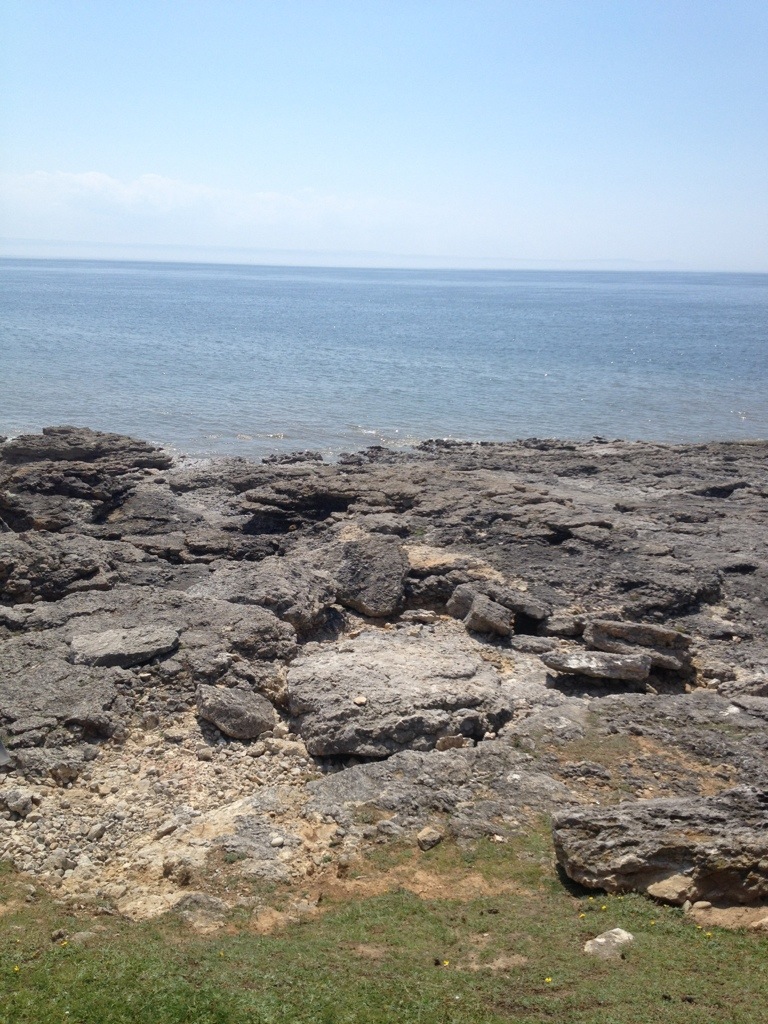
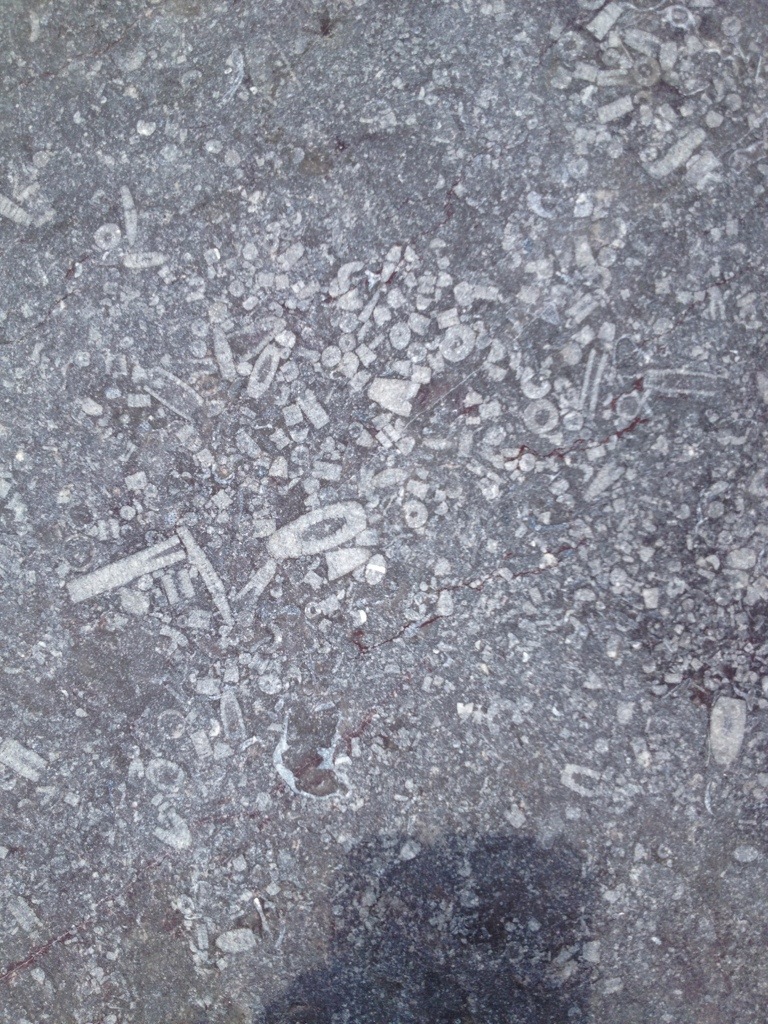
Our excursion was sponsored by the GCG and headed up by Cindy Howells of the National Museum of Wales. Our first stop was Dunraven Bay, where the Jurassic Blue Lias strata sits upon the Carboniferous limestone. The Dunraven fault – a reverse fault – has pushed the Lower Jurassic Sutton Stone up against the Blue Lias with some amazing crumpled folding patterns. This area was mostly underwater during the Jurassic, with only the highest hills projecting above sea level as a series of island chains. As a result, the fossils are mostly aquatic species: lots of Gryphaea; a good number of ammonites; the occasional ichthyosaur and plesiosaur (we were not lucky enough to find either); scattered bits of crinoid everywhere… and no belemnites at all! Where are the belemnites, why have none ever been found in the region?

Next we drove a few miles down the coast to Ogmore by Sea, residential home to a number of mating pairs of wild ravens! As we ate the remains of our packed lunches I watched a raven repeatedly harass a big gull. The Tower of London ravens are significantly bigger than the wild ones here but the Ogmore ravens are still spectacular birds and clearly intelligent.

A few hundred yards down the road brought us into Carboniferous limestone covered by a strange type of rock, which our guides described as an “angular conglomerate” or Breccia. It looks like raw cement and was deposited in the Triassic, when Wales was an equatorial desert. The deposit indicates a cataclysmic monsoon event. I can imagine early dinosaurs hoping to find water, only to learn the old lesson: be careful what you wish for!

We saw lots more incredible geology but it was a lot to take in and alas my head was still absorbing the Triassic landscape to take it all in. The scorching heat didn’t help either. I’d very much like to return another day, there are dinosaur footprints out there.

Looking forward to tomorrow and the start of the SPNHC2014 talks. I’ll keep you updated on these too.

20140623-233253.jpg

NatSCA Digital Digest

Welcome to the weekly digest of posts from around the web with relevance to natural science collections. We hope you find this useful and if you have any articles that you feel would be of interest, please contact us at blog@natsca.org

1. Blog: Lyme Regis Fossil Festival

Lil Stevens, Natural History Museum, London

Synopsis

The Lyme Regis Fossil Festival took place in Dorset on 2-4 May 2014. Our palaeontologists Lil Stevens and Zoe Hughes report back from a weekend of sun, sea, fossils and fun.

On the right hand side of this page, you will find links to two other blogs, Lyme Regis Fossil Festival Day 1 and Day 2, which outline the activities of the weekend.

Lyme Regis Fossil Festival

2. Conference: Woodward 150 Symposium: Fossil Fishes and Fakes

Natural History Museum, 21st May 2014

Synopsis

‘Arthur Smith Woodward contributed widely to our knowledge of fossil fish, extinct animals and regional geology. This symposium considers his influence on palaeontology and the legacy of his work at the Museum.’

Woodward 150 Symposium

3. Exhibition: Nature, not just ‘red in tooth and claw’

Manchester Museum, Now until September

Synopsis

‘We have an exhibition, ‘From the War of Nature’ that revisits the idea of a ‘struggle for existence’, a very widely misunderstood and misapplied phrase. The exhibition links to the WW1 centenary, and explores whether nature is cruel, nice or anything else. The answer is that it’s not one thing- it’s lots of things. Sometimes animals co-operate, collaborate or divide resources up between them. The old idea of nature red in tooth and claw is a very misleading one- and does a real disservice to the complexity of nature. The exhibition runs until September. It was very rewarding to work on.’

Nature, not just ‘red in tooth and claw’

Compiled by Emma-Louise Nicholls, NatSCA Blog Editor

NatSCA Digital Digest

Welcome to the weekly digest of posts from around the web with relevance to natural science collections. We hope you find this useful and if you have any articles that you feel would be of interest, please contact us at blog@natsca.org

1. Blog: ARKive’s Top Ten Eggs

Kathryn Pintus, ARKive

Kathryn Pintus
Kathryn Pintus

Synopsis

For those of us with a public programme to fill each holiday season, ideas and inspiration from other sources can never be too much or too numerous. I for one know first hand what it is like to keep trying to deliver a programme that is constantly fresh and original. As we egg-sit (sorry) another Easter of promoting eggs, egg-laying, anything eggy or egg-like that we have in our collections, I thought you may appreciate a pick me up. Here is a refreshing and quirky blog from ARKive that should do the trick.

ARKive’s Top Ten Eggs

Peacock butterfly eggs. © John Bebbington FRPS

Peacock butterfly eggs. © John Bebbington FRPS

Continue reading

NatSCA Digital Digest

Welcome to the weekly digest of posts from around the web with relevance to natural science collections. We hope you find this useful and if you have any articles that you feel would be of interest, please contact us at blog@natsca.org

1. Blog: Eton College, Natural History Museum

George Fussey, Curator, and colleagues

Synopsis

Rather than drawing your attention to a specific article on this blog, I am rather pointing out that this blog exists in case you hadn’t yet come across it. Having been to the Natural History Museum at Eton College myself, I can tell you that it is well worth the visit. I had the great pleasure of being shown around the Museum by Curator George Fussey, and there are certainly treasures to be seen there. I encourage you to have a look at this blog, it may be one of great interest to many people in our sector.

Eton College, Natural History Museum Blog

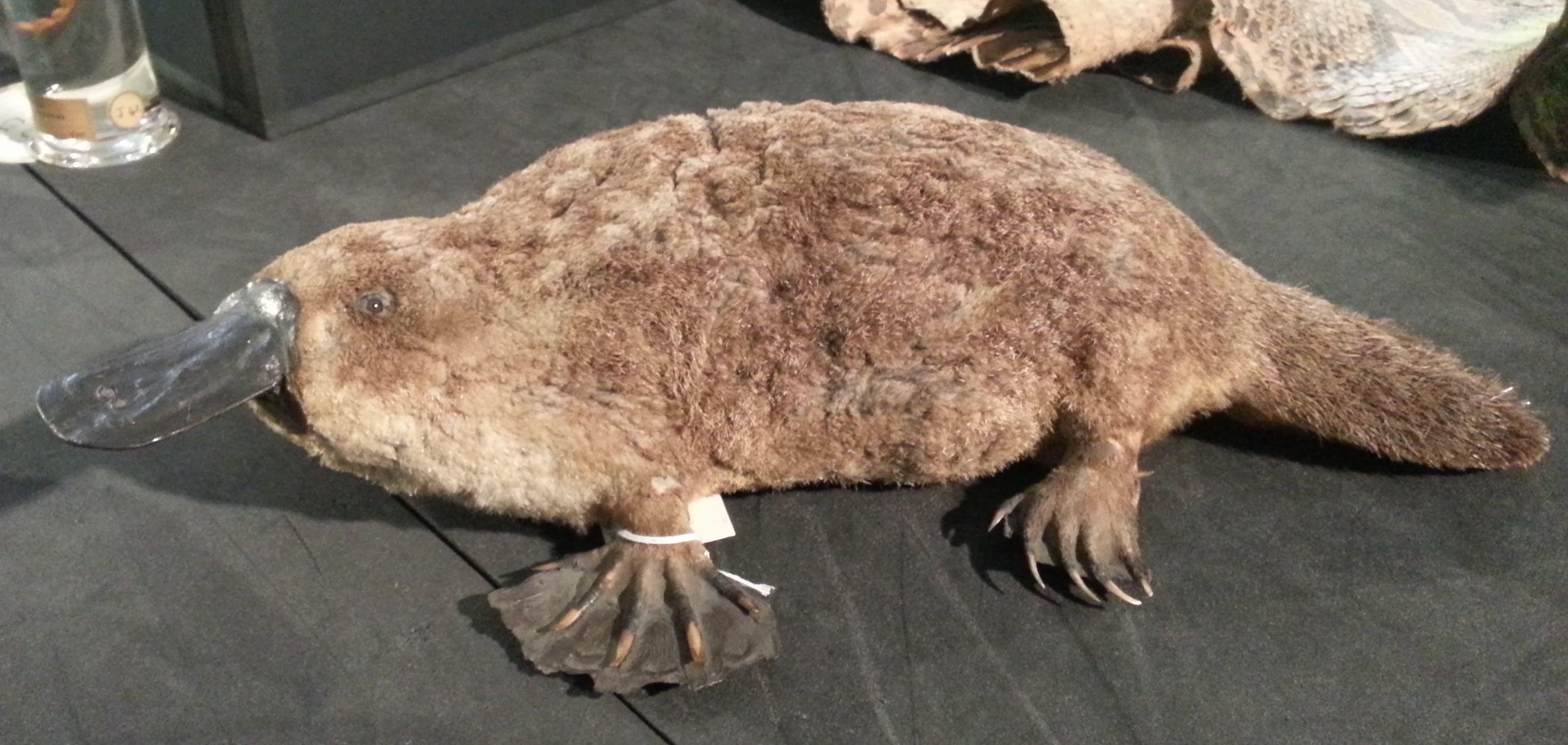
If you think our platy is a fatty, you should see the one at Eton! Specimen LDUCZ-Z20 (C) UCL / Grant Museum

If you think the Grant Museum’s platy is a fatty (above), you should see the one at Eton! Specimen LDUCZ-Z20 (C) UCL / Grant Museum

2. Conference: Radiation and Extinction: Investigating Clade Dynamics in Deep Time

The Linnean Society of London, 10-11th November 2014

Synopsis

To address the issues in the modern day caused by global warming, this conference aims to look at the past. It will focus on:

“Determining the causes and drivers of evolutionary dynamics is central to our understanding of life on Earth. What factors shaped the modern biota? Why did some groups go extinct, whilst others survived and radiated? Why are some groups so much more diverse than others? What will happen to organisms as the Earth continues to warm up?”

Radiation and Extinction: Investigating Clade Dynamics in Deep Time

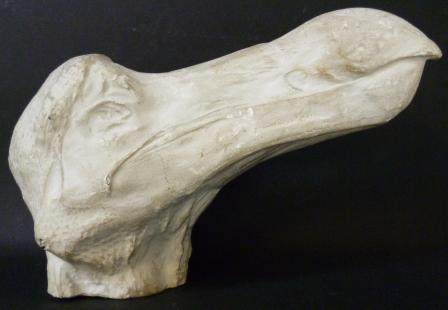
A representative of extinction- the dodo head cast. Specimen LDUCZ-Y86 (C) UCL / Grant Museum

A representative of extinction- the dodo head cast at the Grant Museum of Zoology. Specimen LDUCZ-Y86 (C) UCL / Grant Museum

3. Training: Documentation Training Course

Museum of London, Docklands, 25th April 2014

Synopsis

Museum volunteers are invited to attend this course run as part of the Regional Museums Development programme. The course is designed to look at how to deal with issues of documentation, as well as the theory behind collections management.

Contact kwebbgreen@museumoflondon.org.uk to book.

Compiled by Emma-Louise Nicholls, NatSCA Blog Editor