Let’s Not Forget the Old Ways

Museums Unleashed is the conference to get to in 2015. The theme, as the title suggests, is unleashing your collections: getting them out ‘there’ using social media, blogs, TV, and newspapers. With an excellent programme of speakers, the conference will discuss inspiring new ways of sharing our collections, both to familiar audiences and new ones.

The conference will be an excellent opportunity to hear case studies on what other museums are up to and how different methods are being used. This is where wonderful, new, and exciting ideas are thought up, leading to the birth of outrageously different projects (this often happens in the pub).

As Viscardi (2012) writes, advocacy is essential for survival of the sector as a whole. We all do it, and more than we think. Probably eight or nine times a week. We talk to our colleagues and friends about our collections, or a cool specimen that we are working on. We get on the radio and talk about projects. This is great advocacy. Exciting discoveries or research in our store rooms are often accompanied by media reports highlighting the awesome museum collections.

Capricorn Beetle (Cerambyx cerdo)

Capricorn Beetle (Cerambyx cerdo) found at Plymouth University in 2007. Specimen is the first sighting of this species since 1947, and was donated to the museum. A short article was written for the local newspaper (http://www.plymouthherald.co.uk/Giant-beetle-time-Plymouth-city-native/story-23139707-detail/story.html)

As museum professionals, we should embrace new communication media without forgetting the old ways. One of the most effective means of letting staff at other museums know about your work or your collections is by writing an article for the Journal of Natural Science Collections. The Journal is fully peer-reviewed, and is written by those working with natural science collections for those working with natural science collections. This is a great way of sharing your expertise, your knowledge, and your passion for your collections with your colleagues.

All of the published articles are also made freely available online. The first two Volumes of the Journal are already available, with interesting and useful articles about conservation, collections reviews, education and the history of different collections. Some articles will be useful to your everyday work as a reference, others may spark ideas for future collaborative projects. We are now seeking contributions for Volume 3. If you have something you’d like to share, get in touch and send in an article!

The deadline for the next Volume is 15th July 2015. Please contact the Editor, Jan Freedman, for further information (editor@natsca.org). Guidelines for authors are available here, and are currently being updated.

 

Jan Freedman
Curator of Natural History, Plymouth City Museum and Art Gallery

NatSCA Digital Digest

ChameleonYour weekly round-up of news and events happening in the world of natural sciences


Conferences

Conference season is well and truly upon us! Here are some dates for your diaries:

The National Forum for Biological Recording and the British Ecological Society are holding a joint conference at Sheffield University on 23rd – 25th April.

The conference of the Society for the Preservation of Natural History Collections will be held at the Florida Museum of Natural History this year, on the 17th – 23rd May. The theme is ‘Making Natural History Collections Accessible through New and Innovative Approaches and Partnerships’.

Refloating the Ark: Connecting the public and scientists with natural history collections. A two­‐day meeting at Manchester University on 17th – 18th June, exploring how natural history museums can contribute towards environmental sustainability by engaging effectively with the public and the scientific research community.


Workshops

The Linnaean Society is holding a workshop on Digitising Natural History and Medical Manuscripts on 27th – 28th April.

The 2nd International Conservation Symposium-Workshop of Natural History Collections will be held in Barcelona on 6th – 9th May. The Symposium-Workshop will emphasize concepts relating to the protection and conservation of natural history collections.

Risk Management in Collections Care is a one-day seminar at Kelvingrove Museum in Glasgow on 21st May, discussing how heritage organisations can use risk management to set priorities and efficiently allocate limited resources to reduce risks to collections.

As always, keep an eye on the events page of our website for more upcoming conferences and courses!


In the Media

Illustration of a Brontosaurus skeleton by Charles Othniel Marsh

This week’s big news: Brontosaurus is back! A new specimen-level cladistic analysis of diplodocids found strong support for Brontosaurus as a valid genus distinct from Apatosaurus. The internet rejoiced.

Entomologists from the Natural History Museum of Los Angeles County found 30 new species of fly in urban gardens.

Skeletal collections can tell us about the history of welfare standards in captive animals (warning: the paper is behind a paywall, but the abstract is free).

Brian Switek revisits his old fossil friend Teleoceras.

Three new species of wood lizard have been discovered in Ecuador and Peru by museum researchers.


Got a submission for the blog or Digital Digest? Email us at blog@natsca.org

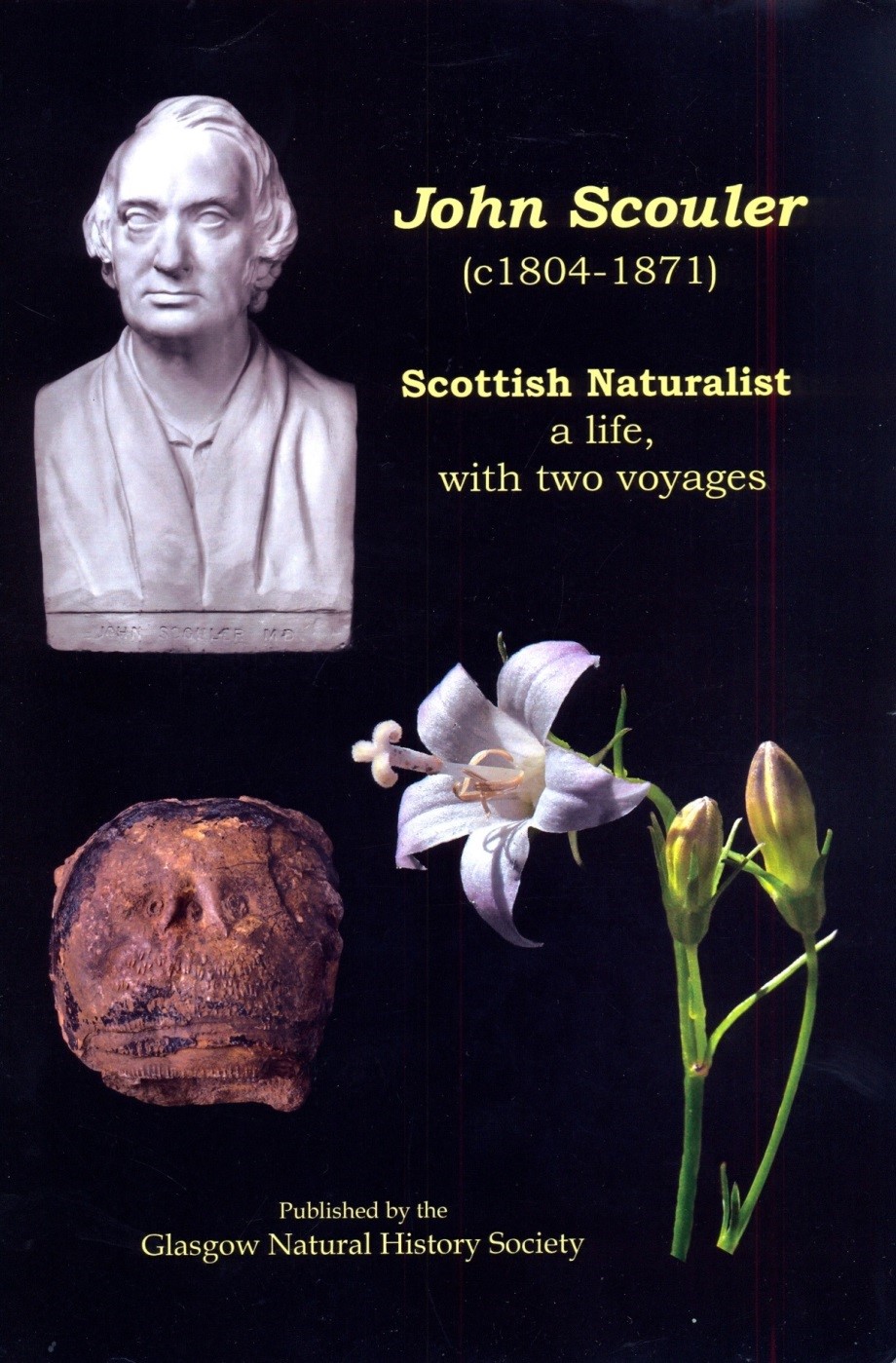
Review of ‘John Scouler (c. 1804 – 1871) Scottish Naturalist: A life, with two voyages’

 Published by the Glasgow Natural History Society

Cover of the journal 'John Scouler (c. 1804 - 1871) Scottish Naturalist:

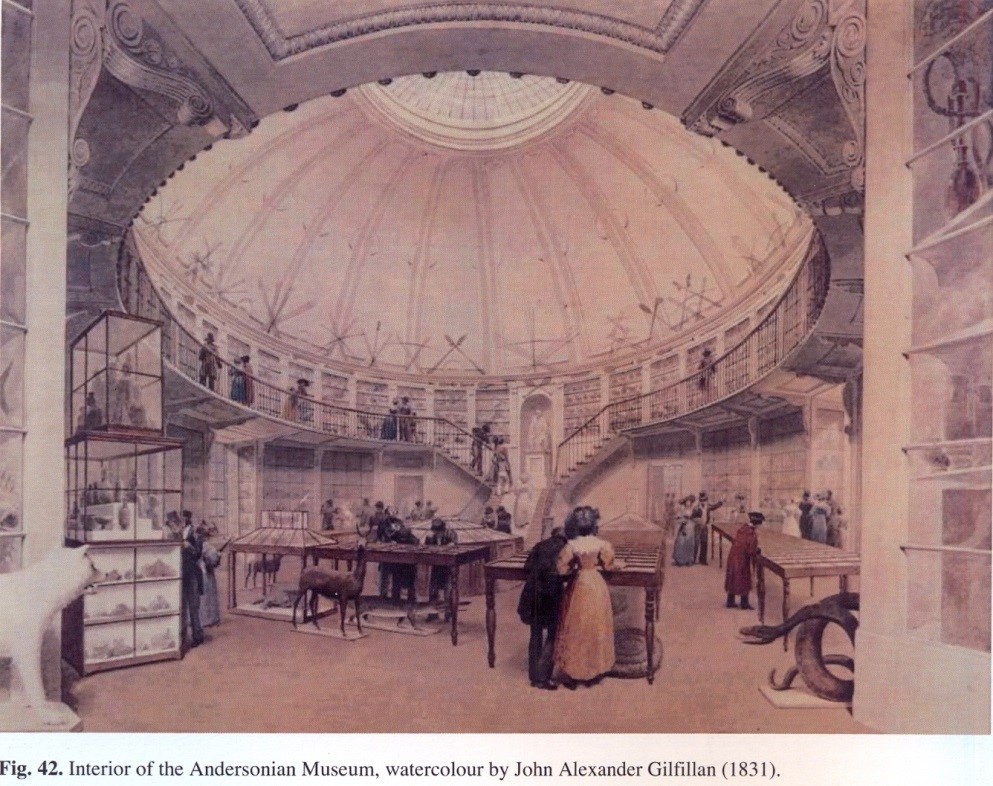
John Scouler was a naturalist whose contribution to his field was highly respected, despite few publications. He was a collector, a lecturer, and in his working life was Professor of Mineralogy at the Andersonian University (and curator of the Museum) in Glasgow (1829 – 1834), and later at the Royal Dublin Society (1834 – 1854). John Scouler was held in high regard by his peers, yet his story, like many other naturalists during the 19th century, is relatively unknown outside of the world-renowned voyages made by Charles Darwin, Joseph Banks, and Alfred Russell Wallace.

Painting of the interior of The Andersonian Museum, which was curated by Scouler (by John Alexander Gilfillan, 1831)

The Andersonian Museum, which was curated by Scouler (by John Alexander Gilfillan, 1831)

The publication begins with the discovery of some ‘dusty plant specimens, dried and mounted on dustier sheets of paper’ found in the biological department of the Royal Technical College, Glasgow. Professor Blodwen Lloyd Binns is charged with the challenge of resolving the mystery of this forgotten herbarium. The Prologue and Introduction are in fact written in her own words, from a draft of a book entitled ‘Round the World in a herbarium’ that she had started in the 1960s. Binns then assesses Scouler based on his contribution to ‘his science’, the scientific thought of the day, and his collections -significantly his herbarium. The author of the journal, Charles Nelson, uses these three areas to portray an accurate and systematic account of Scouler’s legacy with prose that is engaging, erudite, and succeeds in fleshing out the uncertainty around Scouler’s second voyage to India.

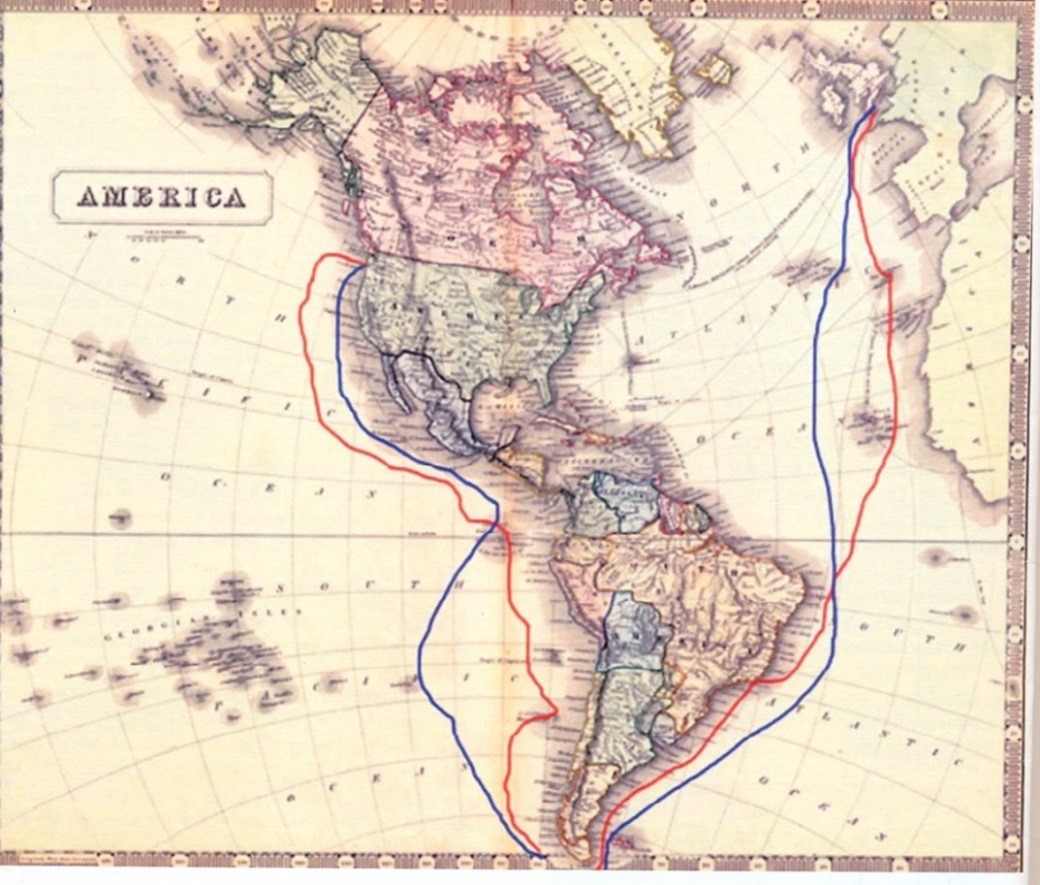
Scouler held a strong passion for collecting and an interest in botany. He studied anatomy at Edinburgh University and wished to pursue a career as a surgeon, but had been greatly influenced by Professor William Jackson Hooker, who became his lifelong friend and teacher. It was Hooker (who would later become Director of Kew) who recommended Scouler as ship’s surgeon on his first ‘voyage of discovery’ on the William and Ann to the Galapagos and North West Pacific coast (1824 – 1826), along with another of Hooker’s capable botanists, David Douglas.

Map of the voyage of the Hudson Bay’s Company William & Ann, 1824-1826, based on the readings recorded in the ship’s log (red outward voyage 1824-1825; blue return voyage, 1825-1826)

Voyage of the Hudson Bay’s Company William & Ann, 1824-1826, based on the readings recorded in the ship’s log (red outward voyage 1824-1825; blue return voyage, 1825-1826)

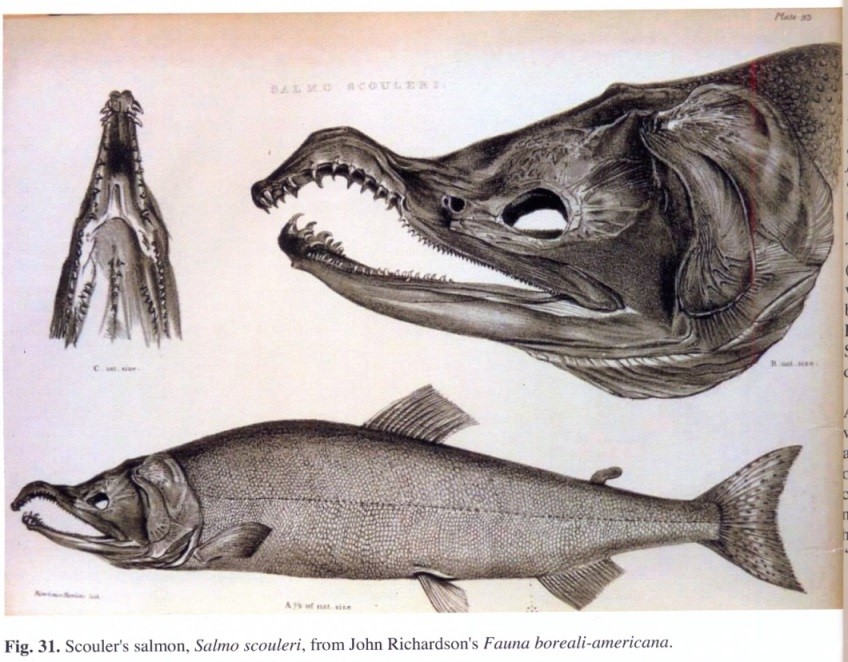
Scouler was the first botanist to explore Oregon and bring back specimens hitherto unknown to science. Scouler reached Canada in June 1825, making new discoveries and descriptions of plants. In Hooker’s ‘Flora’ he honours a new plant collected by Scouler – Phyllospadix scouleri or Scouler’s surf-grass – which belongs to a new genus entirely. This marine flowering plant, unique to the coast, was found at Observatory Inlet, where over 30 species of plants including Scouleri aquatica were found and ascribed to Scouler by Hooker. Scouler’s specimens contributed greatly to Hooker’s great botanical work ‘Flora boreali-americana’ and in some cases still survive in Kew’s collections today.

Scouler’s salmon, Salmo scouleri, from John Richardson’s Fauna boreali-americana

Scouler’s salmon, Salmo scouleri, from John Richardson’s Fauna boreali-Americana

In conclusion, the journal beautifully articulates the life of Scouler using diaries, journals, illustrations from monographs, images, shipping logs, and his own surviving specimens, along with secondary sources such as museum catalogues. It is clear, accessible and enjoyable to read, and is comprehensively referenced. I also like the addition of coloured plates of the species discovered by and named in Scouler’s honour. Charles Nelson succeeds in accurately assessing Scouler’s legacy against the criteria set out by Professor Binns, and extends our knowledge of Scouler’s later life. It tells me that John Scouler was indeed a man dedicated to ‘his science’, without a desire for self-promotion or critical acclaim.

Anthony Roach
Science Educator, Natural History Museum


All images reproduced from John Scouler (c. 1804 – 1871) Scottish Naturalist: A life, with two voyages, published by the Glasgow Natural History Society.

Getting Funding for Natural Science Collections

With the current financial year almost at a close, many of our thoughts are firmly on next year’s budget. With this in mind, here is Clare Brown with some advice on obtaining funding for work on your collections:


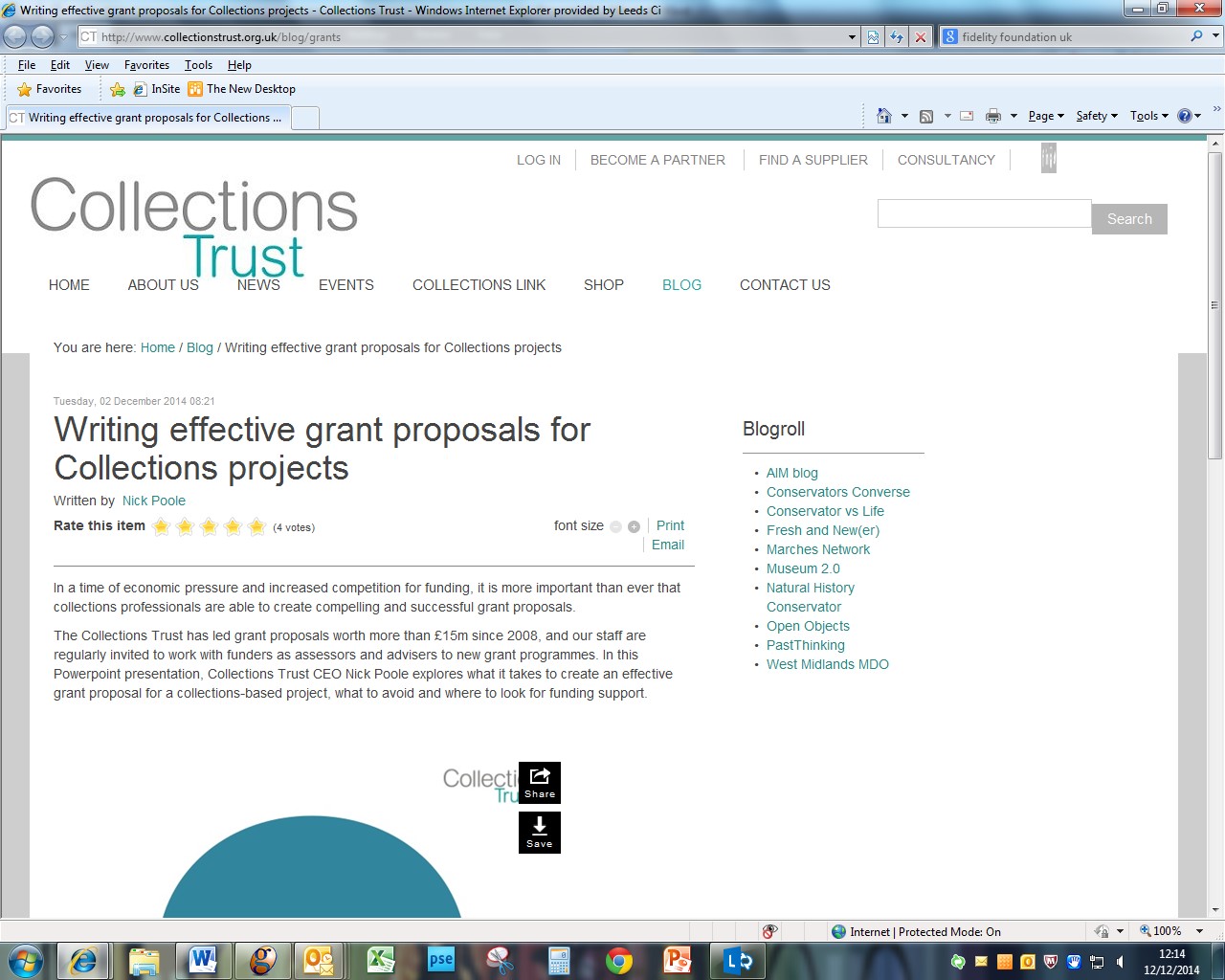
The 2014 Geology Curators’ Group conference and AGM dealt with how to raise money for natural science collections. The first speaker of the day was Nick Poole, CEO of the Collections Trust. He gave a great talk on where to look for funding, and how to get it once you’ve found it. I’ve converted my notes from his talk below, and the slideshow of his presentation can be found here (the slides are comprehensive and brimming with tips).

Screenshot of Nick Poole's web article on obtaining funding

Nick Poole’s advice on applying for grants

Sources of Funding

Nick Poole mentioned that the National Council for Volunteer Organisations has a good website for looking at who funds what, but after a bit of clicking around I couldn’t turn up anything particularly useful. If I’d had more time, and perhaps a membership number, I might have had a better experience.

A great resource is Funding Central. This website allows you to search 4,000 potential funders using the criteria of your choice.

At present the Heritage Lottery Fund (HLF) is in a cash-rich situation. However, they are concentrating on funding projects concerned with social utility or financial resilience. It’s quite hard to squeeze collections into those two titles.

At the end of Nick’s slides he has listed several organisations that fund UK museum projects and collections (slides 39 – 45). It’s well worth taking a look at. If you are lucky enough to work in London, Kent, Surrey, Birmingham or Manchester, the Fidelity UK Foundation also funds museum projects.

How do I get Funding?

When considering applying for a grant, only ever apply for money for a project that is consistent with your museum’s aims, otherwise delivering it will be hell.

Be prepared before the funding call goes out. Have a variety of projects ready to go, with need/scope/budget/supporting evidence available.

When writing a grant:

  1. RTFM (read the … manual).
  2. Give yourself time.
  3. Produce a good solid ‘hearts and minds’ story, with hard evidence to back it up.
  4. Many funders have one eye on the press release. Believe it or not, the projects with great names do seem to get funding. Create drama and make it unique and compelling.
  5. Don’t focus on your collections as a problem – focus on the problem to which your collection is the solution.
  6. Be realistic about cost.
  7. Understand how your proposal will be assessed.
  8. Always quote the funders to themselves: “As you yourselves said …”
  9. Don’t be insecure. Use the word ‘successful’. Don’t keep writing ‘if we get the grant’; write ‘when we get the grant’.
  10. Don’t bother with hubris (unless they ask for it). Avoid death by citation and focus on outcomes, not process.
  11. Build your reputation: become well known for delivering great projects.

If at first you don’t succeed, then ask for feedback, adjust your technique, and try again.


Clare Brown, December 2014

NatSCA Digital Digest

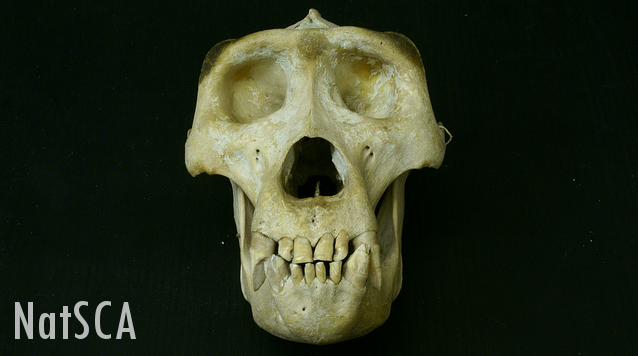
Gorilla skull on a black background

Your weekly round-up of news and events happening in the wonderful world of natural sciences!


Jobs

Unusually, there are a few natural science jobs out there in the UK at the moment:

Curatorial Assistant (Human Remains and Repatriation) – Natural History Museum. Applications close 29th March.

Curator/Lecturer in Vertebrate Palaeontology – Cambridge University. Applications close 3rd April.

Several interesting posts at Royal Botanic Gardens, Kew, including an Assistant Curator (applications close 7th April).

And, just in case you haven’t already seen it:

Collections Manager (Life Collections) – Oxford University Museum of Natural History. Applications close 10th April.

Events

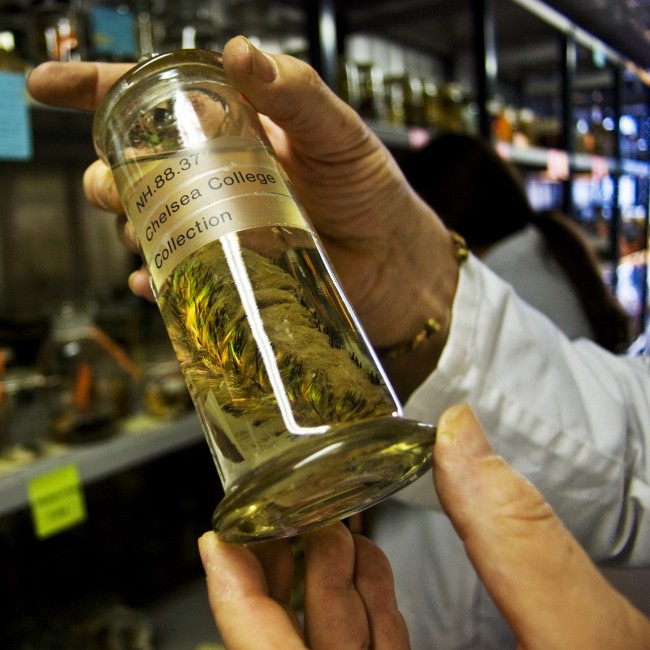
Simon Moore’s renowned fluid preservation course will next run on 1st – 4th June at the Horniman Museum & Gardens. The four-day course costs £300 (NatSCA members can apply for a bursary). See here for details and booking.

A fluid-preserved specimen in a jar is held up to the camera. Image: Russell Dornan

Learn the skills to care for fluid-preserved specimens (Image: Russell Dornan)

The Society for the History of Natural History (SHNH) has put out a call for speakers for their annual conference, to be held at Wakefield Museum on 31st July – 1st August.

The Museum Ethnographers Group (MEG) 2015 conference is entitled Nature and Culture in Museums, and will explore the relationship between natural science and ethnography. It takes place at the Powell-Cotton Museum on 20th – 21st April, and booking is open now!

In the Media

Today is Taxonomist Appreciation Day, a holiday devised by Dr Terry McGlynn, of California State University Dominguez Hills, to highlight the decline in taxonomic skills and the importance of museum collections.

These taxonomists definitely deserve some appreciation: A census of all known marine life by WoRMS (the World Register of Marine Species) has added many new species and removed 190,400 duplicates!

Darwin’s ‘strangest animals ever discovered’ finally find their place in the tree of life.


Got a submission for the blog or Digital Digest? Email us at blog@natsca.org!