NatSCA Digital Digest


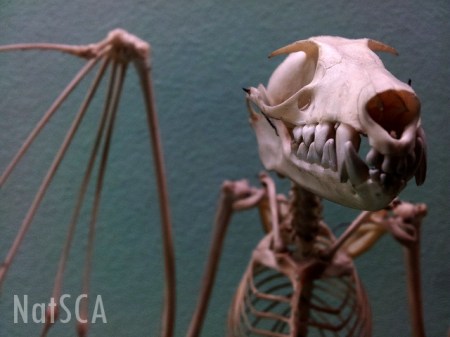
A mounted skeleton of a fruitbat leers at the camera

Welcome to the March edition of the Digital Digest! Without further ado…

News

Booking is open for the 2016 NatSCA Conference and AGM, ‘The Nature of Collections – How museums inspire our connection to the natural world‘, which will be held at the Derby Museum & Art Gallery and The Silk Mill on 21 – 22 April.

We have invited papers and posters looking at how museums have inspired and shaped the relationship of visitors and users of the collections to the natural world:

  • Projects between wildlife/environmental organisations/parks and museums.
  • The training & developing of naturalist skills using collections.
  • Artists projects connecting collections/gallery to outside spaces.
  • Looking at the relationship between natural history societies, their collections & museums.
  • Exhibition examples linking preserved specimens and our environment.

The Early Bird deadline is TODAY (Thursday 10 March), so get booking and save money!

If you’re not yet a NatSCA member, now is a great time to join – you can purchase membership and get the member’s conference rate for the same cost as a non-member ticket! See our membership page to join.

If you are a member, email the NatSCA Membership Secretary (membership@natsca.org) for your booking discount code.

Jobs

Geologist, Scarborough Museums Trust. A great opportunity for any rock and fossil enthusiasts! Application deadline: Friday 8 April.

Research and Data Coordinator in Science Policy (CITES), Kew. One of a selection of interesting posts currently on offer at Kew, the application deadline for this post is Wednesday 16 March.

Around the Web

A taxidermy warehouse in London was broken into on Tuesday this week, and 18 specimens were stolen. The Met police are appealing for information: http://news.met.police.uk/news/help-needed-to-trace-stolen-stuffed-animals-154850

DNA from museum specimens confirms a new species of forest thrush.

Why was the pink-headed duck’s head pink? Museum specimens reveal the secrets of this extinct species.

Curiosity re-discovered at the Vienna Museum of Natural History

There are few museums for me that inspire greater reverence for beauty and the endless variety of nature on display than the London Natural History Museum, the Oxford Museum of Natural History, and Sedgwick Museum of Earth Sciences. These museums all present collections in spectacular, imaginative, and informative ways. However, I was unprepared for the scale, majesty, and awe-inspiring nature of the Naturhistorisches Museum in Vienna, Austria, during my visit this summer. For me, it was evocative of an early ‘Wunderkammer’ filled with curiosities. I walked through what seemed like a T.A.R.D.I.S. of never-ending rooms and corridors filled with objects.

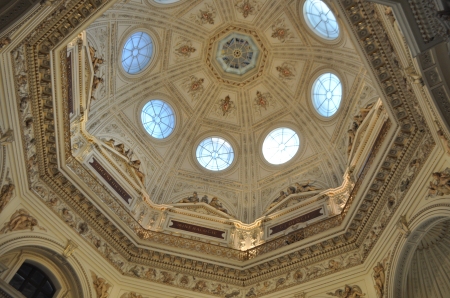
The museum was commissioned by Emperor Franz Josef I and opened in 1889. It faces its equally beautiful sister museum, the Kunsthistorisches Museum, where you can admire the works of Rembrandt, Durer, Rubens, and a frieze painted by Gustav Klimt. The marble, statues, and painted ceilings offer the feeling of a palace. As you enter through the elaborate front doors you are greeted by an immense dome that takes your breath away. Disciplines such as Zoology, Geology, Palaeontology, Botany, and Anthropology are inscribed on the dome’s edge. They allude to its amazing collections and the 19th century desire to understand and bring order to the natural world.

The dome hall in the Vienna Naturhistoriches Museum (Image: Anthony Roach)

The dome hall in the Vienna Naturhistoriches Museum (Image: Anthony Roach)

As I ascended the first floor to the Zoology gallery, the rooms or ‘halls’ are connected by long corridors which give you a dizzying view of the connected rooms stretching out in front of you. There are around 39 individual halls. I smiled when I walked into the first gallery called ‘Microcosm’ dedicated to Ernst Haeckel, the German Biologist whose beautiful drawings of radiolarians feature in ‘Kunstformen der Natur’, and inspired my interest in natural history.  The gallery contains models of microscopic radiolarians and water fleas, along with microscopes and a film featuring microscopic life.

The Zoology collections move from protozoans, corals, and molluscs systematically towards vertebrate life and is sympathetically and beautifully displayed, with some of the largest collections of insects and vertebrates I’ve ever seen. There are whole rooms filled with reptiles alone. The bird galleries contain remarkable specimens, and the museum has its very own taxidermy department. The mineral collections are five halls strong, with a Meteorite hall at the end that contains part of the ‘Tissint’ meteorite and an interactive that demonstrates the destruction force of meteorite impacts.

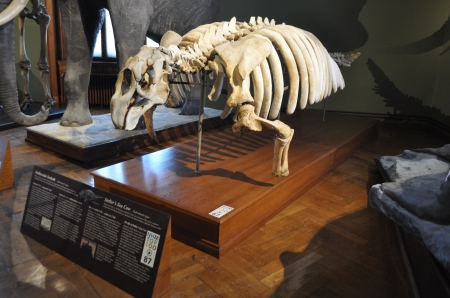
The museum houses over 30 million specimens, with 60 scientific staff working on the collections. Unforgettable specimens on display for me included a complete skeleton of Stellar’s Sea Cow (Hydrodamalis gigas), whose discovery in Alaska by Georges Stellar and rapid extinction is a frequently cited example of the consequences of systematic hunting by humans that was little known to science. I also marvelled at the 25,000 year old Venus of Willendorf figurine, whose palaeolithic origin is said to emphasise female fertility and childbearing. The museum’s palaeontology gallery is equally impressive, with an array of dinosaurs, flying reptiles, and a gigantic fossil turtle.

Skeleton of Stellar's Sea Cow (Hydrodamalis gigas) (Image: Anthony Roach)

Stellar’s Sea Cow (Hydrodamalis gigas) (Image: Anthony Roach)

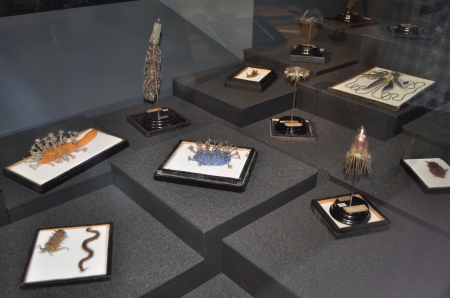
When I finally reached the top floor, I saw something remarkable. In one long case were about 25 beautifully coloured glass models of marine organisms. They were Blaschkas, and they have fascinated me ever since I saw some of my first at the Grant Museum of Zoology. The models were displayed as part of an exhibition called the ‘Knowledge of Things’ that celebrated the 650 year history of scientific discovery at the University of Vienna. The then director, Carl Claus, commissioned 146 Blaschka models to be made in 1880, and they still remain part of the university’s Zoology collection.

A myriad of wonderful Blashka glass models of marine invertebrates (Image: Anthony Roach)

A myriad of wonderful Blashka glass models (Image: Anthony Roach)

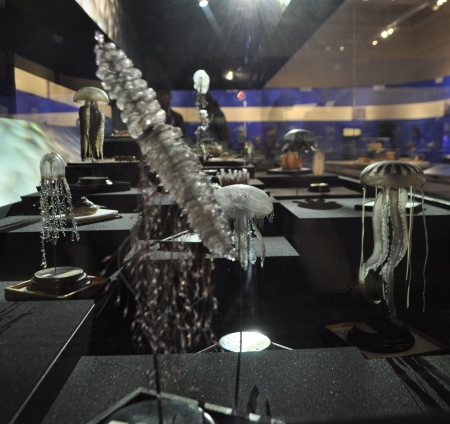
An example of a Siphonophore shown amongst many other Blashka models (Image: Anthony Roach)

An example of a Siphonophore shown amongst many other Blashka models (Image: Anthony Roach)

They were created by Leopold Blaschka, a glassworker whose skill at producing scientifically accurate models of plants and animals caught the attention of museums and scientific institutes. After the tragic death of his wife, Leopold left for America. Whilst travelling by sea he was fascinated by the marine life he observed. When Leopold eventually returned to Europe, his talents were recognised by Dresden Museum. who commissioned him to produce marine invertebrate models for scientific study. Along with his son Rudolph, he established a saltwater aquarium in Dresden to study their form and assist him in creating accurate representations of these enigmatic sea creatures.

The London Natural History Museum contains around 182 Blaschka models of anemones, nudibranchs, cnidarians, cephalopods, and other stunning marine organisms. The ‘Treasures’ gallery displays some of the best. As Miranda Lowe, Collections Manager responsible for the Blaschka models points out*, ‘‘The range, variety and colour of these invertebrate sea creatures show much more than spirit-preserved specimens, which do not retain vivid colour or form’’. You could argue that these beautiful glass objects are the museum equivalent of the Christmas tree bauble. After all, they are aesthetically, culturally, and symbolically valuable to us in much the same way.

Anthony Roach

Natural History Museum, London


*P. 34 – 37

Fight at the museum: filming and fees

This post is a late addition to our series of write-ups from the 2015 NatSCA Conference.


Fisticuffs are threatened between Paolo Viscardi and Jack Ashby, in the Grant Museum of Zoology's Micrarium.

FIGHT!

(Twitter notes on discussion Storified here: https://storify.com/Nat_SCA/natsca2015-tweet-along-day-one-morning)

There was an ongoing disagreement between Jack Ashby (of the Grant Museum of Zoology, UCL) and Paolo Viscardi (at the time of the Horniman Museum and Gardens, but coincidentally now also of the Grant Museum) that finally came to a head-to-head debate at the 2015 NatSCA conference. The proposition put forward to frame the debate was: “This house believes that public museums should not charge for filming when the production content aligns with the museum’s objectives”.

As with any debate, there were terms and conditions that needed to be clarified to avoid the argument from becoming mired in semantics or polemics, so it was mutually agreed that filming conducted primarily for promotional purposes (for example, in a programme that was directly about the work of the museum) and filming that only used the museum as a backdrop (for example, in an advert for a fast food restaurant) be excluded from discussion, since the former would be justifiably free and the latter would always be expected to pay a fee.

Round 1: Delivering your mission?

Paolo in proposition

The first point made was that public museums maintain collections for the benefit of their audiences, so where the use of the collections in filming supports the mission of the museum, it allows the collections to reach a wider audience, helping to fulfil their potential. In order for this to be worthwhile the museum should always be named, but need not always be paid.

Jack in opposition

So Paolo is arguing that working with film crews for free is simply another way of delivering a museum’s mission. To unpick that, let’s look at a typical museum mission statement. This one is from the Horniman Museum:

To use our worldwide collections and the Gardens to encourage a wider appreciation of the world, its peoples and their cultures, and its environments.

It is very easy for a production company to meet this aim, which means that the museum could easily give away a lot of money to these companies. But should they?

I would argue there are three things museums should be compensated for to pay for by film crews:

  • Staff time
  • Reduced productivity
  • The intellectual property (IP) inherent in the objects and displays.

It’s very easy to put a price on staff time, relatively easy to put it on reduced productivity but very hard to put it on IP. But it’s the IP that most interests the film crews.

For the sake of argument, let’s say the staff and productivity costs of a day of filming are £500 – that could be two members of staff, costing £50 per hour for five hours, plus two school groups you didn’t book in, plus not being able to use the phone for a day.

That is how much the Museum is paying to facilitate a film crew, and doesn’t include the value of the IP.

If a film company were undertaking a project outside the museum that closely shared the museum’s objectives, and they asked you to donate that same £500, you would send them packing.

It really is the same thing.

Filming companies are commercial entities, who make money. Don’t let anyone tell you otherwise. Whatever you charge, they will make money off of your collection.

It’s not right that other people profit from your collection if the museum is left out of pocket.

Round 2: The marketing value?

Paolo in proposition

Jack is right to point out the costs of filming, but he hasn’t factored in the benefits that can be gained. This is possibly because it can be very difficult to put a value to the benefits in financial terms. If filming results in a positive message about your organisation, your staff and your collections – in line with your mission – then it can raise awareness about your organisation and demonstrate its value to potentially huge new audiences.

Of course, TV audience sizes will vary, but to get a sense of potential numbers reached, the BBC4 Secrets of Bones series, which used collections from all over the UK, had a weekly viewing figure of 494,000 between February 17th and 23rd 2014*. How much would you expect to spend on advertising to reach a similar audience? Keep in mind that the cost of a single 30 second advertising slot on one of the ITV channels averages £2,932 – a figure calculated from the 2015 ITV spot cost rates, which vary from £50 to £16,540 depending on the time of day and region.

Another example of the potential audience reached by featuring in a TV programme is illustrated by the One Show broadcast on 4th June 2014 featuring an interview about cat anatomy in the Horniman Museum & Gardens Study Collections Centre. This had an audience of 3,610,000 viewers that week*. Put in perspective that means a specimen which had been off display for several decades was used to engage more than 4 times the number of people who visited the Horniman that same year (859,698 – taken from the Horniman annual report 2014-15), at a time when museums are being encouraged to make their stored collections more accessible. Compared to the amount of work required to supervise public tours of museum stores, prepare exhibitions, or administer loans, providing access for a film crew is remarkably cost effective for the potential engagement outcome.

When it comes to reporting, how might this kind of exposure be viewed by your trustees or the local councillors responsible for funding your service? For large organisations with high-profile activities it may not be so important, but for some smaller organisations with less exposure it may count for a lot more. Of course, I’m not saying that all filming in museums should be free of charge, but where the filming is sympathetic to what the organisation is trying to achieve, I think that the benefits can outweigh the costs.

Jack in opposition

It’s easy to see why this kind of argument is tempting – these are impressive numbers. It’s the same line the production companies use when trying to con you out of charging a fee.

However, I strongly believe that simply appearing in documentary as a venue has extraordinarily small impact on visitor numbers – or at least one that we haven’t been able to measure. Comments like “I saw you on the One Show” appear extremely infrequently in our visitor studies. I have never encountered a non-marketing production that generated any useful audience development. (But I do recognise that not all profile raising activity is about real life visitor figures.)

As much as they may try to tell you otherwise, I don’t believe that the simple “honour” of being seen on the BBC translates to strategic marketing. In all likelihood, the people that already know you are the ones that recognise you on TV, not new audiences.

Not only that, but it is essentially impossible to guarantee that mention of the museum’s (correct) name makes it into the final cut, and in my experience many companies won’t commit to doing so in the contract (for the logistical reason that they can’t keep track of all the people they might agree to include as editing progresses). This means you may think you’re getting good coverage, but then it ends up simply saying “I’m in this museum” on the final show, and you scream yourself hoarse at the TV (this has happened to us more than once, but fortunately we were paid so all was not lost).

To end, I can’t get away from the most important point of all:

Even if you do share their values, AND they agree to mention the museum’s name every thirty seconds, the production company is STILL willing to pay (whatever they tell you). Film crews ALWAYS have a locations budget, except perhaps News (please tell me if I’ve been sold a lie on that one!).

I feel bad pointing this out, but the Grant Museum also featured well in Secrets of Bones, and the One Show, with plenty of name credits. The thing is, they paid us.

The point is that you can meet your shared aim AND get paid. No brainer.

Thoughts from the floor:

Different organisations have different levels of demand for filming, so there are different degrees of cost and potential benefit. Bristol and the Grant Museum get lots of requests, so they become a major drain on resources and get plenty of exposure of their collections. Collections that aren’t situated near TV production companies get a lot less interest and may benefit far more from the exposure – and not charging may help encourage their use.


*Figures obtained from the BARB database [http://www.barb.co.uk/]


Jack Ashby is the Manager of the Grant Museum of Zoology

Paolo Viscardi is the Curator of the Grant Museum of Zoology, and that the time of the conference was the Deputy Keeper of Natural History at the Horniman Museum and Gardens.

NatSCA Digital Digest

Chameleon

Jobs and Traineeships

Norfolk Museums Service is offering six 12-month paid traineeships, including one post in natural history. The closing date for applications is 3 January 2016. See here for details.

Curatorial Assistant, Anthropology Audit: Natural History Museum (NHM), London. Six-month collections-based role. Applications close 7 December 2015.

Documentation Officer (job share): Horniman Museum & Gardens, London. 19 hours/week. Applications close 14 December 2015.

Events and Exhibitions

Introduction to Diptera Families. Oxford University Museum of Natural History. A two-day workshop on the ecology and identification of flies.

Gifts for the Gods: Animal Mummies Revealed. Manchester Museum. An exhibition showing how modern science can help explain the ancient practice of animal mummification. Open now until 17 April 2016.

Wildlife Photographer of the Year 2015. Natural History Museum, London. As always, this is a stunningly beautiful exhibition, and well worth seeing. If you can’t make it to London, you can also see it on tour at other museums around the UK.

Collected and Possessed. Horniman Museum & Gardens, London. An exhibition by artist Mark Fairnington, inspired by the collections of the Horniman, NHM, and Wellcome Collection. Open now, until 24 January 2016.

Around the Web

A WNPR podcast looking behind the glass of the taxidermy dioramas the the Peabody Museum.

Who’s digitising what? The New York Times guide to online natural science collections.

In pursuit of plants: The Marianne North Gallery at Kew.

Funny Bones

I wanted to be an Archaeologist when I was 11, and this was certainly down to a fascination with the bones of animals. My inspiration from a very young age came from the wonderful series of ‘Funny Bones’ books by Allan and Janet Ahlberg. The skeletons certainly made me think about how the bones of humans and animals (admittedly not 100% accurate) moved together. I trace my later interest to the many books on dinosaurs and prehistoric life that I assiduously read in my school library. Fast forward 20 years and as an intern at Auckland War Memorial Museum in 2012, I was allowed to ‘have a go’ at preparing some native birds for skeletonisation by de-fleshing them. At Exeter’s Royal Albert Memorial Museum, I worked on a small project to re-house some Moa bones whose storage and provenance needed to be updated. However, I wasn’t aware of the methods to clean and maintain bone and re-mount skeletal collections in museums.

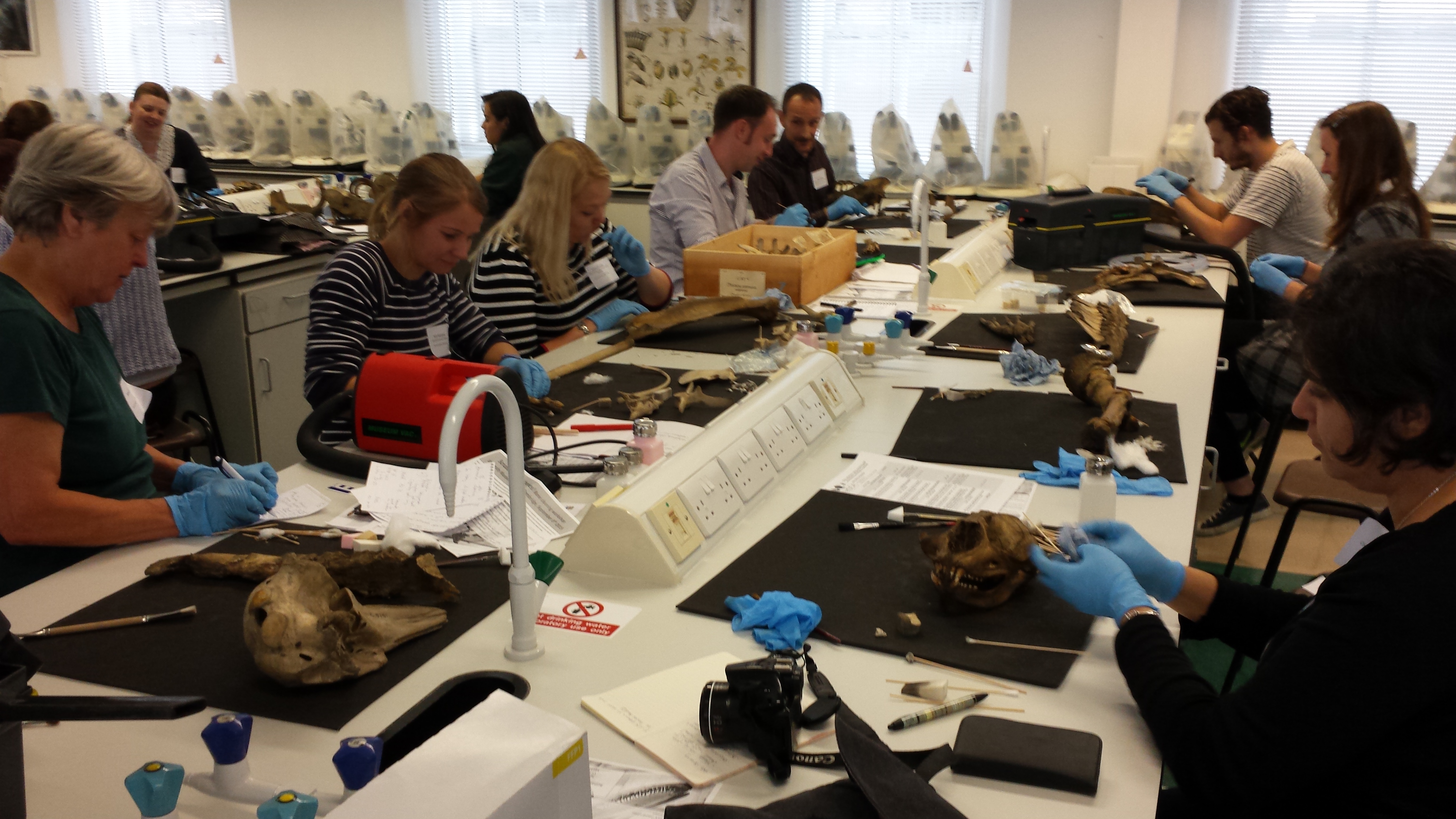
I was therefore pleased when NatSCA and conservators from the Cambridge Museum of Zoology put together an amazing conference and workshop called ‘Bone Collections: using, conserving and understanding osteology in museums’. Depending on your area of interest, you could attend for some or all of the talks, or take part in a bone cleaning workshop hosted by Bethany Palumbo, Conservator at Oxford University Museum of Natural History, and Vicky Singleton and Natalie Jones of Cambridge University Museums. By taking part, I was able to gain some practical hands on experience of handling and observing bones in collections, and using a variety of dry and wet cleaning methods that are recommended as safe to use, easy to apply, and non-invasive.

Bone cleaning in progress (Image: Anthony Roach)

Bone cleaning in progress (Image: Anthony Roach)

Bethany began by outlining the structure and composition of bone and the impact that light, humidity, and temperature can have on bone if not properly cared for. Bone can become bleached through exposure to light. The surface of bones can crack if they become too hot or suffer mould damage if left in cold, damp conditions. Bethany explained that the bone itself can also cause problems, such as with the secretion of natural fats and oils, which are acidic and can ooze out of specimens long after they have been cleaned and erected for display. This can lead to acid burn. Mechanical damage of bones can also occur, where wire is excessively tight in articulated specimens, or fatty acids react with copper wire and pins to cause Verdigris.

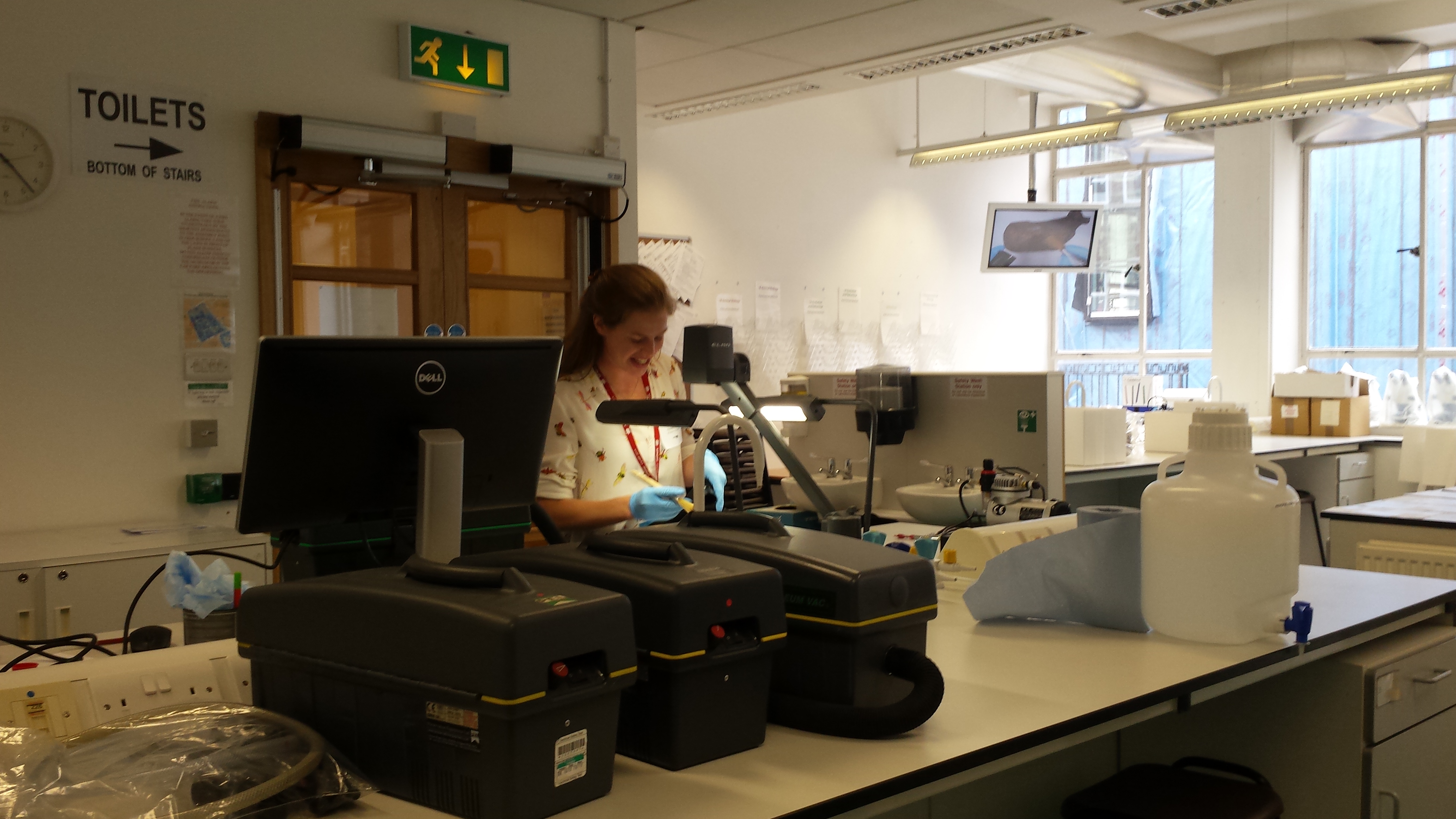
Vicky Singleton,  Conservator at Cambridge University Museums  pictured demonstrating dry cleaning methods (Image: Anthony Roach)

Vicky Singleton, Conservator at Cambridge University Museums pictured demonstrating dry cleaning methods (Image: Anthony Roach)

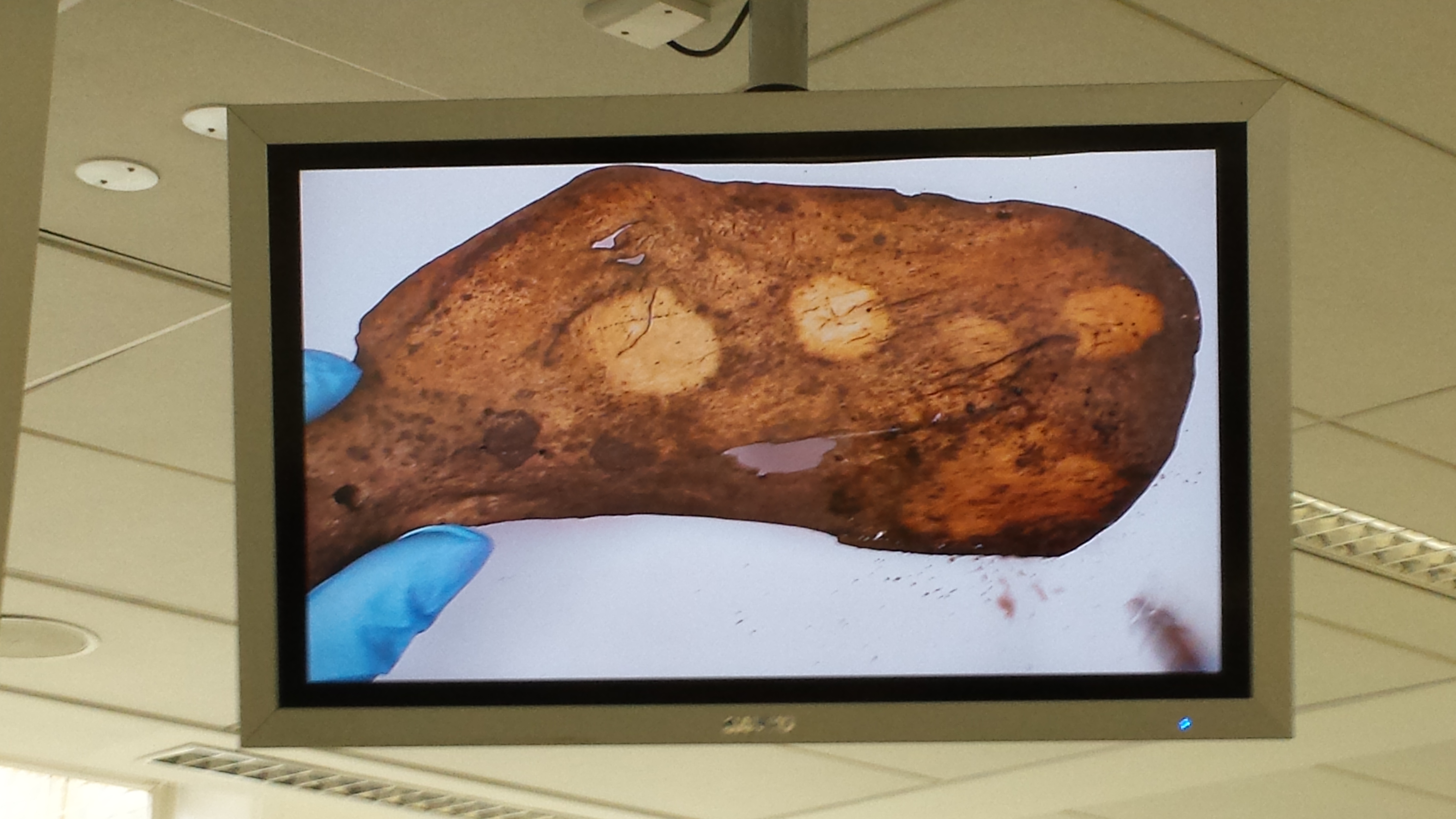
Vicky Singleton and Natalie Jones then systematically went through the various methods for dry and wet cleaning of bones. The methods for dry cleaning include using a vacuum and brush, smoke sponge, a ‘groom stick’ made of natural rubber, and air. These methods are less time consuming, less invasive, and more cost effective than wet methods. I was able to choose specimens from a box of assorted bones, and see the impact of the methods for myself. I could see the difference literally first hand on the digits of a primate hand, using the various dry methods. I then used the wet methods on a collection of horse vertebrae. The wet methods made a dramatic difference to the surface of the bone. These include using solvents such as de-ionised water, ethanol, and white spirit, enzymes, and detergents (e.g. Synperonic A7). I was amazed by the impact of white spirit on greasy bones, where water made little or no impact. The clear favourite to remove dirt in general was actually something I hadn’t ever considered: human saliva, which is full of enzymes. Human saliva! Who knew?

Bones shown partially cleaned by various solvents including water, ethanol and white spirit, as part of the wet cleaning methods (Image: Anthony Roach)

Bones shown partially cleaned by various solvents including water, ethanol and white spirit, as part of the wet cleaning methods (Image: Anthony Roach)

The talks were equally excellent, such as the session by Paolo Viscardi on the uses of skeletal reference collections at Sheffield University, which consists of over 1800 specimens, organised in a useful way for teaching and research. Jack Ashby’s #BoneIdols talk about the successful crowdsourcing project to protect some of the Grant Museum’s most scientifically important and rare specimens was also inspiring. The quagga, for instance, has became something of a celebrity in its own right through a very successful marketing campaign where visitors could see the conservation, re-mounting, and re-storage of the specimen. Interest was also maintained through press releases and blogs about the Quagga and the use of technology used in museums. Jan Freedman’s ‘Game of Bones’ talk on the methods for preparing animals for skeletonisation and using bone collections was also memorable.

Anthony Roach, Natural History Museum (NHM)