Curating Biocultural Collections: A Review.

Book Review:
Curating Biocultural Collections : A Handbook
Edited by Jan Salick, Katie Konchar and Mark Nesbit.
2014. Kew Publishing. Royal Botanic Gardens, Kew. In association with Missouri Botanical Garden, St Louis.
£30
Available from Kew online
E-book available from Chicago University Press

By Jan Freedman, Curator of Natural History, Plymouth City Museum and Art Gallery.

It may appear rather unusual for a natural history curator to review a book on ethnographic collections. However, with a plethora of crossovers from similar storage conditions to comparable conservation methods, this book may potentially be more beneficial than you may first think. I was interested to review this book because I am not an expert on biocultural collections. I am keen to see if this book would be useful to assist with the diverse natural history collections we care for.

Biocultural (ethnographic) collections include any object made with the parts (or whole) of animals or plants. This can include herbarium collections, clothing, animal artefacts, DNA collections, skeletal collections, and many more. These collections provide wonderful evidence of cultures past and present and how they all relied on their natural world to survive; as we still do today. Due to their very nature, these collections require analogous collections management with natural history specimens, and many specimens in our collections cross over (eg. Herbarium, wood samples, etc).
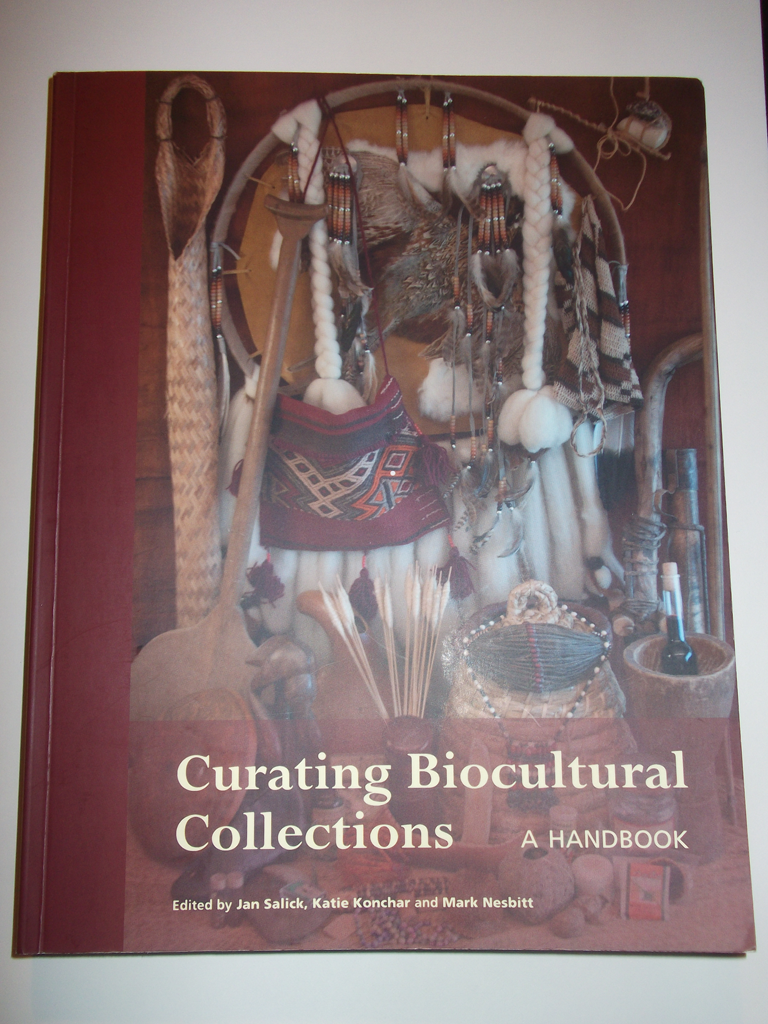
Front Cover

Front Cover

The book itself is well laid out. Each chapter is focused on a different area to fit into one of the five sections: the introduction; practical curation (materials); practical curation (reference material and metadata); contexts and perspectives; and broader impacts. I like that the chapters are written all with the same clear structure, sub headings, images and a detailed accompanying bibliography. They provide detailed, expert advice, case studies, and examples of best practice.

For me, the writing tone is very professional, almost textbook style in a factual way that provides a lot of information in each section. And as such it is not a light read; possibly a book that you wouldn’t read from start to finish. But you would be able to easily search the index for an area you were looking for, and find the most up to date information written by experts in the field. Although I find more casually written pieces easier to digest and understand, I can actually see myself using this book as a reference for many different areas in the future.

The sections covered are detailed, precise, and written by experts across the world. The first section introduces the types of collections that are dealt with, the ethical standards, and the impact of the collections; lots of cross over with natural history collections, as you will find throughout the book. This first short section finishes with a visually impressive summary of the main collaborators of putting the book together; Missouri Botanical Garden, National Botanic Gardens of Ireland, National Museum of Natural History, Paris, Royal Botanic Gardens, Kew, and the Smithsonian Collections.

Section 2 focuses on practical curation, starting with including the basics (environmental conditions, pests, hazards, storage, handling, and labelling) to the more detailed, including storing voucher specimens, reference collections (botanical and zooarchaeological), seeds, DNA and even living plant collections. I found this section interesting because of the huge variety it covered and amount of detail in each chapter; if you find yourself wondering ‘how do I curate genetic resources’ then you can easily flick to Chapter 8 to find out. I had not really thought of curating DNA specimens, when we actually have them en masse in natural history collections. There are a couple of chapters in this Section I will take my time to read with interest in the coming weeks.
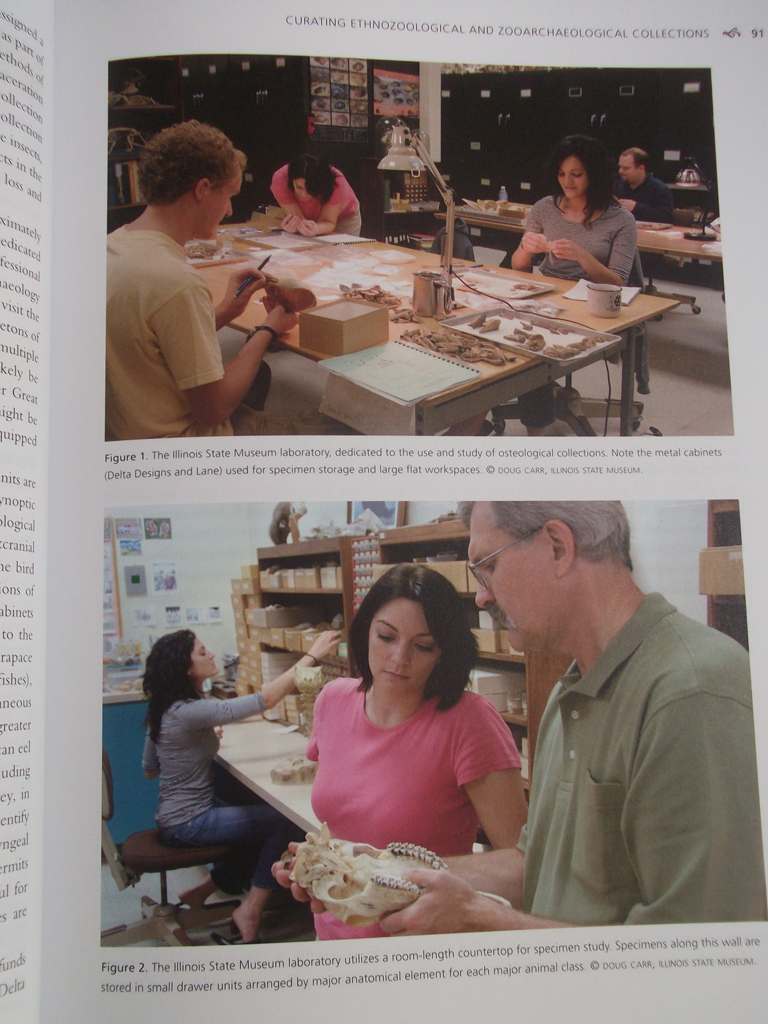
Examples of Images

Examples of Images

Section 3 looks at the curation using reference materials and metadata. Covering best practice in database standards, cataloguing of collections, and associated photograph collections, these chapters provide detailed guidelines on standardising the information for the future. In short, it spells out the importance of recording everything you know associated with that specimen; from letters/emails to photographs of the sites/collectors, and any associated documents. There is also a chapter on the legalities of biocultural collections, which does cover the important issues of CITES and copyright. The chapter that jumped out for me covered how to store oral history recordings and videos. This may not appear relevant to a natural history curator, but I think it may be getting more and more important: after organising and leading several pop up museums around the city, the amount of stories from local people sparked by seeing a photograph, painting, or mineral, was amazing. I wished I could record them all, because these stories will soon be gone forever. I have several collections where the collectors, or people who knew the collectors, are still alive, and I am keen to capture their thoughts and anecdotes relating to the collections before they are lost.

It is a shame Section 4 is the shortest section, as this examines different perspectives on cultural collections. Although not directly related to the hands-on dirty curation work, this section makes you take a little step back and think about the collections we care for. Alongside legal issues, it highlights the importance of respect and building relationships between museums and communities (from the indigenous communities in this book to the communities of amateur specialists for the natural history curator). Many specimens in our stores once belonged to someone and each individual specimen has a story to tell, linking back to the collector. These are the stories that bring the collections to life; forgetting where they have come from cuts any personal link with the visitors.

The final section of the Handbook looks at the broader impacts of biocultural collections. We all work with our collections and have a variety of users from the visitors in the museum, artists, researchers, and school groups. However, looking at the different ways different collections are used can invite ideas in using your own collections in a new and exciting way. This section goes into quite a lot of detail about the different impacts these collections have, where there are many cross overs with natural history. The potential for several different research outcomes for biocultural collections are outlined, many of which can be tied in with natural history collections too (showing a closer working between two departments). A separate chapter examines the use of collections for education, which many of us do on a regular basis with our own collections. This Section includes a useful chapter on the uses of herbarium specimens, including vouchers specimens, and DNA analysis. A useful section in the book showing that sharing ideas and ways of working can encourage new uses of collections.

I would recommend this book to a museum that holds ethnographic collections, and a bonus if it also holds natural history collections. The book can be used by both areas to help safeguard the collections for the future. It is a Handbook which can be used if you are undertaking a specific collections project or if you updating your database. Clearly laid out with nice images the chapters make available the most up to date information on that area.

The book provides a really useful guide to caring for a diverse range of collections many of which a natural history curator cares for too. As there is a lot of cross over, the book can also develop a stronger understanding between departments about the objects and specimens they care for; a better understanding of other curators collections will lead to greater working relationships.

Adaptating to Change

This report on adaptation has been brought to you by curatorial trainee Adam Peel.

20140718-082224.jpg

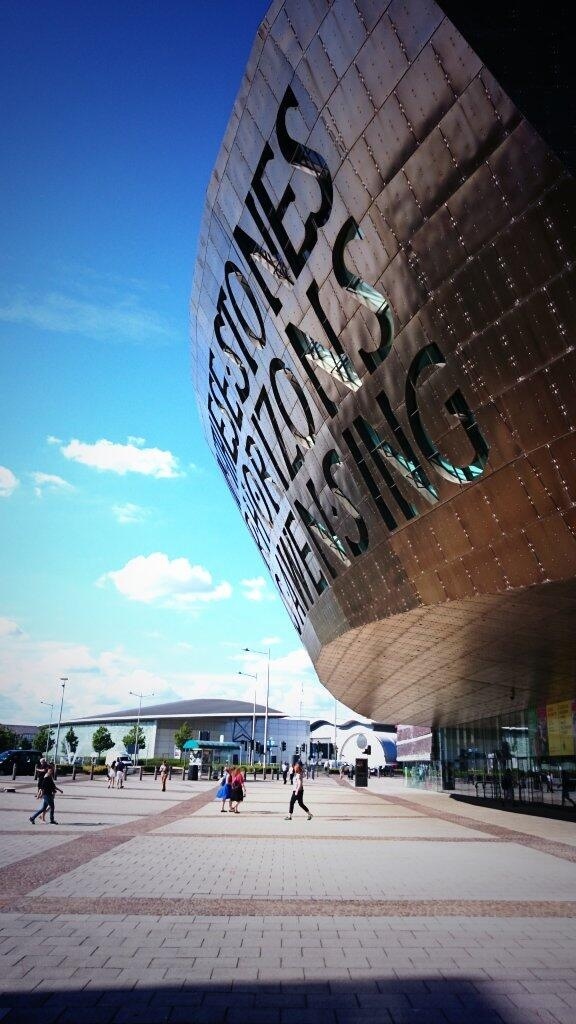
One particular talk I found really interesting at this year’s NatSCA conference at the WMC in Cardiff was the one delivered by Paolo Viscardi, Justine Aw, and Russell Dornan about ‘Rising to the challenge’. The talk was essentially about how adaptation is needed within NatSCA itself and museum collections.
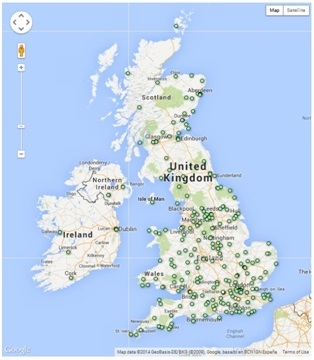
A rather interesting aspect of the talk (for myself anyway) was delivered by Justine Aw who discussed the makeover which the NatSCA website has recently undergone as well as some of the features that have been added. I found the addition of the crowd-sourced interactive map on the page ‘Natural History Near You’ to be the most intriguing. This is a section of the website where museum professionals, members of NatSCA or anyone who has access to the internet and an interest in Natural History can enter information on Natural History collections across the UK & Ireland.

20140718-082244.jpg

To do this, the webpage allows people to add/edit existing information and even for people to add their own new entries to the map by filling in a form at the bottom of the page.
It is important for us to keep records of Natural History collections, as people need to know about them in order to get the most out of them, no matter how big or small a collection is, as well as them providing us all with physical records of what is happening at all levels.

This, with the other recent additions to the site and the general makeover, show just how seriously NatSCA and everyone involved with Natural History take adapting in order to keep up with the rest of the world & technology.

Tetrapod Zoology Conference – Part One

20140716-171224.jpg

Tetzoocon is the brainchild of Darren Naish and John Conway. The first of its kind, Tetzoocon specialises in the earliest four-footed vertebrates and all of their descendents – no mean feat considering most specialisations limit themselves to subgroups of these, such as amphibians or birds, and even then the subject is enormous.

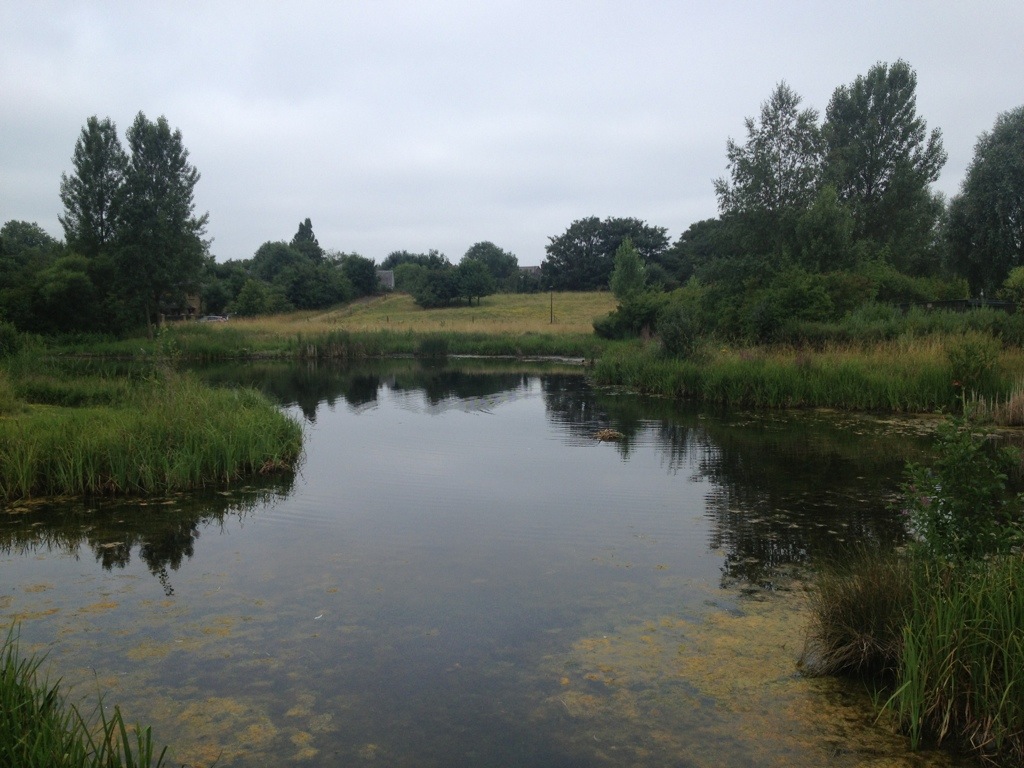
The conference was held in the London Wetland Centre near Hammersmith. A beautiful oasis of nature in a desert of buildings and airport traffic.

We’ll talk about the venue in more detail later but first: the talks.

Darren Naish

Darren opened the day with a talk on speculative zoology: a subject which covers future evolution, intermediary species of known clades, extrasolar evolution, and purely imagined beasts living within earth’s existing ecological niches. Of these, only one has testable predictive power (the intermediary specimens between known clades) and in time will be either borne out or disregarded. Needless to say that natural history collections do and will continue to play a large role in this thought experiment.

There is a long tradition of humans imagining new creatures dating back thousands of years but it has really erupted in the last few decades – from the massively influential books of Dougal Dixon to the gross box-office smash Avatar.

There is a new book out from the makers of All Yesterdays which explores speculative zoology in more detail.

Mark Witton

Renowned pterosaur palaeontologist and palaeoartist Mark Witton was next with a look at how azhdarchids have been portrayed in art since their discovery. The image of azhdarchids was all over the place for a long time – a lot of what we ‘knew’ about them appearance-wise was based on previous speculation until these beautiful pterosaurs were methodically examined and a coherent picture of what one looked like started to emerge. Today if you look at a lot of modern palaeoart you can see the family connection in the group, which is a good indicator that the artist is on the right tracks. Again the natural history collection is employed here to help artists be more accurate in their portrayal of living species. What else can I say about Mark’s talk that won’t divulge as-yet unpublished information? I’ll say this: if you’re at all interested in Mesozoic ecosystems you will attend Flugsaurier2015 and hopefully Mark’s research will be published by then. If you can’t tell already I’m really excited by this news item!

Paolo Viscardi

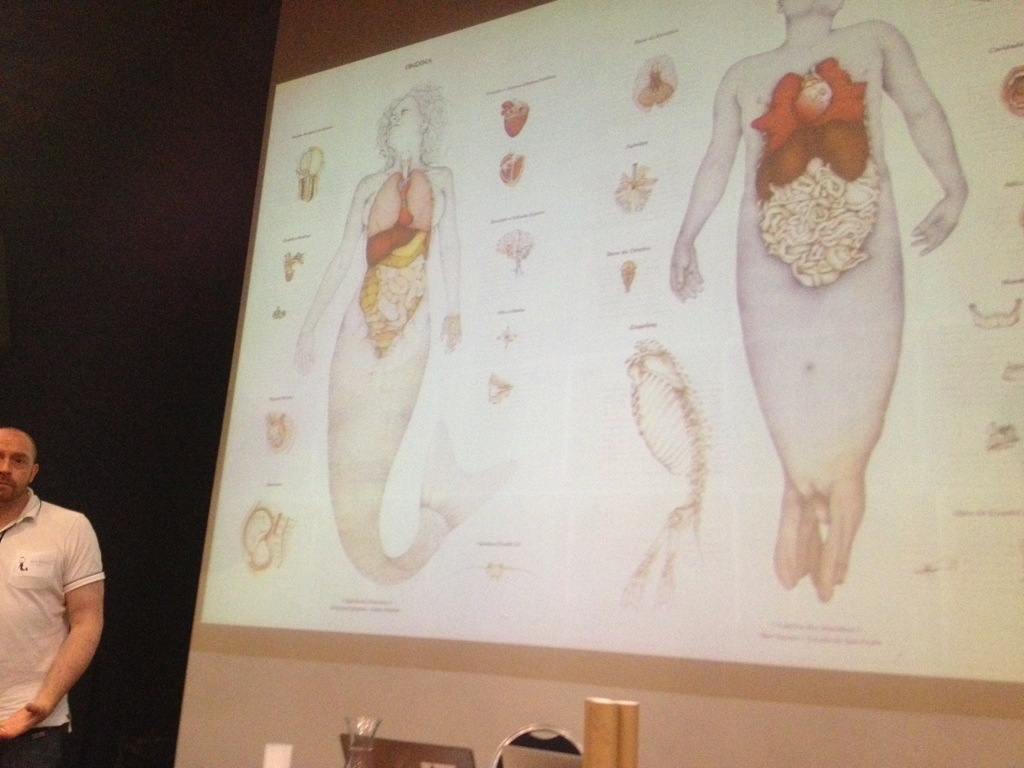
NatSCA‘s new chair Paolo Viscardi gave us the latest on mermaid specimen research: the latest news being of course that they are fabricated – often badly. Contrary to the claims of certain unscrupulous documentary makers this is all we have by way of mermaid evidence: a bunch of assorted fake specimens. There are no mystery hominid skulls with sonar adaptations or any ichnofossils of any kind to suggest that we have ever shared our planet with an ape more aquatic than a chimp.

There have been times when an animal has been thought to be a rumour/fake and then a verifiable specimen turns up. That’s the crucial factor and a vital role played by natural science collections in separating hearsay and conjecture from fact. When we talk about a new species we start with a type specimen and base comparisons of subsequent specimens against the type. With mermaids we have numerous cultural ‘eyewitness’ accounts, not all of which agree on the description. The Western image typified by films like Splash and the Little Mermaid do not describe the same animal as the Eastern description, such as the Japanese Ningyo or Gyojin – nor do they match European sailor’s eye-witness accounts which effectively resemble a manatee with a human neck and fake specimens have been made by starting with a dead manatee and working from there.

With all these fake specimens hanging about, Paolo has started sorting them into types of man-made species – a biologist’s solution to the problem of cataloging anthropological artefacts. They’re fascinating from the perspective of human history even if they aren’t a new addition to the animal kingdom.

There was way too much interesting stuff to tackle it all in a single post. Tune in later this week for part two of Tetzoocon.

20140716-171254.jpg

Uses of Natural History Collections – NatSCA2014 Meeting

20140714-084406.jpg

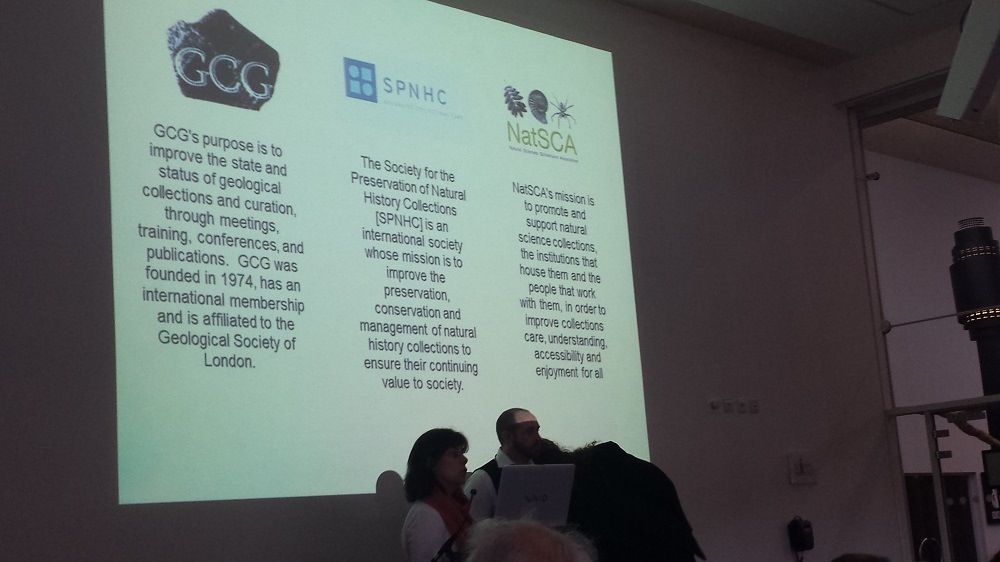
Day three of SPNHC2014 kicked off with the NatSCA conference! Clare Brown introduced the session with a brief account of the importance of NatSCA. Many non-specialist museums do not have access to staff with an understanding of science, and so NatSCA can provide support to these institutions as well as demonstrate the importance of advocating collections and the many different uses that can be made of them.

The NatSCA conference continued with a series of (strictly!) five minute presentations.

Henry McGhie, of the Manchester Museum, discussed how natural history collections are under-appreciated and underused, and how an informal partnership of museums in the North West has formed in order to aid advocacy.

Rob Huxley, Natural History Museum, London, showed that museums could be used much more by a range people, such as molecular biochemists, vets, geneticists or medical practitioners. We need to think of strategies for reaching out to many more people that could make use of the collections.

David Schnidel from the NMNH Smithsonian Institution suggested we focus on what others might want from the collections, and the new uses that could be discovered for data. Scientific collections could hold answers for research in a range of fields such as the food shortage crisis, disease research and climate change. In addition to scientific research, collections could be used for inspiration for artists, fashion designers, or even architects. With millions of objects across the UK, the opportunities for expanding the usage of our collections could be endless!

Glenn Roadley, Natural Science Curatorial Trainee

20140714-084334.jpg

Lepidoptera Project

20140711-112651.jpg

Molly and Gina work at the Oxford University Museum of Natural History on a 2 year project to re-curate the Lepidoptera collections. This involves the databasing of the entire World Moth collection in the Hope Entomology Department.

As part of our day to day routine we document drawers of moths to species level. This means we record the genus and species, the author, and how many specimens we have of each species per drawer. Another important part of our role as curatorial assistants is to repair the wings and bodies of any damaged specimens. This also involves the replacement of any old pins that are causing verdigris, which can pull a specimen apart, although we keep any pins of historic importance.

We also look for “lost” type specimens in the collection. These are types that may have been overlooked or are not immediately obvious to the casual observer. Learning to recognize handwriting is a useful skill to have when looking for types. We then check the appropriate literature to verify its type status and move the specimen to the type collections. So far we have found over 50 putative type specimens.

Type specimens aren’t the only interesting thing we find while recurating collections. Specimens collected by Charles Darwin, Alfred Russell Wallace, and Henry Walter Bates have been found in the moth collections, as well as drawings of caterpillars by Frederic Moore, 5 species of extinct moths and most recently, a butterfly from Tonga that was collected on the H.M.S. Challenger expedition in 1874.
We also are responsible for handling enquiries about the Lepidoptera collections. This includes artists, researchers, students, and interns and can be in person or via email. We have also facilitated a 6 week internship to work on the Sudanese butterfly material.

20140711-112808.jpg

Gina: At the moment I’m currently working on the family Noctuidae, which is the largest Lepidoptera family. To give you an idea of how large, I’m nearly done with this family but have documented over 30,000 specimens. My favourite aspect of this job is detective work. The handwriting on old labels attached to specimens can tell you a lot about the history of a specimen and the collector. It takes a while to learn someone’s particular style of handwriting, but once you do, it can open a world of information for you. For example, we have a lot of type specimens described by Francis Walker. By recognizing his handwriting, we know that a label marked with his hand may possibly be an overlooked type specimen. Label shape and colour can also tell you who might have handled or determined the specimen in the past. John Obadiah Westwood, the first Hope Professor of Entomology, often put blue, diamond shaped labels on specimens in his collection.

20140711-112947.jpg

Molly: Throughout the project both of us have been presented with different challenges as we are working on different families and they often require specific treatment. You can’t treat Cossidae the same as Pyralidae. Due to the size difference, although the basic requirements are the same, Cossids tend to be more robust.

I am currently working on Pyralidae and I’ve heard numerous anti-moth comments: “Didn’t realise you were such a fan of the 70’s”, “Oh look, more beige moths!” There are many more comments, including the popular reference to a drawer of Lepidoptera as “flying stamps.” Phooey. Moths and butterflies draw people in, they are family friendly and are often the first port of call for amateur naturalists. The Lepidoptera Project has over 700 followers on twitter. That works out at just over 100 new followers a month. Moths might be beige, but they sure are popular.
You can follow us Twitter: @hopeulikemoths