
Written by Adriana Ballinger, Yale University Charles P. Howland Postgraduate Research Fellow at the National Museum of Ireland, Natural History.
Natural history specimens are often inaccessible to the communities from which they were collected. As a result, source communities lack opportunities to connect with elements of their local heritage, and museums and their publics overlook the place-based expertise that many of these communities hold about the specimens we research and see on display. Scientists lead the knowledge creation process surrounding natural history specimens, but source communities can also contribute valuable information, especially regarding the meanings that flora, fauna, and geological features embody in their environments of origin. Although these cultural contexts are often intangible and unquantifiable, they are nevertheless important facets of specimens’ natural histories. For the past year, I have led “Our Irish Natural History,” a community-driven research and exhibition project at the National Museum of Ireland (NMI). I set out to increase the accessibility of the NMI’s natural history collections, explore innovative avenues for community-led interpretation, and create new opportunities for public engagement.
My most important task in initiating “Our Irish Natural History” was securing the participation of Irish communities. The National Museum of Ireland was always my preferred partner institution for this project because it is home to the Irish Community Archive Network (iCAN), an initiative of the Museum which supports communities in collecting and sharing their local history and heritage. Approaching communities through this well-established network foregrounded our working relationship in a place of trust. I also avoided a potentially extractive dynamic by securing guarantees from Paolo Viscardi, Keeper of the NMI’s Natural History Collections, about resources we could offer the participating communities, including curator-led collections visits, free use of museum media for the communities’ online archives, and potential funding for the production of multimedia. Additionally, I work closely with Lorna Elms, iCAN’s Development Officer, to ensure that my choices benefit the communities as much as possible.
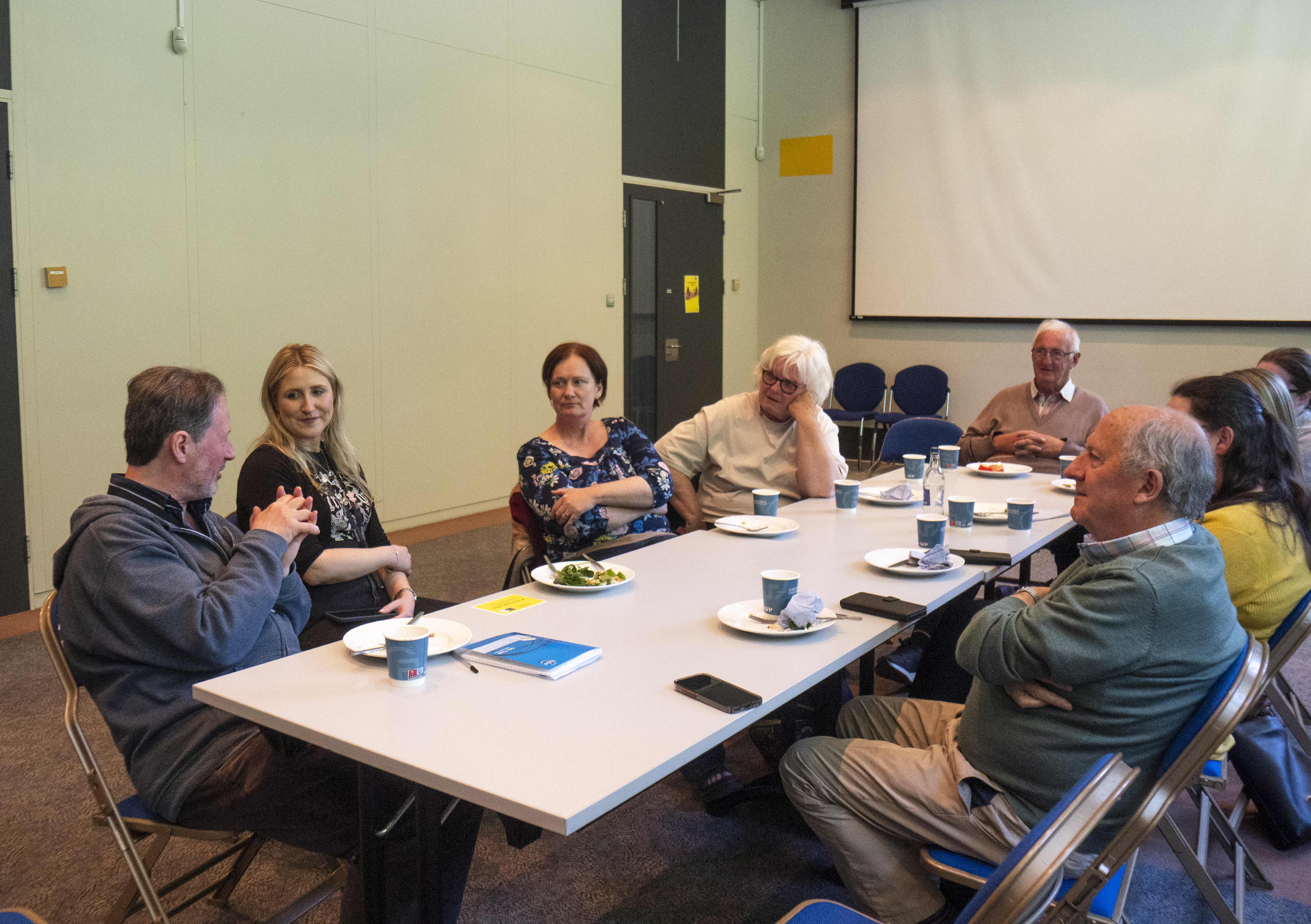
Emma Murphy and Dr. Patrick Roycroft (leftmost corner) chatting with the community members. Photograph by author.
For more than four months, I guided and supported eight iCAN groups as they researched their communities’ connections to native specimens. In May of 2025, we visited the NMI’s Natural History Collections with Terrestrial Zoology Keeper Emma Murphy and Geology Keeper Dr. Patrick Roycroft. The communities had the opportunity to interact with their specimens of interest and learn directly from the museum’s experts. Eric Shaw, a member of Clarecastle & Ballyea Heritage Group, was particularly excited to see several Lesser Horseshoe bats that Richard J. Ussher had collected from the Edenvale Caves of County Clare. Eric often encountered Lesser Horseshoe bats while exploring the Edenvale Caves as a young man, memories which prompted him to call the taxidermy bats “old friends.”
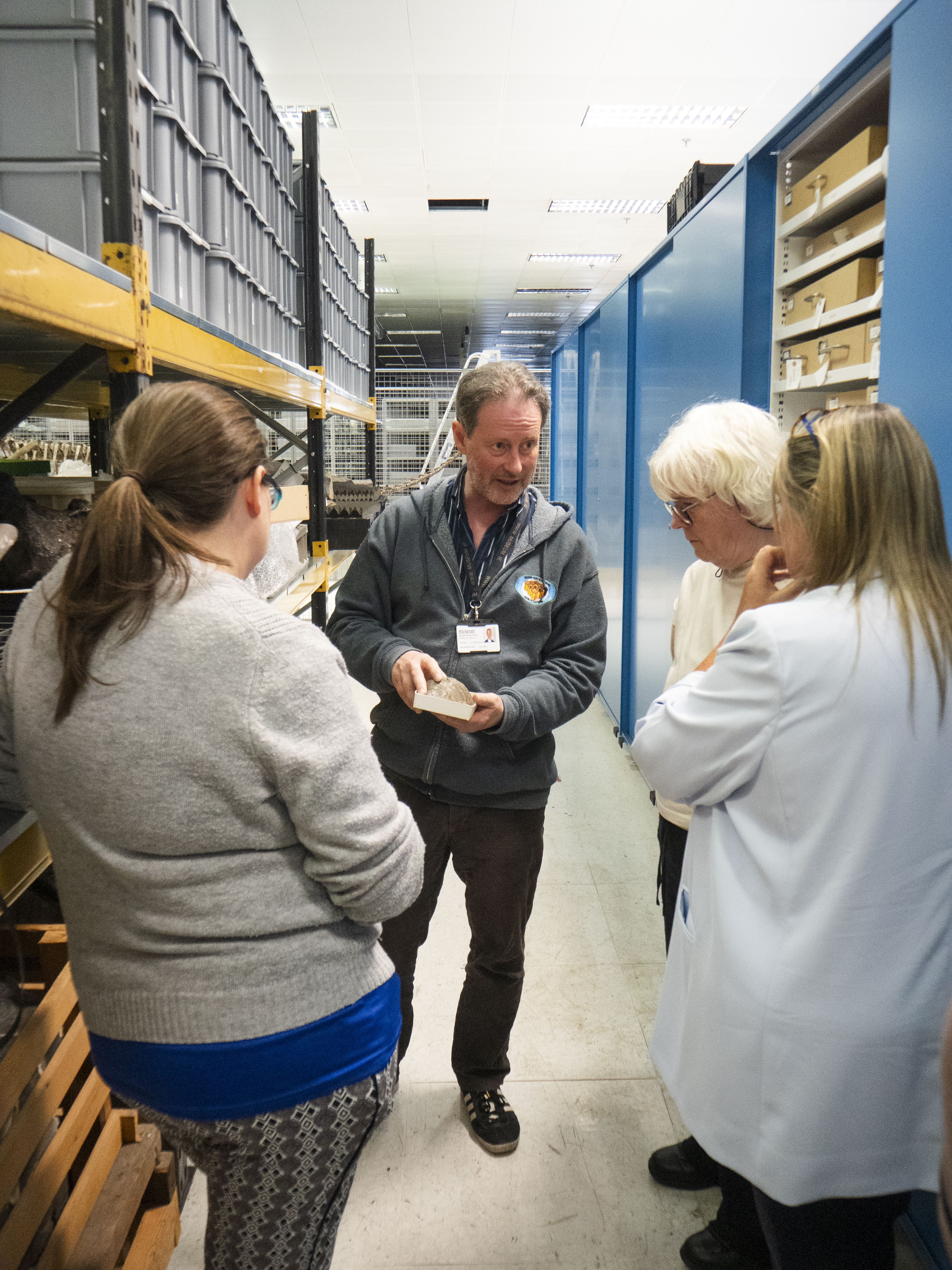
Dr. Roycroft talking with community members about a brachiopod fossil. Photograph by author.
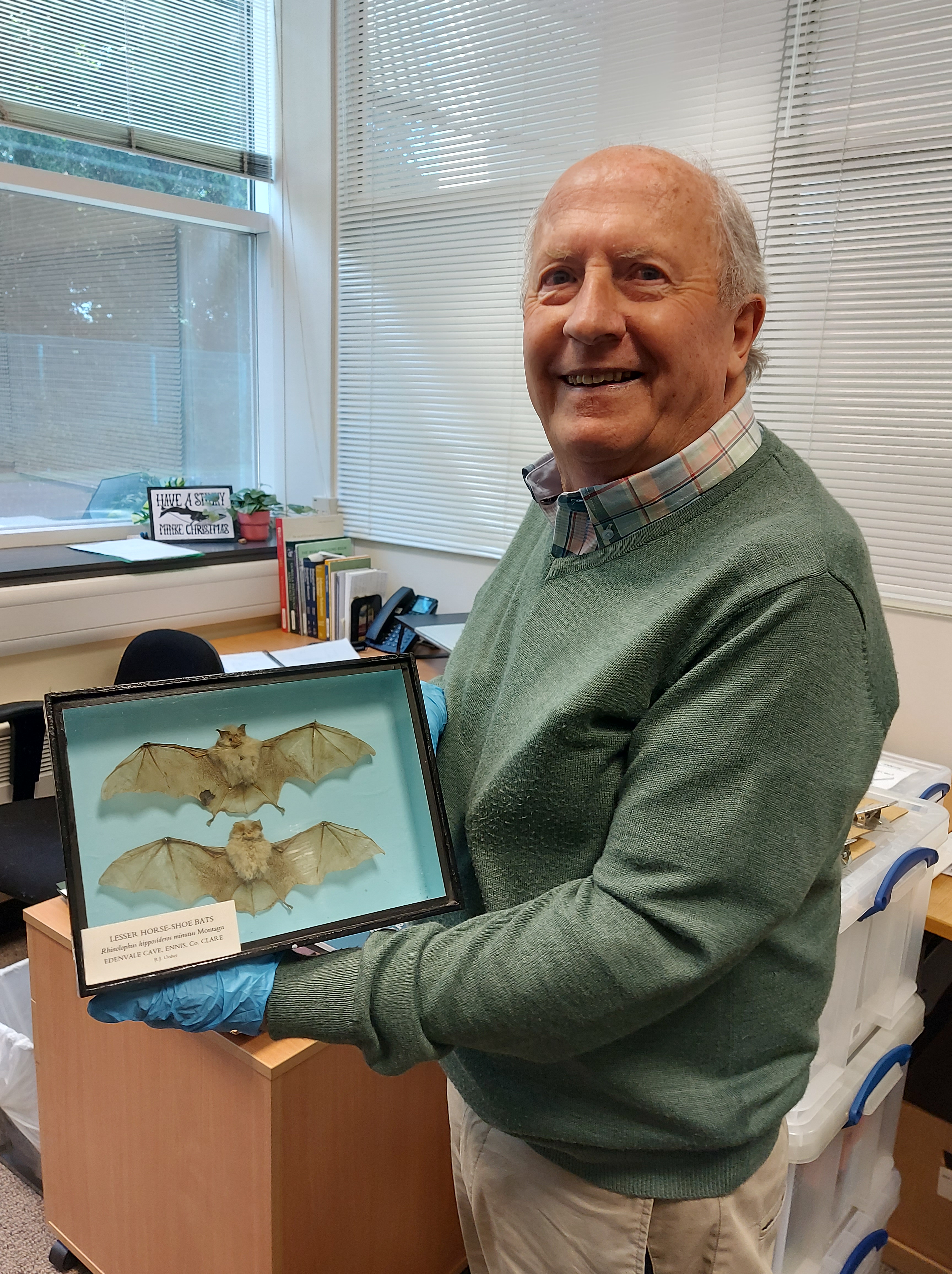
Eric Shaw, a member of Clarecastle & Ballyea Heritage Group, with Lesser Horseshoe bats. Photograph by author.
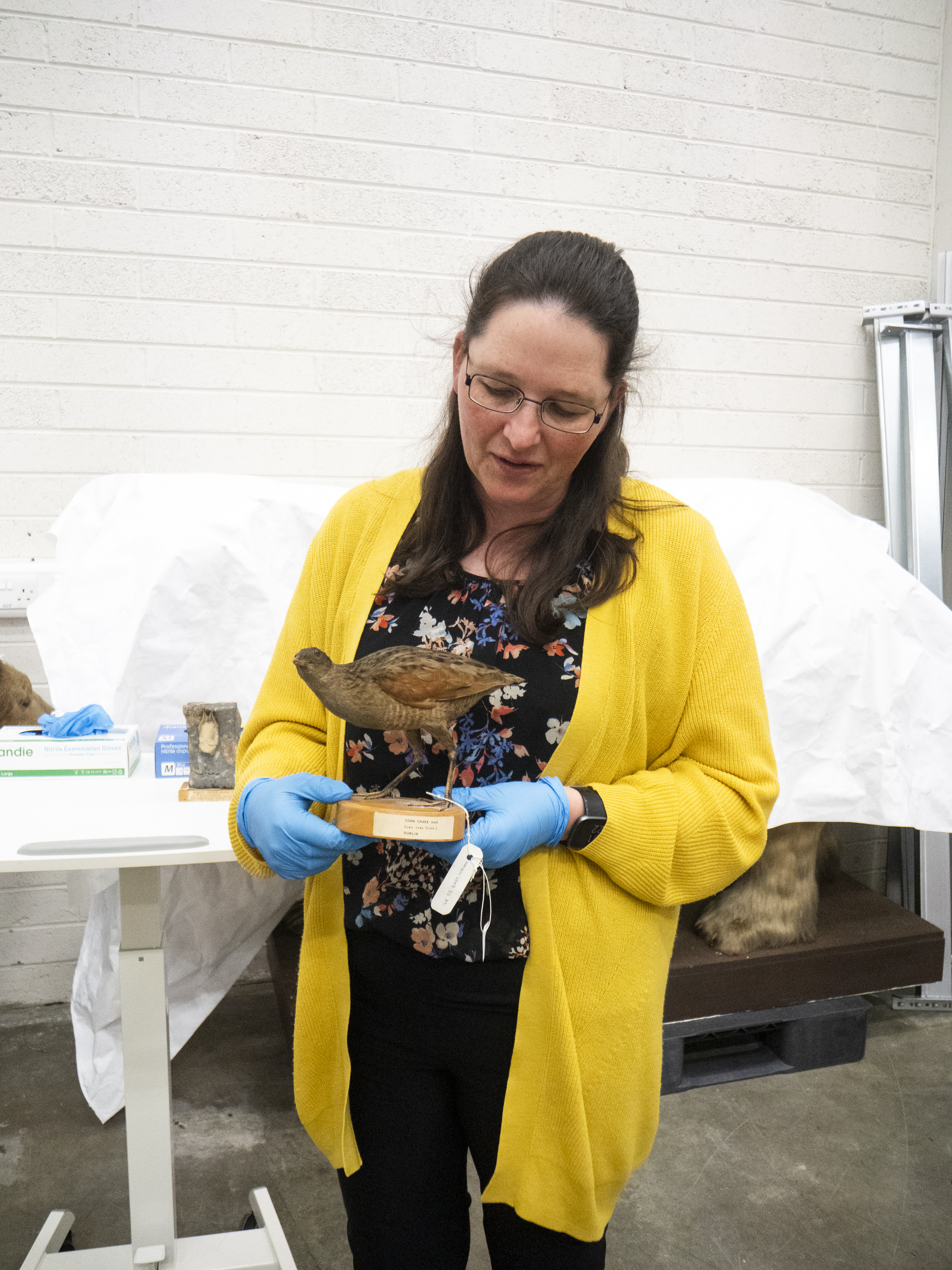
Mary O’Malley, a member of Louisburgh-Killeen Heritage Group, studying a Corncrake. Photograph by author.
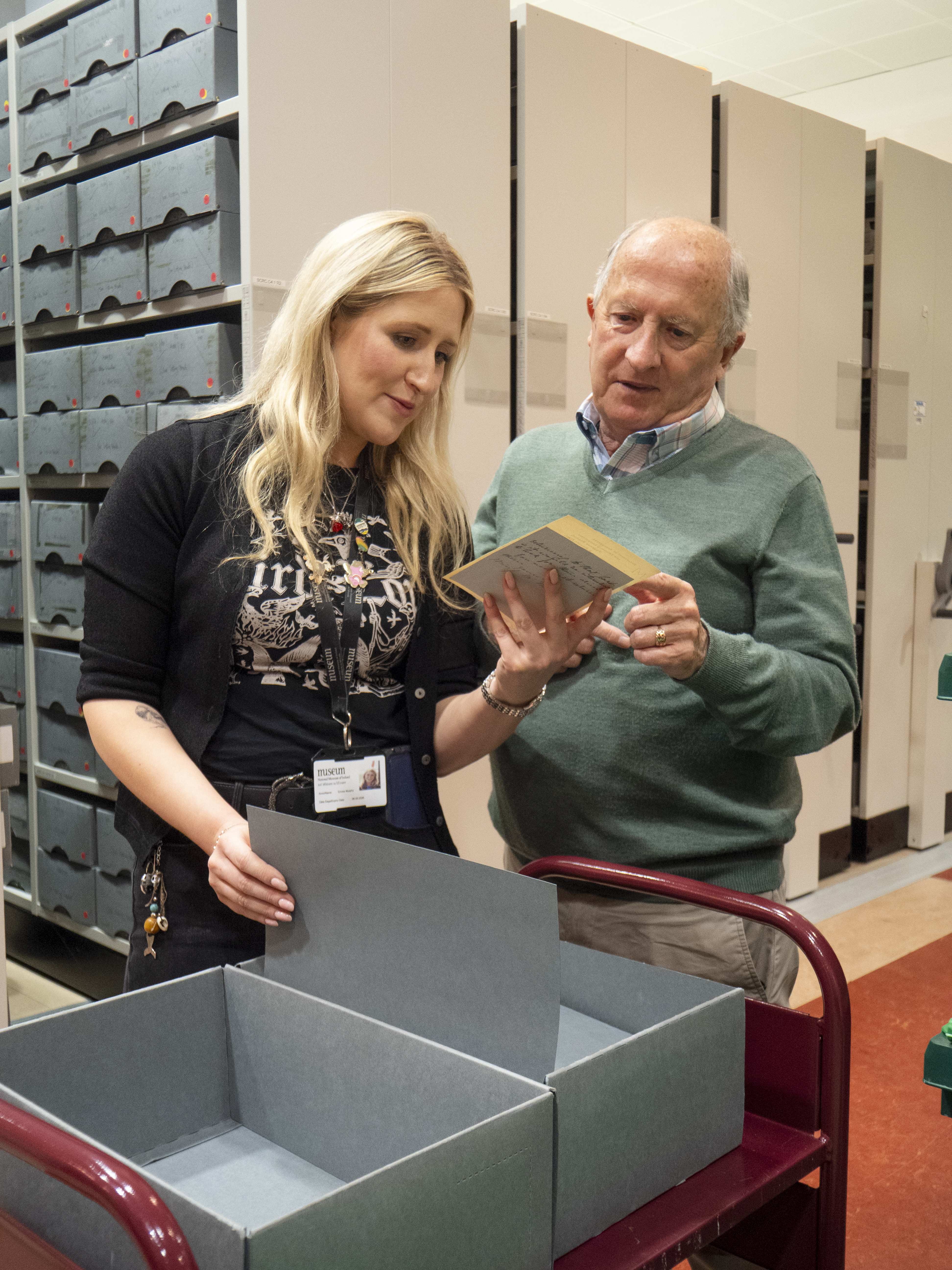
Eric Shaw, a member of Clarecastle & Ballyea Heritage Group, perusing the Richard J. Ussher papers with Emma Murphy. Photograph by author.
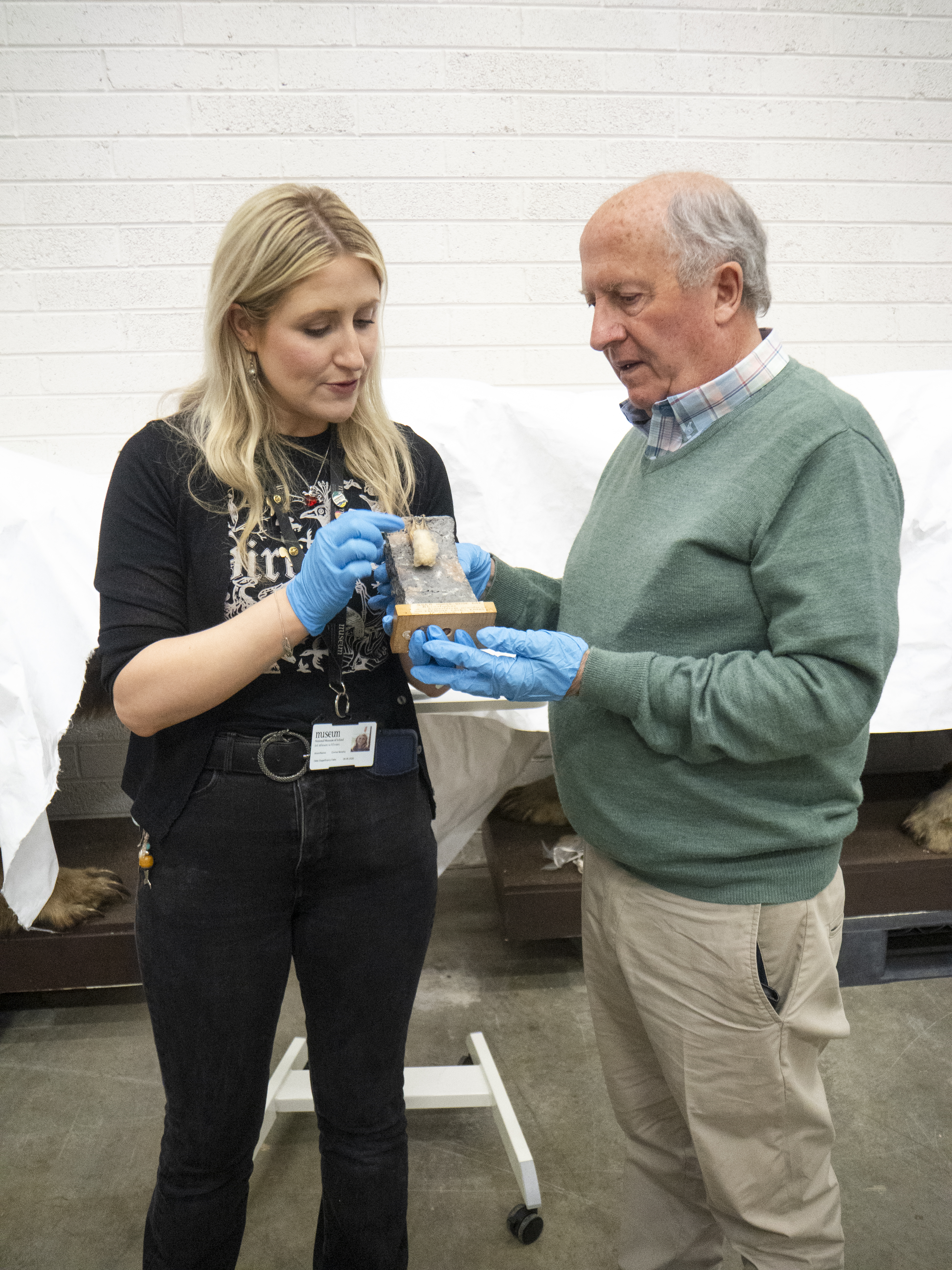
Emma Murphy talking with Eric Shaw about a lesser horseshoe bat. Photograph by author.
I am currently wrapping up the development of an exhibition which will feature the communities’ research alongside museum specimens in the NMI’s newly opened “Dead Zoo Lab.” The iCAN groups were the primary authors of the interpretive text. I provided editing advice and guidance on best practices, such as keeping their writing concise and using widely accessible language. Their text will be displayed on a touchscreen alongside multimedia, allowing us to keep the cases simple and specimen focused.
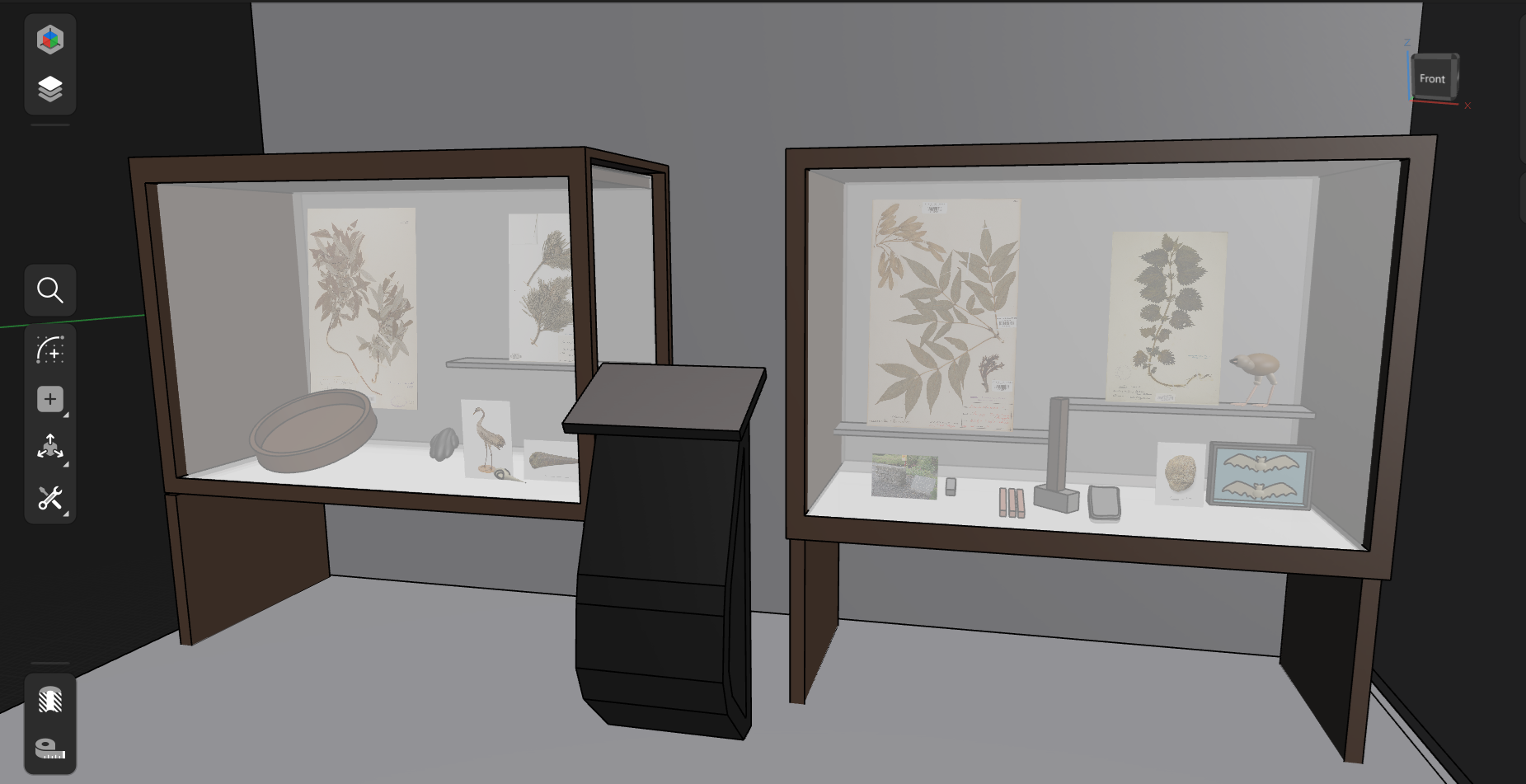
3D Model of “Our Irish Natural History” Exhibition. Designed by author.
We have relied heavily on multimedia to convey the communities’ stories, as their cultural heritage cannot accurately be conveyed purely through the written word. Our cohort of participants boasts painters, willow-weavers, poets, musicians, and archaeologists, all of whom naturally express themselves in diverse ways. With the help of Paolo Viscardi, I was able to secure a bit of funding for the creation of professionally produced video features of the communities’ research. These videos tell engaging stories of community-based Burren pine stewardship in Kilkeedy, County Clare; graveyard fossil discoveries in Moycullen, County Galway; granite mining heritage in Blessington, County Wicklow; and students’ musical engagement with local wildlife in Milltown, County Galway.
Video feature of Burren pine stewardship in Kilkeedy, Co. Clare. Courtesy of Kilkeedy Heritage Group and iCAN.
Community members have also enjoyed conveying their narratives as oral histories. For example, Eric Shaw recorded two oral histories recounting his interactions with lesser horseshoe bats in the caves of County Clare. Other participants have created paintings and poetry to engage with their specimens of interest. Below, you can hear Louise McAteer’s poem about corncrakes in County Mayo.
“A Mayo Corncrake,” written and recited by Louise McAteer. Courtesy of Louise McAteer and Louisburgh-Killeen Heritage Group.
Two communities have also loaned items for the exhibition. Ballyknockan Quarry in County Wicklow has provided old granite mining tools, which we will display alongside a specimen of granite collected from the same quarry. Husband and wife team Pat Reid and Aoife Patterson are members of County Wicklow’s Glendalough Heritage Forum. They are expert willow weavers, and Aoife has created a beautiful Skib basket for the exhibition. This basket will help us better illustrate how willow is woven into the fabric of Irish life.
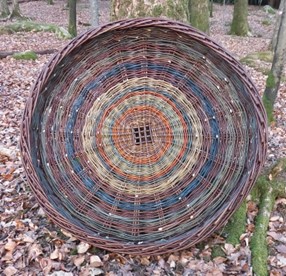
Skib’ Basket, Courtesy of Wicklow Willow
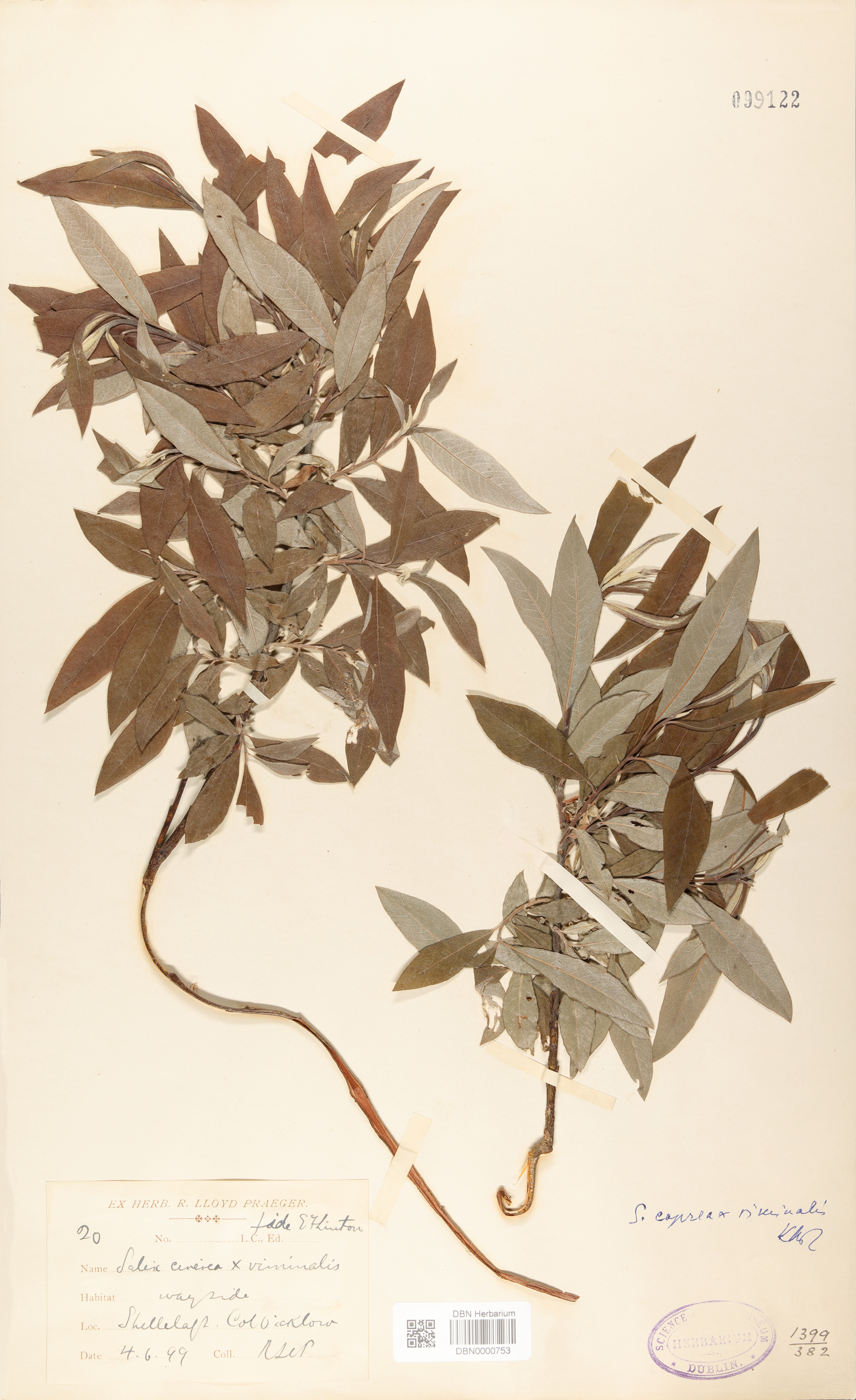
Herbarium specimen of willow (Salix caprea x viminalis), collected in County Wicklow (DBN0000753). Courtesy of the National Herbarium of Ireland and the Digital Repository of Ireland.
Although “Our Irish Natural History” is not yet finished, the eight participating communities have provided consistent feedback that they are enjoying the project, especially the opportunity to connect with specimens collected from their communities. They have also expressed excitement about (re)discovering and bringing attention to elements of their local heritage that are often overlooked.
The National Museum and I have also benefited from our collaboration with the iCAN communities. “Our Irish Natural History” certainly advances the NMI’s Strategic Goals of increasing the accessibility of its collections and creating opportunities for community collaboration. I believe that the exhibition will be naturally engaging to visitors, as they learn about specimens from the perspectives of community members—rather than a disembodied curator—and find points of relatability in the communities’ narratives. I also expect that the specimens will feel a bit more ‘alive’ since the communities have re-imbued them with the meanings they embodied in their environments of origin. Finally, “Our Irish Natural History” has afforded us insights into best practices of working with communities. Below, I have outlined some of my takeaways and recommendations for museum practitioners:
- Creating connections: First, I need to make clear that my experiences with Irish communities are not widely applicable. Many communities—especially Indigenous communities in the Global South—have had extremely negative experiences with museums. They would be very justified in not wanting to engage in any type of communication, much less partnership, with a museum. My general advice is to not contact communities out of the blue and ask them to participate in a project. Invest time, money, and other resources into building a relationship. Ask the communities what they need/what they seek to get out of the relationship, and leverage your institution’s resources to benefit them (words vs. actions). Ideally, create an initiative like iCAN, which will permanently support communities in their work. Once time has passed, and there is a healthy level of trust and respect between your team and the communities, start a conversation about what types of collaborations they may be interested in. Of course, do not assume that a collaboration is guaranteed.
- Use diverse forms of media to tell stories. Invest museum resources into the creation of these media so that the communities feel supported and so that they come away from the project with high-quality outputs they can preserve and pass down to new generations.
- Give communities the primary authorship of interpretive text while providing guidance on best practices.
- Treat community members with the same respect as curators and acknowledge their expertise. Provide them with the same resources you make available to your institution’s curatorial team.
- Always keep dialogue open. Continuous communication between your institution and partner communities allows you to identify new areas where you could offer support, further strengthening your relationship.
- Do not abandon relationships with communities once a project/output is complete.
If you are interested in learning more about “Our Irish Natural History,” please contact me using both of the following emails: aballinger@museum.ie and aballinger37@gmail.com.
I would like to acknowledge and thank the following groups, institutions, and people:
iCAN Community Curators
- Eric Shaw, Clarecastle & Ballyea Heritage & Wildlife Group, Co. Clare
- Bernie Doherty, Woodlawn Heritage Group, Co. Galway
- Mary O’Shea, Hazel Morrison, and Paula Lydon, Moycullen Heritage Group, Co. Galway
- Pauline Connolly, Milltown Heritage Group, Co. Galway
- Don O’Sullivan and John McEvoy, Blessington Historical Society, Co. Wicklow
- Mary O’Malley, Louisburgh-Killeen Heritage Group, Co. Mayo
- Deirdre Ruane, Fiona Whelan, Róisín O’Connor, Art O’Connor, and Rory O’Connor, Kilkeedy Heritage Group, Co. Clare
- Pat Reid and Aoife Patterson, Glendalough Heritage Forum, Co. Wicklow
National Museum of Ireland
- Lorna Elms, iCAN Development Officer
- Paolo Viscardi, Keeper, Natural History
- Emma Murphy, Assistant Keeper Grade II (Zoology), Natural History
- Patrick Roycroft, Assistant Keeper Grade II (Geology), Natural History
- Amy Geraghty, Assistant Keeper Grade II (Aquatic Zoology), Natural History
- Aodhán Ó Gogáin, Documentation Officer, Natural History
- Eimear Ashe, Collections Moves Project Manager, Registration, Natural History
- Kyle Tunney, Photographer
- Richard Weinacht, Digital Imaging Officer
- Róisín Nic Cnáimhín, Assistant Keeper, Irish Antiquities
- Clare McNamara, Commercial Development Officer (Image Library)
- National Herbarium of Ireland
- Herbarium of the Royal Botanic Garden Edinburgh

 NatSCA
Pingback: NatSCA Digital Digest – November 2025 | NatSCA