
Written by Sarah Marden, Curator of Natural History at The Box, Plymouth.
From March 2024 to April 2025, a new exhibition at The Box called Planet Ocean explored Plymouth’s marine heritage and contemporary identity as “Britain’s Ocean City”. Specimens from our natural history collections, including spirit-preserved marine invertebrates, molluscs, corals, mounted sea birds and seaweed folios were displayed alongside art, world cultures collections, image and film and loan material from local partners.
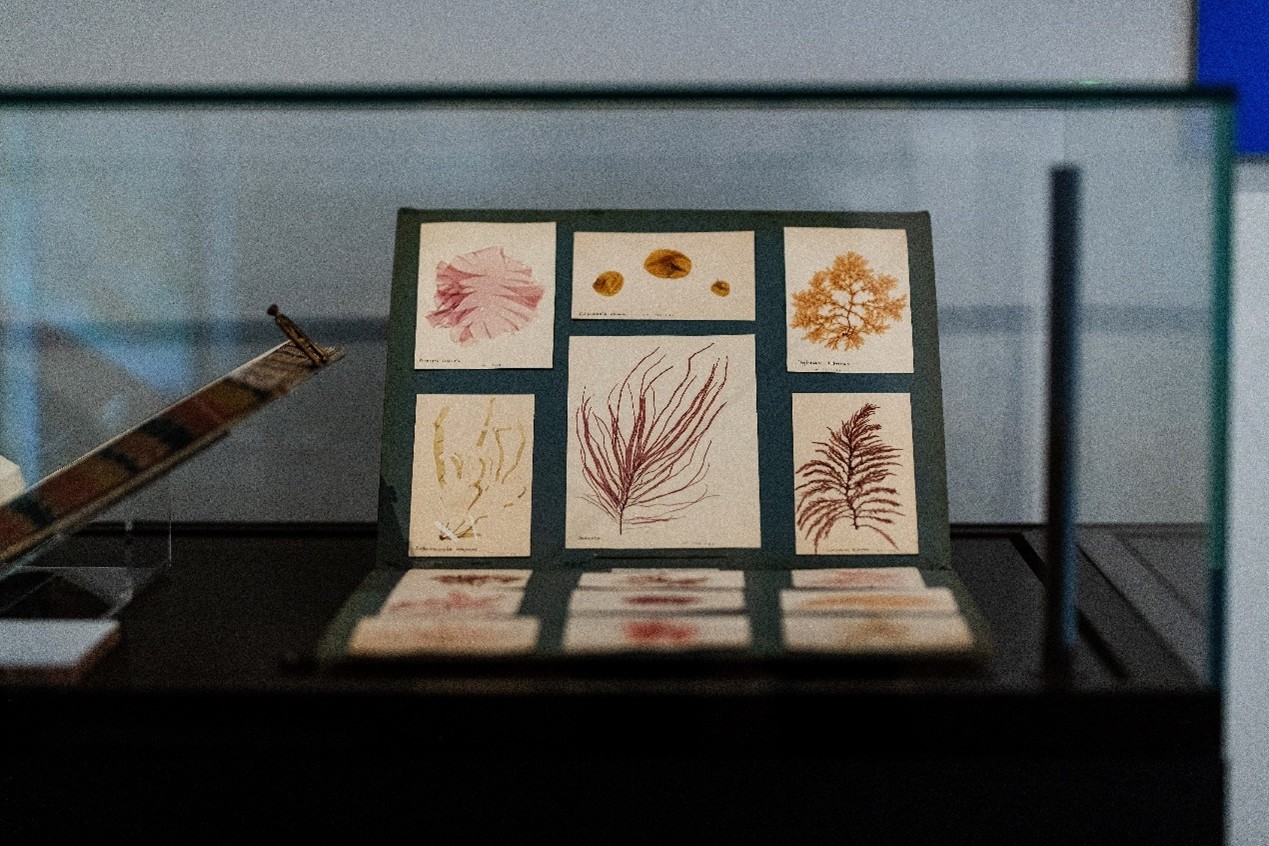
Flowers of the Sea folio by Emily Johns, © Dom Moore
Taking inspiration from science fiction writer and undersea explorer Arthur C Clarke who said “how inappropriate to call this planet Earth when it is clearly ocean”, we explored why the ocean is so important- the fact that we literally couldn’t survive without it as it gives us around half the oxygen we breathe, but also that it sustains and supports us locally with food, jobs, leisure, health and wellbeing. Alongside this quote, the entrance wall of the exhibition featured a moving graphic created collaboratively with Plymouth Marine Laboratory. It used one of the oldest datasets in existence of changing ocean temperatures recorded in Plymouth Sound. This data was input into a globe representing our ocean planet that changed and distorted according to the human impact of climate change over time. This was the first example of science meeting art and partnerships that we developed throughout the exhibition.
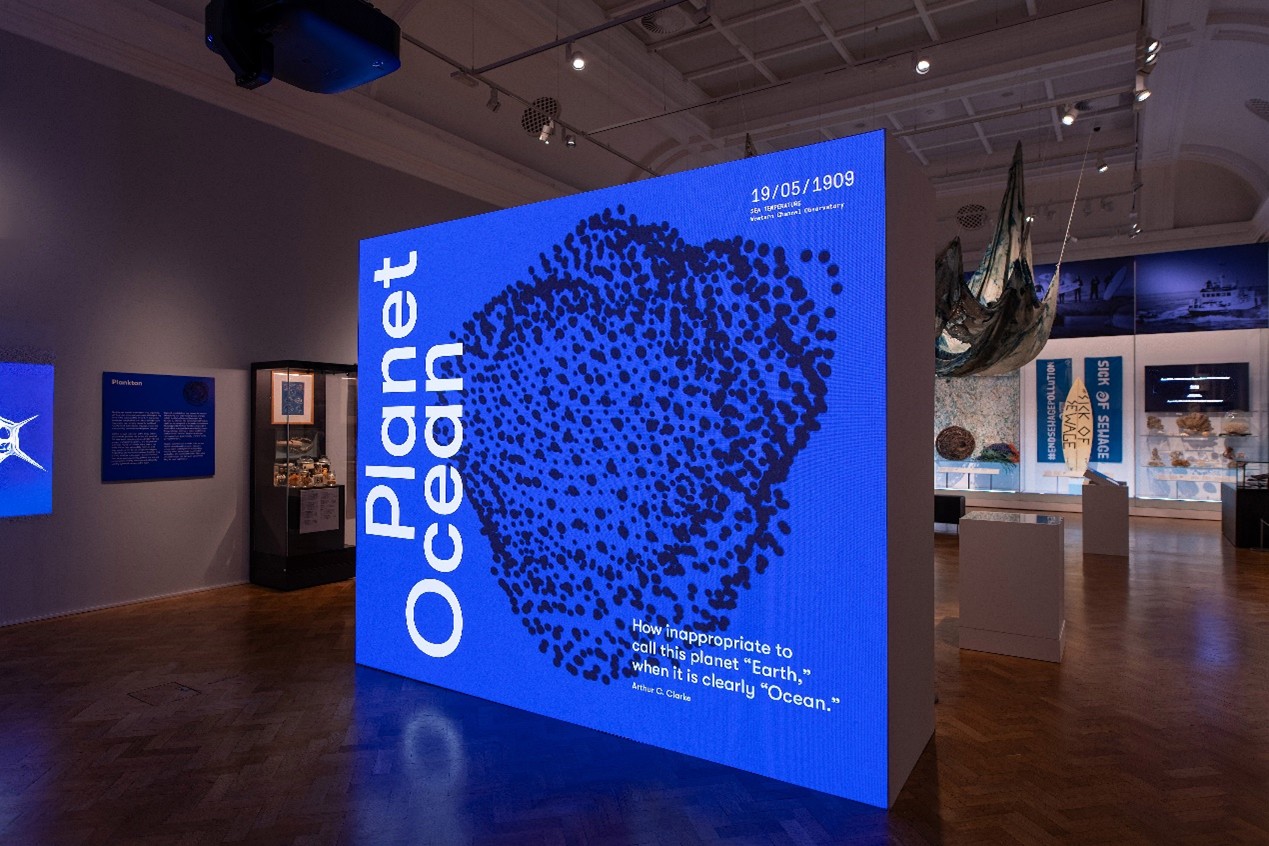
Planet Ocean introductory wall, photo © Dom Moore
A main theme of Planet Ocean was the idea that we are all part of one connected ocean. Our small, familiar body of water at Plymouth Sound physically connects us to the world, so small actions taken here to protect it have consequences for the wider ocean. It is also one of the most studied parts of the ocean. We have the highest concentration of marine scientists in the UK, and Plymouth Sound is used as a model to understand ocean patterns across the world.
The centre space of the exhibition included contemporary art that explored this connected ocean vision. We displayed Parachute by Cornish artist Nicky Harwood, which encouraged visitors to make connections with displays about pollution and reimagine materials as “precious” rather than “waste”. We refreshed the gallery half way through the run of the exhibition and replaced Parachute with All the Seas by Devon-based artist Tania Kovats. All the Seas is a participatory piece where a network of water gatherers responded to the artist’s call to create a library of water from all the seas across the world. We added in a bottle from Plymouth Sound collected by the Leader of Plymouth City Council. Staff, volunteers and visitors were inspired to talk about the invisible territorial barriers of the ocean.
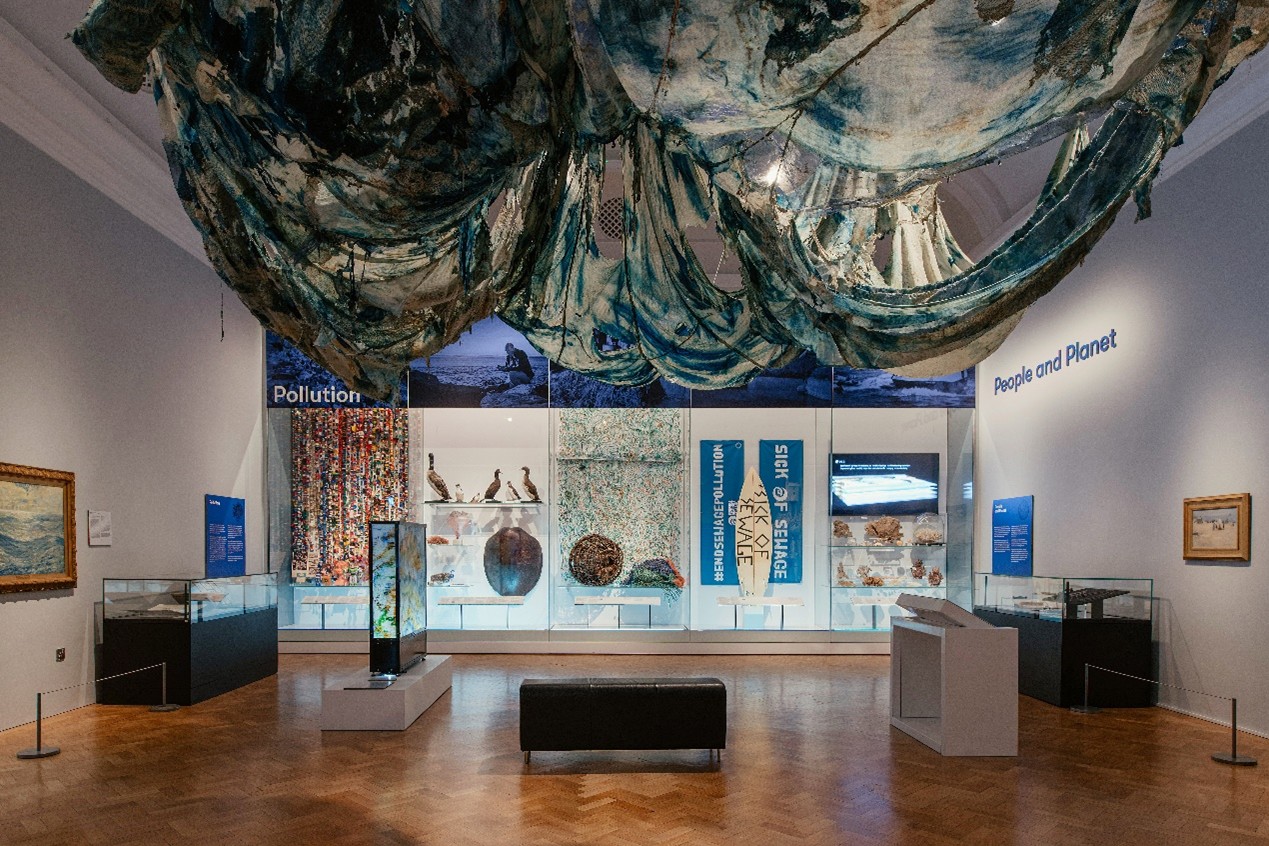
Parachute by Nicky Harwood, photo © Dom Moore
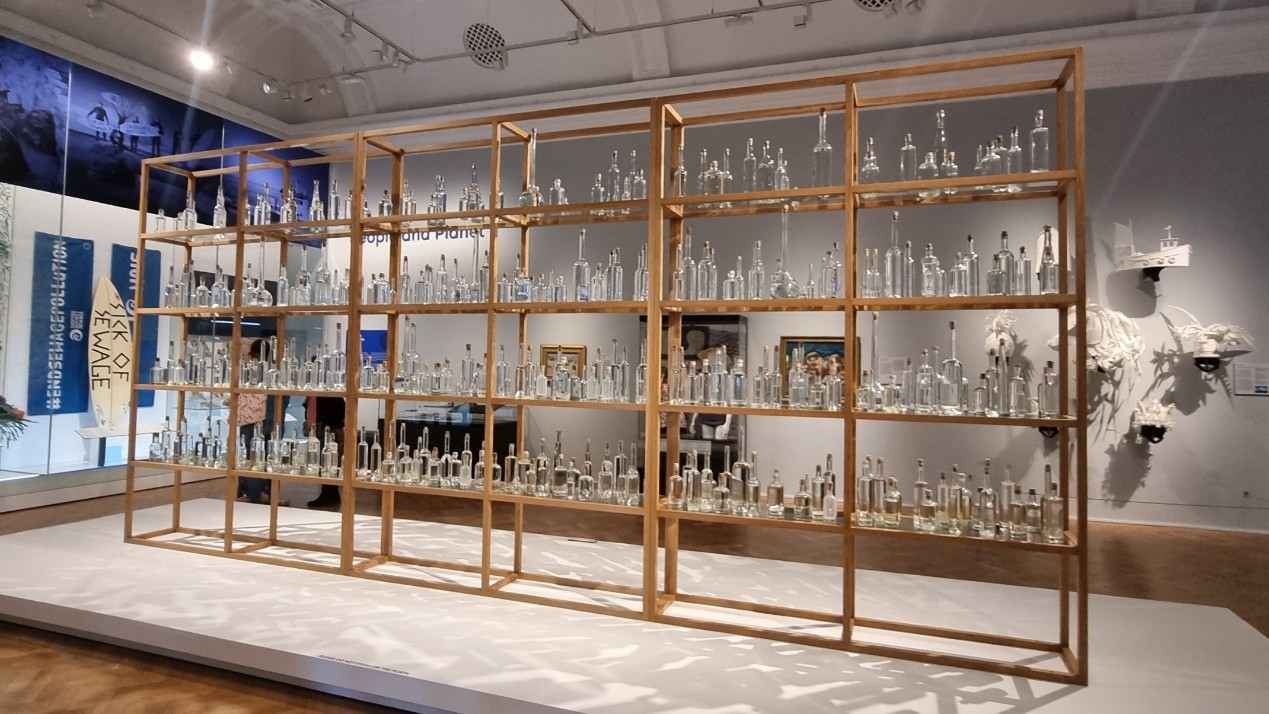
All the Seas by Tania Kovats, photo © The Box
We also shared how Plymouth’s unique connection to the ocean gave us the opportunity to protect it. Focusing on the word “opportunity” was vital to avoid an exhibition about climate emergency with associated negative language that would be a barrier to engagement. We didn’t want to overwhelm or fatigue audiences who might already be struggling to manage their feelings about big issues facing the ocean. Instead, we prioritised positive language and focused on action across the city not just by scientists and experts, but by charities, CIC’s and individuals such as litter pickers and sea swimmers. We approached the exhibition as a celebration of a community and their determination to claim the sea as a safe and healthy space for everyone.
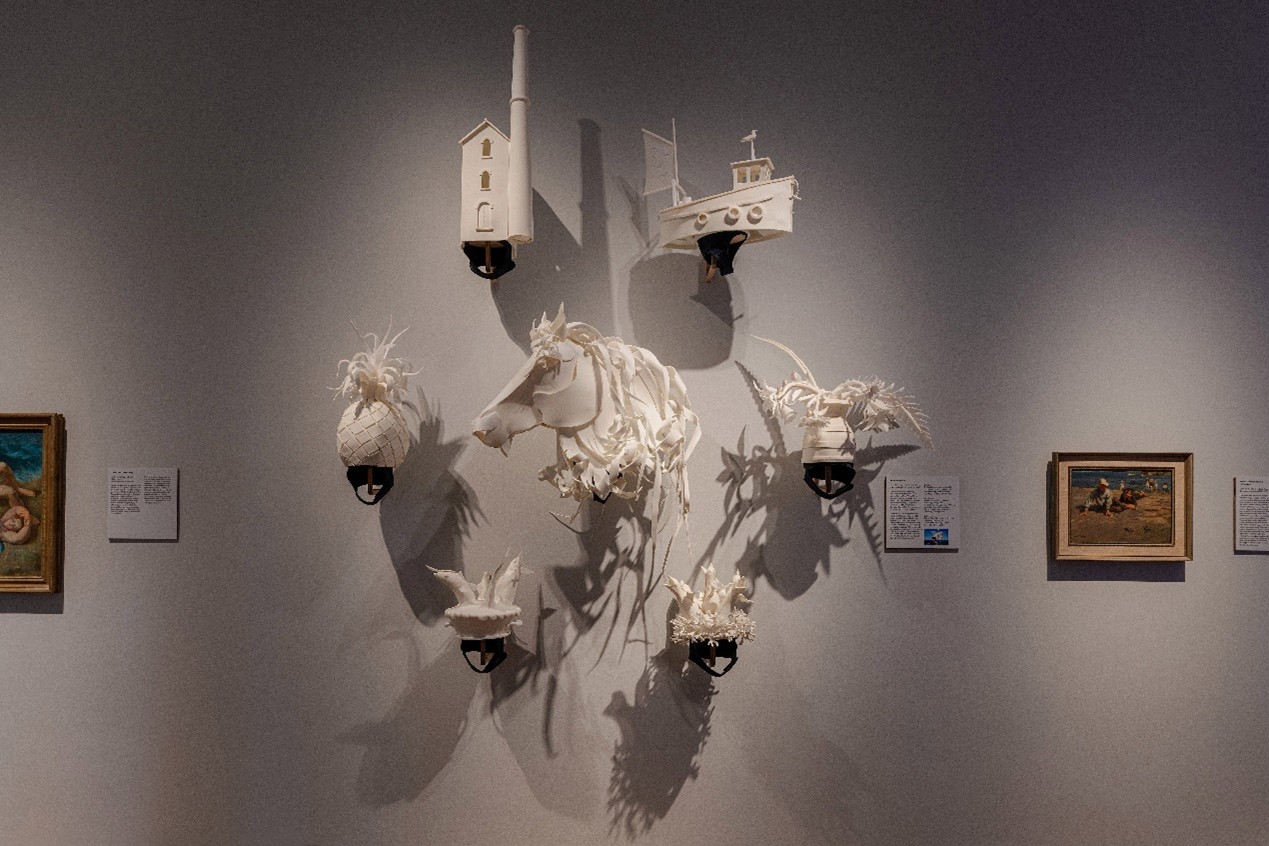
Swimming hats owned by Gorran Haven Cold Water Crew, © Dom Moore
Planet Ocean was a collaborative exhibition with numerous local partners in the South West. We worked with some of the foremost marine scientists in their field including Professor Richard Thompson from the University of Plymouth, sometimes referred to as the godfather of microplastics and recently included in Time magazine’s list of the top 100 most influential people in the world. We shared some of his work that changed global policy and industrial practice, including the ban on microbeads in cosmetics. We also shared some of his personal memorabilia that made him relatable on a human level, including a photograph of him as a child receiving his first plastic toy, alongside the toy itself that has survived decades later.
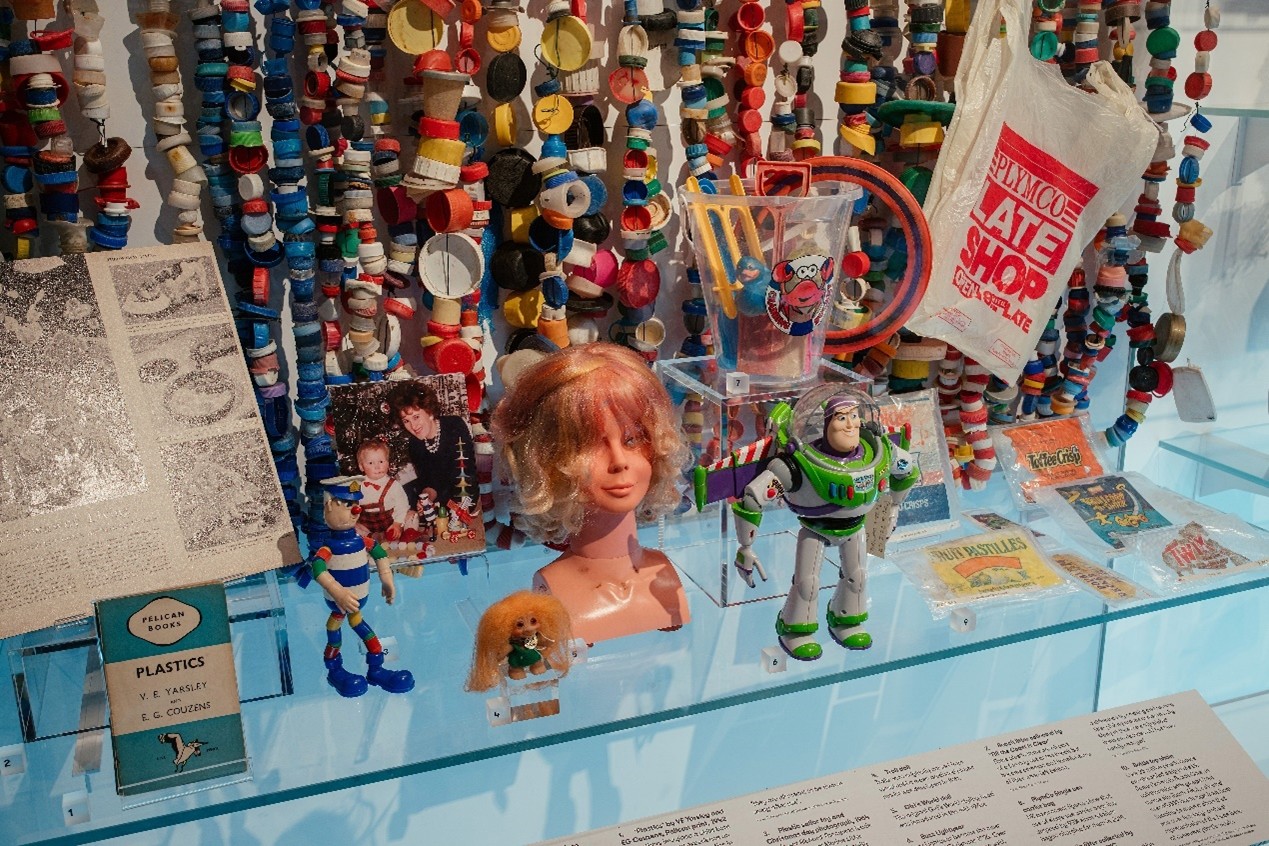
Plastic sailor toy and photograph of Prof Richard Thompson, © Dom Moore
We used our historic collections to explore how Plymouth was established as a world leader for marine research. Our painting A Fish Sale on a Cornish Beach by Stanhope Forbes is a beloved piece in our collection[1]. We worked with local scientists to look at this frequently displayed piece through a scientific rather than art historical lens. We analysed the small-scale fishing methods as well as abundance and variety of catch depicted in the painting. Visitors were surprised to find that it was begun in 1884, the same year that the Marine Biological Association (MBA) was founded by scientists who were already concerned about the damaging effects of overfishing. Scientists from the MBA talked about their 140 year journey to improve information about food fish stocks. We also displayed a continuous plankton recorder which holds the record for the greatest distance sampled by a marine survey (currently 7549431 nautical miles[2]), alongside marine invertebrates from our natural history collections.
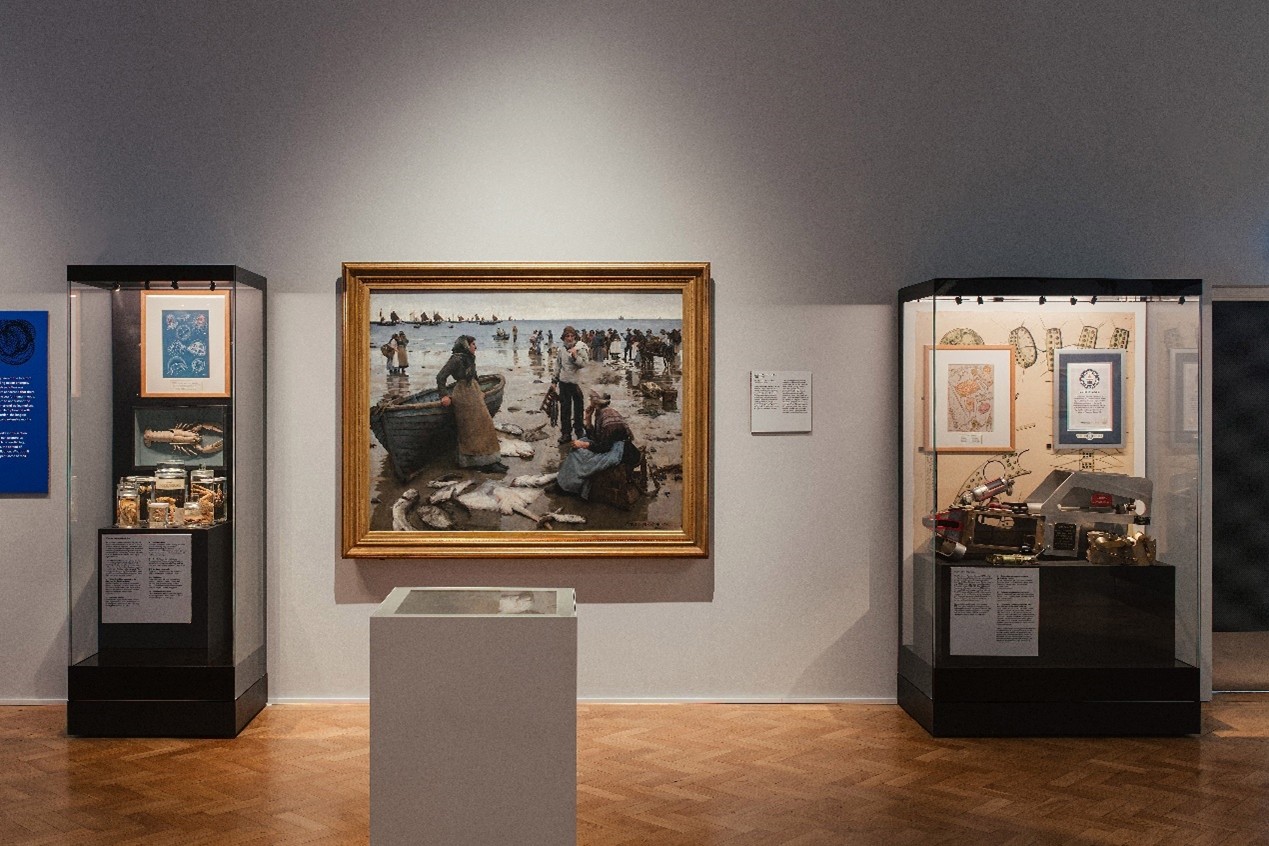
A Fish Sale on a Cornish Beach by Stanhope Forbes, paired with fluid collections and the continuous plankton recorder, © Dom Moore
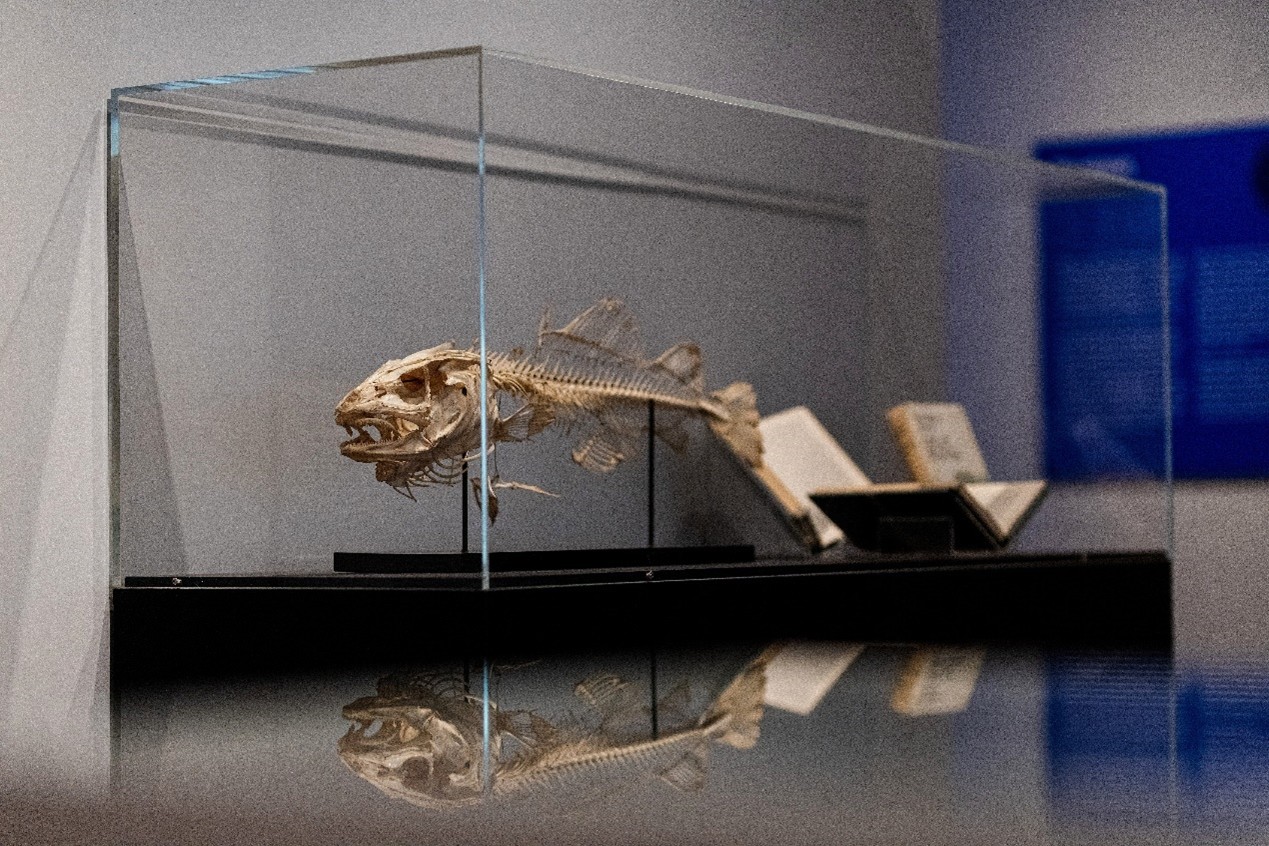
Cod skeleton, 1904, © Dom Moore
Finally, as well as celebrating climate action, Planet Ocean embodied best practice in sustainable exhibition development. All content including contemporary art was sourced from partners in Devon and Cornwall, and we worked with designers and contractors within a local radius to support local talent and reduce the footprint of materials and resources. We used recycled materials in exhibition materials including cardboard text panels and consciously avoided vinyl. The Box shop stocked products from local makers including recycled items made by Precious Plastic Plymouth and Tavistock[1]. A year-long programme of events accompanied the exhibition and featured highlights including a plastic-free July Super Saturday where children created a collaborative giant mural from recycled plastics, a film screening and Q&A with Cornwall Climate Care[2], and ocean exploration through virtual reality with the Shark Trust[3]. The programming of Planet Ocean supported the environmental responsibility policy of The Box to raise awareness of environmental loss and damage among the communities we serve.
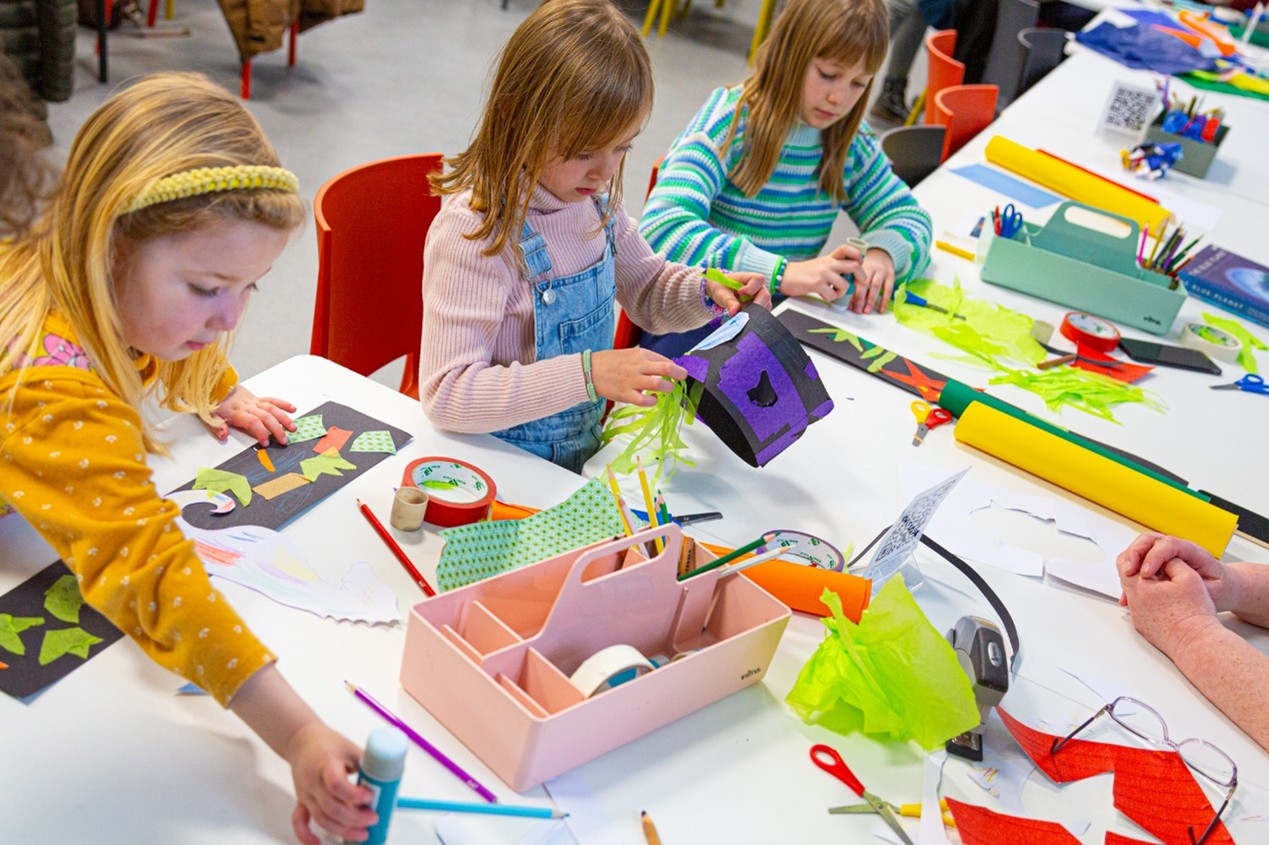
Underwater craft workshop, © The Box

 NatSCA
Pingback: NatSCA Digital Digest – July 2025 | NatSCA