
Written by Julian Carter, Principal Conservator Natural Sciences, Amgueddfa Cymru – Museum Wales, Cardiff
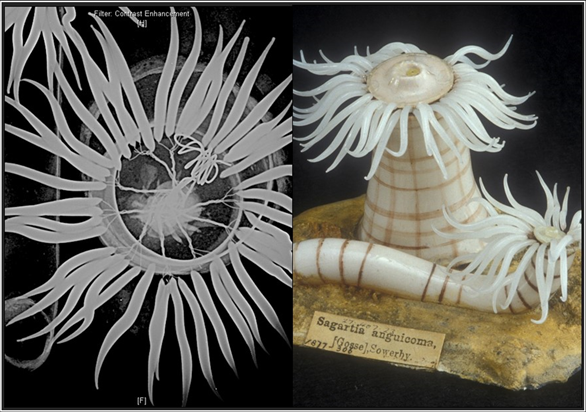
During the late 19th century, Leopold Blaschka (1822-1895) and his son Rudolf (1857-1929) produced thousands of beautifully detailed glass models of a wide range of sea creatures, and other animals, for natural history museums and aquaria all over the world. The work has since been hailed as “an artistic marvel in the field of science and a scientific marvel in the field of art”. The work of the Blaschka’s remains remarkably contemporary today, working as they did on the cusp of design, craft, and industry. Crossing the boundaries of science and art, the surviving models today have a value that makes them irreplaceable.
The idea for making lifelike renditions of sea creatures out of glass arose from the difficulty of preserving and displaying soft-bodied animals such as jellyfish, marine worms, and sea anemones. Preserving such animals in a lifelike way is difficult as techniques such as fluid preservation cause colours to quickly fade and shapes to become distorted. Leopold Blaschka devised a solution to this problem by using his glass working skills to accurately model these animals out of glass and other materials available to him and went on to establish a successful business supplying glass models to museums worldwide during the latter half of the 19th century.

Amgueddfa Cymru is fortunate to hold a significant collection of these models which were acquired in two batches. 138 of the models were purchased from the Blaschka’s by the old Cardiff City Museum in 1890 and were amongst the last of the animal models to be made. A further 62 models came to the museum in 1927 from the Science Museum in South Kensington, London representing models originally made in the late 1870s.
These models have had a hard-working life from being actively used and displayed over their time in the Museum. This has had an impact on the collection due to handling or poor display and storage conditions resulting in the loss or damage of many of the models. In addition, previous attempts to repair some models have caused problems through the use of unsuitable materials. As a result, only 145 of the models survive in the collection today.
In the late 1980s, Chris Meecham from the former Zoology department, embarked on a project to establish the status and condition of the Museum’s collection. As part of this process attention was put to considering how best to care and conserve the collection. Embarking on such a challenge was fraught with difficulties. Given their age and complexity, great care has to be taken before attempting to clean or repair the models whilst the accumulation of decades of dirt, and damage from past repairs also needs to be rectified without causing further damage or altering the original model.
The subsequent conservation work carried out on the models took considerable time and research which has proven to be very successful in improving their visual appearance and integrity. This has enabled us to actively use the models again in exhibitions and outreach, widening their accessibility and allowing many more people to wonder at both the animals they represent but also the remarkable skills that the Blaschka’s themselves used in making them.
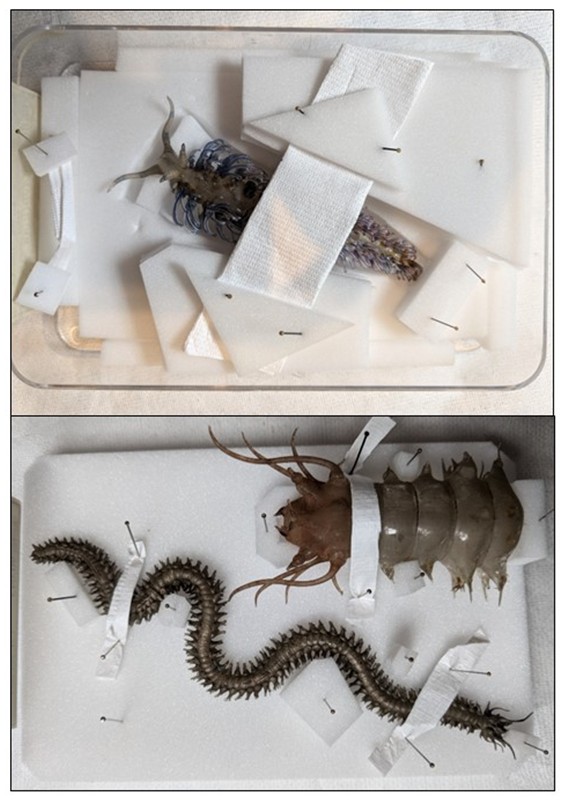
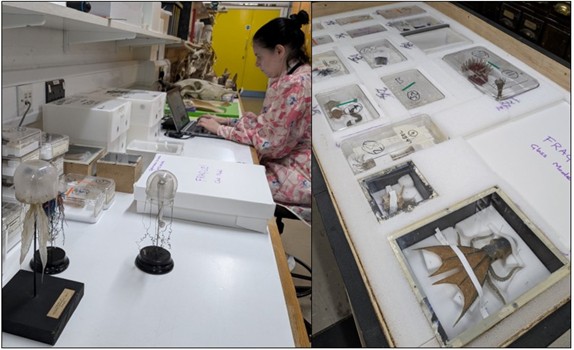
Even when intact and stable, moving and handling many of the models is fraught with challenges, which becomes especially evident when facilitating internal and external loan requests. For this we have over the years developed specifically designed boxes to enable them to be safely transported and handled. Due to the unique nature of the models each packing box and subsequent handling approach is bespoke to that model.
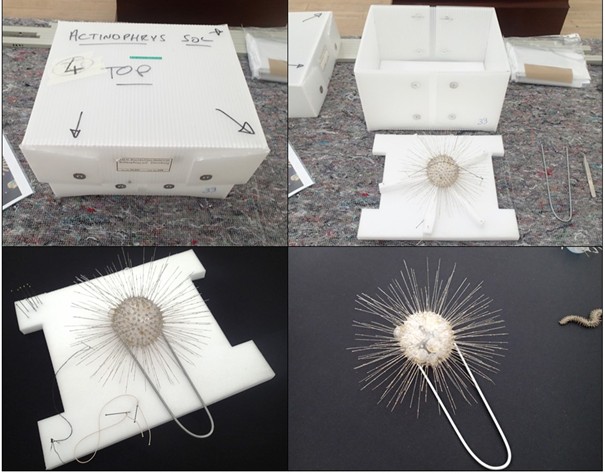
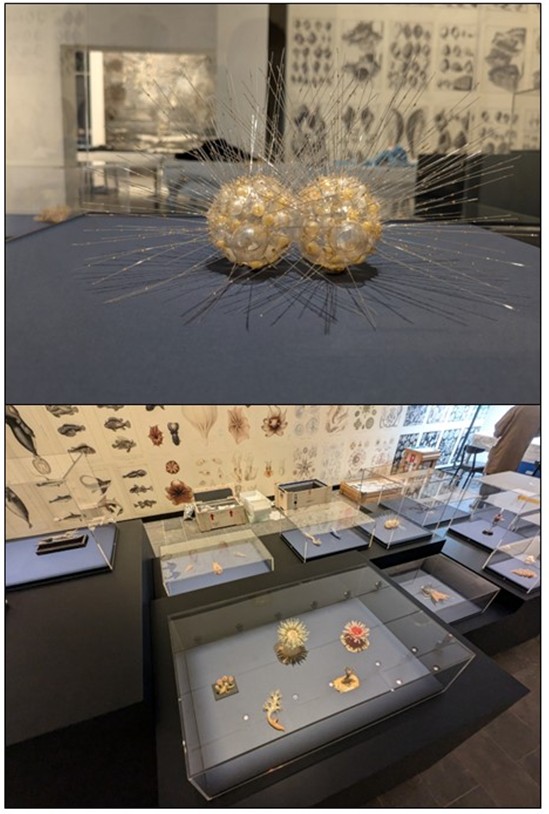
A good example of this are the radiolarian models which are usually complex spheres of glass surrounded with an array of fine glass spicules. For such models fluted polyethylene correx box systems have been designed and built specific to the model. Around this, plastazote foam, entomology pins and other staples of conservation packing are creatively utilised to create a packing system that reduces direct handling and allows safe transportation of the models.
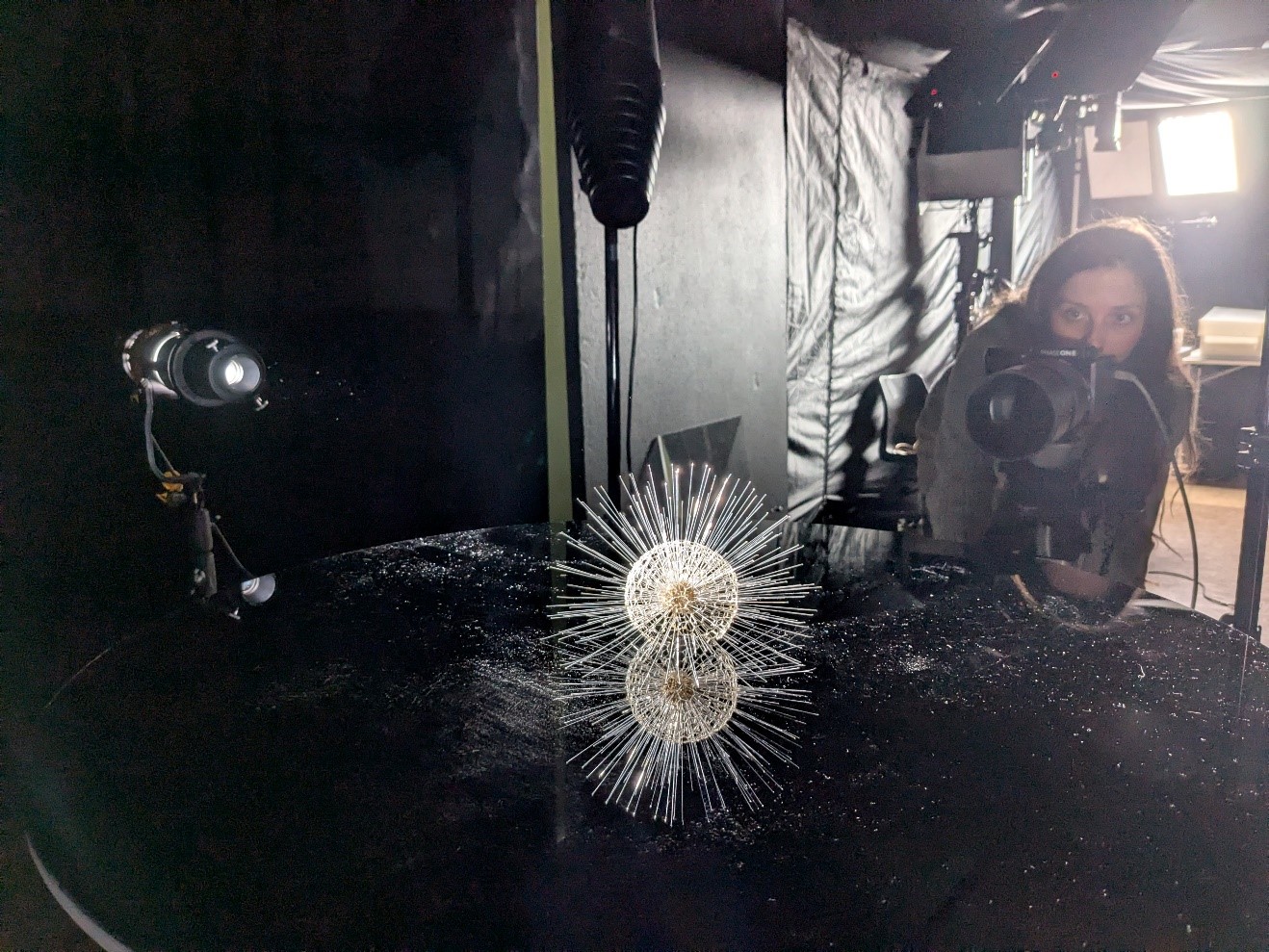
For complex models like the radiolarians, we have also had to devise tools to facilitate the handling of such complex models such as a bent ‘U’ shaped tool made of stiff wire. By sliding this carefully under the models we can carefully lift and place the model off the storage tray and into the desired location.
Such approaches have enabled Amgueddfa Cymru to facilitate loans of the models both within the UK and abroad. Most recently 26 of the models have been loaned to the Louisiana Museum of Modern Art in Copenhagen as part of their amazing ‘Oceans’ exhibition. It is wonderful to facilitate such loans and see the models as part of such exhibitions but also a relief that they do arrive safely and in one piece despite all the experience in handling and transporting these models! After all they are all in excess of 130 years old now…

 NatSCA
Pingback: NatSCA Digital Digest – April 2025 | NatSCA
Pingback: Top NatSCA Blogs of 2025 | NatSCA