
Editors note: This is the first of two concurrent blogs about the new diorama at the Booth Museum, you can read the second one here.
Written by Jazmine Miles Long, Taxidermist. https://www.jazminemileslong.com, Twitter: @TaxidermyLondon; Instagram: @Jazmine_miles_long
The Booth Museum of Natural History was founded in 1874 by naturalist and collector, Edward Thomas Booth. Mr Booth collected a huge variety of British birds and was a pioneer of the taxidermy ‘diorama’, displaying birds in their natural habitat. His collection of over 300 detailed cases were donated to the city of Brighton in 1891 with the proviso the dioramas would not be changed. In 1971 the Booth became a Museum of Natural History. Today alongside the dioramas the museum has a huge collection of 525,000 insects, 50,000 minerals and rocks, 30,000 plants and 5,000 microscopic slides.
I have been practicing taxidermy since graduating from a sculpture degree at Brighton University in 2007. I had originally planned to go into further education to study museum conservation so I volunteered at the beautiful Booth Museum. It was there that alongside digitising Mr Booth’s diary and restoring some of the cases from the collection I also tried my hand at taxidermy. I was keen to learn and Jeremy Adams the Assistant Keeper at the time kindly gave me a rusty scalpel and told me to remove the skull of a mole which we cleaned up together. That act of generosity gave me the taxidermy bug and I’ve been obsessed with the craft ever since. When I was at the Booth I worked alongside Peter Campkin who has been a volunteer at the museum since 2001 and still helps out once a week. Peter was very kind and gave me a guillemot he had in his freezer which ended up being one of my first birds. I am so grateful to all the staff at the museum who helped to set me up in the beginning of my career.

After my time at the Museum I moved to London where I continued my taxidermy practice. In 2014 I gave a demonstration at the Horniman Museum and Gardens at their first Taxidermy late event. John Cooper the Geology curator at the Booth from 1981 to 2016 (John is still regularly at the Booth using the collections for research) came to the event, recognised me and invited me back to the Booth Museum to meet the new Curator of Natural Sciences, Lee Ismail. And from then I have been lucky enough to work with Lee on many projects, mounting a swift for the education department, running taxidermy courses and workshops for children as well as mounting a cheetah for the collection. When Lee then got in touch in 2022 with the possibility of creating a new diorama for the museum (the first in nearly 100 years) I was of course very excited.
‘Discover our Dioramas’ was an 18-month £50,000 project funded by the Esmée Fairbairn Foundation. Su Hepburn and Rebecca Lean worked with thousands of young children under 10 years old, their parents and carers, and educators, eco-groups and low-income groups to collect feedback for the focus of the Museum’s first diorama since the 1930s. The outcome of the research and engagement stage of the project was that the diorama should be a representation of nature that the under 10s would be able to easily recognise and it should also highlight the climate crisis and tackle anxieties.
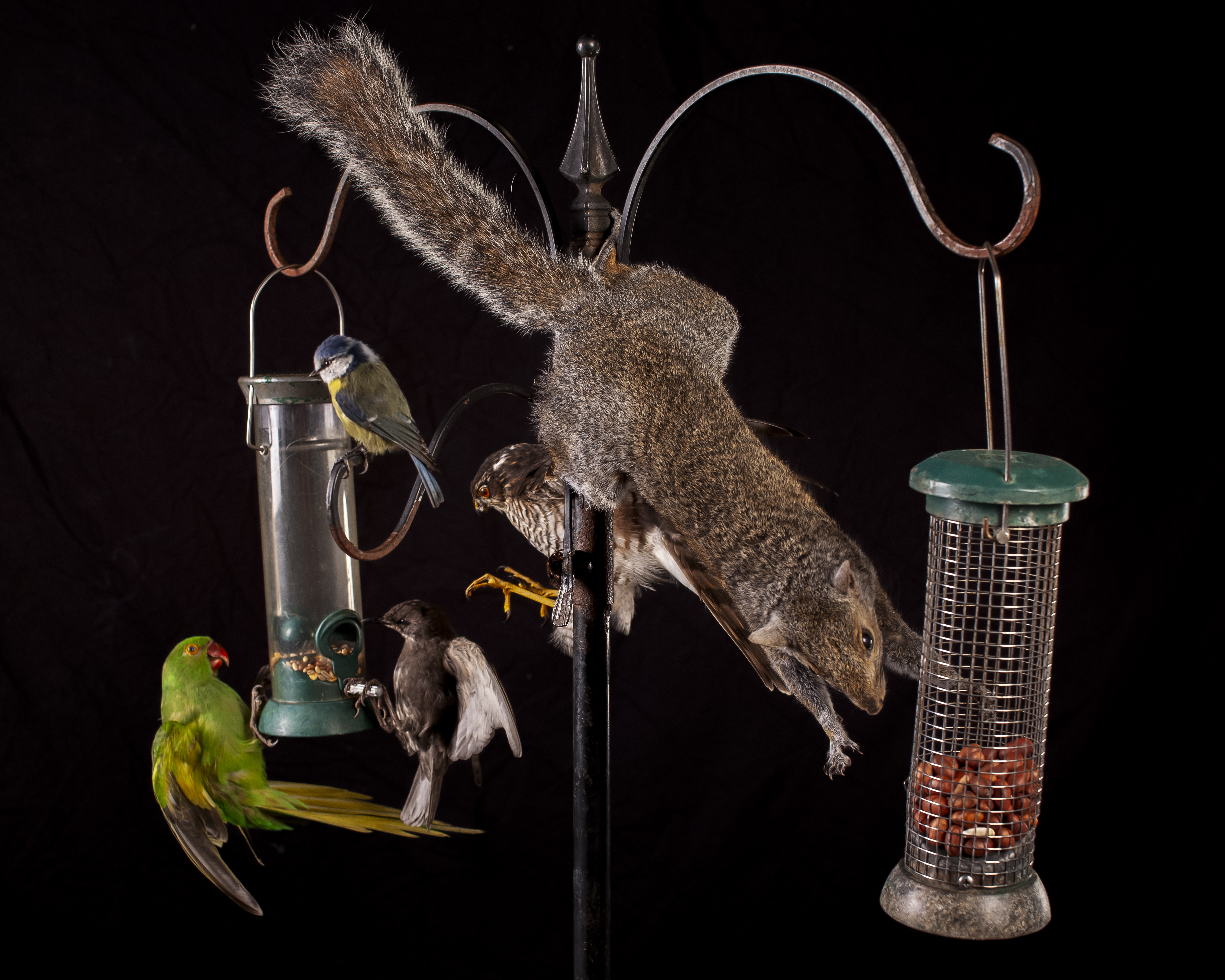
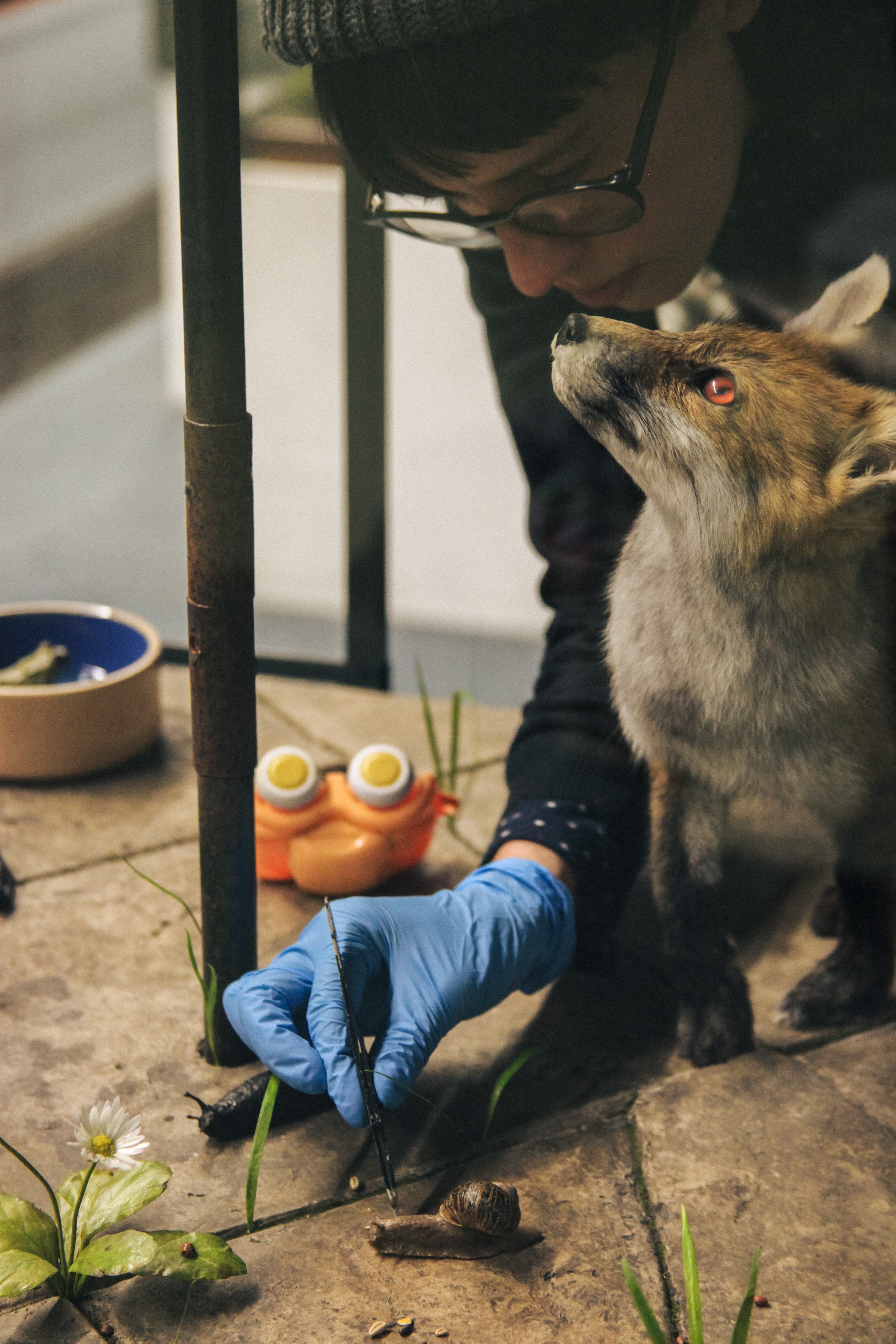
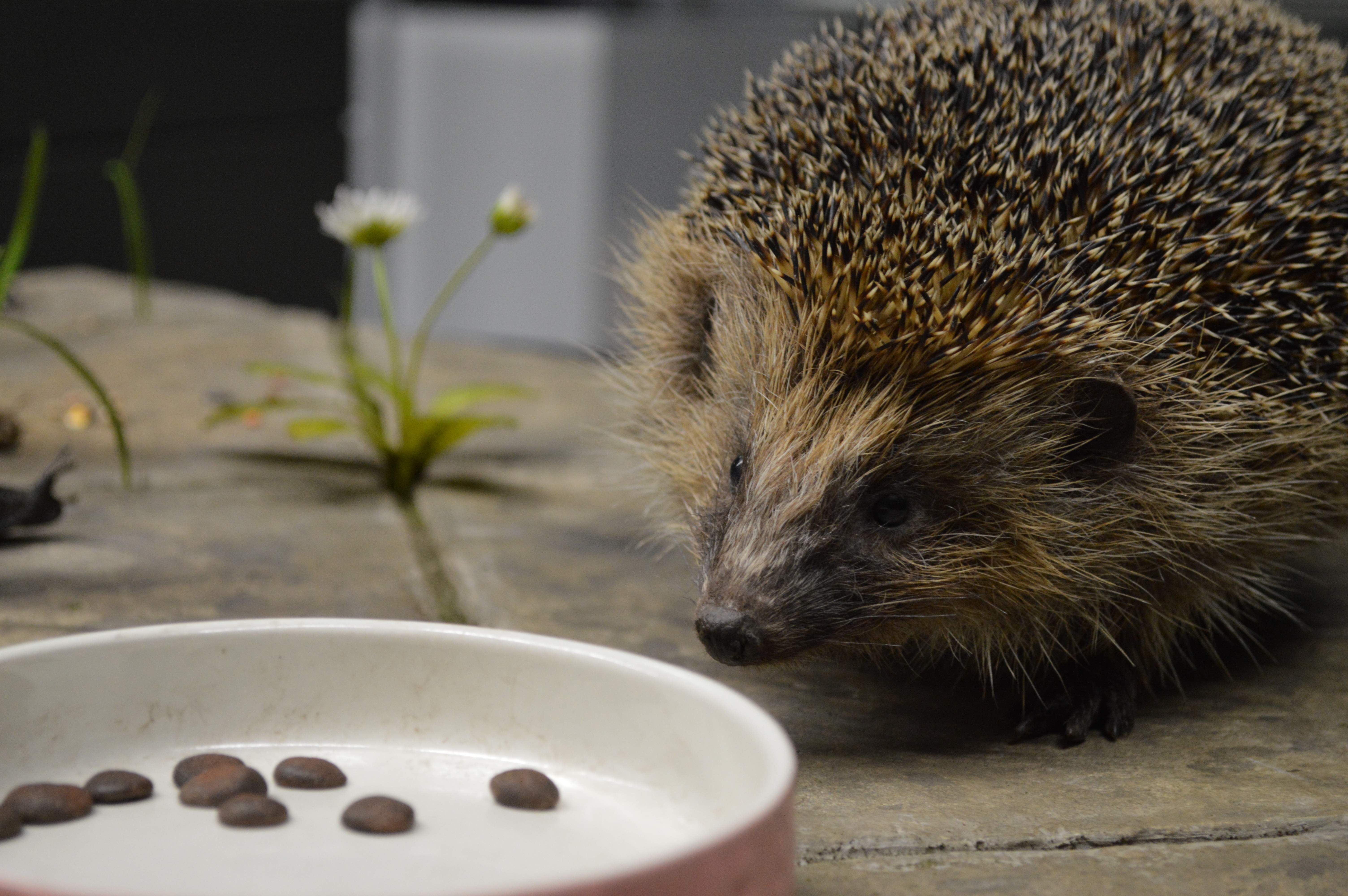
The final design was a garden scene titled ‘Life in the Garden’ based around a bird feeder with grass popping through cracks in the paving slabs underneath. We decided on the animals based on what the children had asked for and so settled on a selection of insects (from the museums collection), a frog, a fox, slugs, snails, a hedgehog, a squirrel, a starling, a blue tit, a mouse, a parakeet, and a sparrowhawk.
Creating ‘Life in the Garden’ was a dream project for me, firstly because the Booth Museum was where I started my career path into museums and taxidermy. The project was also created in alignment to my values as a maker. It is incredibly important to my practice that not only do I only work with animals that have died from natural causes but that the viewer of the work is aware of how the animals died. This storytelling I believe is incredibly important to educate about the provenance of the animals displayed in museums but also to change the understanding of taxidermy itself to be seen as a craft. The information of how each animal died within the diorama is proudly on display on the text panels on the outside of the cabinet. There are also positive steps that can be taken to prevent these deaths such as window stickers.

My taxidermy methods are very similar to those used to create the historic taxidermy created 100 years ago however the fact I am a woman is a big change and so a picture of my face and a little about me is also on the text panels.


The beauty of this diorama is that it not only helps children to engage with the historic dioramas lining the wall of the museum and how they were made, it also talks about climate change, biodiversity change and the food chain. There are sensory elements too such as glass eyes and squirrel fur to touch. The panels were beautifully illustrated by Claire Watson.
I have never made a diorama before so this was a real challenge for me. It was important that it felt dynamic and alive. I also wanted to use as many natural, sustainable and stable materials as possible. The most challenging element was the patio. I decided to create this using newsprint paper that was headed for the recycling bin. I first tested it was acid free and then I made it into a powdered pulp which I mixed with PVA and a little plaster to form the patio slabs onto the base. I coloured these using a mixture of acrylic paints and pan pastels to create texture.
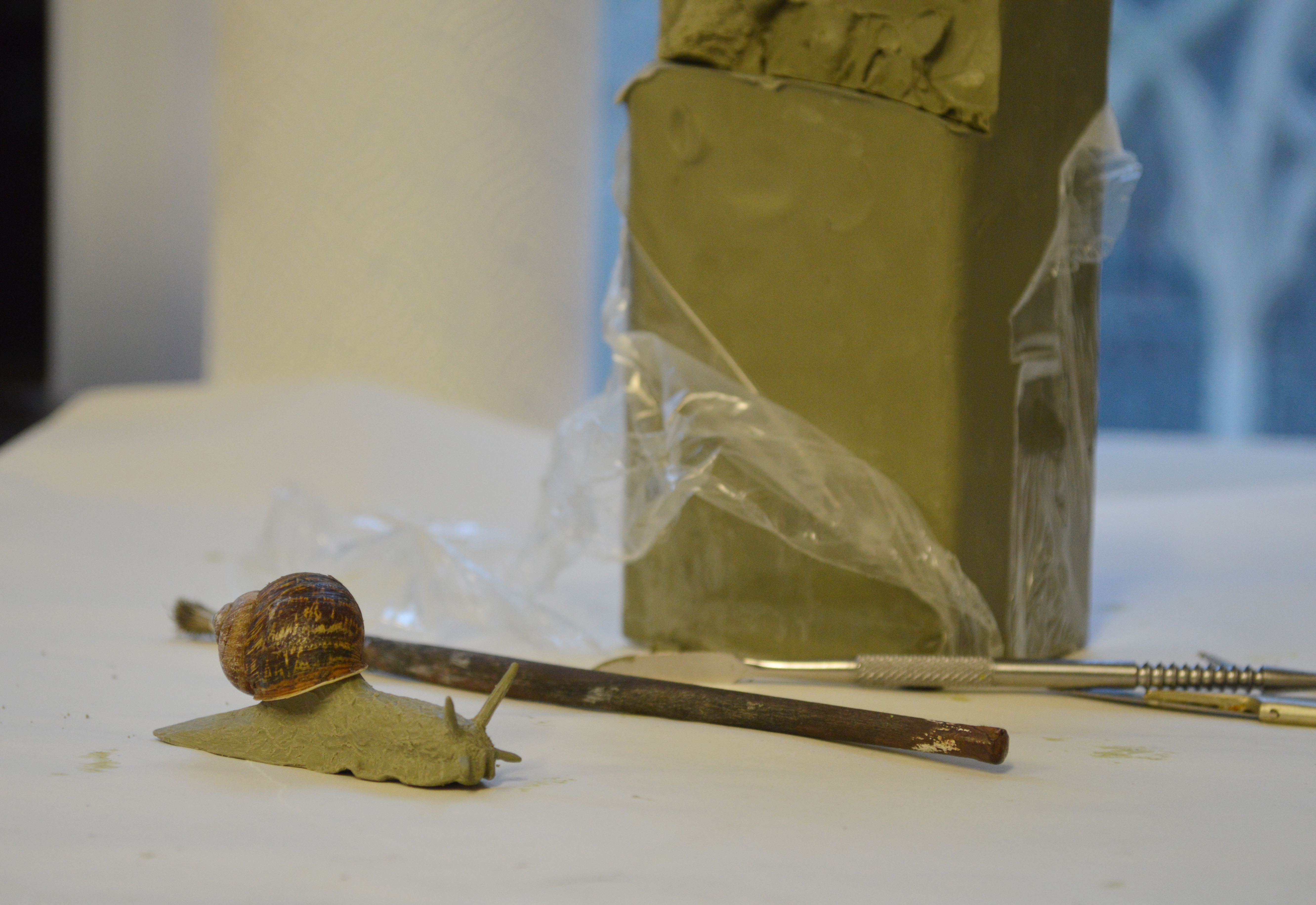
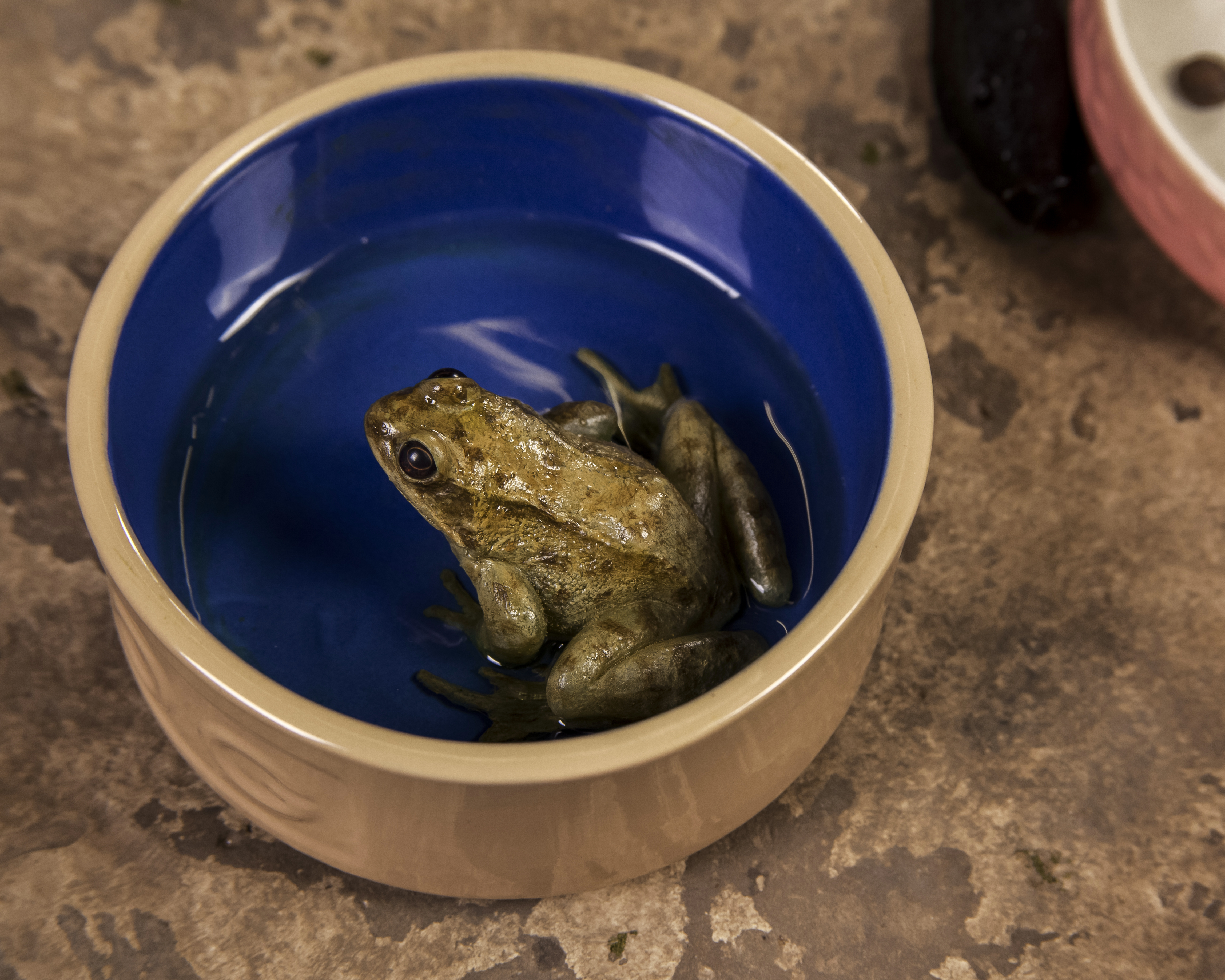
I made the grass and the daisy using traditional silk and wax methods. The dog food, seeds and nuts were individually made using polymer clay. I sculpted the slugs and the snails using an oil based clay which I then moulded in silicone. I then cast them in wax adding real shells to the snails. I made the frog by carving into an old painted plaster replica frog which was made in the 1970s. I carved away the eyes and added detail to the plaster, I then made my own mould again in silicone. I cast the frog in resin and added acrylic eyes and sculpted more detail onto the cast using Milliput. I then painted the cast with acrylics and pan pastels. I used resin to create the water effect in the dog bowl.

The diorama sits proudly in the museum alongside the beautiful historic cases. In the same space stands the cheetah I mounted for the museum in 2017 which was also a community inclusive project. I am so proud of this work. I adore the Booth Museum team, I love their passion for not only the museum and the objects but also for people. Inclusivity is at the forefront of the museum and it is palpable. The first thing you see when you walk into the museum is a sensory box with ear protectors, torches and glowing lights and shapes. This to me shouts ‘everyone is welcome here please come and explore’.

 NatSCA
Pingback: NatSCA Digital Digest – September 2024 | NatSCA