
Written by Ellie Clark (Collections Move Team Lead) and Lizzy Devenish (Collections Move Team Lead Digitisation), Natural History Museum, London.
Introduction
The Natural History Museum is in the process of preparing 38 million specimens to be moved, 28 million of which will be rehoused to a new Science and Digitisation Centre at Thames Valley Science Park (TVSP) in Reading – the largest move of natural history specimens globally. Part of NHM Unlocked, this is an ambitious programme to secure the future of our irreplaceable collections, accelerate scientific research and enhance the Museum’s public offer.
As part of this process, new workflows are being developed to ensure the safety of specimens before, during and after the move. Below, Team Leads Ellie Clark and Lizzy Devenish discuss a couple of ways this is currently being accomplished.
Physical Interventions Survey
It is important to gain a good understanding of the condition and housing needs of specimens before they move to TVSP. To do this, the NHM Unlocked Moves Team are currently undertaking a Physical Interventions Survey across the Palaeontology Collections to better understand these needs. The level of preparation needed varies from specimen to specimen depending on several factors including current storage, specimen condition, size of specimen and collection type. The ultimate aim of the survey is to provide an initial assessment for the time and resources needed for specimen preparation by curatorial and conservation teams to facilitate the safe movement of specimens to the new site.
Since February 2023, the Moves Team have been progressing through the collections, visually assessing specimen condition and housing. Over 40,000 ‘locations’ – which can be anything from a drawer or a shelf containing specimens – across the Palaeontology Collections have been assessed to date. This is not a small task, with some drawers alone containing hundreds of specimens. During the process we have carried out assessments in several sections including Micropalaeontology, Fossil Molluscs and Fossil Mammals – from mammoths to ammonites, the team has seen it all!
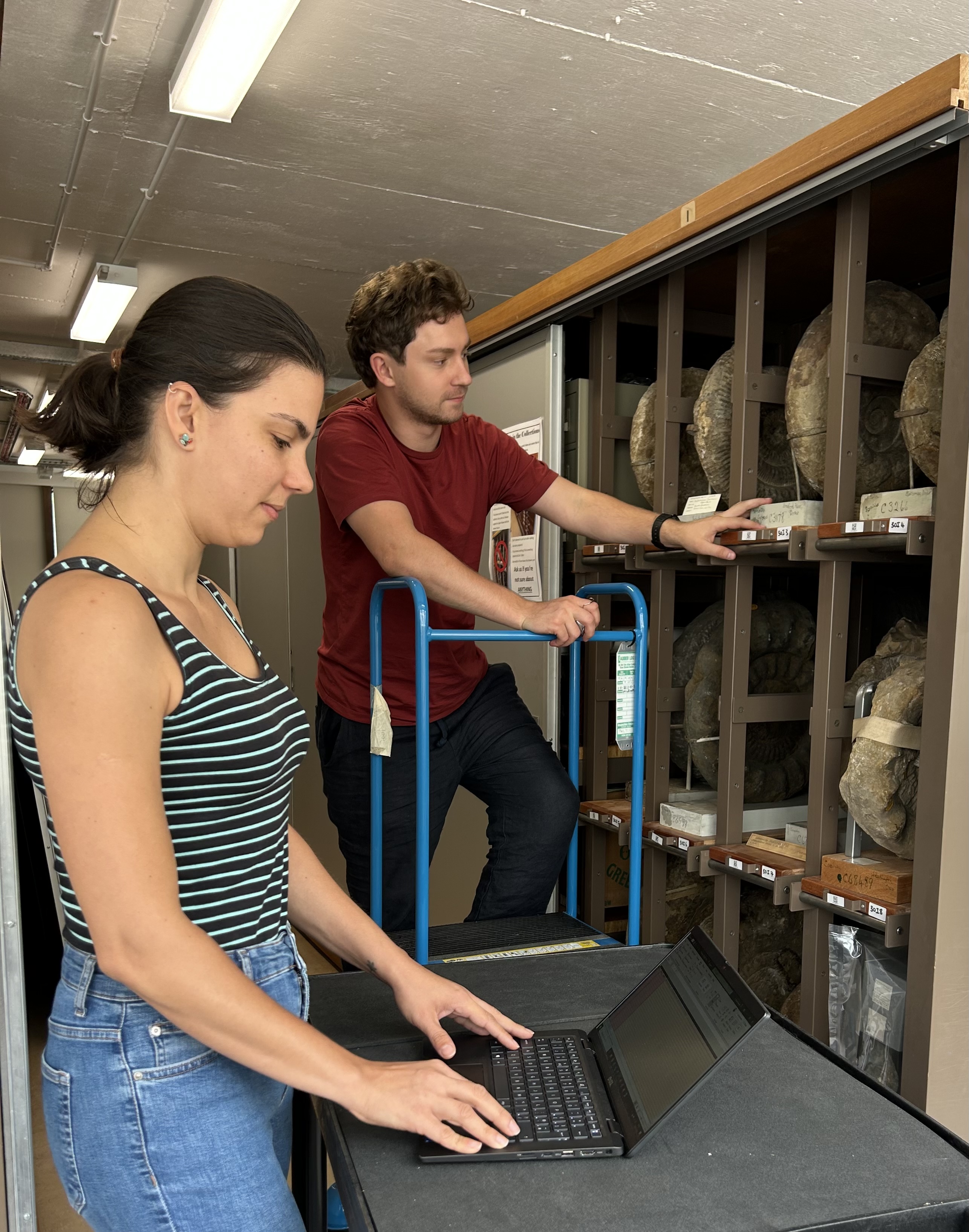
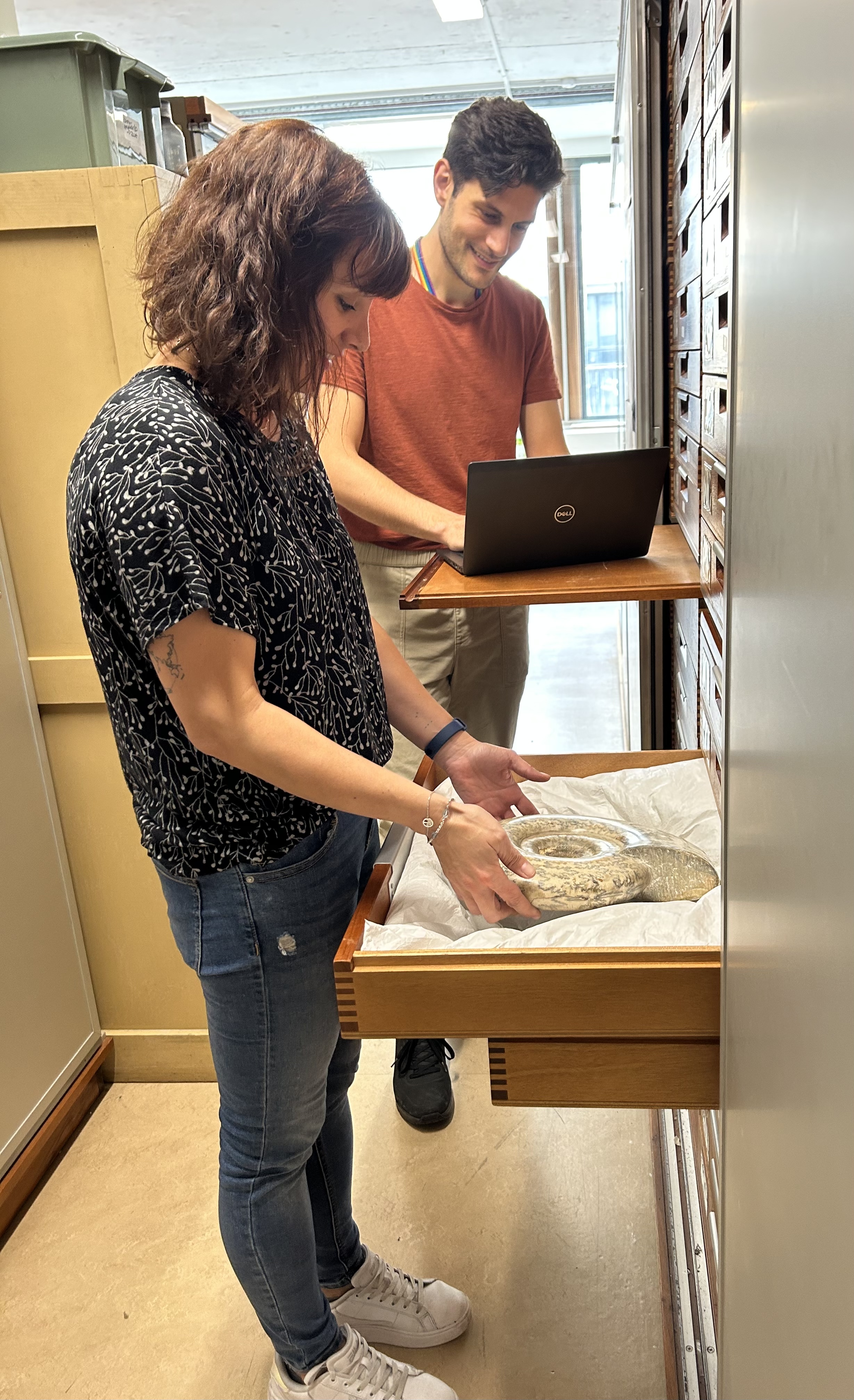
During the survey, specimens are scored against a series of criteria that highlight any rehousing or conservation work that needs to be carried out. The criteria have been developed by conservation and curatorial teams to cover the wide range of interventions needed before the move. Interventions can range from if a specimen needs a new tray, bespoke box or plastazote inserts. Once the first pass of assessments has been carried out, the conservation team then reassesses anything flagged as potentially needing conservation input, further categorising them depending on the type of intervention.
Once the Physical Intervention Survey is completed it will give a broad overview of the rehousing and conservation needs of the collections. It will highlight areas of priority, inform resource allocation and ultimately ensure the safe movement of specimens to the new site at TVSP.
Digitisation
Digitisation is the process of converting physical specimen information into a digital format, which can be achieved using a host of methods such as imaging, transcription, and digital cataloguing.
The benefits of digitised collections are well understood; from improving accessibility for a global audience and encouraging novel forms of interaction and research, to improving routine collections management by providing data on full collection inventories. For collection moves, such as for TVSP, it also ensures that information about a collection exists in the unlikely case of disaster or loss and allows for the collection to still be digitally accessible once physically closed-off.
The vast number and type of specimens involved in the TVSP move allow for the development of new, high-throughput digitisation workflows. These quickly capture inventory data to assist with knowing what specimens the Museum has, what they look like, and where they are currently located. Below are two examples of new workflows attempting to do just that.
Entomology Drawer Imaging
One of the largest single collections involved in the move comprises the Museum’s nine million pinned Coleoptera specimens, housed within 16,000 drawers. Digitising each single specimen would take far longer than the length of the Unlocked Programme, so instead, digital documentation can be completed to drawer level. This gives an overall view of the specimens, item count, broad conservation status, any presence of type material, taxonomy, and any other notable details which could also be useful for everyday curation.
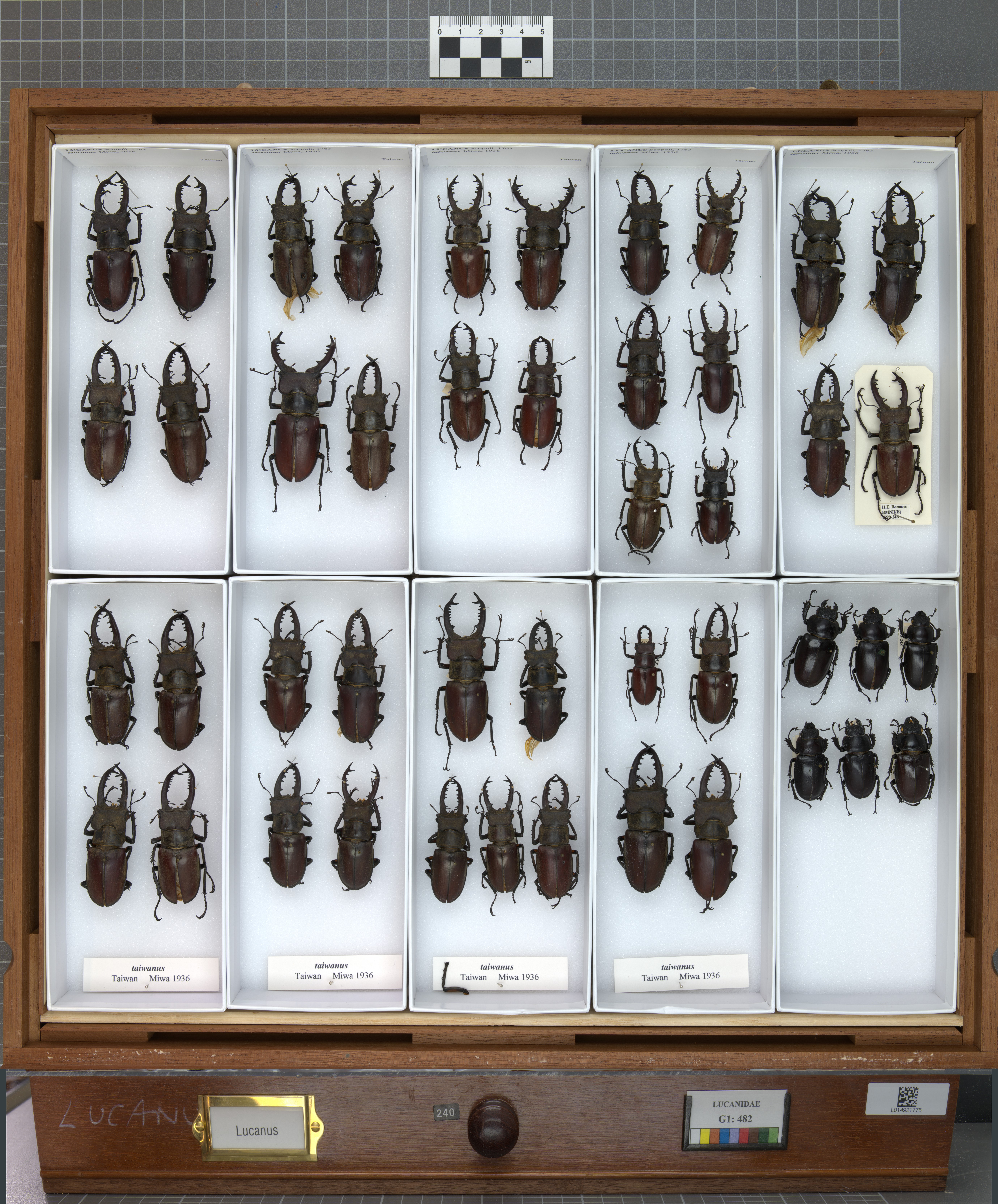
The drawer is barcoded to allow for both a) automatic file-renaming during imaging, and b) automatic ingest to the corresponding record in the Museum’s Collections Management System. A script is used to manipulate the file and allow for a mirrored image of the front of the drawer to also be viewable in the final image.
Jar Imaging
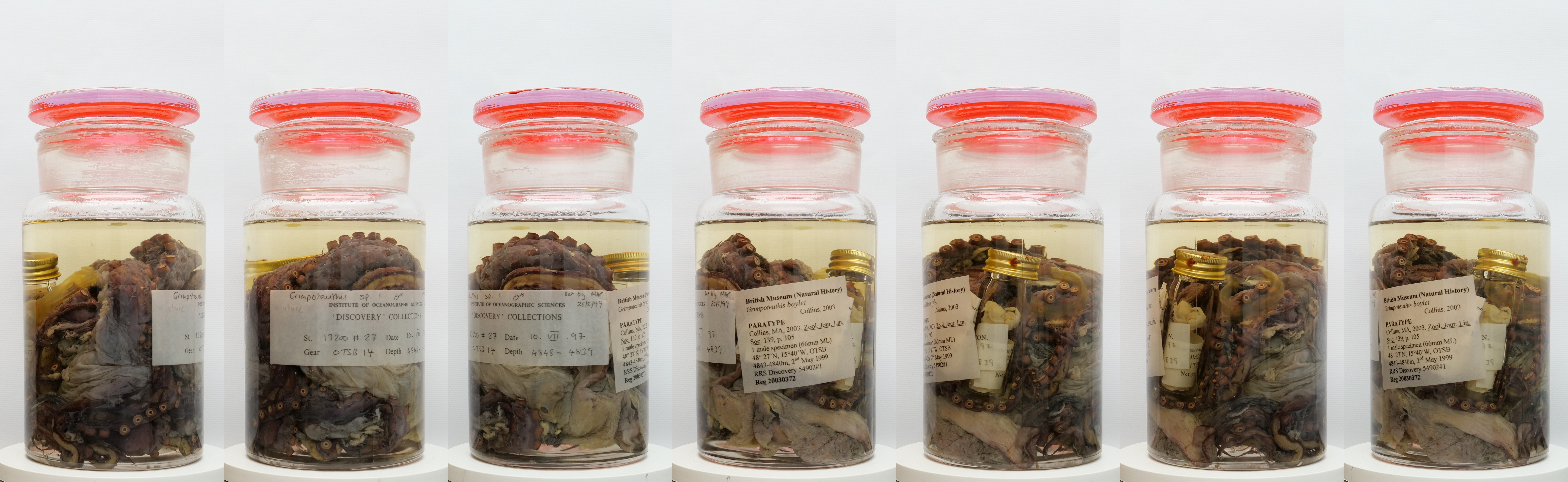
Digitising spirit specimens can be very complex. For the purposes of a collections move, digital documentation of the jar can be completed using a simple auto-rotary stand. In this workflow, the jar is rotated whilst a stationary camera captures multiple images which are later stitched together to produce a single image. This image is incredibly useful as an identification guide, can be used for a specimen overview, enables beneficial label transcription, and gives a snapshot of conservation issues like rate of fluid loss.

 NatSCA
Parabéns a esta equipe de profissionais que com amor, dedicação e muito conhecimento cuidam e preservam várias espécies deste nosso Planeta Terra.
Nos falta é uma política de respeito, cuidado e investimentos para com cada Espécie, seja ela animal ou vegetal dentro de seu próprio habitat.
Abçs
Rosângela Andrade
Belo Horizonte/Brasil
LikeLike
Pingback: NatSCA Digital Digest – August 2023 | NatSCA