State of the Union! Natural History Museums 2014

Author Mark Carnall, Curator, Grant Museum of Zoology, UCL
#NatureData Coordinating Committee
All views are the opinion of the author. August 2014.

‘After visiting the recent natural history museum community conference in July: SPNCH 2014, Cardiff, Mark Carnall reflects on what the sector internationally is thinking and doing – in particular what’s happening digitally and what people’s thoughts are on a UK natural science database’.
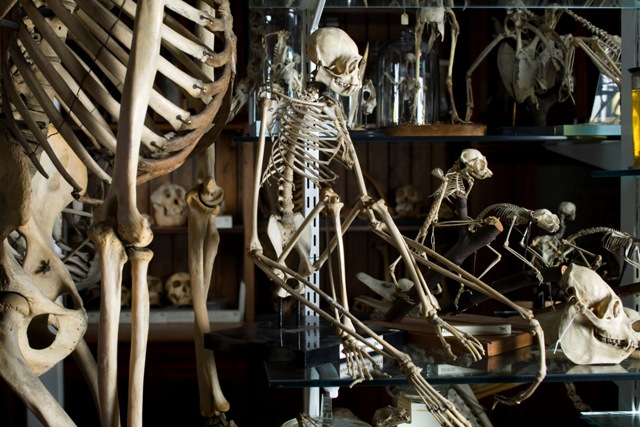
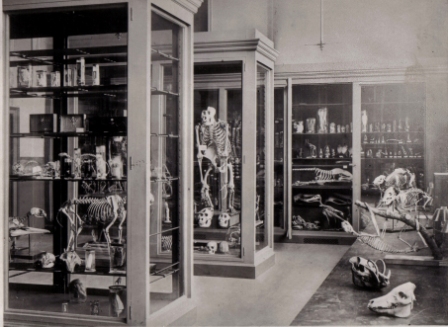
Primate skeletons in the Grant Museum of Zoology, UCL ©UCL, Grant Museum of Zoology and Matt Clayton

Primate skeletons in the Grant Museum of Zoology, UCL ©UCL, Grant Museum of Zoology and Matt Clayton

At the end of June was a rather special event; the coming together of three subject specialist networks (SSN), the Society for the Preservation of Natural History Collections (SPNHC), the Natural Sciences Collections Association (NatSCA) and the Geological Curators’ Group (GCG) hosted by Amgueddfa Cymru National Museum Wales. Between them, these three networks represent a sizeable chunk of curators, conservators, directors and educators who work in and with natural history museums and collections. Each SSN has yearly meetings but a syzygy rarely happens.

The full conference was a six day affair packed with field trips, stores tours, talks, workshops, demos, poster sessions and discussions attended by over 250 delegates from almost as many natural history institutions. This provided a great opportunity to catch up and meet friends, facilitated the catharsis in sharing frustrations unique to natural history museums and offered a rare chance to establish a sense of ‘the state of the union’ in natural history museums across Europe, North America and elsewhere.


The broad theme of the conference was historic collections and future resources and many of the presentations were about off-label uses of collections, advocacy and digitisation. Inspiringly, the conference was kicked off with a series of keynotes which carried the resounding message of “get over it” when it comes to the communities’ existential crisis in demonstrating value and worth with a rousing series of presentations from Professor Paul Smith and Dr Chris Norris setting the tone for the rest of the conference.

Off-label use of collections, a term borrowed from accidental discoveries of secondary beneficial side effects in the pharmaceutical industry, came up time and time again. Cynically, as the curator of a small museum it’s nice to finally be joined by colleagues from some bigger museums who, without having to face the “use it or lose it” challenge to keep a museum in existence, have cottoned on to the notion that perhaps collections have uses beyond the 10% of material that has a function in alpha taxonomy and (often low impact) taxonomic research. Colleagues presented example after example of natural history collections being used for research into environmental change. One question that wasn’t satisfactorily answered was about how this use of collections can be procedurally built into research. Many of the examples were incidental discoveries (hence off-label) rather than arising from researchers deliberately thinking of uses of collections in the first instance. However, advocates for the importance of natural history collections now have a new suite of examples to convince decision and policy makers about unique insights into the natural world which can only be gleaned from scrutinising collections.

When it came to advocacy, unfortunately the community fell into the trap of talking about scientific research use of collections almost to the exclusion of all other audiences. I’ve written before about how natural history museums need to celebrate and contribute more to being a part of the cultural sector, especially for museums which don’t hold scientifically important collections and specimens. Myopia aside, the community seems to have come on to some degree, telling each other how important natural history collections are, which came out in a panel discussion on advocacy. There are still a lot of stereotypes about what museums are and what they do that need to be pulled down, but there’s a danger in evangelising which can be quite divisive. Another general theme that came out across the series of talk days is that we need to get more sophisticated and generally get better at demonstrating what we do well. The finding of the NatSCA and Arts Council England study into the popularity of different kinds of museum galleries was presented, demonstrating that natural history collections are the most popular, but put some audiences off if they don’t appear to be well maintained or invested in. Natural History Near You was also presented, finally making headway into ascertaining exactly where all the natural history collections are, a fundamental piece of information that has eluded several generations of natural history collections workers. Interestingly, one of the contrasts between the UK delegates and those from the rest of Europe and North America was that with a handful of exceptions, the majority of the social media generated around the conference came from UK colleagues. It seems that social media is yet to take off as a promotional, professional networking and advocacy tool for museum professionals elsewhere.

Lastly, there was a cornucopia of presentations on digitising collections. It’s uncontroversial to say that museums in general are far from being digital – let alone post digital – and that natural history museums and collections as a group are lagging behind the rest of the museum sector. It seems that colleagues in North America and from the rest of Europe are making huge advances in all aspects of digitisation from technical advances, standards in digitisation, data capturing pipelines and networks, and databases linking specimen information. Embarrassingly, UK museums are somewhat left in the dust, contributing little to the 20 or so European and International data repositories and the data that does exist is incomplete, hard to export, manipulate or in many cases even locate – let alone scrutinise. This is in part what the #naturedata project hopes to solve, with “one portal to rule them all” in the UK at least. The need for this is even more pressing thanks to worryingly vague requirements for databases required for compliance with the Nagoya Protocol on Access and Benefit-sharing. Three conference sessions on the Nagoya Protocol valiantly tried to deconstruct the bureaucratic layers represented by this legislation but it looks like the practicalities of compliance will be causing headaches for generations of museum professionals yet.

Overall, the conference was an excellent set of days. Networking and socialising with enthusiastic, passionate and brilliant colleagues really is the best way to recharge the batteries and reinvigorate the soul. Throughout the presentations the niggling thought I kept returning to was that all the innovative, experimental and inspiring ways we use to get the most of our collections are still hamstrung by our fundamental issue of getting a handle on what we have in our collections. The curse and gift of natural history collections is their vast size, but it’s no longer good enough to use the size of our collections as an excuse for not getting to grips with every single specimen we have and making them available to the people for whom we keep them in trust.


NatSCA Digital Digest

Welcome to the weekly digest of posts from around the web with relevance to natural science collections. We hope you find this useful and if you have any articles that you feel would be of interest, please contact us at blog@natsca.org

1. Blog: Natural History Blog

Russell Dornan

Synopsis

A great blog worth checking out:

‘My name is Russell Dornan and I was the biology curatorial trainee at Hereford and Ludlow Museums. I blogged throughout my 12 month journey through their natural history collections and went on to be the Natural History Project Co-ordinator at the Horniman Museum in London.

I am now the Web Editor at Wellcome Collection.

All views expressed in this blog are mine alone and do not represent the opinions of my employer.’

Russell Dornan's #MuseumSelfie

Russell Dornan’s #MuseumSelfie (Image by Russell Dornan)

Wunderkammer

2. Volunteer Position: Mudchute Volunteer Coordinator

Mudchute, East London Countryside

Synopsis

We have a fantastic opportunity for an experienced Volunteer Coordinator to join our team at Mudchute Park and Farm to manage the recruitment, supervision and support of our volunteering programme.

We are looking for an organised, dynamic and enthusiastic individual who has the experience of working in a multi-cultural environment Inner City Environment with groups and individuals from a diverse background. Experience of working with and the ability to enthuse and motivate disadvantaged individuals is essential.

If you think this could be you, we’d love to hear from you! For more details about this part time position, including how and when to apply, please download the application pack by following the website below.

Please note that applications must be received by noon on Friday, August 29th.

Mudchute Volunteer Position

3. Training: Accreditation Plus Training- Making your objects accessible

University of the Arts, London

Synopsis

Wednesday 10 September 2014, 1.30-4pm

Central St Martins

http://www.arts.ac.uk/csm/about-csm/find-us/

‘Research has proven that touching and handling objects is an important part of the learning experience. However for many museums, allowing visitors to handle objects is an area in which they lack confidence or ‘trained’ staff. This training will address the issue of how we balance the care and conservation of objects against issues of access. Experienced practitioners from Central St Martins will provide guidance on best practice in object handling and discuss how robust systems can make it possible to manage access to collections through handling whilst still protecting them for future generations.

In the session you will:

  • Look at a range of things to consider in order to handling by your visitors.
  • Explore why we use object handling in our museums
  • Learn best practise for handling objects

It is aimed at staff and volunteers who will be developing and delivering handling sessions within their museums.’

To book, fill in an online application form on the Regional Programmes website:

Training Programmes

Training course booking form

Compiled by Emma-Louise Nicholls, NatSCA Blog Editor

Collecting biological specimens essential to science and conservation

A letter signed by more than 100 biologists and biodiversity researchers,  published online in Science today (Science 23 May 2014: Vol. 344 no. 6186 pp. 814-815 DOI:10.1126/science.344.6186.814), states why collecting plant and animal specimens is essential for scientific studies and conservation and does not, as some critics of the practice have suggested, play a significant role in species extinctions.

Beetle collection. Image by Paolo Viscardi

The letter is a response to an April 18 Perspectives article in Science arguing that alternative methods of documentation—such as high-resolution photography, audio recordings and nonlethal tissue sampling for DNA analysis—make the field collection of animal and plant specimens unnecessary. As most natural sciences collections professionals are fully aware, this is simply not the case.

“None of the suggested alternatives to collecting specimens can be used to reliably identify or describe animals and plants,” said Cody Thompson, mammal collections manager and assistant research scientist at the U-M Museum of Zoology.

“Moreover, identification often is not the most important reason to collect specimens. Studies that look at the evolution of animal and plant forms through time are impossible without whole specimens. Preserved specimens also provide verifiable data points for monitoring long-term changes in species health and distribution.”

In addition, specimens from museum collections and their associated data are essential for making informed decisions about species management and conservation now and in the future, the authors state.

“Photographs and audio recordings can’t tell you anything about such things as a species’ diet, how and where it breeds, how quickly it grows, or its lifespan—information that’s critical to assessing extinction risk,” said Luiz Rocha of the California Academy of Sciences, who organized the response to the Science article.

And contrary to statements made in the April 18 Science article titled “Avoiding (Re)extinction,” collecting biological specimens does not play a significant role in species extinctions, according to the rebuttal authors.

In the April article, Arizona State University’s Ben Minteer and three co-authors cite several examples of species extinctions and suggest that the events were linked to overzealous museum collectors.

Not so, according to authors of the rebuttal letter, who reviewed the evidence and found that none of the cited extinctions—including the disappearance of flightless great auks in Iceland and Mexican elf owls on Socorro Island, Mexico—can be attributed to scientific collecting.

Millions of great auks were harvested for food, oil and feathers over the millennia, and only about 102 exist in scientific collections. Mexican elf owls were common when specimens were collected between 1896 and 1932, and the most likely reasons for extinction around 1970 were habitat degradation and predation by invasive species.

At the same time, Minteer and his colleagues failed to point out any of the valuable services that museum biological collections have provided over the decades, according to the rebuttal authors.

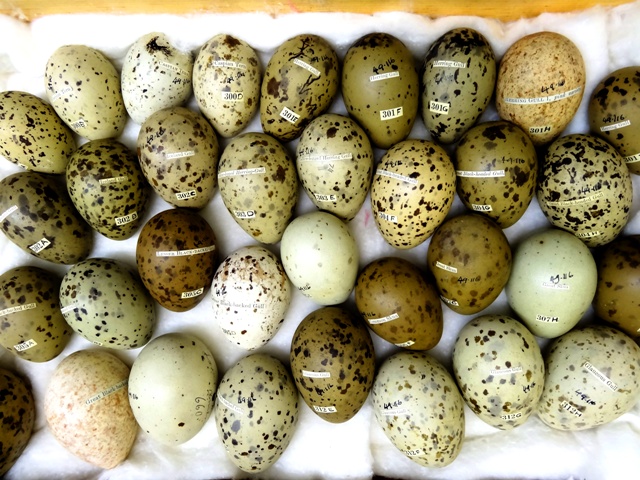
Both historical and new collections played a key role in understanding the spread of the chytrid fungus infection, one of the greatest current global threats to amphibians. The decision to ban DDT and other environmental pollutants was based on the discovery of thinning bird eggshells collected over an extended period. And the declining body size of animals, one of the negative effects of climate change, was discovered using body-size data from museum specimens.

Egg collections like this helped identify the harm done by DDT. Image by Paolo Viscardi

In other cases, genetic data from decades-old scientific specimens has even been used to “de-extinct” species. One of these, the Vegas Valley leopard frog, was thought to have gone extinct in the wake of Las Vegas development. However, a study published in 2011 compared the genetics of specimens from the extinct population to individuals from surviving populations of similar-looking frogs elsewhere in the Southwest and found them to be the same species.

These types of discoveries are “the hallmark of biological collections: They are often used in ways that the original collector never imagined.” And with the continuing emergence of new technologies, this potential only grows.

That potential, combined with the increasing number of threats species face and the need to understand them, suggests that the need to collect specimens—and to share the information they hold—has never been greater.

In their April article, Minteer and his colleagues erroneously portray scientific collecting in a negative light that distracts from the primary causes of modern extinctions: habitat degradation and loss, unsustainable harvesting and invasive species.

“Halting collection of animal and plant specimens by scientists would be detrimental not only to our understanding of Earth’s diverse biota and its biological processes, but also for conservation and management efforts,” said Diarmaid O’Foighil, director of the U-M Museum of Zoology and a co-author of the rebuttal letter.

“That detriment in understanding would only increase with time because having museum specimens available for future generations of scientists will allow their study using research methodologies that have yet to be invented.”

A pre-publication pdf version of the letter can be read here.


NatSCA Digital Digest

Welcome to the weekly digest of posts from around the web with relevance to natural science collections. We hope you find this useful and if you have any articles that you feel would be of interest, please contact us at blog@natsca.org

1. Blog: Natural Support from Colleagues

Jan Freedman, Plymouth City Museum and Art Gallery

Synopsis

The way to best manage and safeguard our natural history collections is to ask for help and guidance from each other, says Freedman. He talks about the different types of natural sciences collections and hazards that we should look out for.

http://www.museumsandheritage.com/advisor/news/item/3242

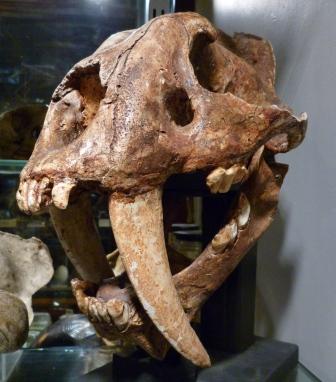
To care for and manage our collections, Freedman explains why it's best to ask each other for help. The smilodon cast LDUCZ-Z2724 at the Grant Museum of Zoology. (C) UCL / Grant Museum of Zoology

To care for and manage our collections, Freedman explains why it’s best to ask each other for help. The Smilodon cast LDUCZ-Z2724 at the Grant Museum of Zoology. (C) UCL / Grant Museum of Zoology

2. Blog: On the Origin of Our Specimens

Emma-Louise Nicholls, Grant Museum of Zoology

Synopsis

In a 12 part series, Nicholls looks at each of the curators that have cared for the collections at the Grant Museum over the last 186 years. Illustrating the series with specimens that can be directly attributed to specific curators, she tells the story of the Museum by demonstrating how each curator added to and steered the development of the collections.

http://blogs.ucl.ac.uk/museums/tag/on-the-origin-of-our-specimens/

The Grant Museum as it was in the 1880s. (C) UCL / Grant Museum of Zoology

The Grant Museum as it was in the 1880s. (C) UCL / Grant Museum of Zoology

3. Paper: Natural History’s Place in Science and Society

Joshua j. Tewksbury, John G. T. Anderson, Jonathan D. Bakker, Timothy J. Billo, Peter W. Dunwiddie, Martha J. Groom, Stephanie E. Hampton, Steven G. Herman, Douglas J. Levey, Noelle J. Machnicki, Carlos Martínez del Rio, Mary E. Power, Kirsten Rowell, Anne K. Salomon, Liam Stacey, Stephen C. Trombulak and Terry A. Wheeler.

Synopsis

An interesting look at how natural history is of vital importance to a wide range of disciplines. Despite this, it seems that there has been a decline in support for natural history in developed economies. The paper argues that the support should be reinforced as natural history provides a significant benefit to society.

http://bioscience.oxfordjournals.org/content/early/2014/03/23/biosci.biu032.full

Compiled by Emma-Louise Nicholls, NatSCA Blog Editor

Jake’s Bones: A Review

By Roberto Portela Miguez

When I was asked to review a book written by a twelve year old, I was slightly uncomfortable with the idea, as I thought that I would have to repress my usual critical and negative self and be gentle and considerate with the effort that this young nature enthusiast has put into such work. Needless to say, I did not want to come across as patronising either.

However, all my silly tribulations dissipated once I tucked into the book, and I actually found the publication not just faultless but truly enjoyable.

Jake McGowan-Lowe’s work is illustrated with beautiful photography and contains a wealth of knowledge and sound advice.

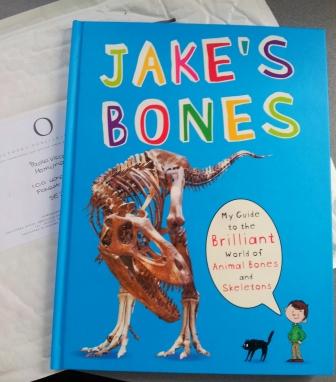
The new book by Jake McGowan-Lowe called Jake's Bones. (C) Paolo Viscardi

The new book by Jake McGowan-Lowe     called Jake’s Bones. (C) Paolo Viscardi


Each chapter has images of specimens from Jake’s very own skeletal collection, which ranges from the common British species to more exotic ones like armadillos and leopards. From the first pages one cannot fail to realise that this work was produced by someone with considerable first-hand experience on the topic. Maybe it was the picture of the more than two hundred skulls decorating his bedroom that gave away that the natural world is not just a pass-time for Jake, but something he is genuinely passionate about.

For each of the species included in the book, we are given details of some of the most significant skeletal adaptations and in specimens where a pathology is visible, Jake provides a well-founded interpretation.

The author does not shy away from using technical names for the different skeletal elements, but do not fear, because if you missed that lesson at school, there is a helpful glossary at the end. It is refreshing to see that Jake uses confidently and comfortably the relevant academic terminology. I was thrilled with this aspect of the editing and hold this as a triumph against those exhibition consultants that underestimate the level of knowledge of museum visitors and keep vanishing academic language from our galleries. You may now picture me taking my hat off to Jake for going boldly where museums used to go.

There is no osteological-related material that this studious naturalist cannot write about. From the basic “what is a bone?” to the more advanced ageing of animals from their bones, Jake displays an astonishing degree of knowledge on everything he presents.

The chapters that pleased me the most were the ones on tips for collectors, your bone collection and golden rules. It is easy to be awed by the natural beauty of the objects and their stories, but Jake wisely reminds all that there are a few important things to consider before we start accumulating our very own skeletal collection. Collection management, Health and safety and legislation are covered in these chapters and the author’s style makes it fun to read, so there is no excuse for accidents or incidents.

This is a great piece of work which I would recommend to anybody of any age and have no doubt that this will not be the last we will hear from such a talented science communicator.