Jake’s Bones: A Review

By Roberto Portela Miguez

When I was asked to review a book written by a twelve year old, I was slightly uncomfortable with the idea, as I thought that I would have to repress my usual critical and negative self and be gentle and considerate with the effort that this young nature enthusiast has put into such work. Needless to say, I did not want to come across as patronising either.

However, all my silly tribulations dissipated once I tucked into the book, and I actually found the publication not just faultless but truly enjoyable.

Jake McGowan-Lowe’s work is illustrated with beautiful photography and contains a wealth of knowledge and sound advice.
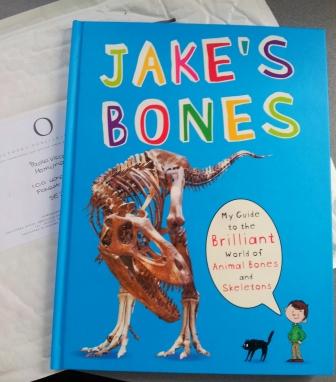
The new book by Jake McGowan-Lowe called Jake's Bones. (C) Paolo Viscardi

The new book by Jake McGowan-Lowe     called Jake’s Bones. (C) Paolo Viscardi


Each chapter has images of specimens from Jake’s very own skeletal collection, which ranges from the common British species to more exotic ones like armadillos and leopards. From the first pages one cannot fail to realise that this work was produced by someone with considerable first-hand experience on the topic. Maybe it was the picture of the more than two hundred skulls decorating his bedroom that gave away that the natural world is not just a pass-time for Jake, but something he is genuinely passionate about.

For each of the species included in the book, we are given details of some of the most significant skeletal adaptations and in specimens where a pathology is visible, Jake provides a well-founded interpretation.

The author does not shy away from using technical names for the different skeletal elements, but do not fear, because if you missed that lesson at school, there is a helpful glossary at the end. It is refreshing to see that Jake uses confidently and comfortably the relevant academic terminology. I was thrilled with this aspect of the editing and hold this as a triumph against those exhibition consultants that underestimate the level of knowledge of museum visitors and keep vanishing academic language from our galleries. You may now picture me taking my hat off to Jake for going boldly where museums used to go.

There is no osteological-related material that this studious naturalist cannot write about. From the basic “what is a bone?” to the more advanced ageing of animals from their bones, Jake displays an astonishing degree of knowledge on everything he presents.

The chapters that pleased me the most were the ones on tips for collectors, your bone collection and golden rules. It is easy to be awed by the natural beauty of the objects and their stories, but Jake wisely reminds all that there are a few important things to consider before we start accumulating our very own skeletal collection. Collection management, Health and safety and legislation are covered in these chapters and the author’s style makes it fun to read, so there is no excuse for accidents or incidents.

This is a great piece of work which I would recommend to anybody of any age and have no doubt that this will not be the last we will hear from such a talented science communicator.

Recreating the Past: In LEGO®

By Christine Taylor, Keeper of Natural Sciences, Hampshire County Council Arts and Museums Service (HCCAMS)

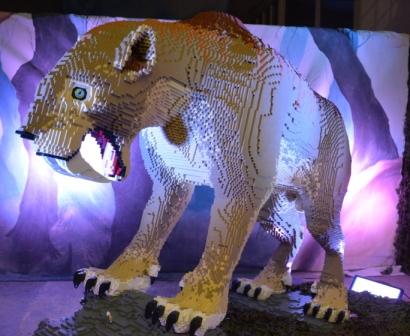
An Ice Age animal, a sabre-toothed cat, made from LEGO bricks. (C) Julian Wright (HCCAMS)

An Ice Age animal, a sabre-toothed cat, made from LEGO bricks. (C) Julian Wright (HCCAMS)

Reaching new audiences for natural science collections is always a challenge, especially if the museum concerned is a network of recreated Victorian and 1930s streets.

However, the opportunity of working with artists from British company ‘Bright Bricks’ has enabled the creation of extinct animals made from LEGO, based on the Natural Science collections of the Hampshire County Council Arts and Museums Service (HCCAMS).

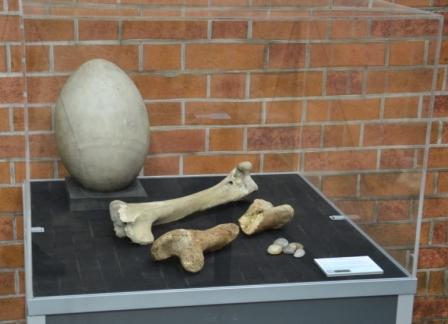
Leg bones, gizzard stones and a replica egg of a giant moa. (C) Julian Wright (HCCAMS)

Leg bones, gizzard stones and a replica egg of a giant moa. (C) Julian Wright (HCCAMS)

The Natural Science collections provided the inspiration for many of the specially commissioned builds for ‘Lost World Zoo’, a menagerie of animals built using LEGO bricks from different periods in time. Original specimens from the collections have been displayed alongside these model animals. The Victorian street settings at Milestones Museum, Basingstoke, enabled a ‘back story’ of a Victorian explorer discovering an uncharted island where the animals still lived.

The railway station at Milestones has been transformed into an aquarium filled with aquatic animals, which provided the opportunity to display Cretaceous marine fossils in bubbles (perspex domes) in the ‘ticket office’. Lamp posts decorated with Meganeura, the giant dragonflies of the Carboniferous and large butterflies and other insects provide an introduction to the origins of insects and an opportunity to display some of the large foreign insect material from the collections.

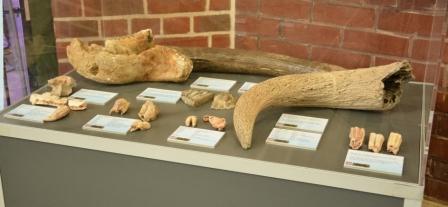
Bones and teeth of Ice Age animals. (C) Julian Wright (HCCAMS)

Bones and teeth of Ice Age animals. (C) Julian Wright (HCCAMS)

Dodo bones, collected by George Clarke in the mid 19th century, inspired a flock of dodos and the advance marketing campaign featured a dodo made from LEGO, visiting various places around Hampshire and beyond. Other visits included a trip to see the Oxford dodo and a hot air balloon factory in Bristol to investigate flying!

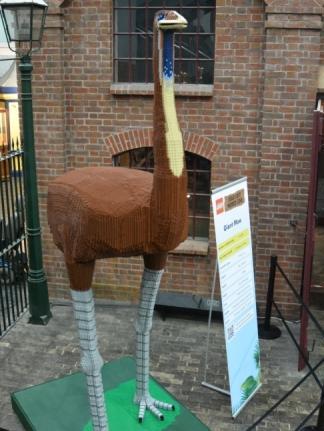
Other models included a sabre-toothed cat, a giant moa bird (full height!), a huge turtle called Archelon made from DUPLO®, a neanderthal, a Megalosaurus head and a woolly mammoth built during the exhibition, as well as displays of smaller models and a spotter trail.

Giant moa made from LEGO. (C) Julian Wright (HCCAMS)

Each of the models have habitat, locality, size and extinction details on banners, with many of the banners displaying a QR code to video podcasts about the Natural Science collections. Throughout the exhibition, which runs until 27th April, and then splits to tour some of the smaller HCCAMS museums, sessions based on fossils, mammoths, giant dragonflies and neanderthals provide visitors with the opportunities to handle collections and to discover more about the collections.

The exhibition has provided a wonderful opportunity for the Keeper of Natural Sciences to exhibit areas of the collections which have rarely been seen on display, to devote time to researching the specimens, enable conservation work to take place and the great excitement of un-wrapping the models made from LEGO!!

NatSCA Digital Digest

Welcome to the weekly digest of posts from around the web with relevance to natural science collections. We hope you find this useful and if you have any articles that you feel would be of interest, please contact us at blog@natsca.org

1. Blog: A Day Out at Tring

Amy Freeborn, Natural History Museum London

Synopsis

This blog covers some of the history of the collections at Tring, and includes some interesting historical photos of the Museum and Rothschild’s estate as it was in the early 1900s. The author had the opportunity to see the preparation lab where beetles are used to clean flesh from carcasses, leaving skeletons fit for mounting. Some ‘wow-factor’ facts regarding the content of Tring Museum’s collections are also outlined.

http://www.nhm.ac.uk/natureplus/blogs/behind-the-scenes/2014/03/14/a-day-out-at-tring

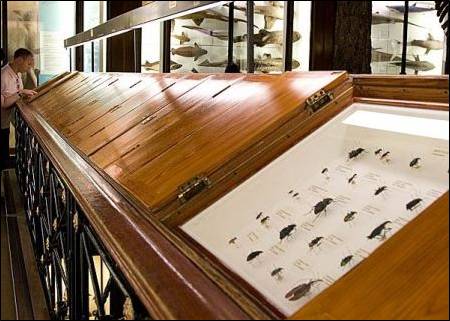
The galleries at Tring Museum. Image by Robert Stainforth. Obtained from http://www.commons.wikimedia.org

2. Blog: Testing a European Competency Framework for VET in Collections Management

National Agency for Lifelong Learning

Synopsis

Access to, and use of, natural history collections are integral in facilitating research in the sector, but the ways in which these are facilitated vary between institutions. This article looks at the application of ‘best practice’ in terms of collections management, care, and conservation and describes a project that utilises the methods developed by the Natural History Museum, London to tackle the task of creating a standard for European collections.

http://www.adam-europe.eu/adam/project/view.htm?prj=10833&projLang=en#.UvpDWvtWsfg

3. Training: Pest Identification and Trapping Study Day

The Horniman Museum, London. 15th May 2014

Synopsis

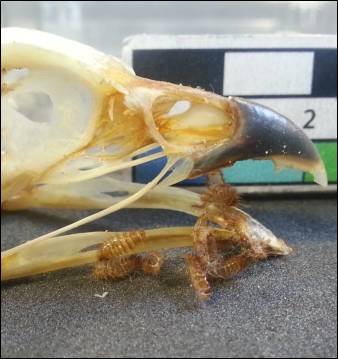
An introduction to the management of museum pests. The day comprises lectures on subjects such as Integrated Pest Management schemes, as well as practical sessions that will give attendees the skills to identify various pest species. The Horniman Museum is used as a case study to illustrate an active pest management scheme. The highlight (having attended myself previously) is a pest based treasure hunt in the natural history galleries.

There is a limited number of places on this course so please get in touch with Libby Finney for details asap if you are interested. Email: lfinney@museumoflondon.org.uk

A horde of Anthrenus larvae on a bird skull. (C) UCL Grant Museum

4. Event: Geological Carbon Storage: Meeting the Global Challenge

Two day conference at the Geological Society at Burlington House. 14th-15th April 2014

Synopsis

Fossil fuels will undeniably be a significant component of energy supplies for ‘several decades at least’. This conference will focus on actions required to avoid serious negative environmental impacts caused by the burning of fossil fuels and the subsequent amount of CO2 that is released. Trapping CO2 and storing it underground (CCS) is a method of achieving this aim. Issues and policies will be discussed by delegates including members of government, industry, regulators and NGOs.

http://www.geolsoc.org.uk/carbonstorage14

Compiled by Emma-Louise Nicholls, NatSCA Blog Editor

NatSCA Digital Digest

Welcome to the weekly digest of posts from around the web with relevance to natural science collections. We hope you find this useful and if you have any articles that you feel would be of interest, please contact us at blog@natsca.org

1. Blog: Knowledge Network

Paolo Viscardi, Deputy Keeper of Natural History at Horniman Museum

Synopsis

Looking at Subject Specialist Networks and how this type of inter-museum communication can improve the sector as a whole. An ‘open line of communication’ encourages a quality control that is standard throughout museums, and allows for the incorporation of discussion with non museum based academics. The success of SSNs centres on workshops and conferences though time and money make these logistically difficult. Suggestions are made regarding solving these issues to perpetuate the benefit museums receive via SSNs.

http://www.museumsandheritage.com/advisor/news/item/3215

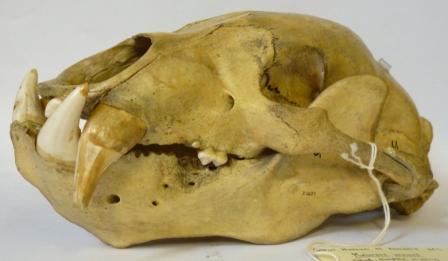
For your pleasure… A sloth bear skull, Melursus ursinus. Specimen LDUCZ-Z1637. (C) UCL Grant Museum

2. Blog: Museum Training for the World

Edmund Connolly, British Council-UCL Museum Training School Coordinator

Synopsis

The British Council and University College London have joined forces to launch the Museum Training School. Based in a variety of museums and galleries across London, this school will give early career museum professionals the opportunity to meet with staff from across the sector, and aims to arm attendees with the necessary skills to ensure ‘sustainability and growth’ of collections, galleries and museums for the future.

http://blogs.ucl.ac.uk/museums/2014/03/07/museum-training-for-the-world/

3. Event: How Museums Can Contribute to Wellbeing

One day event in Newcastle Upon Tyne

Synopsis

This event is aimed at a range of museum staff such as curators, managers, and those involved in education and outreach. it will look at how museums can focus on wellbeing and use it as a tool in relationships and collaborations with external organisations. It will also investigate ways of securing funding, building on the foundations of wellbeing as a concept.

http://www.museumsassociation.org/find-an-event/ev1062022?utm_source=ma&utm_medium=email&utm_campaign=06032014#.Ux8JZNhKTwA

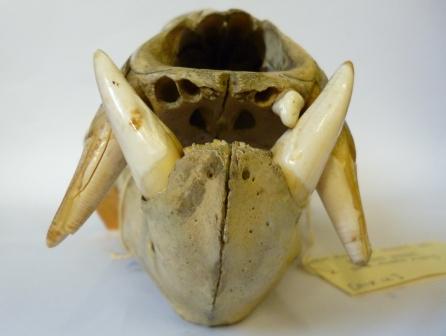
For further pleasure, the sloth bear skull from an exciting angle. Specimen LDUCZ-Z1637. (C) UCL Grant Museum

4. Event: Museum Week on Twitter

Contacts are @TwitterUK or museumweekuk@twitter.com

Synopsis

The 24th to 30th March is Museum Week on Twitter. The main hashtag #MuseumWeek will be the umbrella tag that will run all week long. Aside from this, there will be a specific theme, and relevant hashtag, each day, centred on topics related to museum and collections. It will be an opportunity to showcase parts of museums and collections that would otherwise not be accessible to the public. It also aims to give museum staff the chance to interact with each other through Twitter, and for both professionals and the general public to engage.

For more information, please contact Twitter on the above email or Twitter handle.

Compiled by Emma-Louise Nicholls, NatSCA Blog Editor

NatSCA Digital Digest

Welcome to the new weekly digest of posts from around the web with relevance to natural science collections. We hope you find this useful and if you have any articles that you feel would be of interest, please contact us at blog@natsca.org

1. Blog: Dr Woodward’s Fossils

Dr Ken McNamara, Sedgwick Museum of Geology

Synopsis

How the Sedgwick Museum began as a collection of 10,000 fossils ‘of all kinds’ belonging to John Woodward, and his bequest of £100 a year to ‘keep a lecturer’. The fossils were kept for 300 years in five beautiful walnut cabinets, pictured herein. Originally called the Woodwardian Museum, this blog looks at how Woodward helped to shape the museum, and the legacy he left behind.

http://blog.geolsoc.org.uk/2014/02/21/dr-woodwards-fossils/

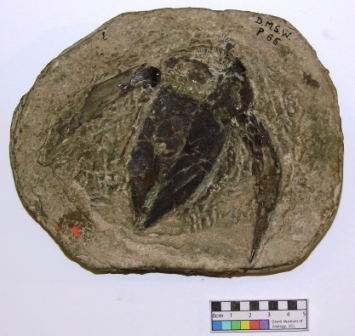
Bothriolepis, a fossil fish. (C) UCL Grant Museum

2. Blog: What can Twitter do for our collection?

Giles Miller, Natural History Museum

Synopsis

Case study showed ‘major players’ retweeting you leads to a greater number of retweets and new followers. Timing of tweets is essential, e.g. weekend tweets hardly ever get retweeted. Twitter may not affect KPIs in a measurable manner, but it opens up the museum to an audience that would never otherwise visit for logistical reasons. It also facilitates access to parts of the collections that are not on display.

http://www.nhm.ac.uk/natureplus/blogs/micropalaeo/2014/02/18/how-did-twitter-help-our-collection

3. Event: The Future of Museums

A conference and workshop for early career museum professionals

Synopsis

Designed to collate the ideas of aspiring museum professionals, a series of talks and discussions will be followed by the opportunity for delegates to collaborate on a manifesto for museums and collections.

http://museumsshowoff.wordpress.com/the-future-of-museums/

4. Event: Human Evolution – The Story of Us

A four hour only pop-up event Friday 7th March at UCL

Synopsis

This mini exhibition will showcase rarely seen objects from UCL’s Biological Anthropology Collection of early hominin fossil casts, including Lucy, the famous Australopithecus afarensis from East Africa. The objects exhibited will also include tools and visitors will have the chance to ‘meet the scientists’. The event will take place in the Rock Room at UCL, which has permanent displays of geological collections.

http://blogs.ucl.ac.uk/museums/2014/02/27/human-evolution-the-story-of-us/

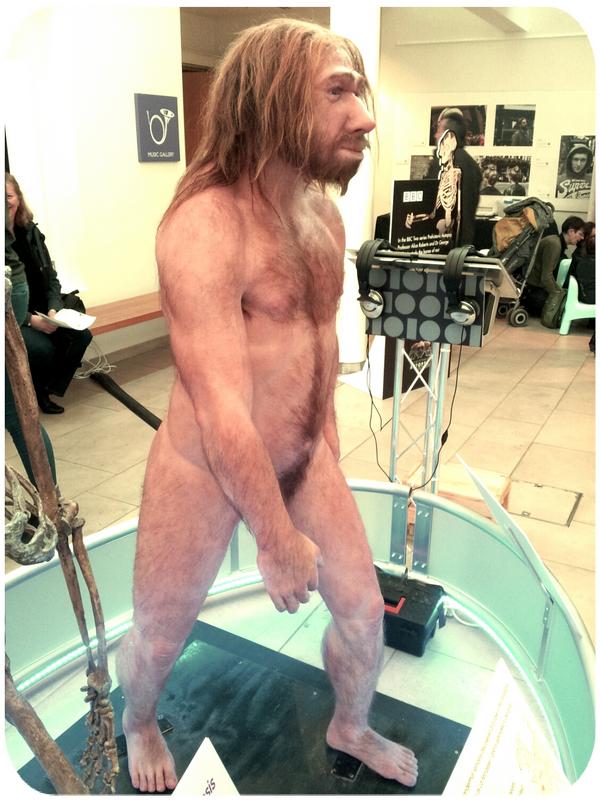
Neanderthal from BBC’s Prehistoric Autopsy exhibition at the Horniman Museum. (C) Paolo Viscardi

5. Event: Written in Stone: Life and Death in the Fossil record

Evening workshop at the Lapworth Museum of Geology, Birmingham

Synopsis

The workshop will be an interactive exploration of Cambrian organisms that formed part of the Cambrian Explosion and the subsequent Biodiversification Event of the Ordovician. These two points in Earth’s history are considered to be the foundations of the Earth’s biodiversity in the modern day.

http://www.birmingham.ac.uk/facilities/lapworth-museum/news/2014/28Feb-Written-in-Stone-Life-and-Death-in-the-Fossil-record.aspx

Compiled by Emma-Louise Nicholls, NatSCA Blog Editor