NatSCA Digital Digest

Welcome to the weekly digest of posts from around the web with relevance to natural science collections. We hope you find this useful and if you have any articles that you feel would be of interest, please contact us at blog@natsca.org

1. Blog: A Day Out at Tring

Amy Freeborn, Natural History Museum London

Synopsis

This blog covers some of the history of the collections at Tring, and includes some interesting historical photos of the Museum and Rothschild’s estate as it was in the early 1900s. The author had the opportunity to see the preparation lab where beetles are used to clean flesh from carcasses, leaving skeletons fit for mounting. Some ‘wow-factor’ facts regarding the content of Tring Museum’s collections are also outlined.

http://www.nhm.ac.uk/natureplus/blogs/behind-the-scenes/2014/03/14/a-day-out-at-tring
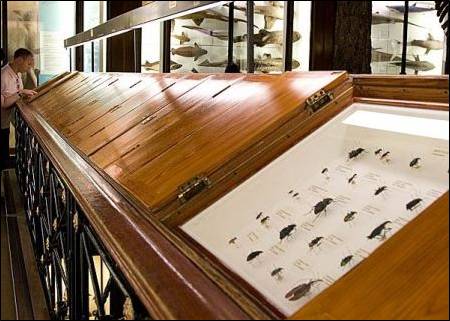
The galleries at Tring Museum. Image by Robert Stainforth. Obtained from http://www.commons.wikimedia.org

2. Blog: Testing a European Competency Framework for VET in Collections Management

National Agency for Lifelong Learning

Synopsis

Access to, and use of, natural history collections are integral in facilitating research in the sector, but the ways in which these are facilitated vary between institutions. This article looks at the application of ‘best practice’ in terms of collections management, care, and conservation and describes a project that utilises the methods developed by the Natural History Museum, London to tackle the task of creating a standard for European collections.

http://www.adam-europe.eu/adam/project/view.htm?prj=10833&projLang=en#.UvpDWvtWsfg

3. Training: Pest Identification and Trapping Study Day

The Horniman Museum, London. 15th May 2014

Synopsis

An introduction to the management of museum pests. The day comprises lectures on subjects such as Integrated Pest Management schemes, as well as practical sessions that will give attendees the skills to identify various pest species. The Horniman Museum is used as a case study to illustrate an active pest management scheme. The highlight (having attended myself previously) is a pest based treasure hunt in the natural history galleries.

There is a limited number of places on this course so please get in touch with Libby Finney for details asap if you are interested. Email: lfinney@museumoflondon.org.uk
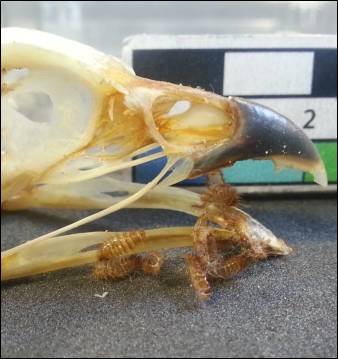
A horde of Anthrenus larvae on a bird skull. (C) UCL Grant Museum

4. Event: Geological Carbon Storage: Meeting the Global Challenge

Two day conference at the Geological Society at Burlington House. 14th-15th April 2014

Synopsis

Fossil fuels will undeniably be a significant component of energy supplies for ‘several decades at least’. This conference will focus on actions required to avoid serious negative environmental impacts caused by the burning of fossil fuels and the subsequent amount of CO2 that is released. Trapping CO2 and storing it underground (CCS) is a method of achieving this aim. Issues and policies will be discussed by delegates including members of government, industry, regulators and NGOs.

http://www.geolsoc.org.uk/carbonstorage14

Compiled by Emma-Louise Nicholls, NatSCA Blog Editor

NatSCA Digital Digest

Welcome to the weekly digest of posts from around the web with relevance to natural science collections. We hope you find this useful and if you have any articles that you feel would be of interest, please contact us at blog@natsca.org

1. Blog: Knowledge Network

Paolo Viscardi, Deputy Keeper of Natural History at Horniman Museum

Synopsis

Looking at Subject Specialist Networks and how this type of inter-museum communication can improve the sector as a whole. An ‘open line of communication’ encourages a quality control that is standard throughout museums, and allows for the incorporation of discussion with non museum based academics. The success of SSNs centres on workshops and conferences though time and money make these logistically difficult. Suggestions are made regarding solving these issues to perpetuate the benefit museums receive via SSNs.

http://www.museumsandheritage.com/advisor/news/item/3215

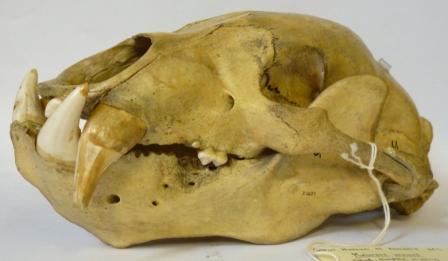
For your pleasure… A sloth bear skull, Melursus ursinus. Specimen LDUCZ-Z1637. (C) UCL Grant Museum

2. Blog: Museum Training for the World

Edmund Connolly, British Council-UCL Museum Training School Coordinator

Synopsis

The British Council and University College London have joined forces to launch the Museum Training School. Based in a variety of museums and galleries across London, this school will give early career museum professionals the opportunity to meet with staff from across the sector, and aims to arm attendees with the necessary skills to ensure ‘sustainability and growth’ of collections, galleries and museums for the future.

http://blogs.ucl.ac.uk/museums/2014/03/07/museum-training-for-the-world/

3. Event: How Museums Can Contribute to Wellbeing

One day event in Newcastle Upon Tyne

Synopsis

This event is aimed at a range of museum staff such as curators, managers, and those involved in education and outreach. it will look at how museums can focus on wellbeing and use it as a tool in relationships and collaborations with external organisations. It will also investigate ways of securing funding, building on the foundations of wellbeing as a concept.

http://www.museumsassociation.org/find-an-event/ev1062022?utm_source=ma&utm_medium=email&utm_campaign=06032014#.Ux8JZNhKTwA

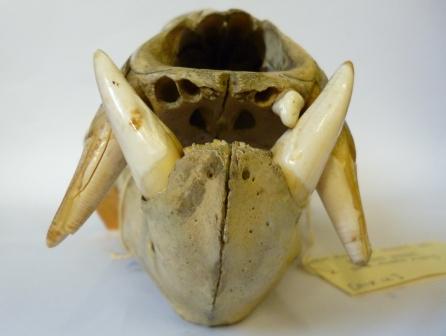
For further pleasure, the sloth bear skull from an exciting angle. Specimen LDUCZ-Z1637. (C) UCL Grant Museum

4. Event: Museum Week on Twitter

Contacts are @TwitterUK or museumweekuk@twitter.com

Synopsis

The 24th to 30th March is Museum Week on Twitter. The main hashtag #MuseumWeek will be the umbrella tag that will run all week long. Aside from this, there will be a specific theme, and relevant hashtag, each day, centred on topics related to museum and collections. It will be an opportunity to showcase parts of museums and collections that would otherwise not be accessible to the public. It also aims to give museum staff the chance to interact with each other through Twitter, and for both professionals and the general public to engage.

For more information, please contact Twitter on the above email or Twitter handle.

Compiled by Emma-Louise Nicholls, NatSCA Blog Editor
NatSCA Digital Digest

Welcome to the new weekly digest of posts from around the web with relevance to natural science collections. We hope you find this useful and if you have any articles that you feel would be of interest, please contact us at blog@natsca.org

1. Blog: Dr Woodward’s Fossils

Dr Ken McNamara, Sedgwick Museum of Geology

Synopsis

How the Sedgwick Museum began as a collection of 10,000 fossils ‘of all kinds’ belonging to John Woodward, and his bequest of £100 a year to ‘keep a lecturer’. The fossils were kept for 300 years in five beautiful walnut cabinets, pictured herein. Originally called the Woodwardian Museum, this blog looks at how Woodward helped to shape the museum, and the legacy he left behind.

http://blog.geolsoc.org.uk/2014/02/21/dr-woodwards-fossils/

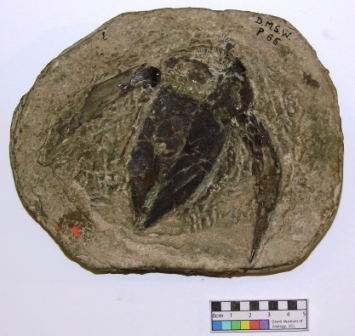
Bothriolepis, a fossil fish. (C) UCL Grant Museum

2. Blog: What can Twitter do for our collection?

Giles Miller, Natural History Museum

Synopsis

Case study showed ‘major players’ retweeting you leads to a greater number of retweets and new followers. Timing of tweets is essential, e.g. weekend tweets hardly ever get retweeted. Twitter may not affect KPIs in a measurable manner, but it opens up the museum to an audience that would never otherwise visit for logistical reasons. It also facilitates access to parts of the collections that are not on display.

http://www.nhm.ac.uk/natureplus/blogs/micropalaeo/2014/02/18/how-did-twitter-help-our-collection

3. Event: The Future of Museums

A conference and workshop for early career museum professionals

Synopsis

Designed to collate the ideas of aspiring museum professionals, a series of talks and discussions will be followed by the opportunity for delegates to collaborate on a manifesto for museums and collections.

http://museumsshowoff.wordpress.com/the-future-of-museums/

4. Event: Human Evolution – The Story of Us

A four hour only pop-up event Friday 7th March at UCL

Synopsis

This mini exhibition will showcase rarely seen objects from UCL’s Biological Anthropology Collection of early hominin fossil casts, including Lucy, the famous Australopithecus afarensis from East Africa. The objects exhibited will also include tools and visitors will have the chance to ‘meet the scientists’. The event will take place in the Rock Room at UCL, which has permanent displays of geological collections.

http://blogs.ucl.ac.uk/museums/2014/02/27/human-evolution-the-story-of-us/

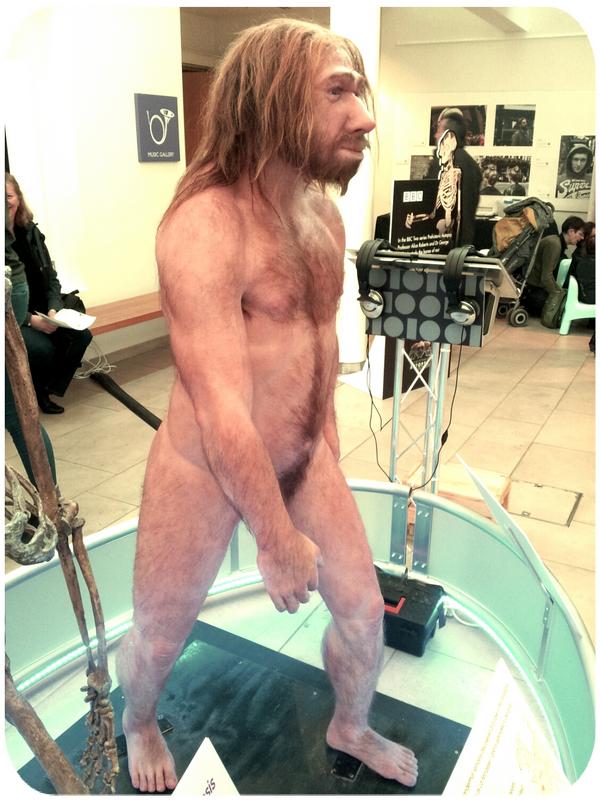
Neanderthal from BBC’s Prehistoric Autopsy exhibition at the Horniman Museum. (C) Paolo Viscardi

5. Event: Written in Stone: Life and Death in the Fossil record

Evening workshop at the Lapworth Museum of Geology, Birmingham

Synopsis

The workshop will be an interactive exploration of Cambrian organisms that formed part of the Cambrian Explosion and the subsequent Biodiversification Event of the Ordovician. These two points in Earth’s history are considered to be the foundations of the Earth’s biodiversity in the modern day.

http://www.birmingham.ac.uk/facilities/lapworth-museum/news/2014/28Feb-Written-in-Stone-Life-and-Death-in-the-Fossil-record.aspx

Compiled by Emma-Louise Nicholls, NatSCA Blog Editor
Caring for Entomology Collections

The following post is from Emma-Louise Nicholls of the Grant Museum of Zoology who attended our recent Caring for Entomology Collections Workshop

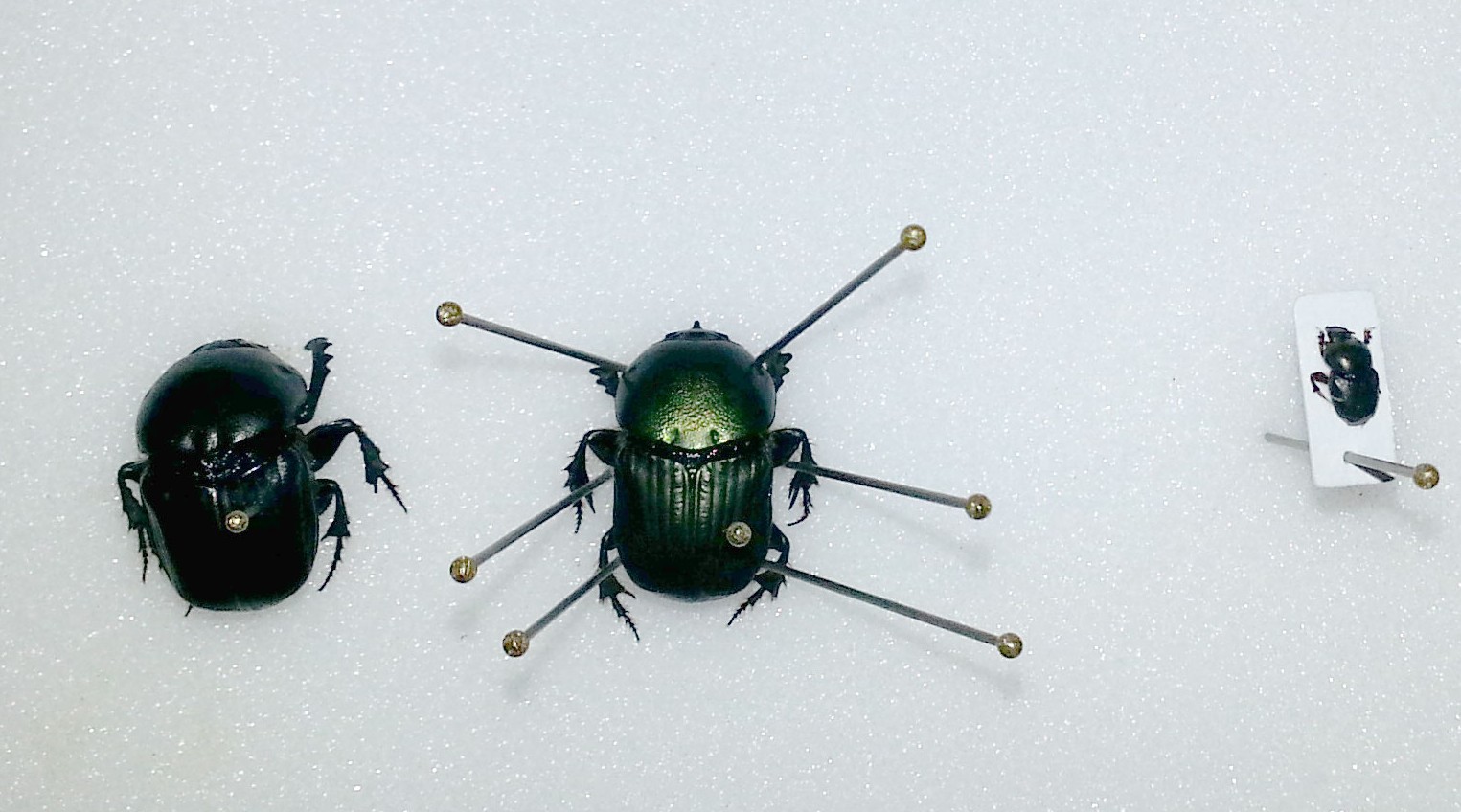
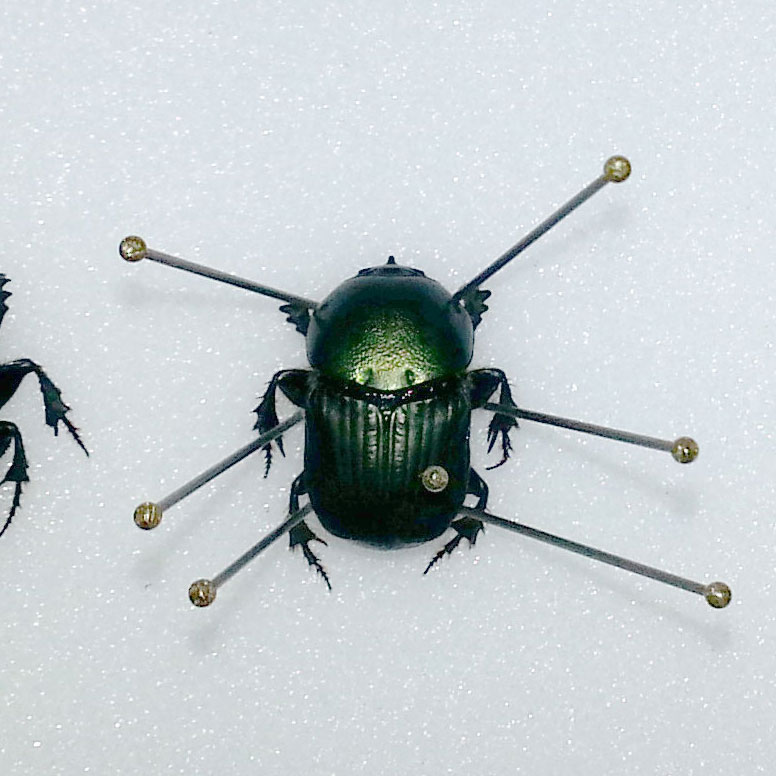
The scarab beetle shows how pins are used to manipulate the legs whilst the specimen is drying, after which it will maintain its shape.

At the NatSCA course Caring for Entomology Collections held at the NHM in London, I not only got to salivate over the swanky slide cabinets that the Natural History Museum now houses, but I also got to pin a scarab beetle from scratch, peer into a liquid nitrogen freezer at minus 196 degrees, see a grasshopper eating a mouse, eat amazing food (not from the nitrogen freezer), and was even rewarded for my endless questions* with a free gift in the form of a rubber gasket. All in all it was a stupendous day and a course definitely worth attending.

This liquid nitrogen freezer is used to store organic material that would degrade at higher temperatures.

This liquid nitrogen freezer is used to store organic material that would degrade at higher temperatures.

The day was split into eight sections that covered how to prepare your specimens, care for and store your collections, and lots of inspiration for what you can subsequently do with your specimens to make them available to a wider audience. We also talked about how to deal with insects that are not so much the specimen type, but more of the wild roaming, likely to eat your specimens variety. Although there is much to say, here are some highlights.

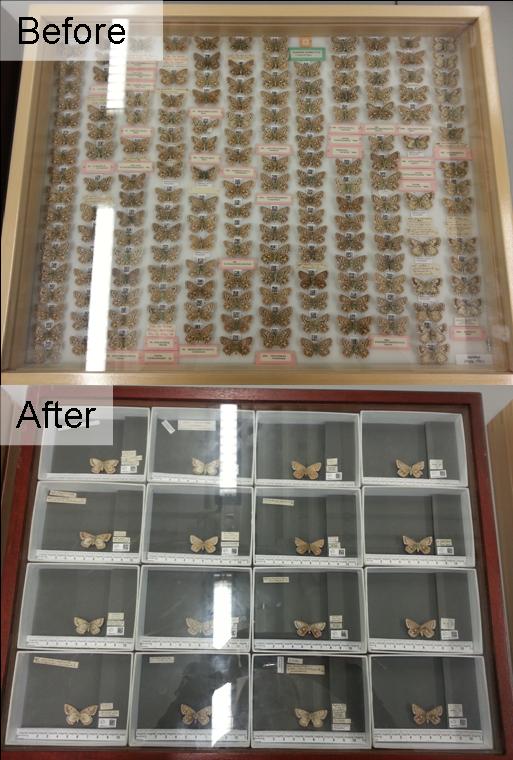
The Digitisation Project is working to re-house entomology collections and give each specimen an individual QR code for fast and efficient data extraction.

The Digitisation Project is working to re-house entomology collections and give each specimen an individual QR code for fast and efficient data extraction.

We were shown an impressive digitisation project that involved taking a drawer of entomological specimens in need of some TLC, applying both remedial and preventative conservation techniques and then photographing each specimen with a unique QR code. The idea is that in the future, the code can be scanned and will link to metadata on the Museum’s database. Knowing how troublesome paperwork for loans can be, this has exciting implications in terms of simplifying the process and decreasing both the time required and the potential for human error in filling out forms and in transcribing the specimens’ labels.

Integrated Pest Management (IPM) is an essential part of any museum staff members’ knowledge base. Even if a full blown IPM plan is not logistically feasible in your building (as it isn’t in the museum where I work), a knowledge of how and why it works is integral to writing a pest monitoring programme that suits your collection. Housekeeping is, of course, the most important part of keeping museum pests at bay, but even in the best kept collection, pests can and do still occur, and knowing how to monitor and effectively eradicate any outbreaks is integral to preventative conservation of your specimens. It was both interesting and very useful to compare and contrast the problems and protocols that are used by the Natural History Museum with those from my own museum and I came away some useful tips.

The scarab beetle in the centre of this image shows how pins are used to manipulate the legs whilst the specimen is drying, after which it will maintain its shape.

The scarab beetle in the centre of this image shows how pins are used to manipulate the legs whilst the specimen is drying, after which it will maintain its shape.

The element of the course I most enjoyed was the opportunity to both pin an insect specimen, and ask endless questions of the suitably enthusiastic entomologists demonstrating the techniques. There are many more methods used in pinning insects and other invertebrates than I had ever imagined, and being able to have a go myself solidified the information as well as making for an exciting day. I can proudly tell you that the scarab I pinned lost no legs and the metal pin was at a (near) perfect 90 degree angle to the base. It’s all in the teaching no doubt.

Despite both the obvious and more subtle differences between the Natural History Museum and other natural history collections and museums, I felt the information given at the course was delivered in a way as to be directly relevant to all collections represented. Having spoken to the other delegates present, it was unanimously agreed to be a thoroughly useful and interesting day.

– Emma-Louise Nicholls is the Curatorial Assistant at the Grant Museum of Zoology

* May have been an attempt to silence me

‘Crap in the Attic?’: the management and use of natural history collections

20 November 2013, 10.30-17.15, Oxford University Museum of Natural History

Oxford University Museum of Natural History, in partnership with Oxford ASPIRE, would like to invite colleagues from organisations with natural history collections in the region to ‘Crap in the Attic?’: a symposium on the challenges facing natural history collections in the region, the role of natural history collections within the wider sector, and what the region needs in order to ensure the future of these significant collections.

Book your free place at http://oxfordnaturalhistory.eventbrite.co.uk/