Derby Museums Need You

Thanks to Jonathan Wallis for bringing this to our attention.

In 2015 Derby City Council will be cutting funding for Derby Museums by 26%. Would that it were an isolated incident for Derby, or indeed the country at large. This is not the first time that the plight of the East Midlands has been brought to NatSCA’s attention, nor the first time they’ve been discussed by the members.

There is much that needs to be done but something we can all do is sign the no Cuts to Derby Museums petition.

100 Years Aboard the Ark…

By Dr. Ebony Andrews
Calderdale Museums

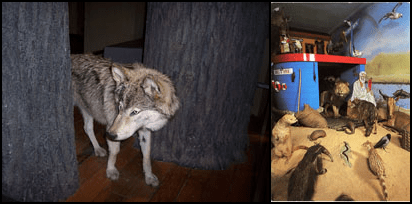
Left: An 'escapee' taxidermied grey wolf on the fringe of the 'Living Planet' gallery, Great North Museum: Hancock (2010). © Image by the author; Right: 'Abel's Ark', Hancock Museum (c.2004). © Archives of the Natural History Society of Northumbria, Great North Museum: Hancock.

Left: An ‘escapee’ taxidermied grey wolf on the fringe of the ‘Living Planet’ gallery, Great North Museum: Hancock (2010). © Image by the author; Right: ‘Abel’s Ark’, Hancock Museum (c.2004). © Archives of the Natural History Society of Northumbria, Great North Museum: Hancock.

For the past four years I have been researching changes in the use, display and interpretation of taxidermy in three regional museums in the North of England. These museums are: Leeds City Museum, Museums Sheffield: Weston Park (more commonly known as ‘Weston Park Museum’), and the Great North Museum: Hancock, Newcastle, (previously the Hancock Museum). The culmination of this research is the completion of my PhD thesis, entitled: Interpreting Nature: Shifts in the Presentation and Display of Taxidermy in Contemporary Museums in Northern England (2013).

In the study, I mapped out some of the wider trends in changes to the display and interpretation of museum taxidermy spanning roughly the last century across all three of the case study museums, but with a particular emphasis on the more recent display histories (from 1950-2013).One of the primary aims of my research was to challenge the idea that the unpopularity of museum taxidermy displays at different points in history, but particularly following the rise of the conservation movement in the UK, was exclusively related to the ‘controversial’ materials of taxidermy’s construction (ie. the use of animal derivatives). Rather, I proposed that much of the perceived ‘problem’ with taxidermy, both public and institutional in the latter part of the twentieth century, could be attributed not only to what was being presented, but also to a significant degree, to how it was being presented. In other words, how and through what mechanisms, public museums were interpreting their taxidermy collections for their public audiences.

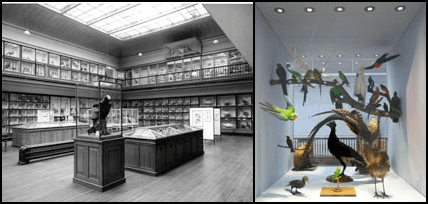
Left: The 'Bird Room', Hancock Museum (c.1966) © Archives of the Natural History Society of Northumbria, Great North Museum: Hancock; Right: 'Bio-Wall' display (detail) featuring 'Sparkie' the budgerigar (centre bottom), from 'Living Planet', Great North Museum: Hancock (2011). © Image by the author.

Left: The ‘Bird Room’, Hancock Museum (c.1966) © Archives of the Natural History Society of Northumbria, Great North Museum: Hancock; Right: ‘Bio-Wall’ display (detail) featuring ‘Sparkie’ the budgerigar (centre bottom), from ‘Living Planet’, Great North Museum: Hancock (2011). © Image by the author.

In a period where museum taxidermy is once again being afforded a considerable amount of attention, my research investigates some of questions that are now being asked about recent shifts in the use of taxidermy in museums along with some of the issues now facing museums in regard to the presentation of historical collections. My thesis is available through White Rose eTheses Online, see: http://etheses.whiterose.ac.uk/6637/ or simply go to http://etheses.whiterose.ac.uk/ and search the database by author or publication title to gain access to the complete document. Access to this resource is free, and you are not required to register your details to use it. With full colour illustrations and an extensive bibliography, I hope my thesis may be of use to those interested in the history of the display and interpretation of taxidermy, the impact of shifting cultural and ethical positions on the popularity of taxidermy, and the fascinating politics of both past and present approaches to the display of taxidermy in regional museums.

State of the Union! Natural History Museums 2014

Author Mark Carnall, Curator, Grant Museum of Zoology, UCL
#NatureData Coordinating Committee
All views are the opinion of the author. August 2014.

‘After visiting the recent natural history museum community conference in July: SPNCH 2014, Cardiff, Mark Carnall reflects on what the sector internationally is thinking and doing – in particular what’s happening digitally and what people’s thoughts are on a UK natural science database’.

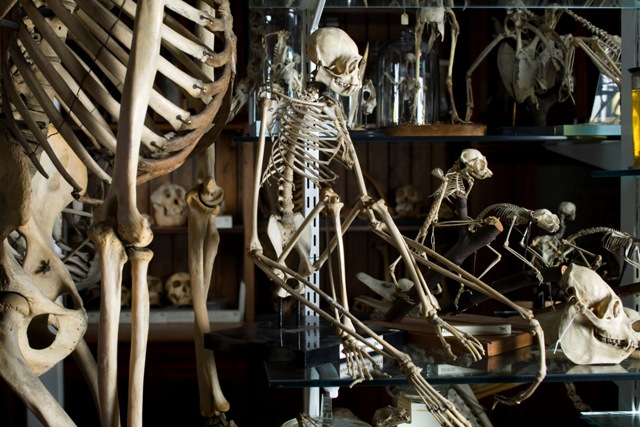
Primate skeletons in the Grant Museum of Zoology, UCL ©UCL, Grant Museum of Zoology and Matt Clayton

Primate skeletons in the Grant Museum of Zoology, UCL ©UCL, Grant Museum of Zoology and Matt Clayton

At the end of June was a rather special event; the coming together of three subject specialist networks (SSN), the Society for the Preservation of Natural History Collections (SPNHC), the Natural Sciences Collections Association (NatSCA) and the Geological Curators’ Group (GCG) hosted by Amgueddfa Cymru National Museum Wales. Between them, these three networks represent a sizeable chunk of curators, conservators, directors and educators who work in and with natural history museums and collections. Each SSN has yearly meetings but a syzygy rarely happens.

The full conference was a six day affair packed with field trips, stores tours, talks, workshops, demos, poster sessions and discussions attended by over 250 delegates from almost as many natural history institutions. This provided a great opportunity to catch up and meet friends, facilitated the catharsis in sharing frustrations unique to natural history museums and offered a rare chance to establish a sense of ‘the state of the union’ in natural history museums across Europe, North America and elsewhere.


The broad theme of the conference was historic collections and future resources and many of the presentations were about off-label uses of collections, advocacy and digitisation. Inspiringly, the conference was kicked off with a series of keynotes which carried the resounding message of “get over it” when it comes to the communities’ existential crisis in demonstrating value and worth with a rousing series of presentations from Professor Paul Smith and Dr Chris Norris setting the tone for the rest of the conference.

Off-label use of collections, a term borrowed from accidental discoveries of secondary beneficial side effects in the pharmaceutical industry, came up time and time again. Cynically, as the curator of a small museum it’s nice to finally be joined by colleagues from some bigger museums who, without having to face the “use it or lose it” challenge to keep a museum in existence, have cottoned on to the notion that perhaps collections have uses beyond the 10% of material that has a function in alpha taxonomy and (often low impact) taxonomic research. Colleagues presented example after example of natural history collections being used for research into environmental change. One question that wasn’t satisfactorily answered was about how this use of collections can be procedurally built into research. Many of the examples were incidental discoveries (hence off-label) rather than arising from researchers deliberately thinking of uses of collections in the first instance. However, advocates for the importance of natural history collections now have a new suite of examples to convince decision and policy makers about unique insights into the natural world which can only be gleaned from scrutinising collections.

When it came to advocacy, unfortunately the community fell into the trap of talking about scientific research use of collections almost to the exclusion of all other audiences. I’ve written before about how natural history museums need to celebrate and contribute more to being a part of the cultural sector, especially for museums which don’t hold scientifically important collections and specimens. Myopia aside, the community seems to have come on to some degree, telling each other how important natural history collections are, which came out in a panel discussion on advocacy. There are still a lot of stereotypes about what museums are and what they do that need to be pulled down, but there’s a danger in evangelising which can be quite divisive. Another general theme that came out across the series of talk days is that we need to get more sophisticated and generally get better at demonstrating what we do well. The finding of the NatSCA and Arts Council England study into the popularity of different kinds of museum galleries was presented, demonstrating that natural history collections are the most popular, but put some audiences off if they don’t appear to be well maintained or invested in. Natural History Near You was also presented, finally making headway into ascertaining exactly where all the natural history collections are, a fundamental piece of information that has eluded several generations of natural history collections workers. Interestingly, one of the contrasts between the UK delegates and those from the rest of Europe and North America was that with a handful of exceptions, the majority of the social media generated around the conference came from UK colleagues. It seems that social media is yet to take off as a promotional, professional networking and advocacy tool for museum professionals elsewhere.

Lastly, there was a cornucopia of presentations on digitising collections. It’s uncontroversial to say that museums in general are far from being digital – let alone post digital – and that natural history museums and collections as a group are lagging behind the rest of the museum sector. It seems that colleagues in North America and from the rest of Europe are making huge advances in all aspects of digitisation from technical advances, standards in digitisation, data capturing pipelines and networks, and databases linking specimen information. Embarrassingly, UK museums are somewhat left in the dust, contributing little to the 20 or so European and International data repositories and the data that does exist is incomplete, hard to export, manipulate or in many cases even locate – let alone scrutinise. This is in part what the #naturedata project hopes to solve, with “one portal to rule them all” in the UK at least. The need for this is even more pressing thanks to worryingly vague requirements for databases required for compliance with the Nagoya Protocol on Access and Benefit-sharing. Three conference sessions on the Nagoya Protocol valiantly tried to deconstruct the bureaucratic layers represented by this legislation but it looks like the practicalities of compliance will be causing headaches for generations of museum professionals yet.

Overall, the conference was an excellent set of days. Networking and socialising with enthusiastic, passionate and brilliant colleagues really is the best way to recharge the batteries and reinvigorate the soul. Throughout the presentations the niggling thought I kept returning to was that all the innovative, experimental and inspiring ways we use to get the most of our collections are still hamstrung by our fundamental issue of getting a handle on what we have in our collections. The curse and gift of natural history collections is their vast size, but it’s no longer good enough to use the size of our collections as an excuse for not getting to grips with every single specimen we have and making them available to the people for whom we keep them in trust.


NatSCA Digital Digest

Welcome to the weekly digest of posts from around the web with relevance to natural science collections. We hope you find this useful and if you have any articles that you feel would be of interest, please contact us at blog@natsca.org

1. Blog: Natural History Blog

Russell Dornan

Synopsis

A great blog worth checking out:

‘My name is Russell Dornan and I was the biology curatorial trainee at Hereford and Ludlow Museums. I blogged throughout my 12 month journey through their natural history collections and went on to be the Natural History Project Co-ordinator at the Horniman Museum in London.

I am now the Web Editor at Wellcome Collection.

All views expressed in this blog are mine alone and do not represent the opinions of my employer.’

Russell Dornan's #MuseumSelfie

Russell Dornan’s #MuseumSelfie (Image by Russell Dornan)

Wunderkammer

2. Volunteer Position: Mudchute Volunteer Coordinator

Mudchute, East London Countryside

Synopsis

We have a fantastic opportunity for an experienced Volunteer Coordinator to join our team at Mudchute Park and Farm to manage the recruitment, supervision and support of our volunteering programme.

We are looking for an organised, dynamic and enthusiastic individual who has the experience of working in a multi-cultural environment Inner City Environment with groups and individuals from a diverse background. Experience of working with and the ability to enthuse and motivate disadvantaged individuals is essential.

If you think this could be you, we’d love to hear from you! For more details about this part time position, including how and when to apply, please download the application pack by following the website below.

Please note that applications must be received by noon on Friday, August 29th.

Mudchute Volunteer Position

3. Training: Accreditation Plus Training- Making your objects accessible

University of the Arts, London

Synopsis

Wednesday 10 September 2014, 1.30-4pm

Central St Martins

http://www.arts.ac.uk/csm/about-csm/find-us/

‘Research has proven that touching and handling objects is an important part of the learning experience. However for many museums, allowing visitors to handle objects is an area in which they lack confidence or ‘trained’ staff. This training will address the issue of how we balance the care and conservation of objects against issues of access. Experienced practitioners from Central St Martins will provide guidance on best practice in object handling and discuss how robust systems can make it possible to manage access to collections through handling whilst still protecting them for future generations.

In the session you will:

  • Look at a range of things to consider in order to handling by your visitors.
  • Explore why we use object handling in our museums
  • Learn best practise for handling objects

It is aimed at staff and volunteers who will be developing and delivering handling sessions within their museums.’

To book, fill in an online application form on the Regional Programmes website:

Training Programmes

Training course booking form

Compiled by Emma-Louise Nicholls, NatSCA Blog Editor

Tetrapod Zoology Conference – Part One

20140716-171224.jpg

Tetzoocon is the brainchild of Darren Naish and John Conway. The first of its kind, Tetzoocon specialises in the earliest four-footed vertebrates and all of their descendents – no mean feat considering most specialisations limit themselves to subgroups of these, such as amphibians or birds, and even then the subject is enormous.

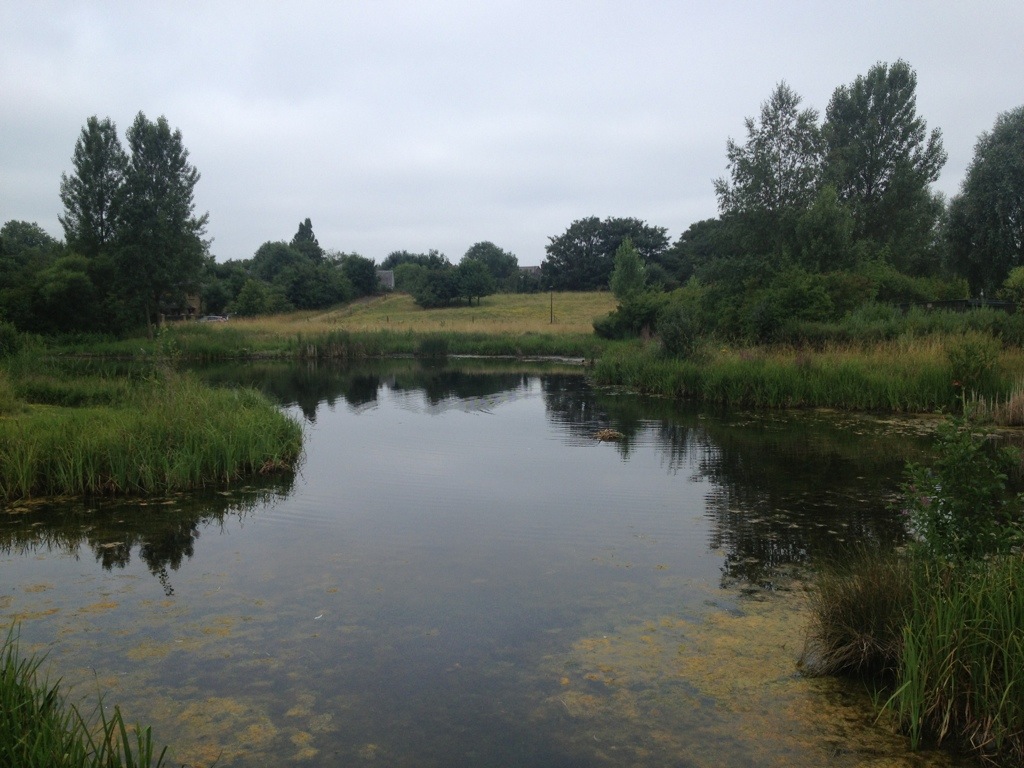
The conference was held in the London Wetland Centre near Hammersmith. A beautiful oasis of nature in a desert of buildings and airport traffic.

We’ll talk about the venue in more detail later but first: the talks.

Darren Naish

Darren opened the day with a talk on speculative zoology: a subject which covers future evolution, intermediary species of known clades, extrasolar evolution, and purely imagined beasts living within earth’s existing ecological niches. Of these, only one has testable predictive power (the intermediary specimens between known clades) and in time will be either borne out or disregarded. Needless to say that natural history collections do and will continue to play a large role in this thought experiment.

There is a long tradition of humans imagining new creatures dating back thousands of years but it has really erupted in the last few decades – from the massively influential books of Dougal Dixon to the gross box-office smash Avatar.

There is a new book out from the makers of All Yesterdays which explores speculative zoology in more detail.

Mark Witton

Renowned pterosaur palaeontologist and palaeoartist Mark Witton was next with a look at how azhdarchids have been portrayed in art since their discovery. The image of azhdarchids was all over the place for a long time – a lot of what we ‘knew’ about them appearance-wise was based on previous speculation until these beautiful pterosaurs were methodically examined and a coherent picture of what one looked like started to emerge. Today if you look at a lot of modern palaeoart you can see the family connection in the group, which is a good indicator that the artist is on the right tracks. Again the natural history collection is employed here to help artists be more accurate in their portrayal of living species. What else can I say about Mark’s talk that won’t divulge as-yet unpublished information? I’ll say this: if you’re at all interested in Mesozoic ecosystems you will attend Flugsaurier2015 and hopefully Mark’s research will be published by then. If you can’t tell already I’m really excited by this news item!

Paolo Viscardi

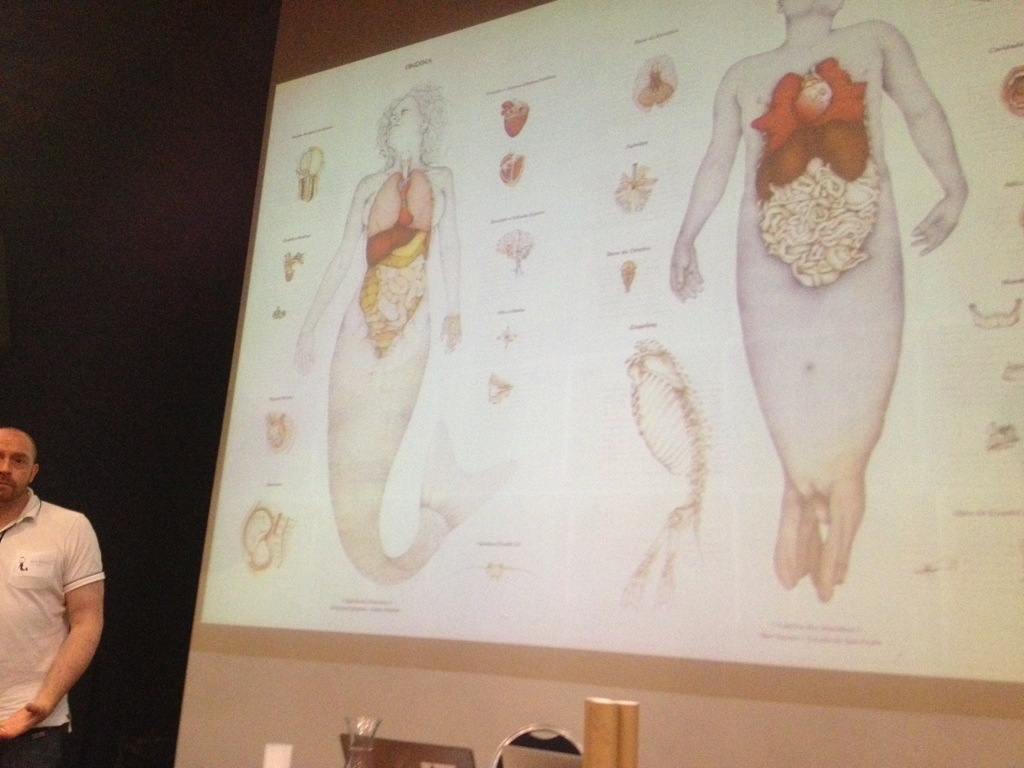
NatSCA‘s new chair Paolo Viscardi gave us the latest on mermaid specimen research: the latest news being of course that they are fabricated – often badly. Contrary to the claims of certain unscrupulous documentary makers this is all we have by way of mermaid evidence: a bunch of assorted fake specimens. There are no mystery hominid skulls with sonar adaptations or any ichnofossils of any kind to suggest that we have ever shared our planet with an ape more aquatic than a chimp.

There have been times when an animal has been thought to be a rumour/fake and then a verifiable specimen turns up. That’s the crucial factor and a vital role played by natural science collections in separating hearsay and conjecture from fact. When we talk about a new species we start with a type specimen and base comparisons of subsequent specimens against the type. With mermaids we have numerous cultural ‘eyewitness’ accounts, not all of which agree on the description. The Western image typified by films like Splash and the Little Mermaid do not describe the same animal as the Eastern description, such as the Japanese Ningyo or Gyojin – nor do they match European sailor’s eye-witness accounts which effectively resemble a manatee with a human neck and fake specimens have been made by starting with a dead manatee and working from there.

With all these fake specimens hanging about, Paolo has started sorting them into types of man-made species – a biologist’s solution to the problem of cataloging anthropological artefacts. They’re fascinating from the perspective of human history even if they aren’t a new addition to the animal kingdom.

There was way too much interesting stuff to tackle it all in a single post. Tune in later this week for part two of Tetzoocon.

20140716-171254.jpg