NatSCA Digital Digest

Chameleon

News

Save the date! The 2016 NatSCA Conference & AGM will be held 21 – 22 April 2016 in Derby, at the Silk Mill and Derby Museum & Art Gallery. A call for papers and more details will follow. We look forward to seeing you there!

Jobs

Museum Manager, Great North Museum: Hancock. A great opportunity to manage the Hancock and its wonderful Natural Science collections. Applications close 12 November 2015.

Assistant Curator, National Museums Scotland. Two six-month posts in Natural Sciences, one working with the bird collections, the other with mammals and wet specimens. Applications close 16 November 2015.

Vertebrate Palaeontologist, Qatar Museum, Doha. A full-time, permanent position in sunny Qatar! Applications close 30 November 2015.

Events

26 November 2015: A talk about the #naturedata pilot system at the Natural History Museum (NHM), London. Flett Lecture Theatre, 2.30pm.

1 – 2 December 2015: Geological Curator’s Group (GCG) AGM. The full programme is now available online, and there is still time to book.

Around the Web

The National Guard had to be called in to airlift a baby Pentaceratops excavated by the New Mexico Museum of Natural History and Science.

The Londonist went behind the scenes at the Grant Museum of Zoology, UCL.

Historic series of museum specimens have helped to solve the puzzle of the evolution of the sparrow’s bill.

A new species of bat has been discovered in the collections of the NHM, where it has resided in a jar since 1983. A relatively short shelf-life by museum standards!

The Bill Pettit Memorial Award 2015

NatSCA is pleased to invite applications to this year’s Bill Pettit Memorial Award. Up to  £1,500 of grant money will be made available to NatSCA members every year to support projects including the conservation, access, and use of natural science collections.

colour-logo(900pxwide)Charles Arthur William ‘Bill’ Pettit (1937 – 2009) started his career with the National Institute of Oceanography, but moved to the Manchester Museum in 1975 to become Assistant Keeper of Zoology. In his time at Manchester, Bill worked tirelessly for the collections and was instrumental in projects such as FENSCORE, as well as numerous publications. It is in recognition of his commitment to natural science collections that we would like to offer this annual award.

Applications are invited under a wide range of categories. Each project will be considered on its own merits by the NatSCA committee and the committee’s decision, including not awarding any money that year, will be final. Grants up to £1,500 are available. To apply, please put together a 700-word project proposal, which must include:

  • The name and status (e.g. charity, individual, local authority) of the applicant
  • The proposed outcomes of the project and benefits to the museum
  • Detailed costs
  • Accurate timescale (including any work undertaken so far and the project end date)
  • Details of other funding/match funding already secured for the project

Grants will be considered on an annual basis in January or February.

Deadline for 2015 applications: Friday 11th December

Successful applicants will be announced at the NatSCA annual general meeting and are required to produce a report/article on their project for publication.

Applications are open to NatSCA individual or institutional members only.

Please contact David Gelsthorpe (david.gelsthorpe@manchester.ac.uk, 0161 3061601) for further information or to submit a grant application.

NatSCA Digital Digest

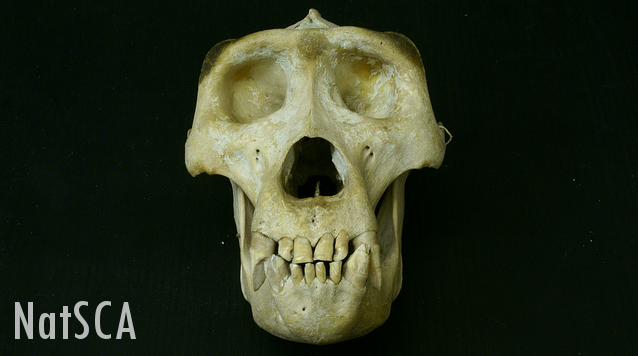
Gorilla skull on a black background

Jobs and Placements

Life Collections Conservator (maternity cover) – Oxford University Museum of Natural History. A great opportunity to join the Oxford team. Applications close 21 October 2015.

Collections Administrator and Access Coordinator – Science Museum, London. A 6 month, fixed-term post. Applocations close 27 October 2015.

Two placement positions are available at Leeds Museums: with their Zoology collections, and on a Geoblitz Project. Applications for both close 31 October 2015.

As always, more opportunities are advertised on our Jobs Page.

Events

The Geologists’ Association’s Festival of Geology is on 7 November, at UCL, London. The festival includes talks, walks, stalls, displays, and a photography competition. Entry is free!

On 27 November, there is a free one-day conference at the Natural History Museum (NHM), London, entitled ‘Biotic Response to Environmental Change: Insights from Natural History Collections‘. Booking is via Eventbrite, where you can also see the full schedule of talks.

Save the date! The Geological Curators’ Group’s AGM is coming up on 1 – 2 December at NHM, London. This year the theme is ‘Not just rocks in the cupboard: communicating geoscience through collections‘. Further details have yet to be announced.

Around the Web

Controversy over the collection (and non-collection) of specimens seems to have reigned lately…

The first male moustached kingfisher to be observed was found by a research team from the American Museum of Natural History (AMNH), and a single specimen was euthanised and collected. Following a negative reaction in the press, the lead researcher wrote an article defending the decision to collect this scientifically important specimen.

A new species of South African bee fly was described, solely on the basis of photographic evidence, with no physical type specimens preserved for study and comparison.

Derby Museums showcases 200 year old Captain Cook shells

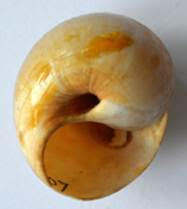
200 years after being collected, a group of sea shells with links to Captain Cook’s voyages have been fully documented and photographed for the first time, and put on display in Derby Museum & Art Gallery, thanks to one of the museum’s Super Nature volunteers, Hannah Maddix. Donated to the museum in 1961, along with original documents dating to 1815, they are key to unlocking the secrets of 18th century shell studies. Fred Woodward, former president of the Conchological Society of Great Britain and Ireland, said: “The collection could be considered an equivalent to the Rosetta Stone since it contains shells with common names and Latin names not only used by Humphrey in his catalogues but also numbered by Humphrey himself, which until now has not been known.”

Shell. Image: Derby Museums

Image: Derby Museums

The shells have a fascinating history. They were bought by a Mrs Borough in 1815 from George Humphrey, a London dealer in shells and ‘curiosities’ who in turn had bought shells collected on Captain Cook’s second and third voyages of discovery to Australia and New Zealand in the 1770s. It is almost certain that the Australian and New Zealand shells in the collection came from Captain Cook’s voyages. George Humphrey was one of the world’s first conchologists, and wrote numerous catalogues of important shell collections. The shells in Derby Museum have tiny numbers written on them by George Humphrey, and his original lists survived with the collection. This unique combination of actual specimens related to original lists provides a missing link for modern shell specialists, allowing them to translate long forgotten 18th century shell names into their modern equivalents.

Rachel Atherton, Co-production Curator at Derby Museums said:

“This wonderful collection of shells not only links to Captain Cook and the discovery of a continent, but also give us a glimpse into the early scientific study of shells.”

Shell. Image: Derby Museums

Image: Derby Museums

Hannah Maddix, who catalogued the collection, said:

“It was such a delight to research these shells and discover that we have specimens collected from all over the world. For over two hundred years they have remained desirable and beautiful objects, commonplace and yet still precious.”

The Borough family was once a prominent Derby family, originally called Borrow, living at Castlefields House, before moving to Chetwynd House, Shropshire in 1803. Mrs Borough’s shell collection was passed down in the Borough family until they were donated to Derby Museums in 1961, along with six Joseph Wright oil paintings and a portrait of Isaac Borrow, twice Mayor of Derby in 1730 and 1742.

The shells are on display in Derby Museum’s new nature gallery ‘notice nature feel joy’.

NatSCA Digital Digest

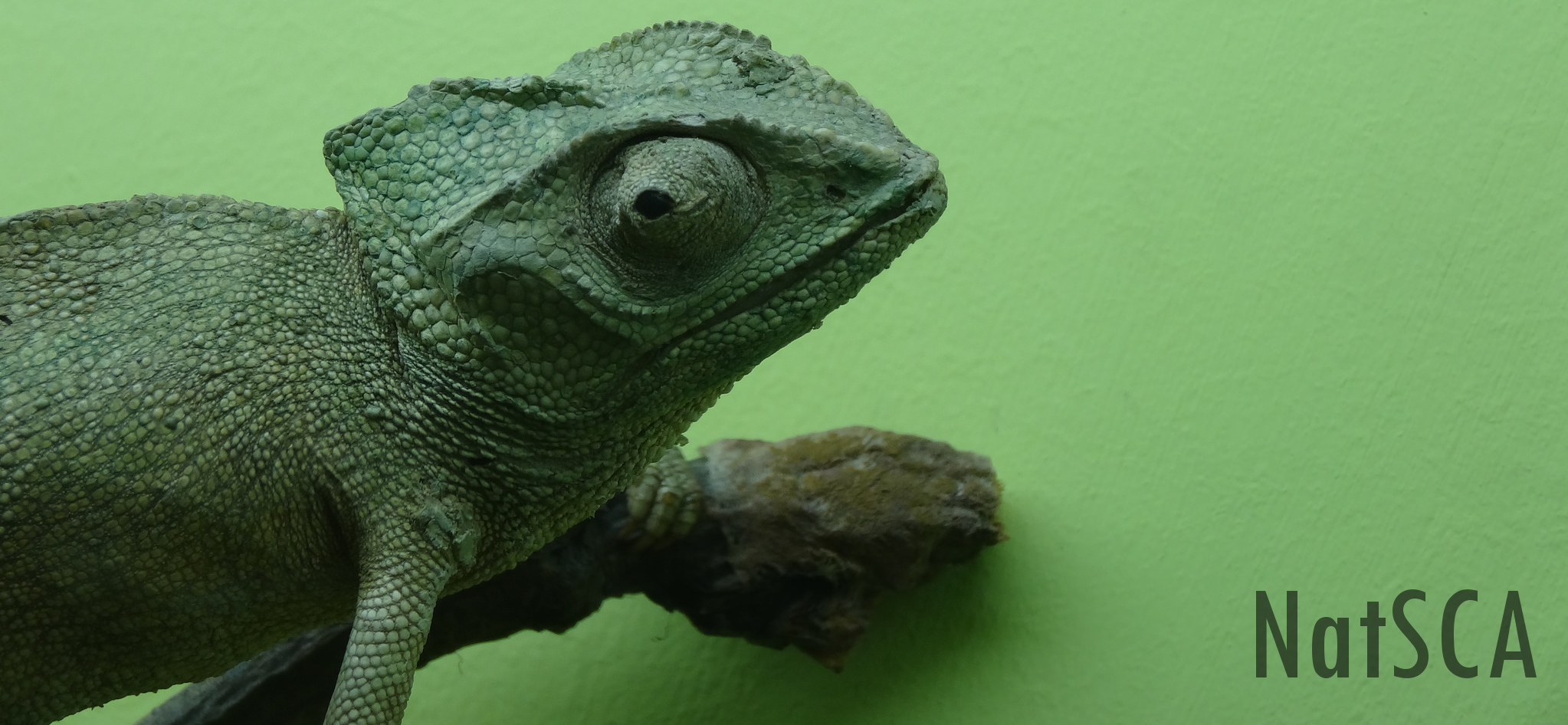
Chameleon

Events

  • The iDigBio 4-part webinar series, The Value of Digitizing Vertebrate Collections, starts on Tuesday 8th September. The first session is on mammal collections (delivered by Cody Thompson, University of Michigan), and will be held at 3 – 4pm EDT (that’s 8 – 9pm in the UK!). You can access it here: https://idigbio.adobeconnect.com/vertdigitization. The following three sessions will be at the same time each Tuesday (at the same link):

September 15: The Value of Digitizing Fish Collections, Andy Bentley, University of Kansas Biodiversity Institute and President of SPNCH
September 22: The Value of Digitizing Herpetology Collections, Chris Phillips, Illinois Natural History Survey, University of Illinois
September 29: The Value of Digitizing Bird Collections, Carla Cicero, UC Berkeley and Lead PI for Vertnet.

Around the Web

What to do when someone gives you a giant squid.

A technological revolution in museums? 3D printing and virtual reality.

A visit to Microbia, the world’s first microbe museum!

CT scan reveals fossils within fossils.

19th century Ecuadorian snail specimen is a new species.