The Most Natural Science Positive Film of Recent Times?

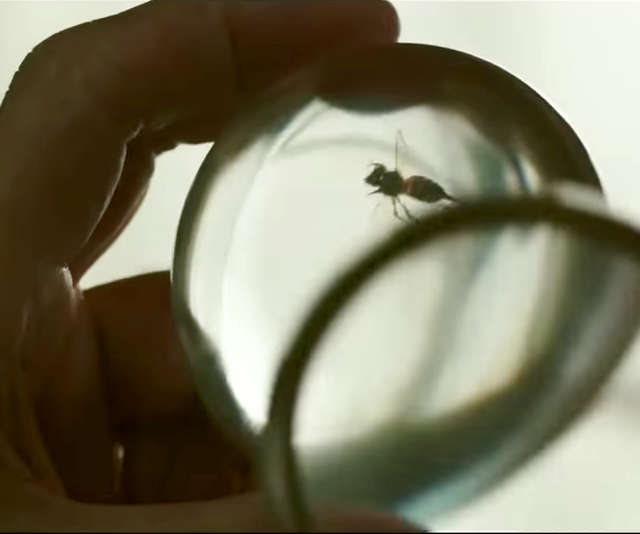
holmes-bee

Hollywood hasn’t always portrayed the natural sciences in the best light. From the entomology nerds in Silence of the Lambs to the evil taxidermist in Paddington, the people who live it daily don’t often come off looking good. Even when museums are the star of the show, it is the night watchmen, not the curators and conservators, who steal the glory. Where, then, is cinema’s role in encouraging the next generation to pursue a career in the natural sciences? Some have said they watched the original Jurassic Park and that sparked their interest in genetics. Did you watch a film and think “that’s the life for me?” If so I’d love to hear from you. Nature inspires movies all the time. It behoves the film industry to keep this passion alive.

Enter a new film into the UK top ten (no, we aren’t talking about Jurassic World). Mr. Holmes is the latest adaptation of Sir Arthur Conan Doyle’s famous detective. Set in war-ravaged Sussex, Sherlock Holmes is an old man, retired and trying to cope with the changes in his life. I won’t give away the plot for you but I will say this: The plot depends upon an accurate  understanding of the natural world, specifically botanical and entomological. The film is filled with beautiful species and fascinating facts about nature. I can quite easily see someone leaving the cinema thinking “I want to know more about this world”. Holmes’ personal collection is lovely and I want to know whose skull that is on his desk.

Further refreshing news, if you’re as sick of explosions and CGI as I am right now, this film has the fewest special effects of any new film I’ve seen for a long time. Less definitely is more in Mr. Holmes. The performances are superb – not just Sir Ian McKellen but I don’t think there’s a bad actor in the entire movie. I’d highly recommend you go and see this.

NatSCA Digital Digest

ndd-llama

Conferences, Workshops, and Events

It’s not too late to book tickets for our Osteology workshop in August. The deadline to book is 31st Jul 2015.

When: 8th Sep 2015
Where: University Museum of Zoology, Cambridge

Hot off the press last night, this year’s Tetrapod Zoology Conference (#Tetzoocon) has just been announced. Several NatSCA members attended last year, including myself (here’s the review). It was a great event with lots of interesting talks, ranging in topic from under-appreciated amphibians to future pterosaur literature to speculative zoology – including one by our Paolo. They haven’t announced the speakers this year but they’re sure to be great.

When: 14th Nov 2015
Where: The London Wetland Centre

If you’re in town this evening, come along to the drinks thing at the Horniman Museum in Forest Hill.

And now an appeal to our out-of-town readers: There is some great stuff going on in London almost all the time but I want to hear from you if you have any information regarding natural history related events outside of the London area. Our readers who can’t reach London regularly want to know that these events are. Contact us.

In the News

With applicants rushing to fill the space that Mark Carnall is leaving in the Grant Museum, as he goes off to his new home in Oxford, we thought it would be a good time to tell you about a new email address here at NatSCA Towers. It’s joblistings@natsca.org and, if you have a job that you’d like advertised, this is the best address to send it to.

No news coverage would be complete this week without a hat-tip to Pluto, the little dwarf planet that surprised us all. Although it will take 16 months for all the data to return to Earth, we’ve had some very interesting geological features already, including huge mountain ranges on a par with America’s Rockies; areas with no impact craters, suggesting there may be geological activity resurfacing it (it is unlikely that a large body in the Kuiper belt could be that lucky to avoid impact); and a large reddish brown icecap on Charon nicknamed “Mordor”. We look forward to more information as the data is disseminated. In the meantime, here’s an overview of the changing face of Pluto, by NASA.

In the Blogosphere

The RVC‘s John Hutchinson honours the contributions of R McNeil Alexander in this touching installment of What’s in John’s Freezer.

NatSCA Digital Digest

NatSCA Digital Digest

Welcome to another edition of the NatSCA Digital Digest! This episode has been brought to you today by the phrase “birdy num num”. Extra credit if you know where that phrase comes from.

Let’s start off with the news everyone’s been waiting for: Fenscore is back! It was showcased at Refloating the Ark last week and it has a new home right here at NatSCA. We are going to have a full story on this later with many more details from a mystery guest blogger, so we’re looking forward to that. For those of you still struggling to complete your NatSCA Bingo cards, reading this counts.

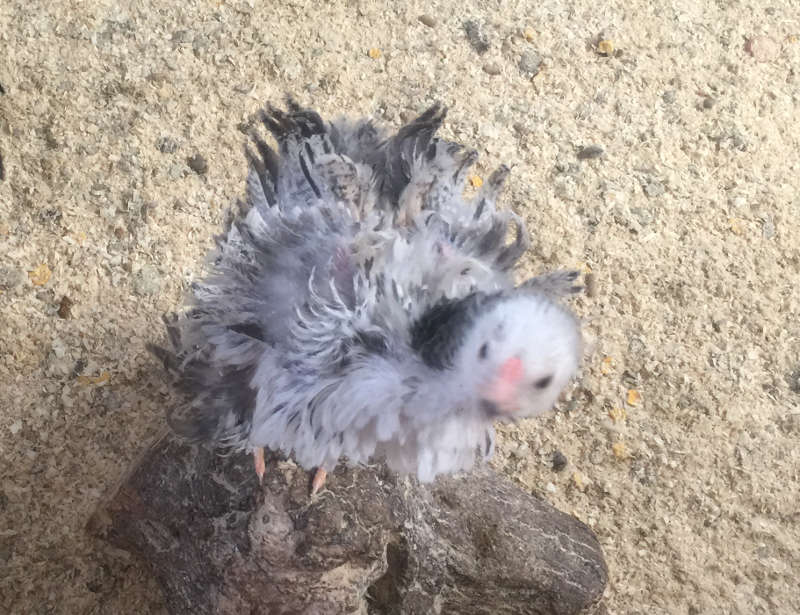
Another reminder for anyone wishing to submit a poster for the Bone Collections day in Cambridge, Vicky Purewal and Natalie Jones want to hear from you. Get your submissions in or scrawny chick judges you.

Scrawny chick judges you

For those of you that weren’t in the UCL grounds on Monday night, you missed a great night out (including free and student price drinks)  with some of the NatSCA irregulars. The night started with a talk about the Victorian attitudes to fossil discovery by Professor Joe Cain and proceeded to an evening viewing of the Grant Museum‘s temporary exhibition. Joe highlighted the Crystal Palace dinosaurs as a great place to go and see that enthusiasm for lost worlds. He also highlighted the repair work needed and the important work being done by the Friends of Crystal Palace Dinosaurs.

Which brings us to our news from interesting recent papers: weird Romanian theropod Balaur bondoc, with its distinctive pair of sickle claws per foot has been shifted from the dromaeosaur to the basal bird clade, thanks to the work of Cau, et al. It isn’t all that big a jump but it does mean Balaur won’t be getting picked on by its clademates for being different quite so much. For more on this, check out co-author Darren Naish’s write-up at Scientific American.

That’s all for now. Tune in next week when we (hopefully) will be able to advertise a really tempting job vacancy!

NatSCA Digital Digest

NDD-EvilEye


In the Blogosphere

Our conference has drummed up a lot of blog interest. The Museums Association and Museums & Heritage Advisor both ran posts on it, written by our wonderful members. Also see Rachel’s piece Tweeting up a Storm on the conference and the power of social media hashtags.

Claire Madge has written an excellent piece on her experience of volunteering. Regular readers will remember Claire from the interview she gave on autism and museums last year.

Upcoming Events

The Cheltenham Science Festival has begun and will be continuing until the 7th June. If you’re free this weekend, pop along. Among the many reasons to go, seeing NatSCA patron Ben Garrod quiz palaeontologist Jack Horner has got to be right up there.

Professor of Zoology Matthew Cobb at Manchester University will be giving a talk with evolutionary biochemist Nick Lane on the 11th June at the Royal Institute called The Story of Life – a look at how genetics has impacted our understanding of biology.


There are some exciting things in the pipeline, which I want to tell you about here but I can’t yet *sits on hands*. Just watch this space.

Content assembled by Samuel Barnett

NatSCA Digital Digest

Coot

Jobs

Curator of Pleistocene Mammals at the Natural History Museum

Duration: fixed term (12 months)

Closing date: 27th May 2015

To apply, click here

Conferences and Workshops

This will be the last NatSCA Digital Digest before Museums Unleashed begins next week in Bristol. It’s set to be a great event with Some terrific speakers. Don’t forget to be a part of it. Those of you that really can’t go can follow the live tweets at #NatSCA2015. The conference lasts for two days from the 21st May but, if previous years are any indication, the fun will start the night before.

We also have an Osteology Workshop coming up in Cambridge on the 8th September 2015. If you’re still in two minds about going, why not ask some of the people who will be speaking? I’m sure they would be happy to answer any questions you may have – either online or in person next week if you’re in Bristol.

The Museums Association Conference will be with us on the 5th and 6th of November but the Early Bird booking ends on the 7th August. The theme this year is “Radical Futures”. For more information, click.

Exhibitions

The Oxford University Museum of Natural History is featuring an art exhibition of New World Vultures by Nigel Hughes in the Café Gallery. There is also a talk this evening about the exhibition by the artist if you’re in the area.

In Other News

If you’re in London this evening, come down to the RSPB’s Summer Party, featuring guest speaker Darren Naish. You can find out the details of the event here. You don’t have to be an RSPB member but it helps.

Content assembled by Samuel Barnett