
Written by Anastasia van Gaver (Conservator) & Bethany Palumbo (Head of Conservation) Natural History Museum Denmark).

Workshop participants and Julian Carter
As conservators, it’s essential we keep up to date with developments in the techniques used in specimen treatments. With hundreds of fluid-preserved specimens to make and conserve for the new exhibitions at the Natural History Museum of Denmark, we sought the best in the field to give us a refresher course. Esteemed expert Julian Carter arrived fresh off the plane from Cardiff and over 3 days we explored different techniques for preserving and mounting specimens and well as discussing the unique challenges we face when conserving these invaluable scientific resources.
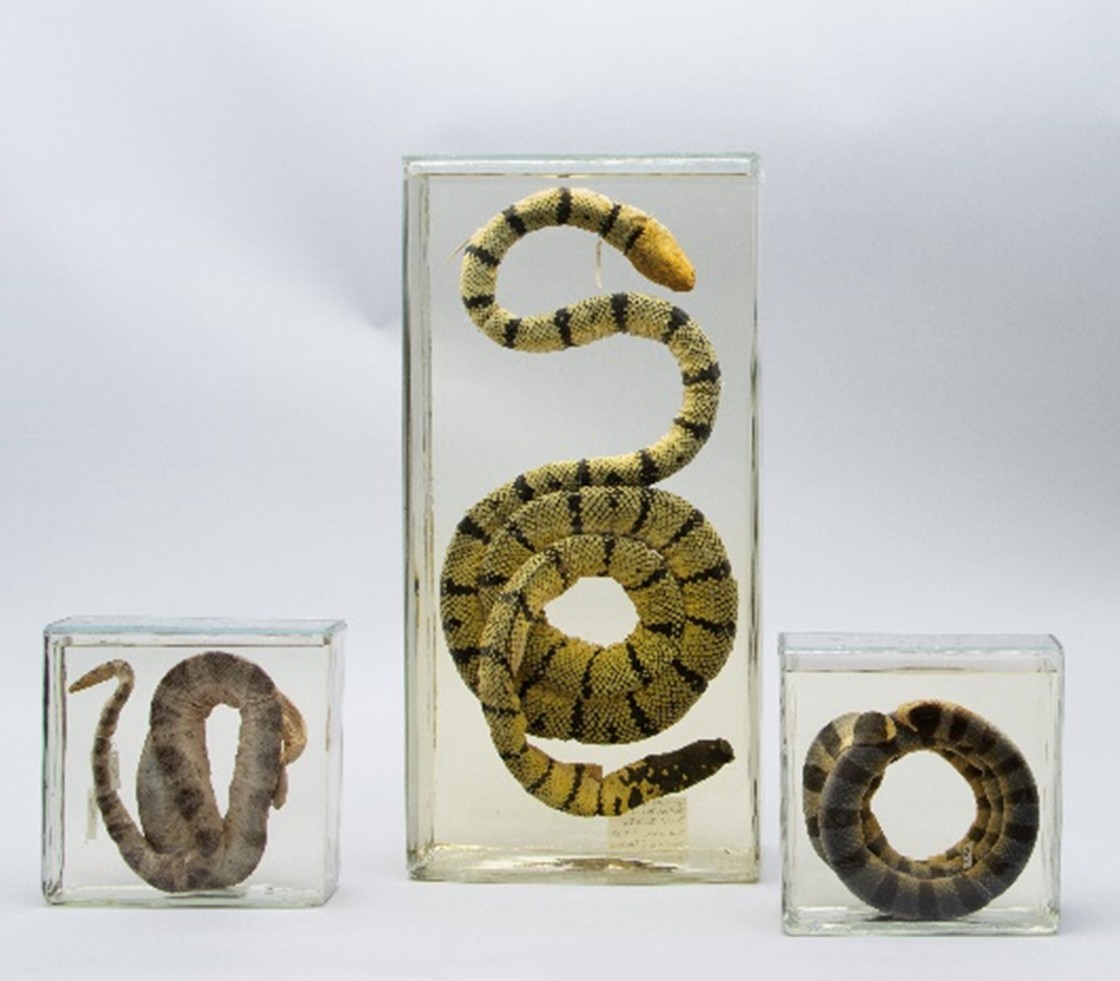
Example of three fluid specimens prepared by the conservation team for the new Natural History Museum of Denmark
The history of fluid preservation served as an introduction to the workshop, providing insights into the evolution of preservation techniques over time and their significance in scientific research. Understanding the chemistry behind ‘fixation’ (the chemicals used to stop breakdown of cells) was also crucial. Julian also emphasised the importance of adhering to best practices, ensuring that specimens remain intact and viable for research and education, while leaving room for experimentation and new techniques.
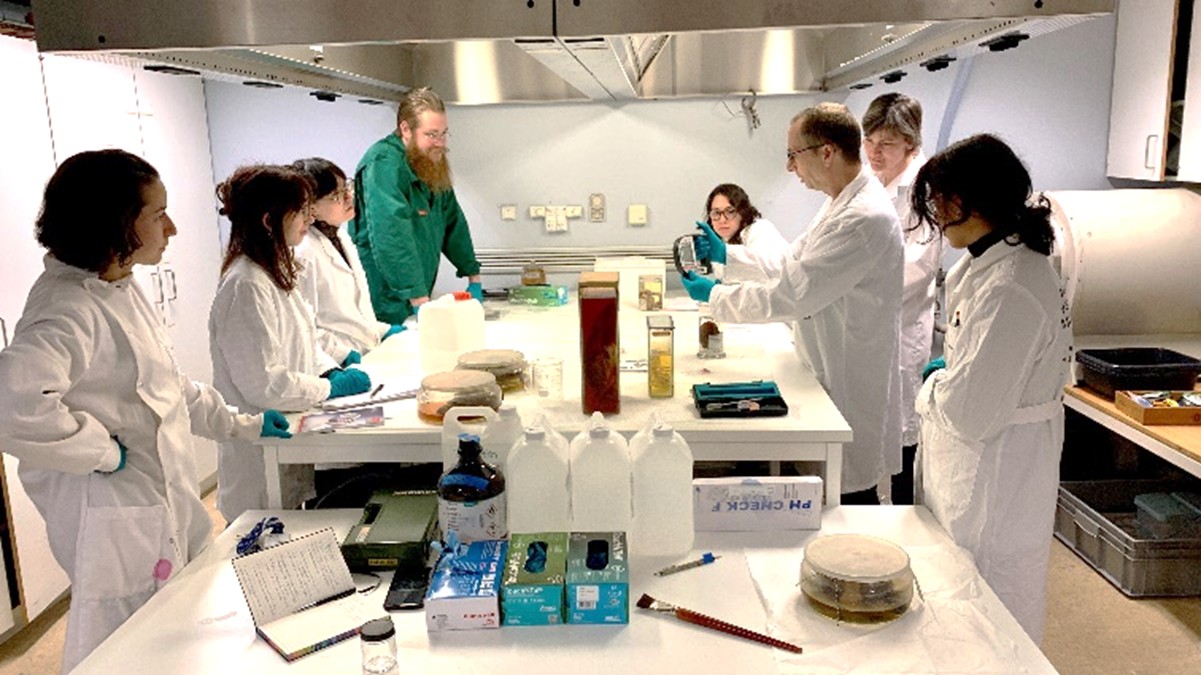
Julian demonstrating the use of different techniques and tools, such as a refractometer and a density meter, to test the fluid used
Practical demonstrations covered a range of techniques, including fixation of fresh specimens, rehydrating of dried specimens, and swapping fluids from one chemical solution to another. We also gained hands-on experience in repairing specimens. For example, did you know for example you can use gelatine as a glue to adhere broken segments back together?
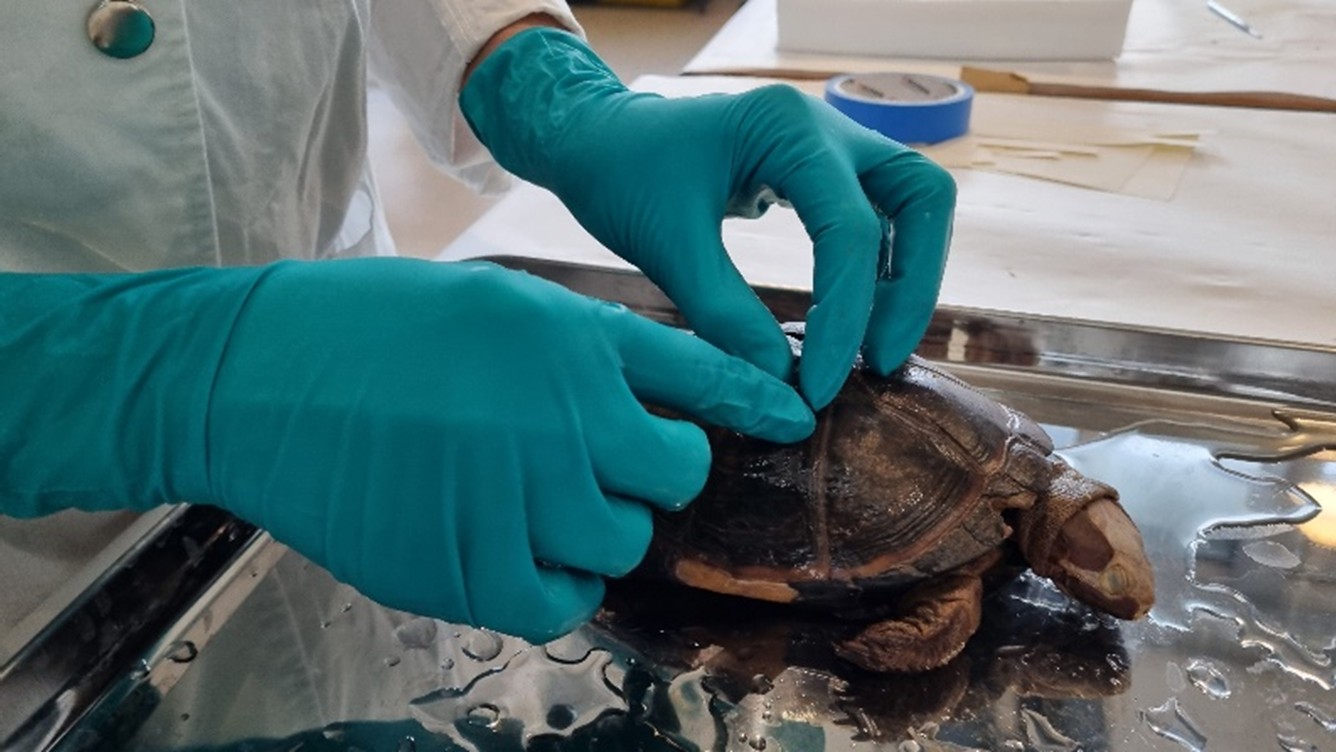
Conservator Anastasia van Gaver adhering a detached tortoise scute with gelatine
The workshop also provided time to experiment with various back plates, jars, and sealants, from traditional to non-traditional methods. Hands-on skills were honed as we practiced techniques such as cutting glass and drilling holes. One of Julian’s less traditional techniques was to mount certain specimens on a thick sheet of Mylar (a type of plastic) instead of the typical glass back plate. It is a much faster mounting technique, but only suitable for lighter specimens such as this worm that can be threaded through cuts in the Mylar.


Bethany Palumbo with her worm, mounted on a Mylar sheet
Storage strategies were also a key focus – how can we store and display fluid collections to minimise monitoring and maintenance, and to protect specimens and scientific data? We explored different sealants, and what paper we should use for labels that would be long-lasting. Storage, both inside the jar itself and within the larger environment of a museum store or display case, is a critical aspect of fluid specimen conservation.
Julian Carter’s expertise and guidance provided a great opportunity for the NHMD conservation team to develop and refine the skills necessary to ensuring that these invaluable scientific collections are safeguarded for future generations. Thank you Julian!
Julian is a co-author of the book ‘Preservation and Management of Fluid-Preserved Biological Collections’ (2022) which is highly recommended for anyone responsible for the care and maintenance of these collections.

 NatSCA
Pingback: Top NatSCA Blogs of 2025 | NatSCA