
By Eimear Ashe, Collections Moves Project Manager, National Museum of Ireland
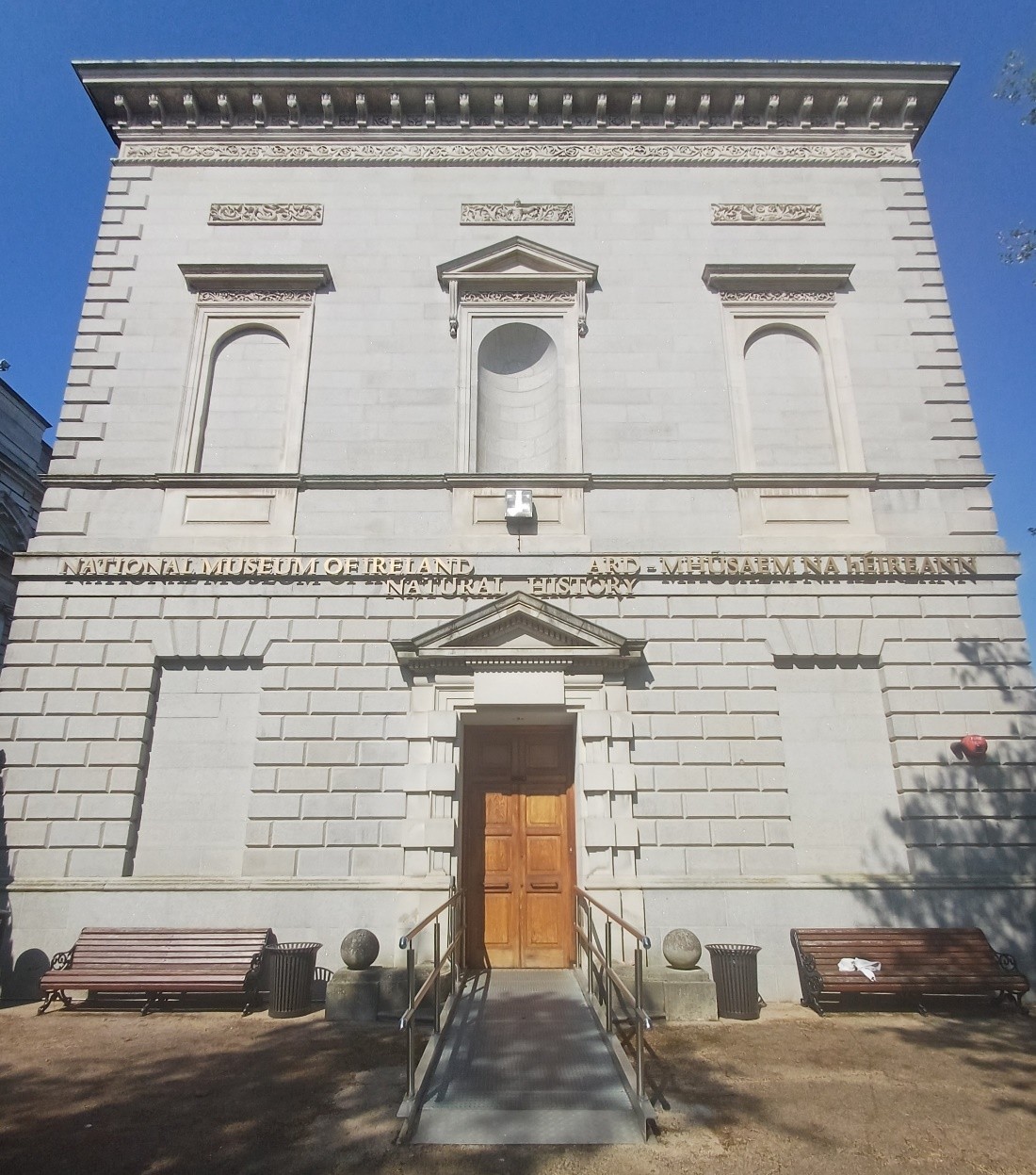
Having recently completed a major decant of Natural History collections in the National Museum of Ireland, I thought it a perfect opportunity to share my learnings with fellow NatSCA colleagues.
Tip 1. Start with the staff!
- What skills do you need to recruit in or increase capacity in?
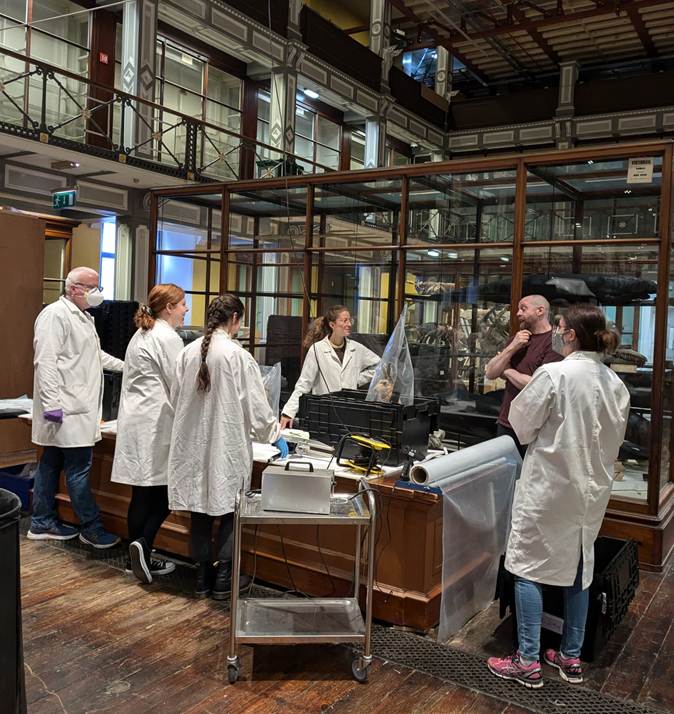
- Recruit new temporary staff. Training should be provided in the following areas: hazards in collections, manual handling, object handling, photography (if part of the workflow), condition assessment, object packing, transfer documentation procedures, integrated pest management (IPM), and the collections management system.
- If you cannot recruit new staff, you will have to use existing resources. Agree with management that the permanent staff team will not be able to carry on their regular duties during the period of decant. You should also make the public aware of this reduction in capacity and service provision.
Tip 2: Gather your supplies and equipment
- Beg, borrow (don’t steal), and buy!
- Moving boxes/crates.
- Materials such as acid free tissue, conservation grade foams, bubble wrap, conservation cushions, Tyvek, and cotton tape
- Stillage building – timber, fixings, saws, drill, mitre saw.
- Photography equipment
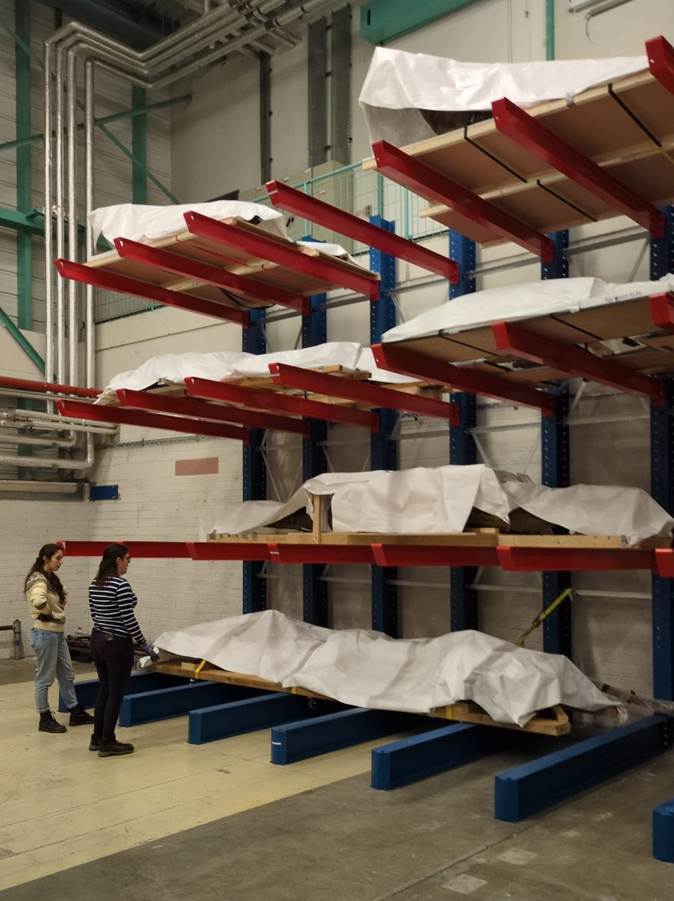
- We have been extremely fortunate to have a large space available for temporary storage. However, investment was needed for physical housing. You may need to buy new shelving or cabinets for temporary storage. These will be an asset for use in later projects, or for future collections expansion, if your decant is a temporary one.
- Consider your procurement thresholds, follow your institution’s rules around purchasing, and ensure you get value for money. If you have the time to consider the requirements for the lifetime of the project and you have space to store supplies, buy in bulk, and you are likely to get better value for money.
- Estimate how much you anticipate spending with each type of supplier and then see if you need to run formal requests for quotes, or tenders.
Tip 3: Increase freezer and quarantine capacity
- Do you have organic collections which are vulnerable to damage from museum pests?
- Consider your integrated pest management approach. If you don’t have in-house expertise, get external professional advice. A pest outbreak at a museum store could be catastrophic for your institution.
- Freezing and quarantining are your friends!
- Can you increase the capacity of freezers and quarantine rooms for the duration of the project?

Tip 4: Book your transport in advance
- Do you have enough staff to pack a truck load (or more) each week? If so, book in a collections move for the same day each week/fortnight/month (whatever’s most achievable).
- A vehicle already owned by the institution is hugely useful and economical, if you are insured and permitted to transport collections that way. The National Museum of Ireland have small electric vans which have been useful in transporting non-accessioned items (supplies, equipment and furniture, for example).
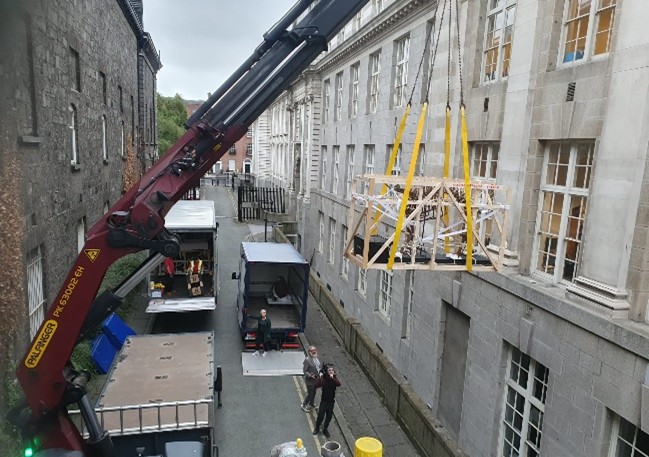
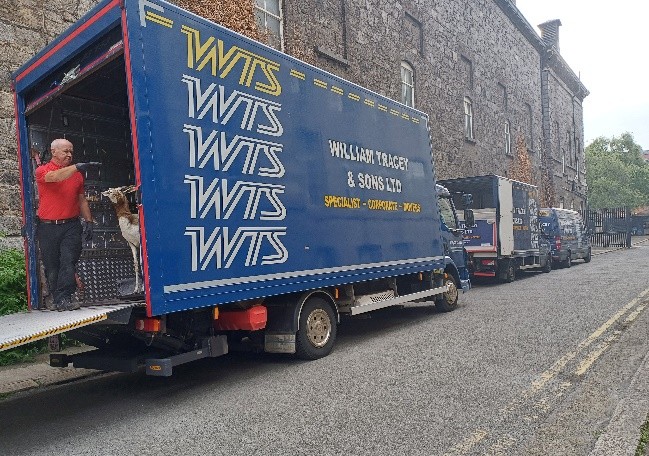
- If you don’t have your own vehicle, contract a transport, logistics and art handling company, depending on what exactly your requirements are. Ensure they are appropriately qualified, accredited and insured to carry your collections.
Tip 5: Document every object that moves
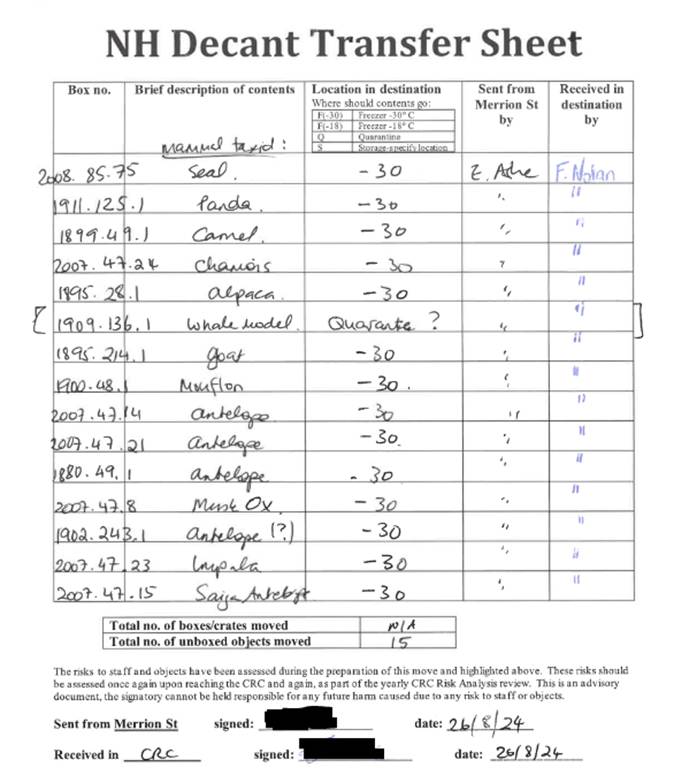
- Document your crate/box contents as you pack.
- Give each crate a unique identification code.
- List all the crate codes going into each truck. Note where each crate is to go when it reaches its destination, as the person receiving may not be familiar with the contents and requirements of each crate. All crates should be checked off the packing list as they are removed from the truck, to ensure that all are accounted for.
- Particularly in larger collections and bulk collection moves, it is vital to maintain up to date location codes in the collection management system. You may think you will remember where that particular object is, but when you are moving hundreds if not thousands of objects, you will forget. What if key personnel move jobs, or take a leave of absence? Maintaining excellent location records of your collection ensures that both yourself and others can locate the objects for audits, research visits, and (hopefully) preparation for reinstall!
We have now successfully emptied our exhibition building in advance of restoration works, removing 10,000 displayed objects and thousands more which were in storage. Should you wish to chat about decants or similar projects, drop me a line at eashe@museum.ie.

 NatSCA
Pingback: NatSCA Digital Digest – June 2025 | NatSCA
Pingback: Top NatSCA Blogs of 2025 | NatSCA