
Compiled by Ellie Clark, Collections Moves Team Leader at the Natural History Museum, London.
Welcome to the November Edition of NatSCA Digital Digest.
A monthly blog series featuring the latest on where to go, what to see and do in the natural history sector including jobs, exhibitions, conferences, and training opportunities. We are keen to hear from you if you have any top tips and recommendations for our next Digest, please drop an email to blog@natsca.org.

Sector News
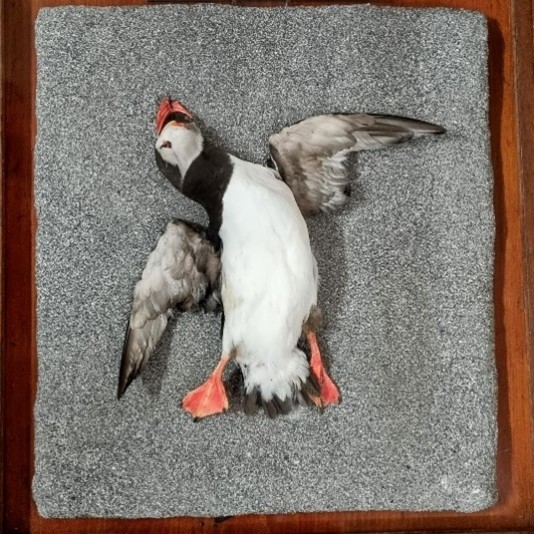
The Unnatural History Museum Seminar Series is Back!
The Unnatural History Museum brings together museum professionals and academics across disciplines to platform vital conversations about the museum mediation of the natural world during the sixth mass extinction.
The first session, on Avian Life, is at 5pm Irish Standard Time on Wednesday 13th November and will feature papers from and discussion with Megan Kuster, University of Manchester; Clara Dawson, University of Manchester; and Elle Kaye, Ethical Taxidermist. Get free tickets here.
Collections Sage Journals 20th Anniversary – Calling all Museum Enthusiasts and Cultural Thinkers
In honour of the 20th anniversary of Collections (Collections: Sage Journals), they have announced an open call for contributions to a special “Re-Collections” series! This edition will explore personal perspectives on museum experiences and bold visions for the future of museum collections. They invite reflections, thoughts, and forward-looking ideas on the impact of museum collections. This is your chance to contribute to a series celebrating both the history and future of museums.
The deadline for submissions is the 1st of February 2025. Find submission details here.
Forensic Solutions to Pangolin Poaching
Does your collection include pangolins? Museum pangolins requested in an effort to build a stable isotope database.
The plight of the pangolin and intensification of poaching for traditional medicine is well-publicised. There is an urgent need for new forensic solutions to this crisis that transcend disciplines. The Scottish Universities Environmental Research Centre (SUERC) are seeking small scale samples from any and all pangolin species held in UK museums. Of particular interest currently is the Philippine pangolin (Manis culionensis).
The project aims to develop a robust, multi-isotope provenancing map which will make it possible to determine where specific confiscated scales are poached. It will do this using stable isotopes and spatial markers such as trace metals. The team at SUERC are happy to travel for in-house destructive sampling or can provide postage materials if the curators and collection managers would prefer to take samples themselves.
For details, please contact Ruth Lewis-Smith (r.lewis-smith.1@research.gla.ac.uk) at the University of Glasgow.
NatSCA Lunchtime Chats
The new lunchtime chats are for members only and run on the last Thursday of every month.
This series is supposed to be informal, no fancy equipment is needed, it will be put out over the NatSCA Zoom platform and there is no fixed format. For those who want to take part please email training@natsca.org to put forward your idea. All members will have received a link to join via Zoom (the same link works for all sessions) – if you haven’t, get in touch with membership@natsca.org
Where to Visit
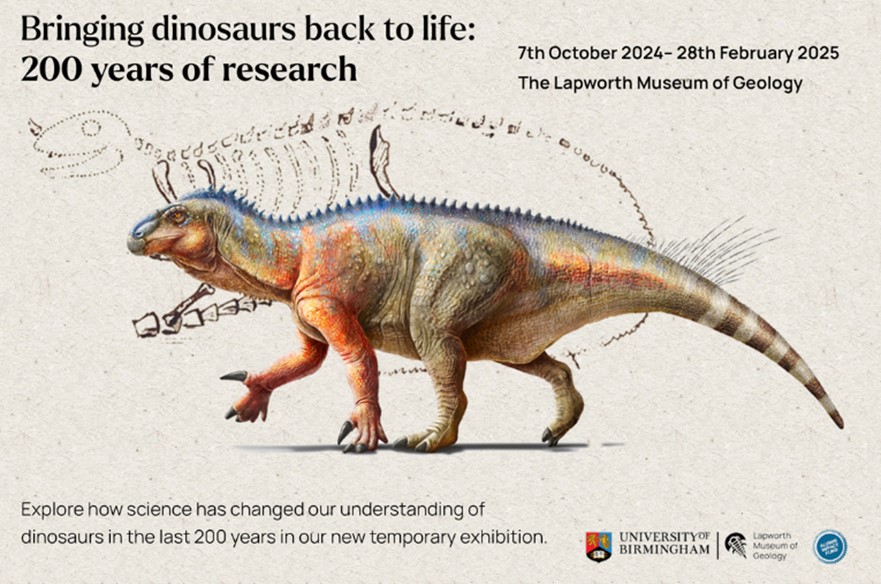
‘Bringing Dinosaurs Back to Life: 200 Years of Research’ at the Lapworth Museum of Geology
In February 1824, palaeontologist William Buckland stunned the scientific community with a discovery from a quarry about 50 miles from Birmingham. It was the first dinosaur to be scientifically described, named Megalosaurus – the great lizard.
‘Bringing dinosaurs back to life: 200 years of research’ is a new temporary exhibition at the Lapworth Museum of Geology. It provides a small glimpse into the world of dinosaur research, a field which began exactly 200 years ago. The exhibition explores the origins of dinosaur research and several contemporary studies from Birmingham undergraduate students, PhD researchers, and academic staff that have contributed to this wealth of knowledge. The exhibition will stay with the Museum until 28 February 2025 and is accompanied by weekly articles available on the University of Birmingham website which delve into the personal stories of those involved with current dinosaur research.
Find more information here.
Upcoming Mammal Society Events
There are several upcoming events and workshops hosted by the Mammal Society available to take part in, including a National Harvest Mouse Survey, Dormouse Ecology and Conservation and many more. To see the full list visit https://mammal.org.uk/events.
What to Read
We have a number of fabulous articles on the Blog, including:
Botanist Wuu Kuang Soh, botanist at the National Botanic Gardens of Ireland, talks to us about digitising the National Herbarium of Ireland. Reflecting on the establishment of a digitisation facility at the Museum in 2020, they discuss how transnational collaboration may be the way forward to bridging the technology and research gap between underfunded and well-funded herbaria.
Swansea University student, Sebastien Lherondel-Davies, talks to us about the 2023 Conservation Matters Wales Christmas Conference.
Glenn Roadley, Curator of Natural Science at The Potteries Museum & Art Gallery, discusses the very successful Make Plastic History engagement event in April 2024.
Where to Work
PhD Studentship: ‘Re-storying the Sussex Weald Garden: Exotics, Empire and Ecobiography’ at the University of Sussex in collaboration with Royal Botanic Gardens, Kew. Closing date 17th of February 2025. Find more information here.
And for those happy to cross the pond…The Department of Integrative Biology at Michigan State University (https://integrativebiology.msu.edu) and the Michigan State University Museum are conducting a search for an Assistant/Associate Professor(s) and Curator of Vertebrate Collections. The advertisement can be viewed here (https://careers.msu.edu/en-us/job/521070/assistant-professortenure-system).
Before You Go…
If you have any top tips and recommendations for our next Digest please drop an email to blog@natsca.org. Similarly, if you have something to say about a current topic, or perhaps you want to tell us what you’ve been working on, we welcome new blog articles so please drop Jen an email if you have anything you would like to submit.

 NatSCA
