
Written by Emilie Pearson, Curatorial Assistant at the Natural History Museum, London.
The Natural History Museum is a large, vibrant museum with over 900 staff working across many different teams. These include numerous collections-based teams, as well as the learning and engagement teams who work with a variety of audiences in different ways. There are many crossovers between these teams, with curators and researchers taking part in events such as the popular Nature Live in person and online series, as well as numerous evening events held by the museum Visitor Events teams.
My journey with the NHM started back in 2016, when I joined as a Learning Volunteer. I’d come twice as a visitor before then, once when I was just 18, killing time before seeing a film in the BFI Imax (I nearly missed the start of the film as I didn’t want to leave!) I then came again during university holidays when I was studying for a Zoology degree (inspired partly by my first visit) and I was determined to go on one of the Spirit Collection Tours to see the Giant Squid. I made the friend I was going with queue up from 9:30 (the museum didn’t open till 10) to ensure we got a spot on one of the tours.
As a Learning Volunteer, once a week I would travel down to the museum, where I had the pleasure of engaging with visitors using the volunteer team’s specimen collection used for handling. This collection included a range of mammal skulls, fossils, entomology specimens and even different plant seeds. As I mainly volunteered on Fridays, me and the other volunteers in that day would often go to the Nature Live sessions held in the museum’s Attenborough Studio, a purpose-built venue for shows and talks, where we’d get the chance to hear from some of the NHM’s scientists and see specimens from the main collection.
These experiences inspired me to work towards and apply for the paid position of Science Educator, which I was fortunate enough to obtain in early 2020. 3 weeks after starting with the team though, the world as we knew it changed as we saw the whole country adapt to the outbreak of Covid-19. The Science Educator team went from being out in the museum every day, carrying out school sessions, presenting shows, engaging with guests face to face, to being told to stay home and await further instruction.
Even a global pandemic couldn’t dampen the team’s spirits though! After a period of furlough, the team were back on track and putting a series of events and resources together to enable them to continue sharing the wonder safely, including creating online learning activities, hosting a weekly online homework club, and putting together what continues to be a highly successful virtual workshop program programme.

Life slowly began to return to normal, the team started to be back on-site engaging face to face (at a slight distance to begin with) with the public once more. We restarted some of our school sessions and began hosting our shows again. I even got trained up on how to carry out the Spirit Collection Tours that I’d been so desperate to go on all those years earlier!

It was around this time that I heard the museum would be hiring a team of collections staff to help prepare the specimens moving to a new purpose-built site under what is now known as the NHM Unlocked programme. Part of my tour guide training had involved working with some of the NHM curators to get a sense of what their job entails, and to get some hands-on experience working with some of the collections. It was an amazing experience! When I saw the collections jobs advertised, I didn’t hesitate to apply, as what could be better than getting to work with such inspiring collections all day. I still remember the shock of opening the email offering me one of the positions….
Fast forward a couple of months, and I was in the thick of working in the collections. As part of a team helping to prepare them for the big move, I was working with fossils, wet specimens, dry specimens, slide specimens – seemingly everything! While I was loving my new role, I did still feel a bit of a pang when I’d see my old team out on gallery interacting with visitors or getting ready to present a show. It was a dream working more closely with the collections, but I did miss getting to interact with and help inspire the public.
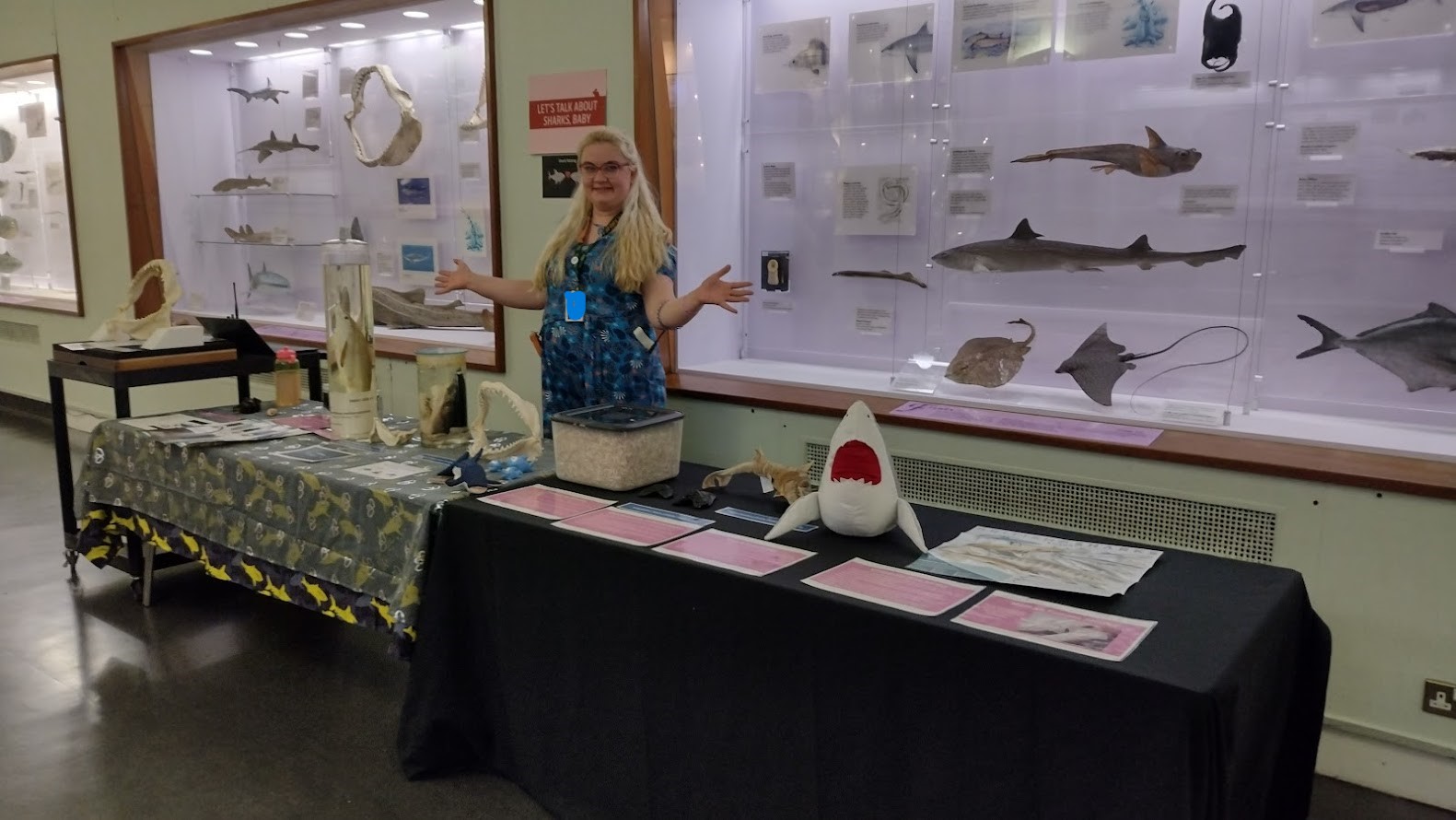
I realised pretty soon though that just because I was working ‘back of house’ now, it didn’t mean I had to stop taking part in things that involved learning and engagement. As day to day life at the museum had gotten back to normal, this included the extensive Visitor Events programme. I’ve since signed up for and worked many times at the infamous DinoSnores sleepovers, for kids and grown-ups, where I’ve been able to help host Science Shows. I’ve also worked at various evening events such as NHM Lates, where I was thrilled to help put together a science station themed around shark senses.
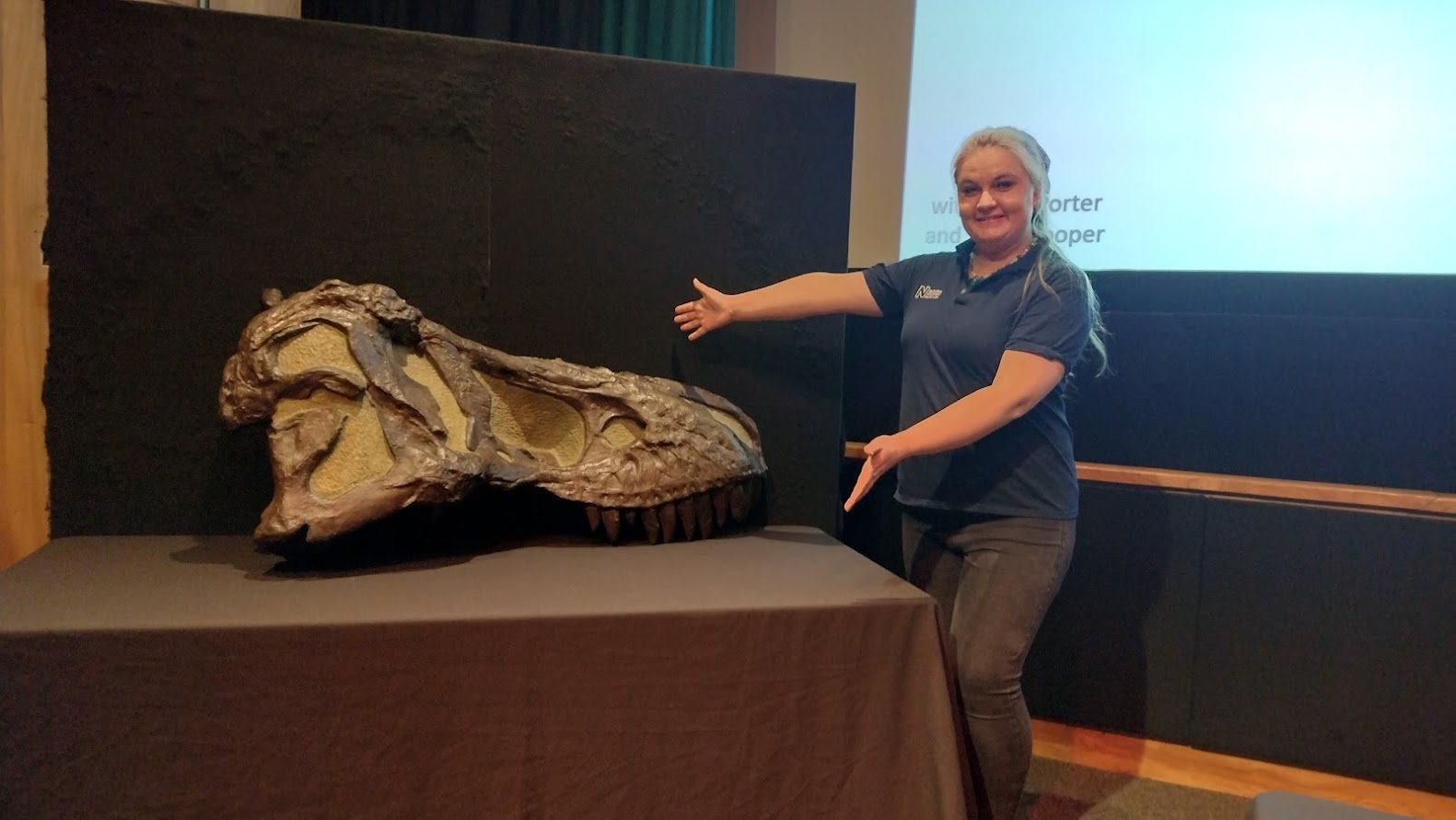
I’ve worked with the NHM Community and Youth team to host science activities at sessions held for hyper local audiences who have previously felt the museum wasn’t a place for them. I even got the chance to work in Lowestoft with our National Partnerships team when a team from the NHM hosted activities at the First Light Festival.
This list is not exhaustive, it’s safe to say though that I’ve been very fortunate in being able to continue working in learning and engagement with many different audiences, while also developing a career working with the NHM collections.

It’s understandable that working with the public isn’t going to be appealing for everyone, and this might be for a variety of reasons. What I have found when discussing it with my collections-based colleagues is that often the barrier in place of them wanting to take part in events and activities as mentioned previously, is confidence. They wonder who is going to want to talk to someone like them, and what they’d talk about. My advice to anyone working with natural history collections is that there are very few people in the world who, when they learn what your job is, won’t think you have the coolest job ever. Whatever their level of knowledge, they’ll always have a question for you. Even if it’s just ‘What’s that?’ as they point at one of the specimens you have on display, they’ll always value that interaction. Another fear that is voiced is quite often ‘What if they ask me something I don’t know?’. I’ve had many of these questions over the years, my answer is always ‘I’m not sure, but I’ll try and find out’.
I’ve been very fortunate that in such a big institution, there have been many public engagement opportunities available for me to participate in since moving to a collection-based role. I recognise that at smaller institutions, this may not always be the case, as time and budget constraints may impede this possibility. I would urge though wherever possible, to try and share the wonder of what you are working on. Whether that is face to face at an event, out on the gallery, or through an online talk or social media campaign, there will be someone who is inspired by that interaction. It was one of those interactions years ago at a Nature Live event, listening to a NHM scientist talk about shark teeth, as a recent graduate I then thought ‘I’d like to work here one day…’.

 NatSCA
Pingback: NatSCA Digital Digest – October 2024 | NatSCA