
This article is re-posted from a piece that appeared on the Amgueddfa Cymru blog page, 3 August 2023 with permission from the author.
Written by Madalyne Epperson, MA Conservation Practice student, Durham University – when on placement at Amgueddfa Genedlaethol Caerdydd – National Museum Cardiff.
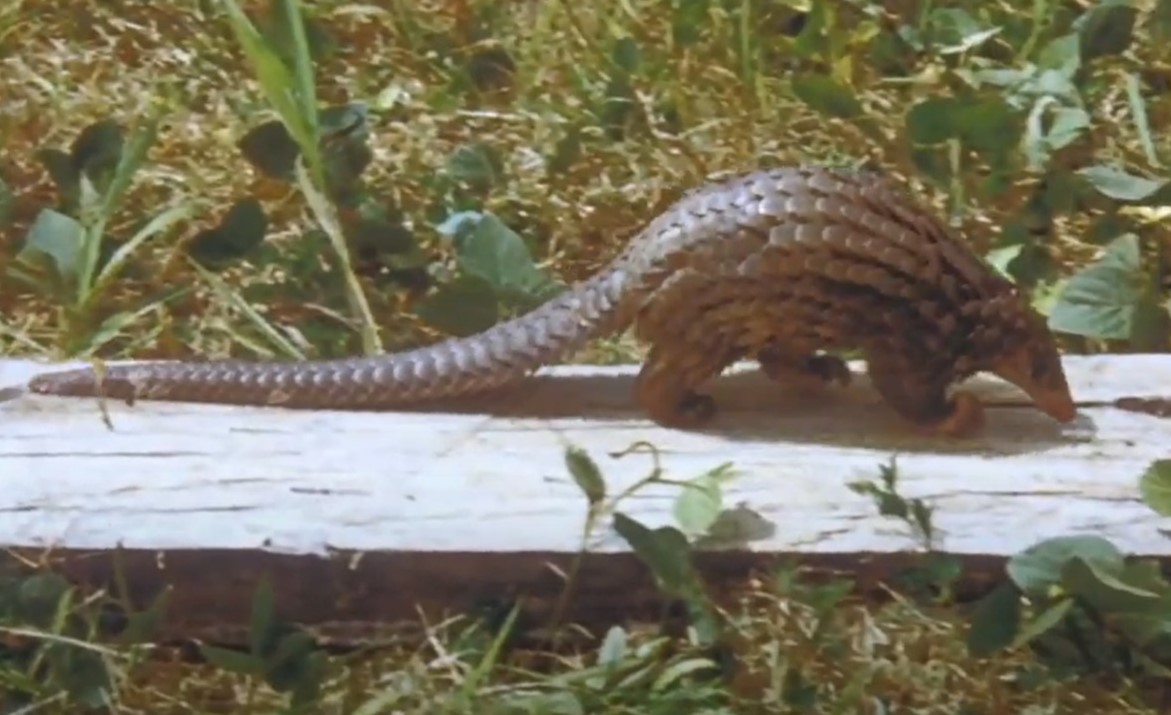
Natural history collections are often central to our understanding of evolution, population genetics, biodiversity, and the environmental impacts of pesticide use and climate change, among other things. For this reason, caring for these collections is of great importance. A taxidermy tree pangolin – named Paddy by the conservation team – was brought to Amgueddfa Cymru – Museum Wales in 2017 in need of attention. Paddy was collected on August 4th, 1957, by researchers during Cambridge University’s French West Africa Expedition. According to the expedition diary, Amgueddfa Cymru had asked the researchers to retrieve a pangolin to make a museum specimen, as was common practice at that time. The mounted pangolin was feared lost after the expedition’s drying tent went up in flames on August 25th, 1957. Paddy was terribly singed by the fire, which greatly disheartened the expedition team. It is perhaps for this reason that Paddy never made it to the museum when the expedition concluded. It was not until 2016/2017 that Paddy was found in Staffordshire in the home of one of the expeditions members and sent over to the museum.
Condition Prior to Conservation
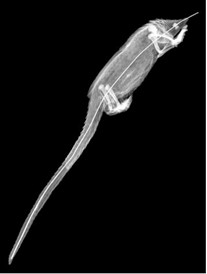
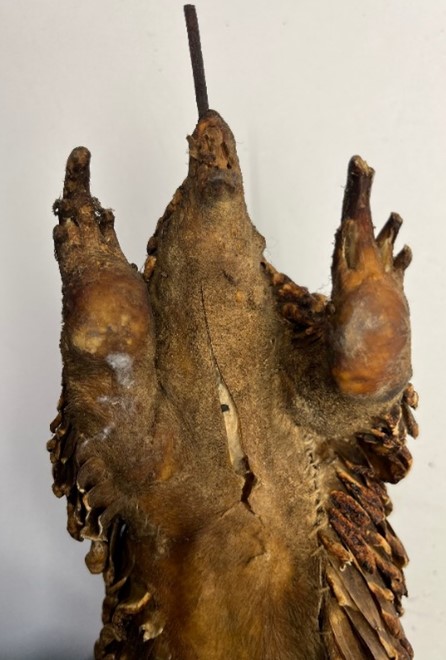
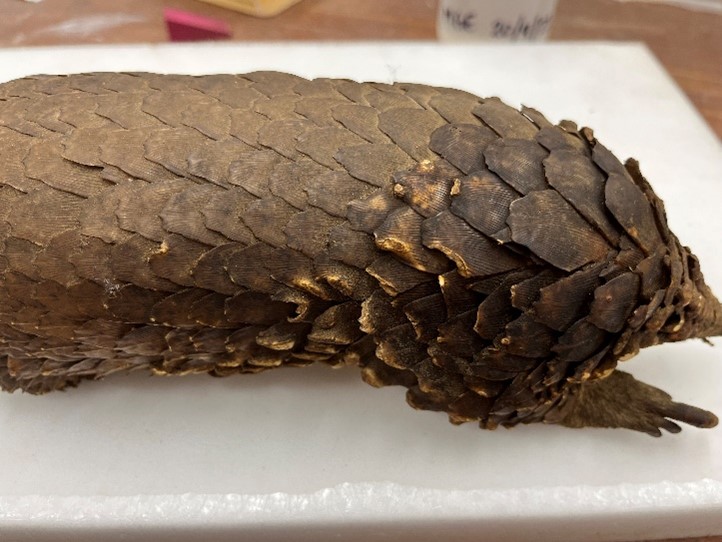
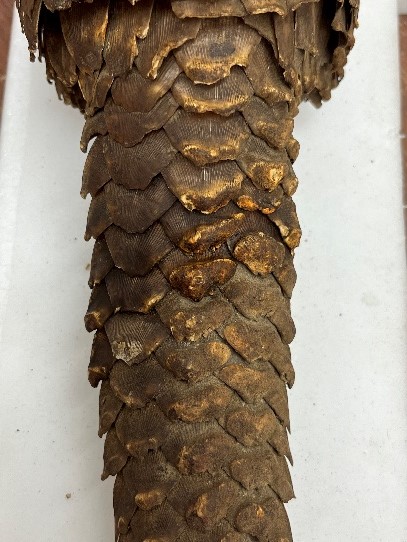
Analysis was conducted to learn more about Paddy’s preparation, and his condition was assessed before interventive conservation treatments were undertaken. X-radiography revealed an iron wire extending the length of the specimen, while scanning electron microscopy with elemental analysis (SEM-EDX) confirmed no arsenic, mercury, or other pesticides are present. After being left on top of a wardrobe for 60 years, Paddy was covered in dust, cobwebs, and other contaminants. He was also coated in smoke residues from the fire that melted the keratin scales on his face, torso, and tail. Larvae casings found on and within the specimen suggest there was a carpet beetle (AKA wooly bear) infestation as one point, although no signs of an active pest problem were found. Arguably the most imperative concern was the split in Paddy’s chest, which was liable to grow if not addressed properly.

Conservation Treatment
A conservation vacuum and soft bristle brush were used to remove loose debris, including fuzz, insect casings, and dust from Paddy’s surface. Cosmetic sponges were proposed and tested as a means of removing engrained dirt from the specimen’s scales but they were not as effective as expected due to the coarse nature of the scales. A dilute solution of Synperonic N non-ionic detergent in 50:50 water and ethanol on dampened cotton swabs proved very successful at removing the stubborn contaminants. Once Paddy was cleaned, ethanol on cotton swabs was utilized to clear any remaining surfactant residues.
After Paddy was clean, attention turned to the split in Paddy’s chest. Bridges were made from Japanese Tissue paper and secured using Evacon R, a neutral pH, non-plasticized ethylene-vinyl acetate (EVA) copolymer emulsion. Tweezers and dental tools were used to manipulate the adhesive-soaked strips of Japanese Tissue paper into the split until the entire gap was sufficiently filled. Once the adhesive was dried, Winsor and Newton acrylic paints were used to tint the Japanese Tissue. The so-called “six-foot, six-inch” rule was followed during the colour-matching process. This will allow the gap to be identified upon close inspection but ensures it does not detract from the specimen while on display.
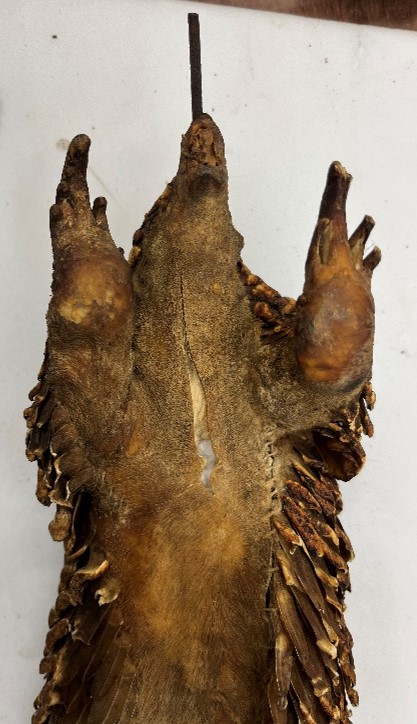
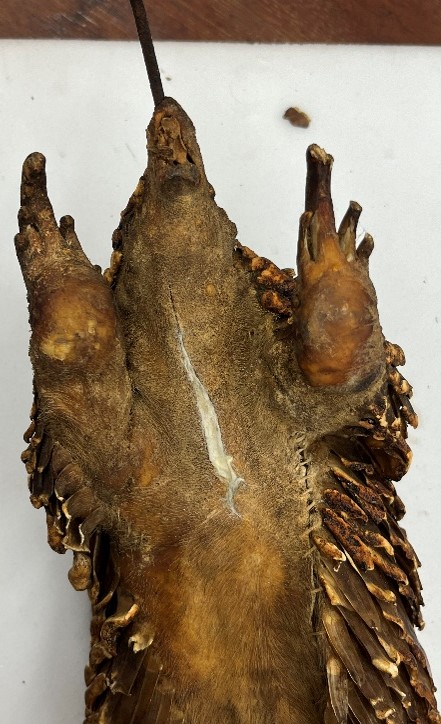
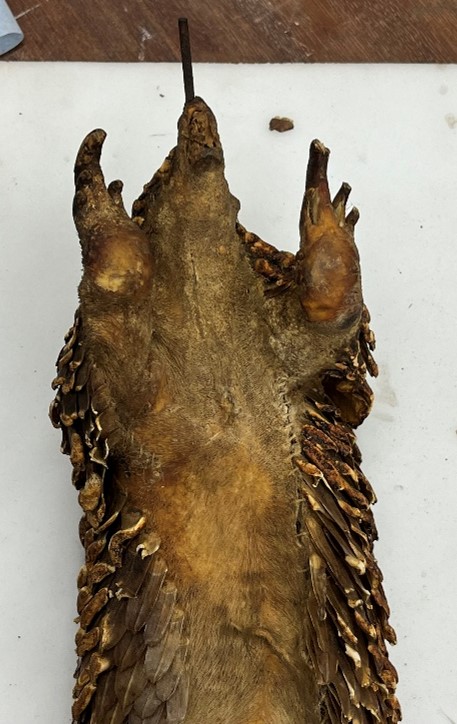
The decision was made to remove the section of iron wire protruding from Paddy’s nose. Although the wire is part of the preparation history of the specimen, there was concern that the wire may snag and cause damage in the future. A small hacksaw and wire cutters were utilized to quickly remove the wire. Care was taken to cut off as much of the wire as possible without affecting the organic material surrounding it. The cut wire was very bright and shiny, so the end was obscured using Winsor and Newton acrylic paints.
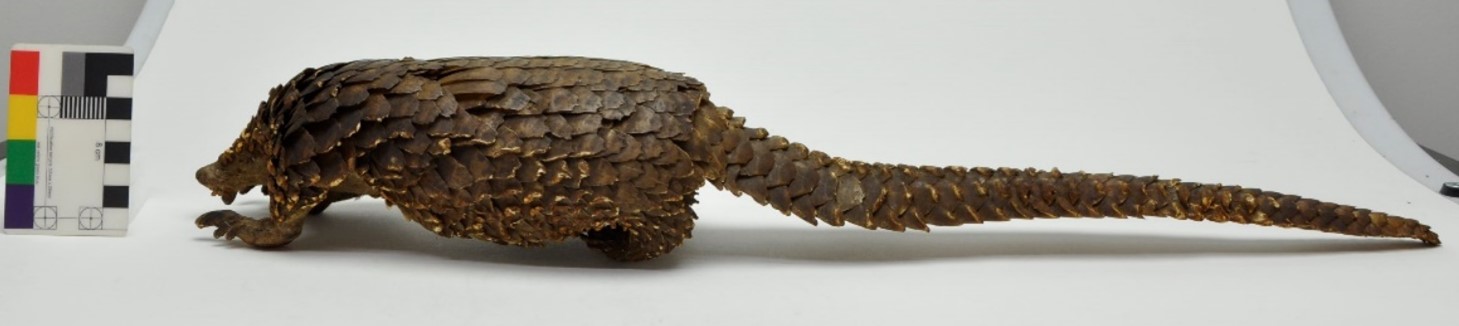
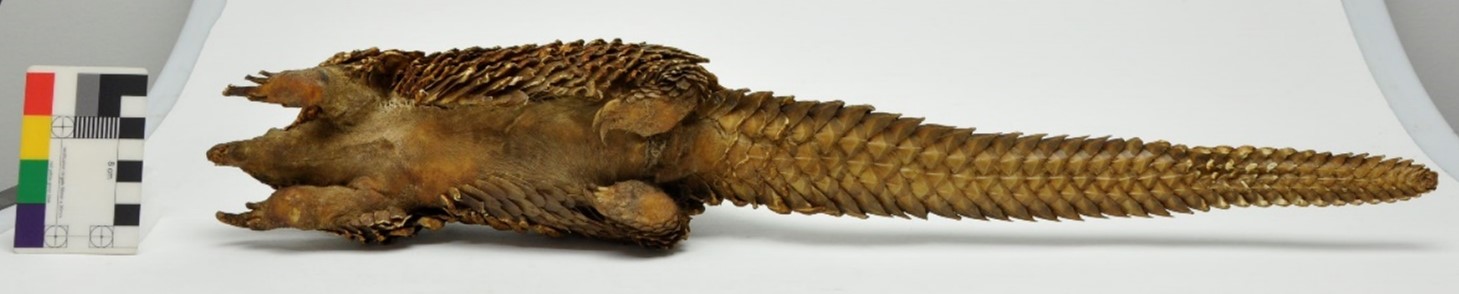
Paddy is now ready to meet his adoring public! Pangolins, generally, are considered the most trafficked animal in the world. Their defense mechanism (i.e., curling into a ball) makes them easy for poachers to collect and transport. They are primarily harvested for their scales, which are highly valued in traditional Chinese medicine. Now that Paddy is presentable once again, he can be used to help educate and raise awareness for these wonderfully odd and endangered creatures.
References:
Pan Golin. 2018. GabonExpeditionPart1. [online video] Available at: https://youtu.be/DBjGmN6dZS8?t=550 (Accessed 30 May 2023)

 NatSCA
Pingback: NatSCA Digital Digest – December 2023 | NatSCA