
Written by Caitlin Jenkins, Project Conservator at Parliamentary Archives (previously Assistant Conservator at Royal College of Surgeons of England).
The Hunterian Museum at the Royal College of Surgeons (RCS) in London closed in 2017 for redevelopment. This necessitated the temporary removal, storage, and condition assessment of its contents. One particularly challenging project was the conservation of 19 large animal skulls. These specimens are part of the museum founder John Hunter’s original collection, dating from the 18th century.
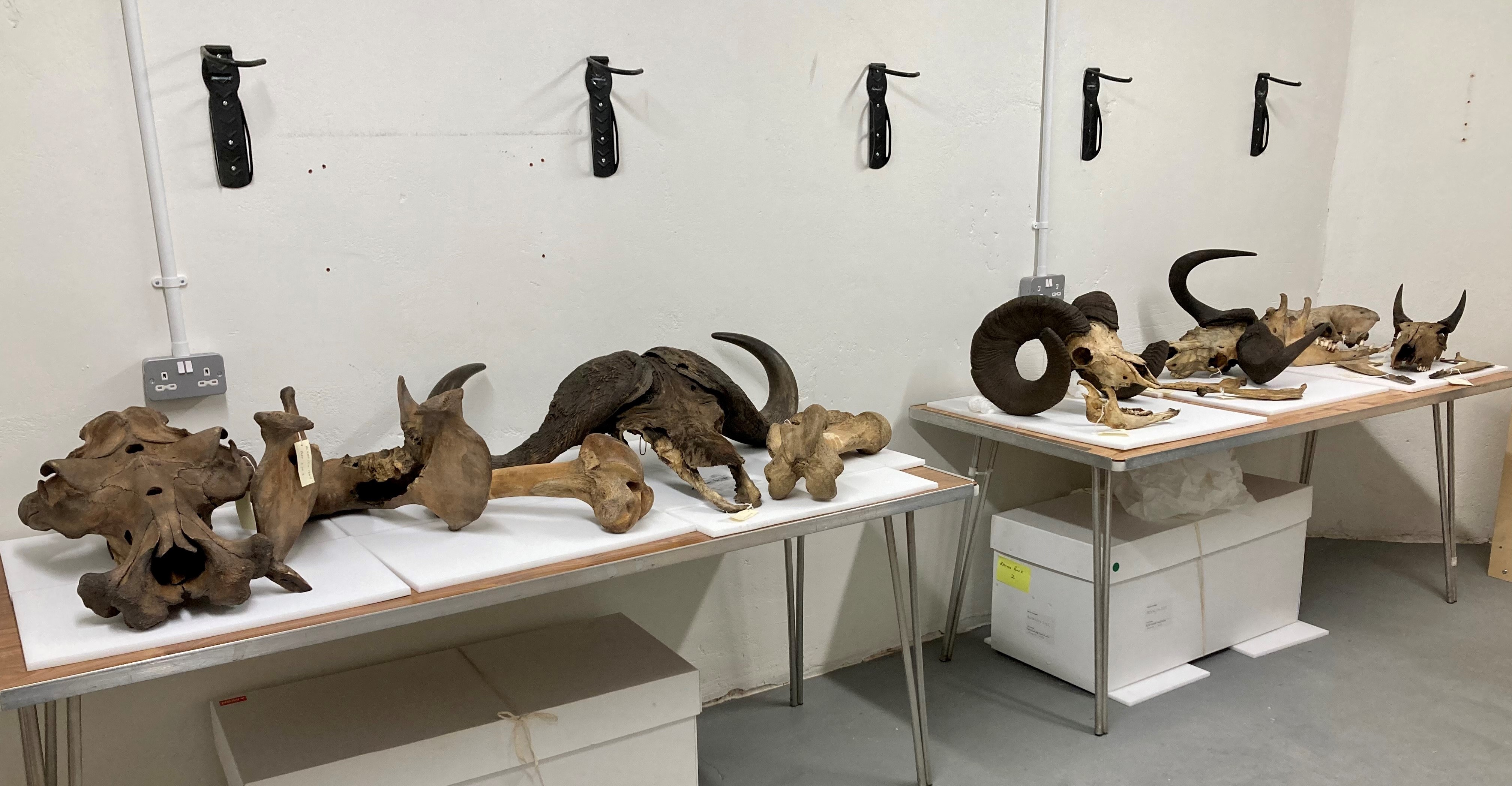
Although the skulls had been sealed in secure crates since the museum’s closure, most had some noticeable dust and dirt accretions and needed attention before they could be redisplayed. Due to their size and number, a team of conservators from Virtu Conservation Housekeeping was brought in to assist with this task. There was a lack of suitable bench space to accommodate so many large specimens at once, so temporary cleaning stations were set up.
The first stage was dry cleaning. Loose particulate debris was removed gently using vacuums and soft brushes. More ingrained areas of dirt were treated using smoke sponges and Groomstick rubber to gradually remove material, layer by layer. While more commonly used in paper conservation, these can also be useful for cleaning large and irregular surface areas of bone.
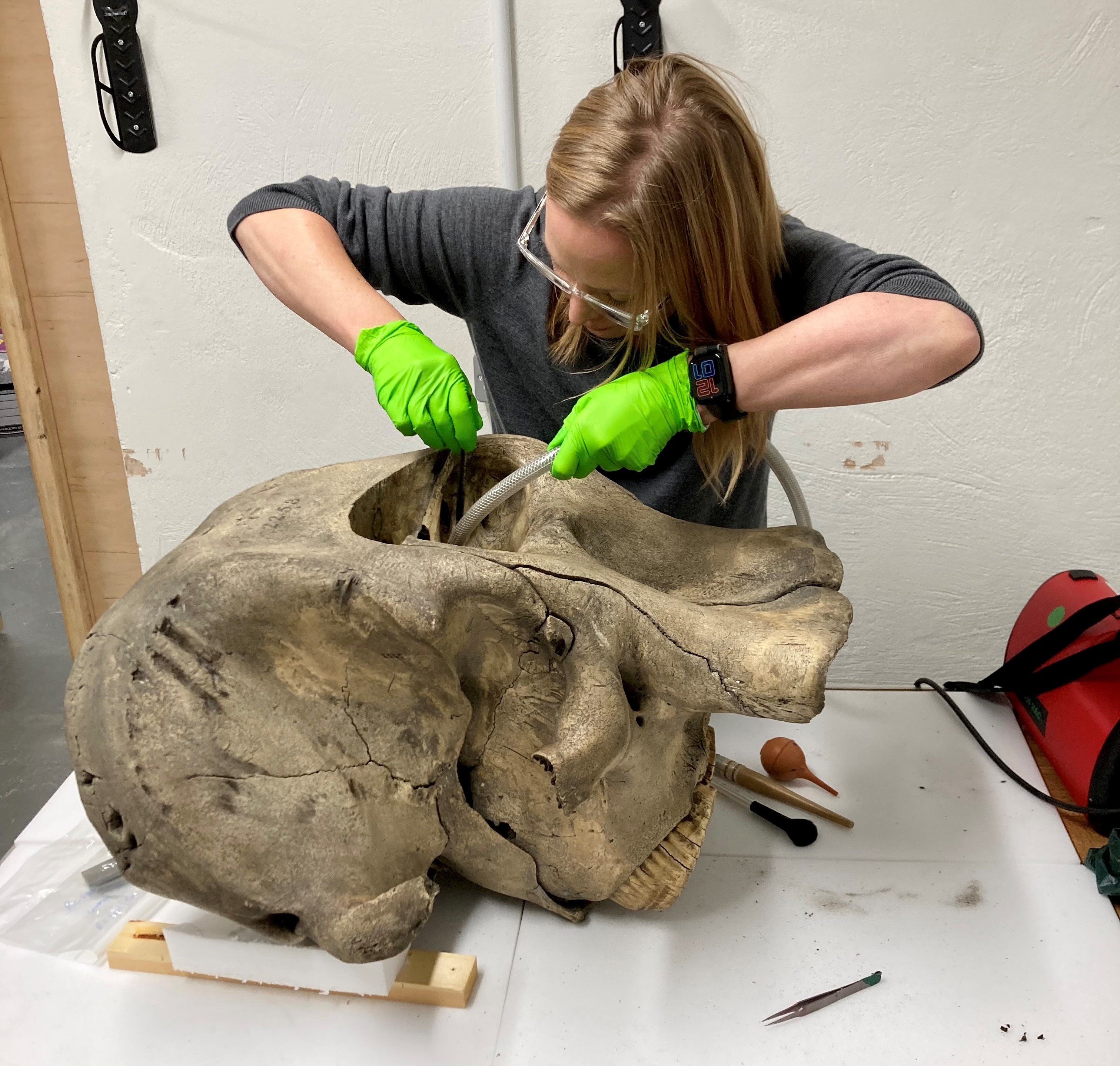
For stubborn dirt, wet cleaning was often the only effective treatment. Saliva generally proved to be the most useful medium, because of its enzymatic content. Other liquids such as deionised water and ethanol were also employed, particularly with greasy accretions. Wet cleaning was carried out with cotton swabs, ensuring that the bones were subjected to the minimum amount of moisture required to remove dirt.
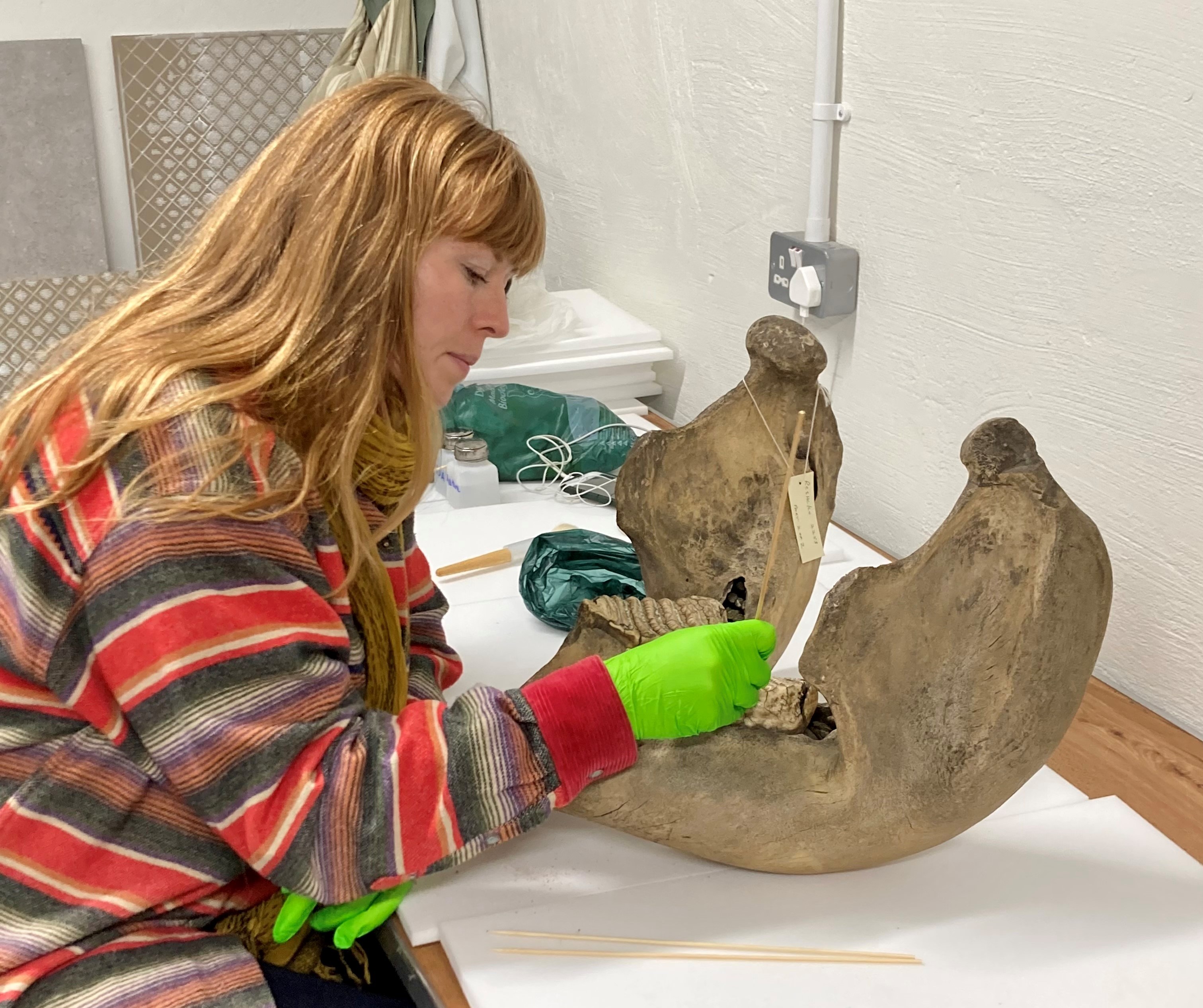
All cleaning treatments took place over a period of four days, after which the specimens were fitted for mounts. As they are hundreds of years old, the aim was to bring them to a state befitting their age, rather than ‘deep’ clean them to a more pristine condition. You can visit them on display in the new Hunterian Museum, which re-opened in May 2023.
I would like to thank Tina Kenward, Loli McIlvenny, Emily Bird, Anja Hordejuk and Jana Kostalikova from Virtu Conservation Housekeeping for their hard work on this project.

 NatSCA