
March 10th, 2023, Royal Botanic Gardens, Kew
Written by Fiona Roberts (Collaborative ESRC PhD student, Cardiff University & Amgueddfa Cymru-National Museum Wales) and Violet Nicholls (Assistant Curator in Herbarium, Portsmouth Museums).
This post is dedicated to Dr Dagoberto Lima Azevedo (1979-2023), Tukano researcher, translator, scholar, author and a voice for the Indigenous peoples of the Rio Negro in the northwestern Amazon.
The third and final workshop of a one-year project ran in March 2023, at Royal Botanic Gardens, Kew. The project, “People and Plants: reactivating ethnobotanical collections as material archives of indigenous ecological knowledge”, began in January 2022, and was supported by NatSCA (Natural Sciences Collections Association). Funded by the Arts and Humanities Research Council (AHRC), it was led by National Museums Scotland, the Powell-Cotton Museum and Royal Botanic Gardens, Kew.
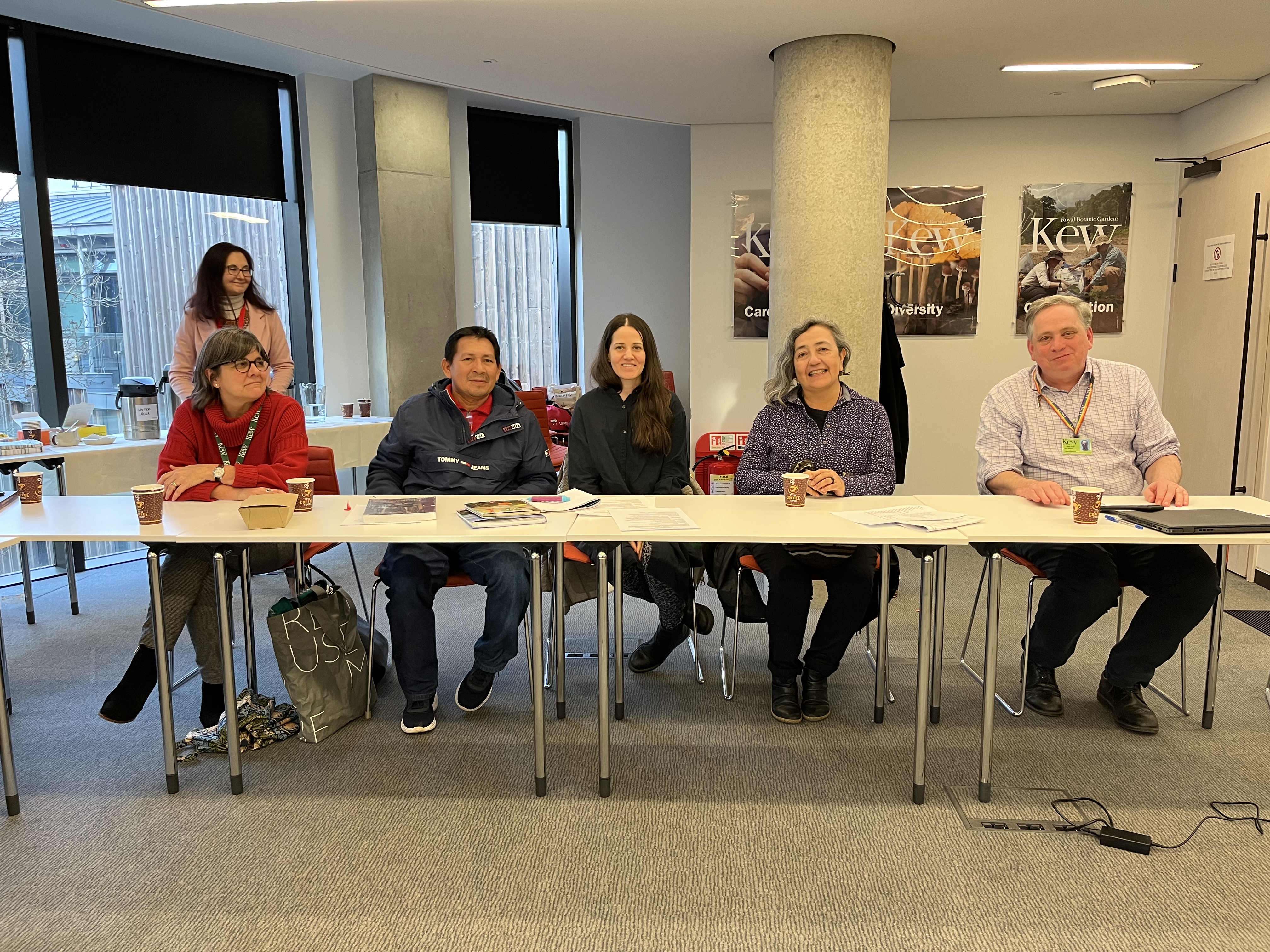
The workshop ran in partnership with Museu Goeldi, Brazil and the Department of Cultures and Languages, Birkbeck, University of London. It addressed the question, ‘how ethnobotanical collections in museums can best be used to support Indigenous communities?’. Dr Dagoberto Lima Azevedo, from the Federação das Organizações Indígenas do Rio Negro, and Claudia Leonor López Garcés (Museu Paraense Emílio Goeldi) travelled from the Brazilian Amazon for the event. They met with fellow panellists Professor Mark Nesbitt (Royal Botanic Gardens, Kew), Professor Luciana Martins (Birkbeck, University of London), Cinthya Lana (University of Gothenburg) and Dr William Milliken (Royal Botanic Gardens, Kew).
The Richard Spruce collection (1849-1864) was used as a case study. Spruce collected plants and recorded their uses in South America, and is considered to be an early ethnographer, as he also recorded the traditions and customs of the different communities that he met on his travels.1 He collected over 14,000 herbarium specimens in the Andes and Amazon regions, and 350 items are in his ethnobotanical collections.2
However, whilst the scientific perspective is evident through Spruce’s notes and letters, the Indigenous perspective isn’t there, as William Milliken emphasized during the morning talks at the workshop. To address this, and the importance of re-engaging with source communities, a series of questions were discussed and translated from Portuguese into English by Kew botanist Cynthia Sothers. As Claudia expressed during the talks, there has been a lot of discussion about objects, but not of the people.

Reflecting on the Past
Reflecting on the past and looking forward were two themes that came up throughout the workshop. Through Cinthya Lana’s presentation we learnt how Indigenous communities have been depicted in museums in the past, how they have not been invited to participate in past exhibitions, and of the role that human influence has played in the diversity in the forest. The ecological value of Indigenous knowledge was emphasized, as well as the importance of knowing the flora of the Amazon in order to preserve it.
Part of the morning discussion also reflected on past projects and their impacts, such as collaborative research with the Ka’apor Indigenous people. A project funded by the Newton Fund that ran in 2016 had many outputs (see Mobilising Richard Spruce’s 19th century Amazon legacy | Kew), including a book from Instituto Socioambiental (ISA). Dagoberto collaborated on “Manual de Etnobotânica”,3 which is designed for use by Indigenous researchers, and co-authored “A Maloca entre Artefatos e Plantas”,4 a teaching and learning toolkit. This was based on Richard Spruce Collections and was an output of Luciana’s project, “Digital Repatriation of Biocultural Collections”.

These books were designed to be more accessible as some ethnobotanical books contain scientific language that is too obscure. “Manual de Etnobotânica” includes information on how to describe plants, including Indigenous classifications, with, as Dagoberto expressed, non-Indigenous and Indigenous knowledge walking together. He explained the importance of this for people in the community, as they can bring this into teaching. The book was also produced in Portuguese, Tukano and Baniwa.
Sharing Knowledge and Practices
A second theme of the day was considering how to share knowledge and practices, particularly highlighting the relationship between scientific and Indigenous knowledge. During the panel discussion ‘Connecting Scientific and Indigenous Communities of Knowledge in Amazonia through Richard Spruce’s collections at Kew,’ Professor Luciana Martins discussed her 2016 project mobilising the value of biocultural collections in Brazil, using training workshops and creating an Ethnobotany Manual (as described above). This was brilliant to flick through and see in detail.
Collaborator Dagoberto Lima Azevedo highlighted how important this project was in the face of losing Indigenous knowledge, as it helped to reach towards symmetrical knowledge, where knowledge of communities is highlighted as much as ‘Western’ knowledge. Both Luciana Martins and Claudia Leonor López-Garcés highlighted how creating this knowledge is very important for the environment and managing socio-ecological systems, bringing them together to create an intercultural science.
An interesting discussion also emerged when William Milliken highlighted the importance of training people in research methods. During the project in 2016 a workshop was held with the Indigenous peoples of the Upper Rio Negro region (Brazil), in São Gabriel da Cachoeira, which included extensive training. Dagoberto emphasized the importance of continuing this training for researchers, and the need for recognition of Indigenous Agents of Environmental Management (AIMAs) for their work. Without institutional linkages and continued training, work may be unrecognised; and Luciana highlighted a proposal for an intercultural herbarium in the region that could provide this, recognising the community as experts in both kinds of knowledge.
These insights were continued in Claudia Leonor López-Garcés’s talk on Indigenous knowledge and ‘Western’ science, discussing collaborative research between the Ka’apor Indigenous community and the scientific collections of the Museu Paraense Emílio Goeldi and the National Museum of Ethnology, Leiden. The participants visited collections at Goeldi, motivating reflections on the contribution of Indigenous knowledge to ‘Western’ science and vice versa, and the ways the Ka’apor create and transmit knowledge. Throughout this, the Ka’apor participants highlighted memories and knowledge around pottery, pipes, and ceramics – which in particular brought back memories of the dietary and sexual restrictions that this craft required. During a visit to the Goeldi library, the participants commented that seeing how Ka’apor elder stories were kept here highlighted the usefulness of books and reflected that ‘Western’ knowledge is “another knowledge about care.”
Overall, this theme of the day brought through consideration of how scientific collections can be spaces for interepistemic encounters and understanding each other, which involves new learning and changing the work dynamics of both institutions and communities. Later, in the discussion wrapping up the day, it was highlighted how important the construction of intercultural science was, the idea of science and knowledge as a form of care, and how museums might be able to provide care for objects.
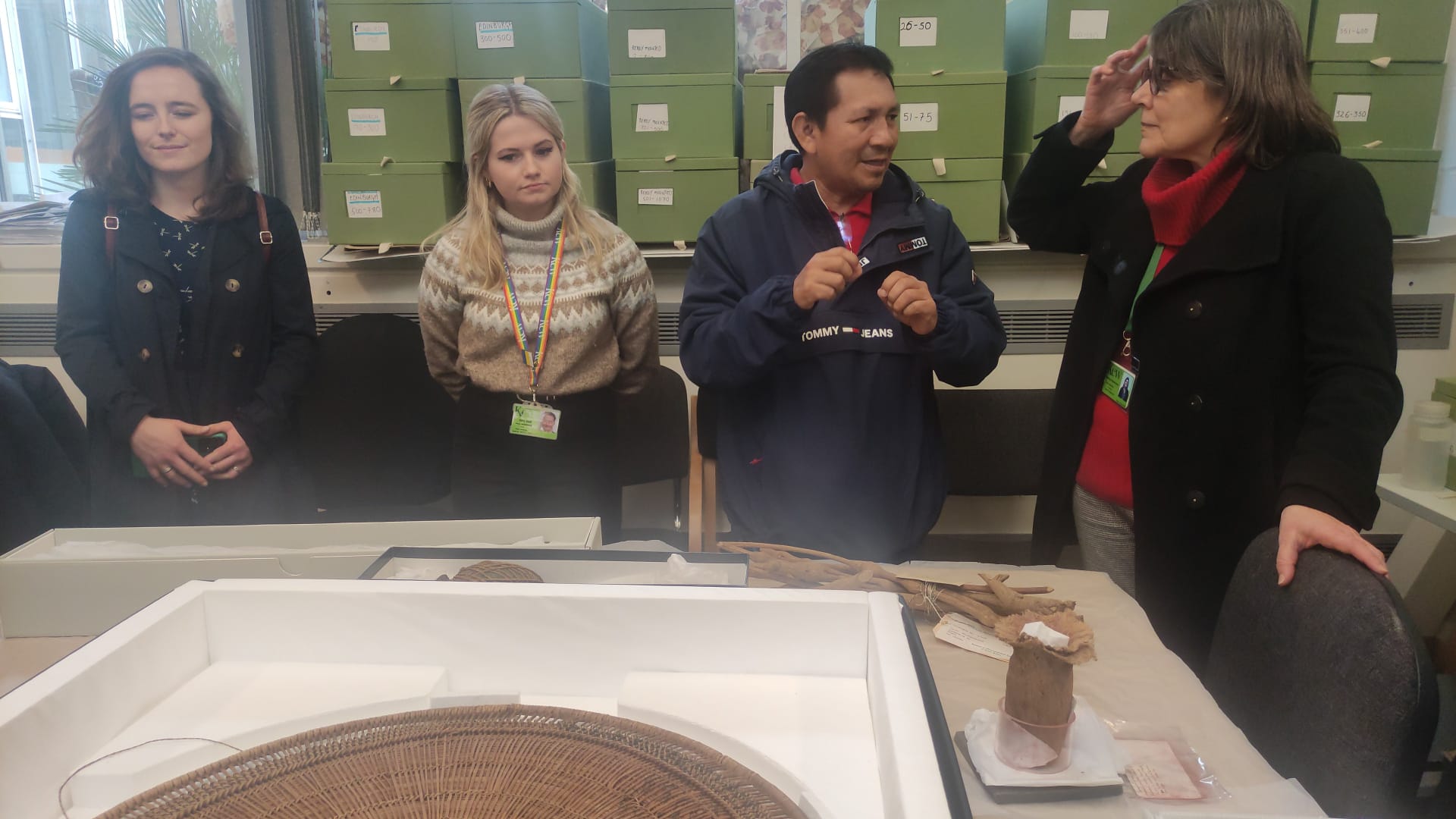
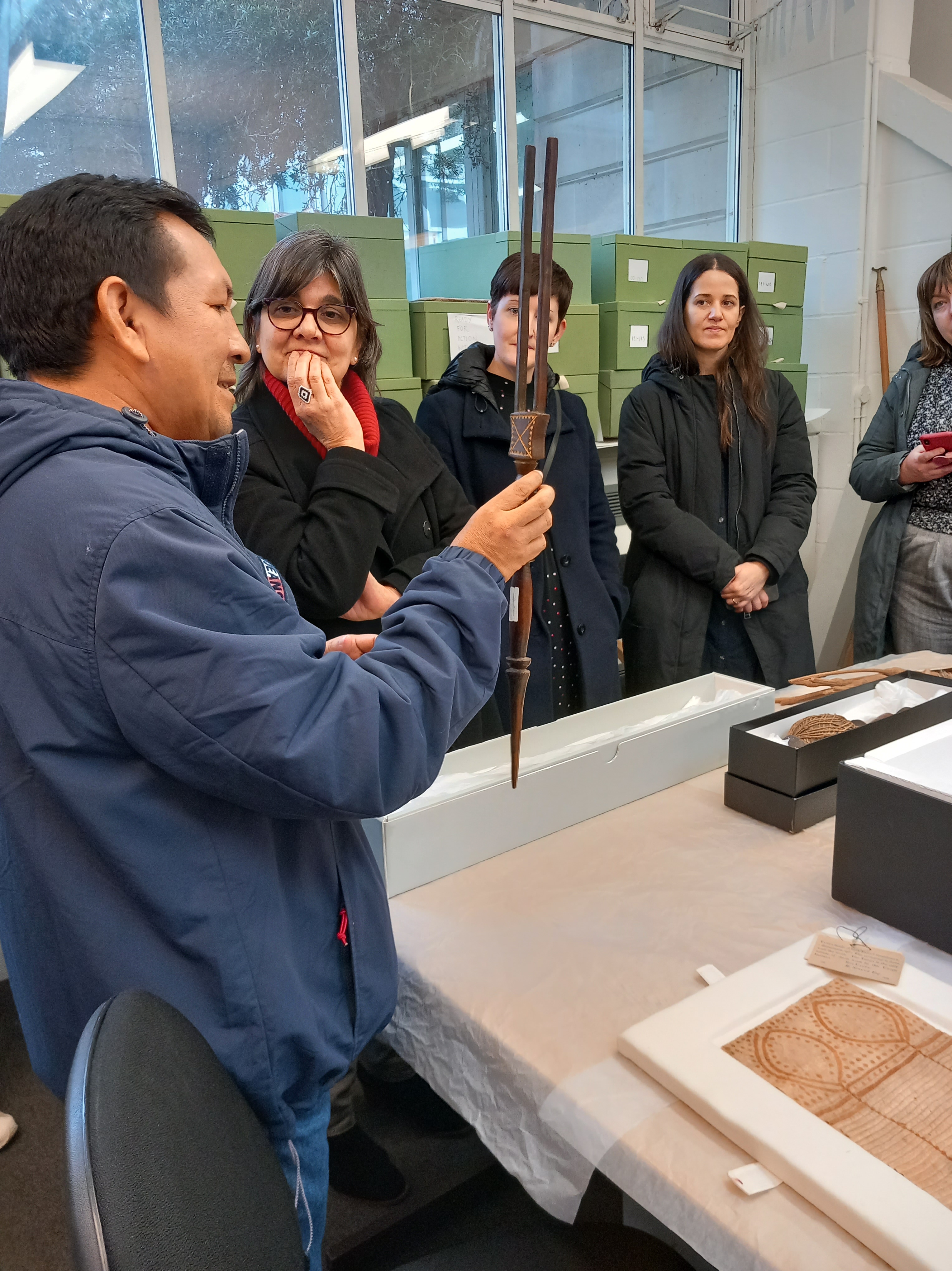
In the afternoon, we had a tour and object handling in Kew’s Economic Botany collection; learning more about particular objects, which built on discussions of knowledge sharing as Dagoberto shared his knowledge and memories about items in the collection.
Co-curating Digitally
This theme of knowledge sharing was built upon with insights on how the digital could be used to build intercultural science. Insights from co-curating digitally came through in the panel discussion, as Luciana Martins highlighted how when moving forward to their next project in 2019, within the climate of COVID-19, they began to focus on the digital repatriation of collections. This focused again on Amazonia, connecting the Berlin Ethnological Museum with the Sao Pedro community in Rio Negro Indigenous territory. Workshops took place online, focusing on the maloca (long house) in the 19th century and rebuilding this today, creating a teaching and learning toolkit (which is digitally accessible at biocultural.wpengine.com). Through this work, the digital is used to reconnect, reassemble, reanimate and recover, bringing together people, collections, places, plants and animals. This uses creative practices and socio-ecological processes to do so, involving stories, languages, histories and new materials. However, Luciana Martins highlighted the challenges of working online, including language challenges and additional time required to bring through the female and gendered aspects of stories and knowledge. Despite this, an online illustration workshop they held over five hours, demonstrated how creativity can connect people and collections.
The digital was also explored in Cinthya Lana’s talk about ‘Amazonian Exhibitions and Digital Returns.’ She highlighted how visual and museum representations of the Amazon have changed over time, and discussed how in the Museum of World Culture in Gothenburg, Sweden, digital work contests past narratives of the inhospitable Amazon (separating Nature and Culture, and obscuring the connection between the two seen in the biocultural diversity of the area) by connecting with communities through WhatsApp groups. This continued discussions and communication throughout the project, allowing digital databases to be changed by them, and retelling stories of artefacts.
Future Directions
As well as reflecting on the past, the discussion led to hopes for the future. Luciana added that outputs should be agreed in the early stages of future proposals and co-created to ensure mutually beneficial outcomes. In the next steps it is also hoped that a bigger project may include other collections from the same area.
Accommodating spiritual needs was also highlighted as important when approaching some collections in museums. Dagoberto explained that the objects are regarded as living things, and that they need to be visited, and connected with.
Mark further emphasized that museum staff need to be trained and learn what the appropriate behaviour is for the current situation, and not be restricted by past policies. This would further help to embed confidence in upcoming museum professionals. Dagoberto also remarked on how discussion helps things move forward, and that the projects in the past have helped to prevent traditional knowledge from being lost.
To watch some of the talks visit: People and Plants – YouTube.
References:
- Harrington, K. (September 8, 2017). Retrieved from Royal Botanic Gardens Kew website: Richard Spruce: botany on a global scale | Kew
- Milliken, W. (n.d.). Retrieved from Royal Botanic Gardens Kew website: Mobilising Richard Spruce’s 19th century Amazon legacy | Kew
- Cabalzar, A., Fronseca-Kruel, V.S., Martins, L., Milliken, W., and Nesbitt, M. (2017). Manual de Etnobotânica: Plantas, Artefatos e Conhecimentos Indígenas. Instituto Socioambiental.
- Martins, L., Fonseca-Kruel, V.S., Cabalzar, A., Azevedo, D.L., Milliken, W., Nesbitt, M., and Scholz, A. (2021). A Maloca entre Artefatos e Plantas: Guia da Coleção Rio Negro de Richard Spruce em Londres. Instituto Socioambiental.

 NatSCA
Pingback: NatSCA Digital Digest – July 2023 | NatSCA