Celebrating the mundane

This article is reposted from the UCL Museums blog.

By Mark Carnall, Curator of the Grant Museum of Zoology, UCL

Earlier this month I was lucky(?) enough to have a spot on the excellent Museum Mile Museums Showoff special as part of the Bloomsbury Festival. For those of you who don’t know, Museums Showoff is a series of informal open-mic events where museum professionals have nine minutes to show off amazing discoveries, their research or just to vent steam to an audience of museum workers and museum goers. My nine minutes were about the 99% of objects that form museum collections but you won’t see on display. They fill drawers, cupboards, rooms and whole warehouses. But why do we have all this stuff? Who is it for? In my skit on Tuesday I only had nine minutes but I thought I’d take the time to expand on the 99% and the problem of too much stuff (particularly in natural history museums) and what we can do with it.

Tip of the Iceberg

Museums often display only the tip of the iceberg when it comes to collections. Here at the Grant Museum we have about 7% of the collection on display and it tends to be the Hollywood Animals that make the cut. At larger museums it can be less than 0.1% of the collection that makes up the public facing galleries. In my relatively short career as a museum professional I’ve been very fortunate to see behind the scenes in more museums than most and boy, there is a lot of stuff. Even though I love natural history and am very passionate about museums and the future of the museum sector sometimes I do wonder why do we have all this stuff?

In natural history, the obvious and often made, argument is that our collections can tell us about global challenges that affect us all including climate change, organisms that cause or spread human diseases, extinction, agriculture and aquaculture and from geology the exploitation of fossil fuels. Natural history collections are the only record of life on Earth and if we are to make any models or predictions we need to dip into the data enshrined in objects.

However, there are large portions of natural history collections which could never contribute to those agendas. All the ‘Raggy Doll‘ specimens without data for example. All those specimens that require four text books of explanation. Most fossil specimens can be used to reconstruct the past with only limited impact on what’s happening in the present. There are rooms and rooms full of bad taxidermy and taxidermy dioramas that for reasons of taste, health and safety and changing scientific ideas never see the light of day. Even something as simple as an animal not having a common name (to put on a label) can keep a specimen off display There are large chunks of the animal world which simply aren’t being actively studied (for now). Lastly there are all the models, casts and those dreaded boxes.
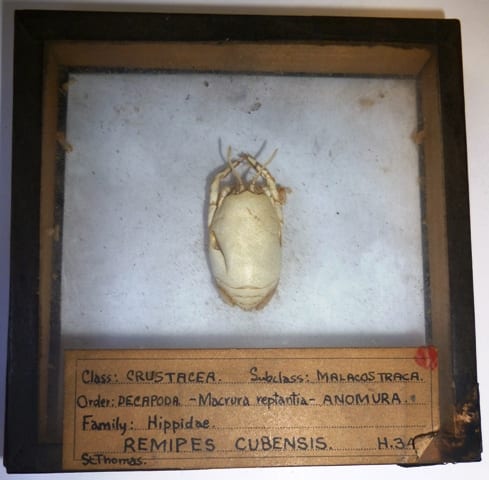
Image of a specimen of the crab Hippa testudinaria

Spare a thought for specimens like this. Dusty, pest attacked, wrongly named crabs. SAD SMILEY FACE.

So how do we make the most of the 99% now especially if they aren’t saving the world? Well, in short, it shouldn’t matter how important our specimens are to science. Every specimen has a story to tell.

Museums of Inspiration? Continue reading

Caring For Entomology Collections

Seminar series to explore basic entomology collections management, curation and conservation techniques.

NHM (Natural History Museum), South Kensington, London 9.30am – 4.30pm Friday 1st November 2013

Cost £34 for members or £49 for non-members (remember that becoming a member is just £15 a year!).

This course will cover all basic aspects of collections management for entomological collections, including storage and handling of specimens, loans and legislation, and specimen preparation.

There will be specialist sessions including Integrated Pest Management, storage facilities, spirit curation, specimen pinning, molecular collections, basic slide preparation, documentation and databasing. Tours of the collection areas will also occur.

The course will be both theory and practical supported by a booklet covering both aspects.

Schedule (TBC):

9:30 -10:00 Introduction and Coffee

10:00 -10:30 Entomological Storage

10:30 -11:00 IPM

11:00 – 11:30 Morning Coffee

11:30 – 12:00 Digitisation

12:00 – 12:30 Data-basing

12:30 – 2:00 Lunch

2:00 – 2:30 Specimen pinning

2:30 – 3:00 Slide preparation

3:00 – 3:30 Afternoon Coffee

3:30 – 4:00 molecular collections

4:00 – 4:30 Spirit collections

Download booking form

Contacts:

For further information: Erica McAlister – e.mcalister@nhm.ac.uk

For booking & payment: Holly Morgenroth – holly.morgenroth@exeter.gov.uk

To become a member: Maggie Reilly – maggie.reilly@glasgow.ac.uk

Natural Science Collections and the Law

The Manchester Museum – 8th February

Museum collections have a variety of legal issues surrounding them and natural science collections are no exception. A variety of laws are in place to protect wildlife and these can have an impact on how collections may be used. To find out how the law may affect you join us for our Natural Science Collections and the Law seminar taking place on 8th February 2013 at the Manchester Museum.

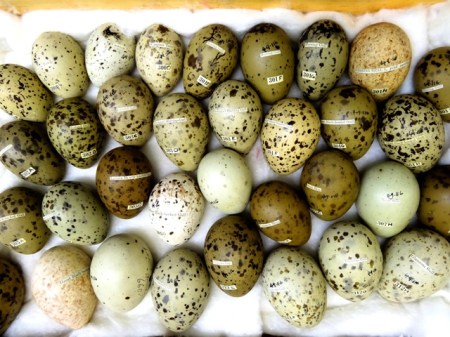
eggs

Timetable for the day:

10.00 Arrival/Coffee/Registration
10.30-11.30 ‘CITES and Museums: Perfect partners?‘  Nichola Burnett, UK CITES Scientific Authority (fauna), Joint Nature Conservation Committee
11.30-12.00 Q & A with Nichola
12.00 Lunch
12.45-1.30 ‘Legislation relating to possession of egg collections in museums‘ Douglas Russell, NHM
1.30-1.45 Q&A with Douglas
1.45 Coffee
2.00-3.00 ‘Licensing requirements for UK protected Wildlife‘ Nigel Shelton, Natural England
3.00-3.30 Q & A with Nigel
4.00 Close

The seminar costs £35 for members or £50 for non-members (so why not use the extra £15 to join?), which includes lunch and refreshments. The deadline for booking is 7th January so fill in the form today.

Hope to see you there!

NatSCA conference and AGM 2013

Natural Science Collections: Policy and Practice

28th February & 1st March 2013 – The Yorkshire Museum, York

The Yorkshire Museum, York, England. Designed by architect William Wilkins in a Greek Revival style and was officially opened in February 1830. By Kaly99

At this year’s NatSCA conference we will be looking at how collection policies, reviews and legislation influence current practice in curation and care of collections. We will also be addressing some of the ongoing wider issues affecting the sector, including a proposed strategy for safeguarding collections for the future.

As usual, the meeting will provide a fantastic opportunity for communicating with colleagues and finding out what’s going on in the sector – all at a very reasonable price (especially if you fork out the £15 for membership)!

Two day cost: NatSCA members £85 (non-member £100)

Early bird booking by 11th January  £75 (non-member £90)

One day cost: NatSCA members:  £50 (non-member £60)

Early bird booking by 11th January:  £40 (non-member £50)

Deadline for bookings is 8th February 2013

Booking form for the NatSCA 2013 conference [doc file]

List of nearby accommodation for NatSCA 2013 conference [pdf]

Programme of talks for NatSCA 2013 conference [pdf]