State of the Union! Natural History Museums 2014

Author Mark Carnall, Curator, Grant Museum of Zoology, UCL
#NatureData Coordinating Committee
All views are the opinion of the author. August 2014.

‘After visiting the recent natural history museum community conference in July: SPNCH 2014, Cardiff, Mark Carnall reflects on what the sector internationally is thinking and doing – in particular what’s happening digitally and what people’s thoughts are on a UK natural science database’.
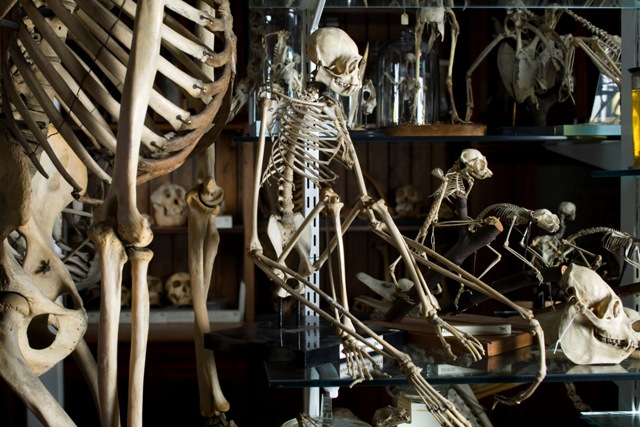
Primate skeletons in the Grant Museum of Zoology, UCL ©UCL, Grant Museum of Zoology and Matt Clayton

Primate skeletons in the Grant Museum of Zoology, UCL ©UCL, Grant Museum of Zoology and Matt Clayton

At the end of June was a rather special event; the coming together of three subject specialist networks (SSN), the Society for the Preservation of Natural History Collections (SPNHC), the Natural Sciences Collections Association (NatSCA) and the Geological Curators’ Group (GCG) hosted by Amgueddfa Cymru National Museum Wales. Between them, these three networks represent a sizeable chunk of curators, conservators, directors and educators who work in and with natural history museums and collections. Each SSN has yearly meetings but a syzygy rarely happens.

The full conference was a six day affair packed with field trips, stores tours, talks, workshops, demos, poster sessions and discussions attended by over 250 delegates from almost as many natural history institutions. This provided a great opportunity to catch up and meet friends, facilitated the catharsis in sharing frustrations unique to natural history museums and offered a rare chance to establish a sense of ‘the state of the union’ in natural history museums across Europe, North America and elsewhere.


The broad theme of the conference was historic collections and future resources and many of the presentations were about off-label uses of collections, advocacy and digitisation. Inspiringly, the conference was kicked off with a series of keynotes which carried the resounding message of “get over it” when it comes to the communities’ existential crisis in demonstrating value and worth with a rousing series of presentations from Professor Paul Smith and Dr Chris Norris setting the tone for the rest of the conference.

Off-label use of collections, a term borrowed from accidental discoveries of secondary beneficial side effects in the pharmaceutical industry, came up time and time again. Cynically, as the curator of a small museum it’s nice to finally be joined by colleagues from some bigger museums who, without having to face the “use it or lose it” challenge to keep a museum in existence, have cottoned on to the notion that perhaps collections have uses beyond the 10% of material that has a function in alpha taxonomy and (often low impact) taxonomic research. Colleagues presented example after example of natural history collections being used for research into environmental change. One question that wasn’t satisfactorily answered was about how this use of collections can be procedurally built into research. Many of the examples were incidental discoveries (hence off-label) rather than arising from researchers deliberately thinking of uses of collections in the first instance. However, advocates for the importance of natural history collections now have a new suite of examples to convince decision and policy makers about unique insights into the natural world which can only be gleaned from scrutinising collections.

When it came to advocacy, unfortunately the community fell into the trap of talking about scientific research use of collections almost to the exclusion of all other audiences. I’ve written before about how natural history museums need to celebrate and contribute more to being a part of the cultural sector, especially for museums which don’t hold scientifically important collections and specimens. Myopia aside, the community seems to have come on to some degree, telling each other how important natural history collections are, which came out in a panel discussion on advocacy. There are still a lot of stereotypes about what museums are and what they do that need to be pulled down, but there’s a danger in evangelising which can be quite divisive. Another general theme that came out across the series of talk days is that we need to get more sophisticated and generally get better at demonstrating what we do well. The finding of the NatSCA and Arts Council England study into the popularity of different kinds of museum galleries was presented, demonstrating that natural history collections are the most popular, but put some audiences off if they don’t appear to be well maintained or invested in. Natural History Near You was also presented, finally making headway into ascertaining exactly where all the natural history collections are, a fundamental piece of information that has eluded several generations of natural history collections workers. Interestingly, one of the contrasts between the UK delegates and those from the rest of Europe and North America was that with a handful of exceptions, the majority of the social media generated around the conference came from UK colleagues. It seems that social media is yet to take off as a promotional, professional networking and advocacy tool for museum professionals elsewhere.

Lastly, there was a cornucopia of presentations on digitising collections. It’s uncontroversial to say that museums in general are far from being digital – let alone post digital – and that natural history museums and collections as a group are lagging behind the rest of the museum sector. It seems that colleagues in North America and from the rest of Europe are making huge advances in all aspects of digitisation from technical advances, standards in digitisation, data capturing pipelines and networks, and databases linking specimen information. Embarrassingly, UK museums are somewhat left in the dust, contributing little to the 20 or so European and International data repositories and the data that does exist is incomplete, hard to export, manipulate or in many cases even locate – let alone scrutinise. This is in part what the #naturedata project hopes to solve, with “one portal to rule them all” in the UK at least. The need for this is even more pressing thanks to worryingly vague requirements for databases required for compliance with the Nagoya Protocol on Access and Benefit-sharing. Three conference sessions on the Nagoya Protocol valiantly tried to deconstruct the bureaucratic layers represented by this legislation but it looks like the practicalities of compliance will be causing headaches for generations of museum professionals yet.

Overall, the conference was an excellent set of days. Networking and socialising with enthusiastic, passionate and brilliant colleagues really is the best way to recharge the batteries and reinvigorate the soul. Throughout the presentations the niggling thought I kept returning to was that all the innovative, experimental and inspiring ways we use to get the most of our collections are still hamstrung by our fundamental issue of getting a handle on what we have in our collections. The curse and gift of natural history collections is their vast size, but it’s no longer good enough to use the size of our collections as an excuse for not getting to grips with every single specimen we have and making them available to the people for whom we keep them in trust.


Night at the Museum, Uni Week

“Every night all the specimens in the museum come alive and instantly drown in industrial methylated spirits or silently scream without flesh”

Mark Carnall, Grant Museum.

Most people’s experiences of museums after dark differ to Ben Stiller’s. Mine last night was no exception. I visited the Natural History Museum, London, to see what science’s next generation are doing with our natural science collections.

It didn’t take long to wade past the cultural historians and robot musicians to find a relevant stand:

The University of Leicester

These guys have been studying the process of organic decay. Their stand, titled “Rotten Fish and Fossils – Resolving the Riddle of our Earliest Vertebrate Ancestors”, showcased photographs of a series of exquisitely preserved fossils – many from the Royal Ontario Museum, Toronto. I was shown a 300 million year old relative of the lamprey who stared lifelessly back at me from deep time. His modern counterpart lay equally lifeless in a nearby vacuum bag.

As part of their research, the team have been deliberately decaying various modern vertebrates in an attempt to better understand the process. One thing their team found was that the order in which structures decayed seemed to be a reverse mirror of the order in which they evolved. The implication: if you don’t identify how far along something is in the rotting process, its evolutionary relationships could very easily be misdiagnosed. You can read more about this on their site. This includes citations of published material (£).

The University of Cardiff

Project Splatter is a relatively new endeavour to track the location, variation, and frequency of road kills around the UK. Roadkills are a daily occurrence and form an important part of the corvid and fox diet. The University of Cardiff are asking for your help using social media to crowd source the data.

Most of the time all they want is the species, location, and date but, if it’s a bird of prey or an otter, they need the carcass too. As we know all too well from the DDT egg shell research, if there’s toxins in the environment it’s the top predators who get the most concentrated dose. Here’s the best part: after they have finished analysing the specimens, their remains are sent to the National Museum, Scotland to contribute to their natural science collection. With around 200 otter fatalities on the road per year, the NMS is fast becoming the best place to go for otter variation studies.

You can help out via Twitter, Facebook. They even have an Android app.

Middlesex University

Andrew Greenhargh has been playing with some fun toys involving biomechanics. While his current research is predominantly aimed at humans, the technology has been used to analyse obstacle avoidance techniques in running guineafowl during his stint at the Royal Veterinary College.

Andrew was squeamish until he met John Hutchinson: one elephant dissection later and he was a new man. One thing I learned talking to Andrew is that, when you have to euthanise a sick elephant, it is important to do it in front of the remaining elephants and give them time to grieve. They are very emotional and social animals. If you don’t do this, the other elephants can often become violent. He also talked about the keepers sitting vigil with the deceased elephant: despite recent tabloid stories to the contrary, most zoos care deeply for the animals in their care.

That’s all for my round-up of natural science university research. I did take a look at the other stands ad am happy to talk about what those institutions are up to. If you missed it and want to know more, do ask.

Collecting biological specimens essential to science and conservation

A letter signed by more than 100 biologists and biodiversity researchers,  published online in Science today (Science 23 May 2014: Vol. 344 no. 6186 pp. 814-815 DOI:10.1126/science.344.6186.814), states why collecting plant and animal specimens is essential for scientific studies and conservation and does not, as some critics of the practice have suggested, play a significant role in species extinctions.

Beetle collection. Image by Paolo Viscardi

The letter is a response to an April 18 Perspectives article in Science arguing that alternative methods of documentation—such as high-resolution photography, audio recordings and nonlethal tissue sampling for DNA analysis—make the field collection of animal and plant specimens unnecessary. As most natural sciences collections professionals are fully aware, this is simply not the case.

“None of the suggested alternatives to collecting specimens can be used to reliably identify or describe animals and plants,” said Cody Thompson, mammal collections manager and assistant research scientist at the U-M Museum of Zoology.

“Moreover, identification often is not the most important reason to collect specimens. Studies that look at the evolution of animal and plant forms through time are impossible without whole specimens. Preserved specimens also provide verifiable data points for monitoring long-term changes in species health and distribution.”

In addition, specimens from museum collections and their associated data are essential for making informed decisions about species management and conservation now and in the future, the authors state.

“Photographs and audio recordings can’t tell you anything about such things as a species’ diet, how and where it breeds, how quickly it grows, or its lifespan—information that’s critical to assessing extinction risk,” said Luiz Rocha of the California Academy of Sciences, who organized the response to the Science article.

And contrary to statements made in the April 18 Science article titled “Avoiding (Re)extinction,” collecting biological specimens does not play a significant role in species extinctions, according to the rebuttal authors.

In the April article, Arizona State University’s Ben Minteer and three co-authors cite several examples of species extinctions and suggest that the events were linked to overzealous museum collectors.

Not so, according to authors of the rebuttal letter, who reviewed the evidence and found that none of the cited extinctions—including the disappearance of flightless great auks in Iceland and Mexican elf owls on Socorro Island, Mexico—can be attributed to scientific collecting.

Millions of great auks were harvested for food, oil and feathers over the millennia, and only about 102 exist in scientific collections. Mexican elf owls were common when specimens were collected between 1896 and 1932, and the most likely reasons for extinction around 1970 were habitat degradation and predation by invasive species.

At the same time, Minteer and his colleagues failed to point out any of the valuable services that museum biological collections have provided over the decades, according to the rebuttal authors.

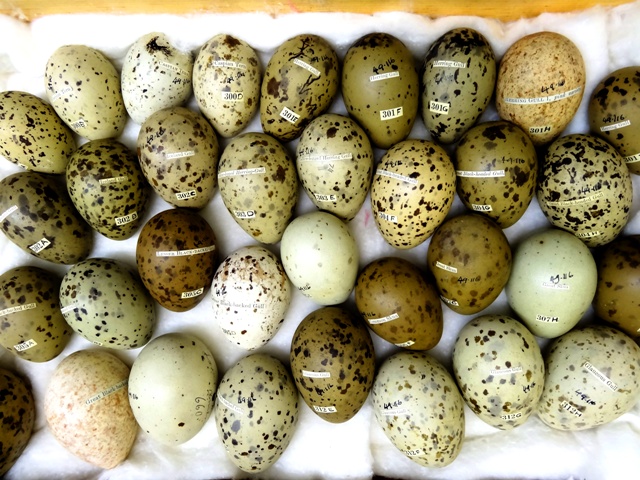
Both historical and new collections played a key role in understanding the spread of the chytrid fungus infection, one of the greatest current global threats to amphibians. The decision to ban DDT and other environmental pollutants was based on the discovery of thinning bird eggshells collected over an extended period. And the declining body size of animals, one of the negative effects of climate change, was discovered using body-size data from museum specimens.

Egg collections like this helped identify the harm done by DDT. Image by Paolo Viscardi

In other cases, genetic data from decades-old scientific specimens has even been used to “de-extinct” species. One of these, the Vegas Valley leopard frog, was thought to have gone extinct in the wake of Las Vegas development. However, a study published in 2011 compared the genetics of specimens from the extinct population to individuals from surviving populations of similar-looking frogs elsewhere in the Southwest and found them to be the same species.

These types of discoveries are “the hallmark of biological collections: They are often used in ways that the original collector never imagined.” And with the continuing emergence of new technologies, this potential only grows.

That potential, combined with the increasing number of threats species face and the need to understand them, suggests that the need to collect specimens—and to share the information they hold—has never been greater.

In their April article, Minteer and his colleagues erroneously portray scientific collecting in a negative light that distracts from the primary causes of modern extinctions: habitat degradation and loss, unsustainable harvesting and invasive species.

“Halting collection of animal and plant specimens by scientists would be detrimental not only to our understanding of Earth’s diverse biota and its biological processes, but also for conservation and management efforts,” said Diarmaid O’Foighil, director of the U-M Museum of Zoology and a co-author of the rebuttal letter.

“That detriment in understanding would only increase with time because having museum specimens available for future generations of scientists will allow their study using research methodologies that have yet to be invented.”

A pre-publication pdf version of the letter can be read here.


Natural history under the hammer

Reblogged from UCL Museums & Collections Blog

Natural history under the hammer

By Mark Carnall, on 4 December 2013

Recently there have been a spate of high profile auctions of natural history specimens raising many issues about ownership, the value we should or shouldn’t put on natural history and the relationship between professional scientists, museums, amateurs and private collectors. My colleague Jack Ashby wrote about the recent dodo bones that were auctioned. Colleagues Dave Hone and Mark Graham give a balanced view of the recent sale of a Diplodocusskeleton over at the Guardian. The ‘duelling dinosaurs’ fossil was estimated to reach $9 million at auction in New York and last year the controversial proposed sale of an allegedly illicitly smuggled Tarbosaurus skeleton caused much debate.

I thought I’d add my thoughts on the subject here, in particular about the relationship between collectors, museums and ethics.

Lost to Science

One of the most common criticisms that comes from the scientific community is that these high profile and expensive auctions, way above the budgets that museums can afford, result in a loss to science when specimens pass into private collections. I don’t want to downplay that this is a real problem, I know of at least two examples of important material that would likely cause a re-evaluation of entire groups of organisms but which are resolutely in the hands of private collectors who won’t allow them to be accessed. However, other museums, particularly art collections, embrace and work with private collectors. The museums get to display important or interesting objects and the collectors receive credit and validation for the collections they have built up. Furthermore, the buying, selling and trading of artworks means that there’s an excellent paper trail in the form of auction and exhibition catalogues which means that the movement of works can be traced much more readily than natural history specimens which don’t have this tradition of a published, publicly accessible paper trail.

Private to Public

When it comes to natural history I think we’re too quick to demonise private collectors with the “loss to science” rhetoric. Many of today’s largest museums were founded as private collections that were donated to the nation including the Natural History Museum London, the Natural History Museum Tring and the British Museum. Of course the Tate galleries still bear the name of the man whose funds and collections seeded what is now considered one of the most important art collections in the world. Recently two George Stubbs paintings, the first Western depictions of Australian animals was ‘saved for the nation‘  by the National Maritime Museum (NMM). The works were finally secured by a significant donation from a shipping magnate and patron of the NMM. It would be interesting to consider if the paintings would have been saved in the same way if it were the Natural History Museum trying to secure the funds instead.  Natural history museums don’t receive anywhere near the same level or have such a long history of patronage supporting them as other kinds of museums. Often it’s assumed that buyers of multimillion pound specimens erect them in their mansions and display them as ‘trophy’ objects. That’s not to say that this doesn’t occur but I think it’s fair to assume that these buyers may have a keen interest and love of natural history. Perhaps talking to private collectors instead of instantly labelling them as a problem would improve the patronage and support of natural history museums and increase the awareness of ethical collecting and trading.

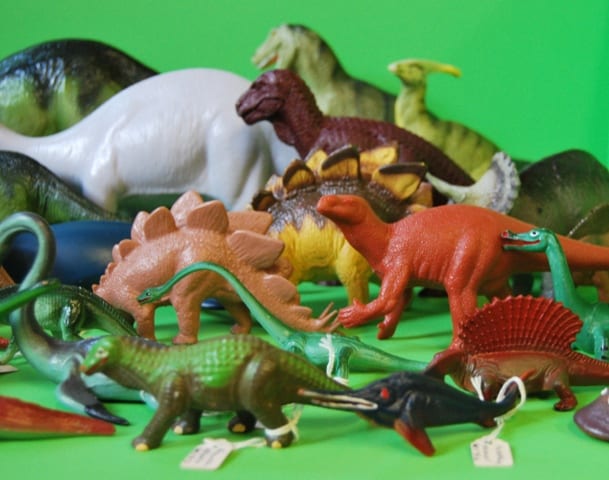
Grant Museum plastic dinosaur specimens

If relationships were improved there’s also the danger that scientific research on specimens could be used to increase the price tag of specimens as commercial assets. Say for example, if research on the recently sold Diplodocus skeleton revealed that it was the largest, rarest or the only example of a new species this increases the rarity and desirability of the object and pushes the price even further away from the reaches of public institutions. Conversely, research may devalue a specimen, yet another reason why private collectors may be wary of caliper bearing scientists examining their collections. It’s already ubiquitous across museums to never give a valuation on objects brought in for opinions or identifications to avoid certifying or authenticating material for sale. I’d recommend looking across the museum sector to seek guidance on how other museums deal with the issues of research affecting commodity prices.

Amateur vs. Professional

Lastly, working with private and amateur collectors can very realistically improve our knowledge about the natural world. Anecdotally, I’d say that there’s a deep mistrust of museums by amateur collectors (either those buying their collections or those collecting fossils and unfortunately extant animals from the wild). There’s the perception that once an object goes into a museum collection it’s essentially lost to the public, only accessible to card carrying scientists. With museums bursting at the seams with objects, only a tiny proportion of collections on display and visits to collections requiring managing it’s easy to see where this perception comes from. Again, looking to other museums provides guidance. The excellent, excellent Portable Antiquities Scheme is a solution to this exact problem in archaeology. There are thousands of amateur archaeologists, metal dectectorists and collectors and the portable antiquities scheme is an easy way to encourage the wider archaeological community to register finds. They are given full credit for the discoveries, there’s a prestige associated with contributing to the scheme and their finds and data are almost instantly available to the wider sector. Quite why a similar scheme for fossil finds doesn’t exist is increasingly perplexing especially as the legislation and policing of the movement of fossil material, as the aforementioned Tarbosaurus auction highlighted,  is nowhere near as robust as it is with artworks and archaeological material.

With museums brokering discussions with private collectors and auction houses we could better support patronage for museums, save important specimens for the public and improve our understanding of  palaeontology and biology.

Mark Carnall is the Curator of the Grant Museum of Zoology

Celebrating the mundane

This article is reposted from the UCL Museums blog.

By Mark Carnall, Curator of the Grant Museum of Zoology, UCL

Earlier this month I was lucky(?) enough to have a spot on the excellent Museum Mile Museums Showoff special as part of the Bloomsbury Festival. For those of you who don’t know, Museums Showoff is a series of informal open-mic events where museum professionals have nine minutes to show off amazing discoveries, their research or just to vent steam to an audience of museum workers and museum goers. My nine minutes were about the 99% of objects that form museum collections but you won’t see on display. They fill drawers, cupboards, rooms and whole warehouses. But why do we have all this stuff? Who is it for? In my skit on Tuesday I only had nine minutes but I thought I’d take the time to expand on the 99% and the problem of too much stuff (particularly in natural history museums) and what we can do with it.

Tip of the Iceberg

Museums often display only the tip of the iceberg when it comes to collections. Here at the Grant Museum we have about 7% of the collection on display and it tends to be the Hollywood Animals that make the cut. At larger museums it can be less than 0.1% of the collection that makes up the public facing galleries. In my relatively short career as a museum professional I’ve been very fortunate to see behind the scenes in more museums than most and boy, there is a lot of stuff. Even though I love natural history and am very passionate about museums and the future of the museum sector sometimes I do wonder why do we have all this stuff?

In natural history, the obvious and often made, argument is that our collections can tell us about global challenges that affect us all including climate change, organisms that cause or spread human diseases, extinction, agriculture and aquaculture and from geology the exploitation of fossil fuels. Natural history collections are the only record of life on Earth and if we are to make any models or predictions we need to dip into the data enshrined in objects.

However, there are large portions of natural history collections which could never contribute to those agendas. All the ‘Raggy Doll‘ specimens without data for example. All those specimens that require four text books of explanation. Most fossil specimens can be used to reconstruct the past with only limited impact on what’s happening in the present. There are rooms and rooms full of bad taxidermy and taxidermy dioramas that for reasons of taste, health and safety and changing scientific ideas never see the light of day. Even something as simple as an animal not having a common name (to put on a label) can keep a specimen off display There are large chunks of the animal world which simply aren’t being actively studied (for now). Lastly there are all the models, casts and those dreaded boxes.

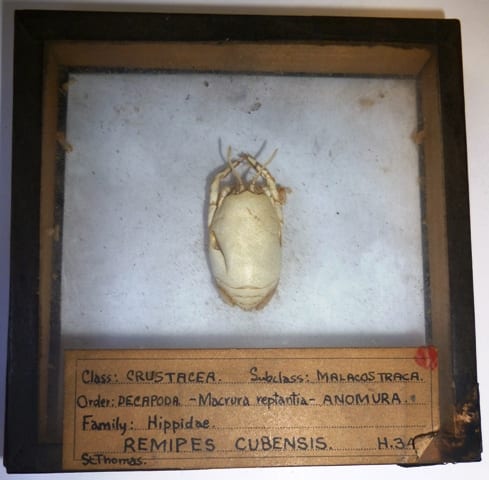
Image of a specimen of the crab Hippa testudinaria

Spare a thought for specimens like this. Dusty, pest attacked, wrongly named crabs. SAD SMILEY FACE.

So how do we make the most of the 99% now especially if they aren’t saving the world? Well, in short, it shouldn’t matter how important our specimens are to science. Every specimen has a story to tell.

Museums of Inspiration? Continue reading