Rhino DNA database

Rhinoceros horn thefts have been a problem for a while, with several UK museums being amongst those targeted by thieves. If you haven’t hidden away your rhino horn yet you should do it now!

Despite the rather dire situation, it is heartening that in several cases the people responsible for thefts have later been arrested and convicted. It is also interesting to note that rhino horn is being intercepted and seized at airports and in Police raids.

Of course, a seized horn isn’t easy to return to its owner unless it has a unique identification – after all, rhino horns can look rather similar to each other. This is especially problematic when the material is seized in the destination country rather than the country from which it was taken.

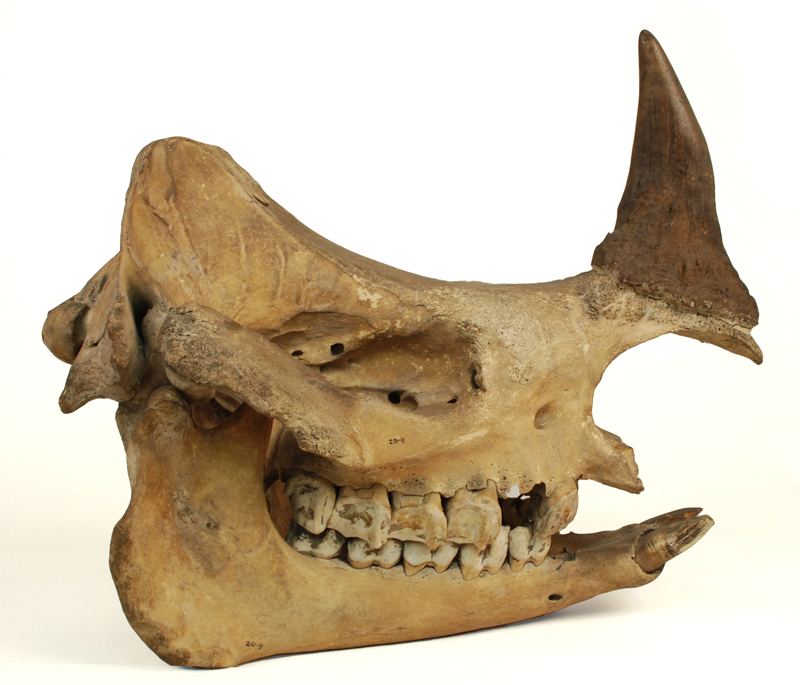
To tackle this problem, the Wildlife DNA Forensics – Diagnostics & Molecular Biology Section of Science and Advice for Scottish Agriculture (SASA) have just started on a project to establish a DNA database for rhino horn in museums and zoos in Europe. This service is currently being offered for free to museums in the UK.
Rhino

The database will provide a mechanism for the identification of stolen rhino horn, which will make return of specimens possible and (perhaps more importantly) make it far easier to demonstrate whether seized material has been stolen as well as illegally traded/imported/exported. This would mean longer prison sentences for guilty parties – which may be a better deterrent than the paltry sentences sometimes handed out – and it would also help identify the chain of supply for rhino horn, which could play an important role in restricting the trade.

The database could also potentially contribute to other research on rhinos – perhaps about their past genetic diversity, which may contribute to a better understanding of their conservation requirements in the future.

In light of the obvious security concerns associated with rhino horn, NatSCA have been in touch with the representative for SASA who is heading up the project, Dr Lucy Webster.

Lucy has been very helpful in providing information about the project and addressing security concerns about the database. In her own words:

“We realise the sensitivity of the information you are providing. The information you submit with your samples will be held securely and transcribed into electronic format as part of the database. The database will be hosted on a government secure network, with access restricted to those directly involved in this project.

Some concerns have been raised regarding the security of this information in relation to Freedom of Information (FOI) requests. We have consulted with Scottish Government FOI unit and while we are obliged to consider all requests, the sensitive nature of the information means that we have good grounds for withholding detailed information (e.g. addresses of submitters).

Summary information, such as the total number of samples on the database or the total number of submitters, may have to be disclosed. We are very grateful for your involvement in this project. If you are interested in specific details about your samples (e.g. the species, or the sex of the animals) we will be able to provide these details once the DNA profiles are on the database.”

It’s worth keeping in mind that the project does not ask for the specific storage location of any rhino material and there are no visits to museum sites by external parties involved in the data collection – the specimens are sampled by staff at the museum using the guidance provided below.

Obviously there are still considerations about getting involved in the project, since sampling involves drilling a 5mm hole in specimens (alas the surface sampling technique using a rubber that we saw at this year’s conference only provides enough data for species level analysis, not individual identification), but that has to be balanced against the potential benefits offered by the database.

Whether you send in your samples is a decision for you and your organisation, but if you would like more information you can contact a NatSCA committee member or get in touch with Lucy.

Sampling method guidance

Submitting samples for Rhino DNA database

Subject Specialist Networking

NatSCA is the Subject Specialist Network (SSN) for natural science collections in the UK. This means that we provide a mechanism for communicating about advances in theory and practice in the sector, as well as supporting the development of staff – both specialists and those generalists with responsibilities for mixed collections.

In general SSNs are viewed a valuable resource and are seen as intrinsic to Arts Council England’s (ACE) plans for the museum sector – at least that’s what we were told by a representative of ACE at NatSCA’s recent 20th anniversary conference at the Yorkshire Museum.

The conference topic of ‘Policy and Practice’ focused on strategic issues and practical projects that have contributed towards policy and procedure formulation and testing. I won’t go into a blow-by-blow account of the meeting, which ranged from legislation affecting asbestos and radioactive materials in collections, to the practicalities of choosing and implementing a method for collection reviews and the benefits and pitfalls of disposal.

The meeting opened with a call for greater positive advocacy of natural science collections in a talk that can be summarised as “we need to stop bloody moaning and do something positive”. It was a well received sentiment, despite the fact that in some instances it can be hard to be positive.

The buzzing of the grapevine revealed dark deeds in a university (involving a skip and a departmental collection with notable specimens) and mounting clouds over the National Museum of Wales where cuts are looming, with the sciences bracing to take the brunt. Nevertheless, there was a remarkably positive feeling to the meeting as a whole and some healthy discussion arose that continued well into the early hours of the morning.

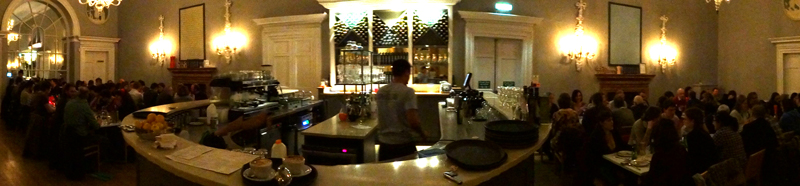
conference_meal

The NatSCA conference meal in York 2013. A lot of people and a lot of discussion!

One particular topic that saw a robust response was an NHM call for a national strategy for collections. After decades of the NHM focussing on their global placement the audience was
sceptical about the factors driving this change of focus. Rob Huxley from the NHM performed well on the spot and may have begun the slow work of winning over a surprisingly hostile crowd when he acknowledged that national museums often have lessons to learn from their smaller counterparts.

The full proceedings of the meeting will be published later this year in the new peer-reviewed Journal of Natural Science Collections. I would recommend taking a look if you want to find out how to non-destructively sample parchment for protein analysis, simplify your loan procedures or conduct a review of a quarter of a million objects in just one year.

This article is based on a piece originally written for the Museums Association website.

Useful information for the NatSCA conference in York

Don’t you hate it when everyone else seems to know where they’re going and what’s going on, but you somehow missed the memo and are left in the dark? It can be a particular problem at conferences held in unfamiliar cities, so we’ve decided to pull together a guide to the plans for the forthcoming conference in York to help make sure there is more time spent discussing interesting developments in natural science collections and less time discussing where everybody else has vanished to.

For the directionally challenged we’ve included this interactive map that highlights some of the more useful places to know about. Red pin for the Yorkshire Museum, where the main meeting is happening during the day on Thursday and Friday; blue pins for places we will be meeting on Wednesday evening;  green pins for places we’ll be going on Thursday evening and yellow pins for handy landmarks – you can click on the pins for more details.  Hopefully this potted plan for the conference will help make sure you’ll end up where you want to be.

Wednesday 27th February

In the early evening there will be a committee meeting in the (pretty small) Three-legged Mare on High Petergate, everyone else would be better off in the Guy Fawkes Inn, which is also on High Petergate. If you are standing at the cross-roads in front of the Minster you can see both these pubs but you have to look both ways down High Petergate. The committee will join everyone in the Guy Fawkes once the meeting is over.

Thursday 28th February

During the day we will be at the Yorkshire Museum for the sessions, after which  it’s back at the Guy Fawkes if you fancy pre-dinner drinks, as it’s two minutes from ‘Ask’ on Blake Street where we’re having dinner. After dinner we will head to the large Old White Swan on Goodramgate, after running the gauntlet of smaller pubs on Stonegate (which we probably won’t fit in en masse). Of these Clare recommends The Yorkshire Terrier, Ye Olde Starre Inne, Evil Eye Lounge (yes really) and The House of Trembling Madness.

Friday 1st March

Once again the day will be spent at the Yorkshire Museum, unless you are planning to take the tour to the off-site venue in the afternoon, but more details about that will be made available on the day.

For further information about what’s happening (and to keep up with the talks and discussions) you can check Twitter under the hashtag #NatSCA2013 and follow the NatSCA twitter account @Nat_SCA

We hope you find this useful and we look forward to seeing you in York!


N.B. If you want to print the map and are having trouble, here is a link to a printable version.

Books on the History of Taxidermy

History of Taxidermy

Here are two useful books on the history of taxidermy that went out of print soon after publication have been reprinted and are now available again (in softback only).

Edward Gerrard & Sons – a taxidermy memoir

by Pat Morris

This is an account of the once famous London firm whose work can be seen in many museums from Britain to Australia. They began by specialising in osteological preparations, but by the late 19th century had diversified into taxidermy and model making (particularly as teaching aids in schools).
A speciality of Gerrards was making ‘animal furniture’, an astonishing variety of bizarre objects. You would not believe how many things can be made from a dead elephant! A final chapter reviews the history and closure of Gerrard Hire Ltd, suppliers of mounted specimens for theatrical and photographic work. Stuffed vultures were particularly popular to take to people in hospital apparently.

The King’s Choice

by Pat Morris & Rob Chinnery

This book describes the beautiful taxidermy by George Quatremain (1846-1917). He was well-known to famous artists of his day, and active in Stratford on Avon and Malvern.
Some of his mounted animals were set up in natural surroundings and photographed for calendars. As befits the quality of Quatremain’s work, this book includes some full colour illustrations.

Natural Science Collections and the Law

The Manchester Museum – 8th February

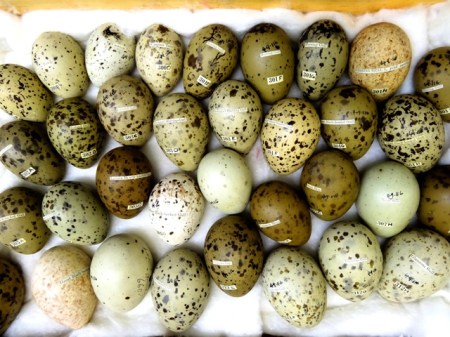
Museum collections have a variety of legal issues surrounding them and natural science collections are no exception. A variety of laws are in place to protect wildlife and these can have an impact on how collections may be used. To find out how the law may affect you join us for our Natural Science Collections and the Law seminar taking place on 8th February 2013 at the Manchester Museum.

eggs

Timetable for the day:

10.00 Arrival/Coffee/Registration
10.30-11.30 ‘CITES and Museums: Perfect partners?‘  Nichola Burnett, UK CITES Scientific Authority (fauna), Joint Nature Conservation Committee
11.30-12.00 Q & A with Nichola
12.00 Lunch
12.45-1.30 ‘Legislation relating to possession of egg collections in museums‘ Douglas Russell, NHM
1.30-1.45 Q&A with Douglas
1.45 Coffee
2.00-3.00 ‘Licensing requirements for UK protected Wildlife‘ Nigel Shelton, Natural England
3.00-3.30 Q & A with Nigel
4.00 Close

The seminar costs £35 for members or £50 for non-members (so why not use the extra £15 to join?), which includes lunch and refreshments. The deadline for booking is 7th January so fill in the form today.

Hope to see you there!