Digitisation

20140709-083416.jpg

Today we have Lukas Large, curatorial trainee with the Birmingham Museums Trust, on digitisation:

The theme of this year’s SPNHC2014 meeting was ‘Historic Collections: Future Resources’. Digitisation was featured as one of the main topics as this is an important way that collections are being made accessible to researchers and new audiences.

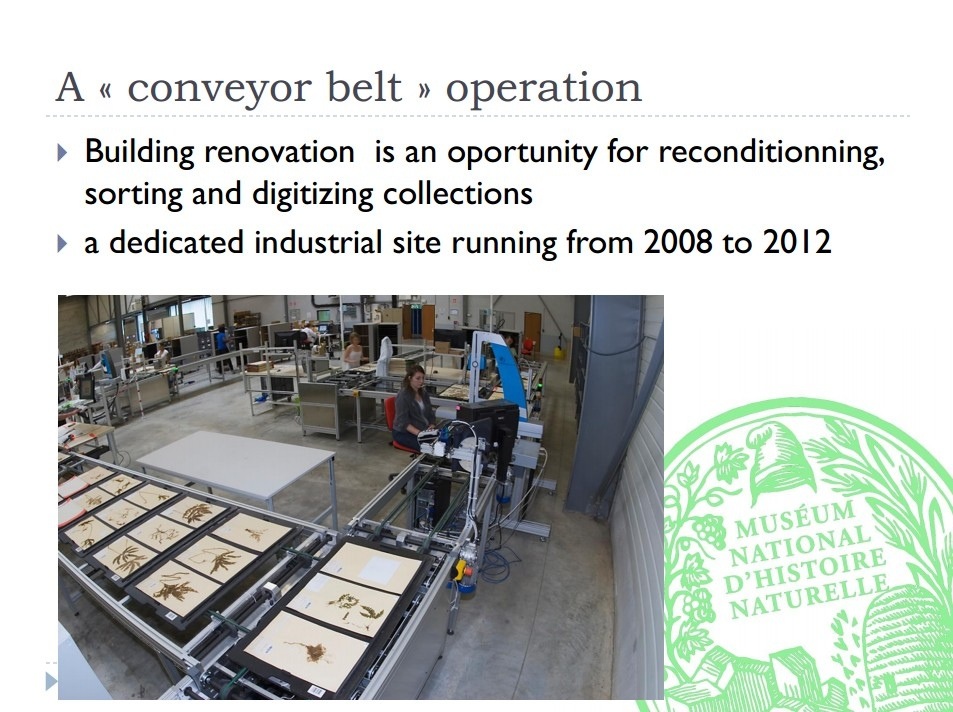
The talks described a wide variety of digitisation projects from the enormous Paris Herbarium which ran for 4 years and created images of 5.3 million specimens to Arkansas State Herbarium with 18,000. Many of the projects involved herbarium sheets as these are relatively easy to image but an amazing variety of objects have been digitised including fossils at GB3D Type Fossils, insects and even historic slide collections.

20140709-083443.jpg

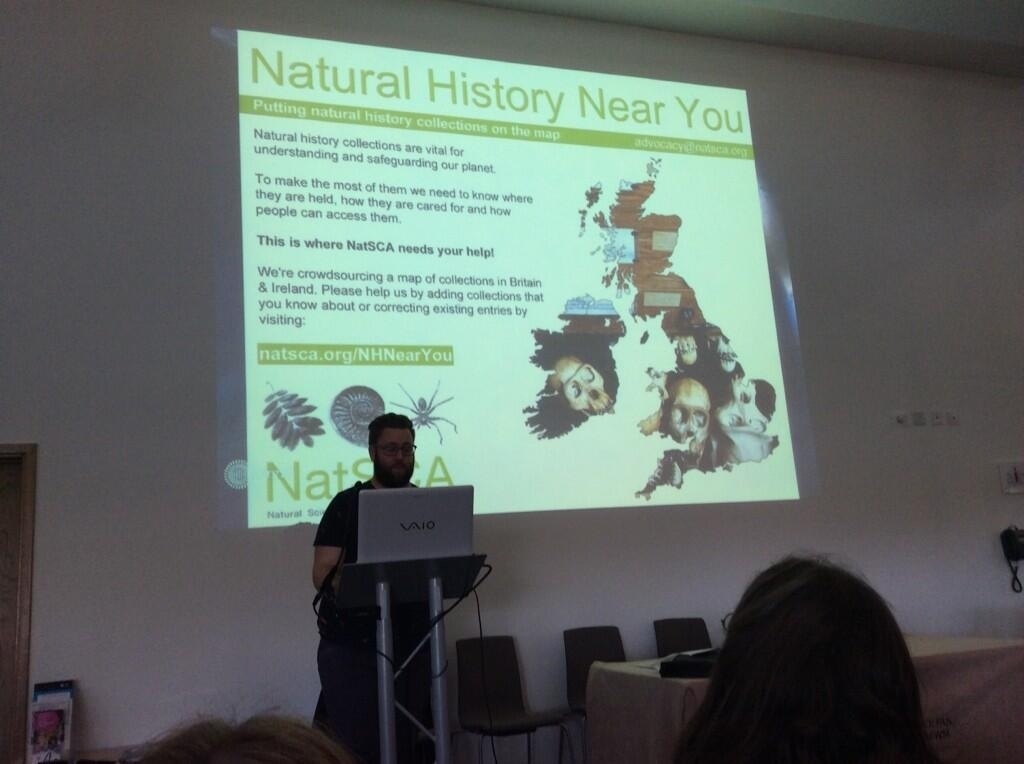
Extracting the information from specimen labels is an important but potentially expensive and time consuming process so many museums have started to use crowd sourcing to perform tasks such as transcribing specimen labels. Laurence Livermore discussed several successful examples such as Herbaria@home which has been running since 2007 and has a dedicated team of digital volunteers who have contribute 135,000 transcriptions.

These new uses of collections show just how important it is that these objects are properly cared for. Without the museum staff that have looked after these objects, we would not have them to digitise. Without ongoing care, researchers will not be able to study them in the future.

Slides from the talks are available on the iDigBio website as well as detailed descriptions of the protocols and tools used by different projects which are extremely useful for anyone planning their own digitisation project.

20140709-083500.jpg

Data-less Natural Science Specimens are Useless to Science. Aren’t they?

Here we have Clare Brown, of the Leeds Museum, telling us about some devilishly exciting research:

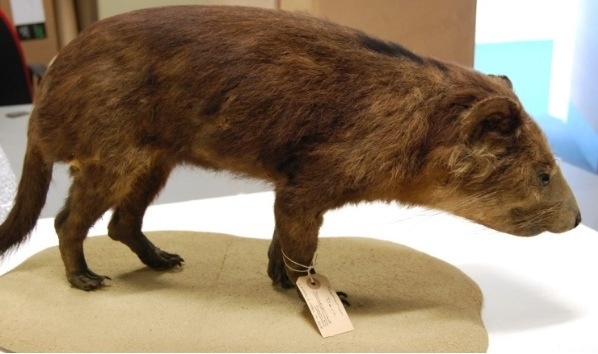
Tasmanian Devil specimens in UK museums, with no data whatsoever, have been used in cutting edge research on devil facial tumour disease as part of the effort to save these incredible animals.
Data – when and where a specimen was collected – is vital to the usefulness of natural science collections. It is crucial for so many aspects of research that these collections are commonly used for: climate change work; biodiversity research; distribution mapping etc.
Specimens without data are usually much more problematic. At Leeds we have thousands of objects that don’t have any record of where they came from or when they were collected. The information has either been lost or never noted down in the first place. Even our scrappiest, most moth-eaten bits of taxidermy are elevated above the rest of the collection if they have associated data.
I was therefore delighted when Jeremy Austin at the University of Adelaide asked whether we had any Tasmanian Devil Sarcophilus harrisii material collected in the last 200 years. Crucially, he didn’t need an exact date or location – just a two century timespan. We’d been collecting since 1821.
Leeds, a large, rich, Victorian industrial city, spent most of the 19th century collecting scientific material from around the world. We had a ‘purveyor of Australian wildlife’ and acquired, amongst other things, two Devil mounts and a skeleton. The specimens were duly sampled and sent to Australia.

20140707-083844.jpg

The study, also using specimens from Oxford, looked at genetic diversity in a group of molecules in cell membrane proteins called the ‘major histocompatibility complex’. Low diversity in this complex has been linked to the emergence and spread of devil facial tumour disease. The team needed samples of historical and ancient Devil DNA to see how diverse the populations were before European settlement and after. The article, published in Biology Letters, can be read here.

This is a great example of how natural science specimens, whatever their ‘data status’, can contribute to scientific research at the forefront of species conservation.

Advocacy for Collections – SPNHC2014 Day Three

20140705-110102.jpg

Today we have a write-up by Rachel Jennings of the Horniman Museum, London:

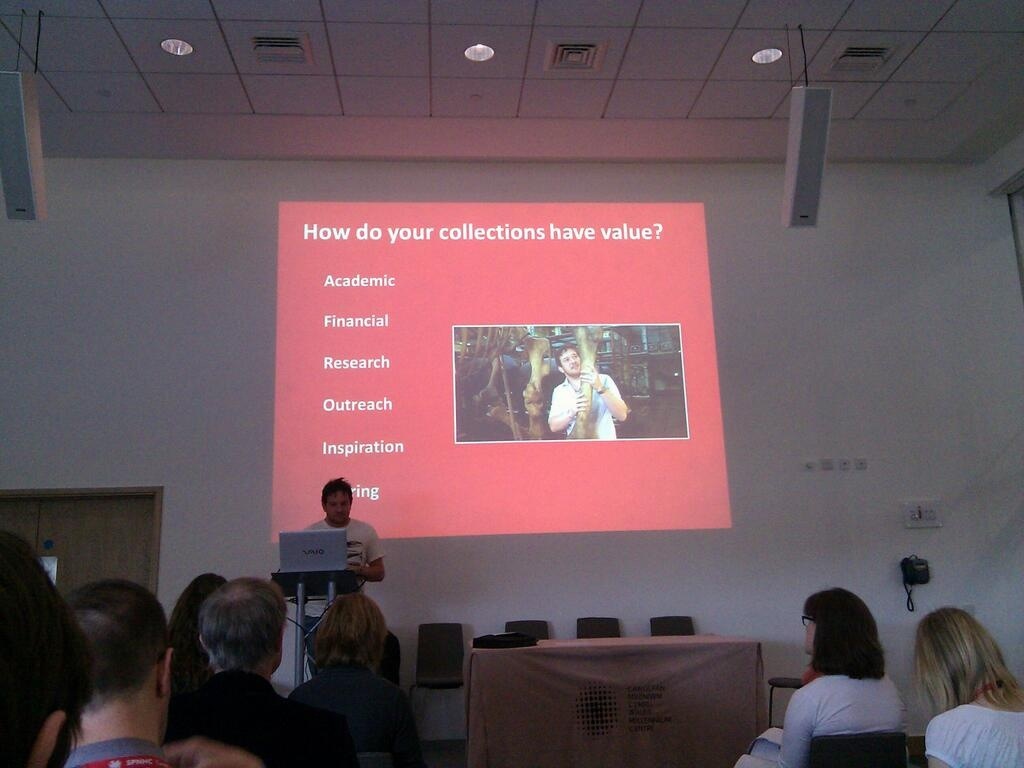
The need to advocate for natural history collections, so that those making decisions about the future of museums can understand their importance, has been a recurring theme over the last few years – and SPNHC 2014 was no exception. The Thursday morning session, chaired by NatSCA, focused on this very topic. Ben Garrod, in his keynote speech, stated that we need to inspire our visitors so that they become our advocates. Luanne Meehitiya of Birmingham Museums argued that advocacy must start with basic concepts, such as ‘What is natural history?’, because, while it is obvious to us, our visitors and colleagues may have a very different idea.

While the afternoon sessions on collections were not overtly advocacy-themed, I still found the thread running through, with many examples of the importance of natural history collections. Bethany Abrahamson of the University of New Mexico (UNM) showed, by looking at publication records, that natural history collections are supporting a much wider range of research now than ever before. J. Tomasz Giermakowski, also of UNM, demonstrated that historic collections data can be used to target hotspots for current conservation efforts. Tiffany Adrain of the University of Iowa showed that historical research can reveal the importance and improve the future research potential of forgotten specimens.

While advocacy is not a new topic, this year I left the conference feeling that there was a new optimism, as colleagues from all over the world came together to share their vision for the future of natural history collections.

20140705-110129.jpg
Photo by Judith C. Price

Highlights of Day Two – SPNHC2014

20140701-093917.jpg

The conference had a packed schedule. From the very beginning there were times when I had to choose between two talks I really wanted to see and would have to sit in on one physically while stalking twitter comments from the other. During Tuesday’s Conference committee meeting, someone raised the idea of live streaming the talks via Adobe Connect or similar for future events. The Emergent Professionals group had already done that in the previous session with some success. The main concern seemed to be that paying delegates would be put out by non-attending people getting more of the perks of those attending. I can’t speak for everybody but, as a paying delegate, I would have appreciated the ability to attend more than one talk at once.

Sometimes I picked the wrong talk. I won’t highlight which ones but I would like to give some feedback for those talking at these events in the future. All of these are based on actual events but nobody was alone in making these mistakes. Also I would like to go on record as saying that I am not a great public orator and am saying this purely from an audience perspective. Getting up there and doing it in the first place is awesome.

Advice for Future Speakers

  • If the speaker before you was really good, don’t let that intimidate you. Your material is different in content, therefore it has new and exciting value.
  • The sun is going to explode in a few billion years. If you embarrass yourself it’s not the end of the world.
  • You’re there to engage people but don’t falter if your presentation is right before the tea break and your audience seem more engaged by that.
  • A constant monotone for 20-30 minutes is a killer even if the subject matter is chocolate dinosaur sex (the three most exciting research areas for the average person according to a survey).
  • Don’t be thrown by sleeping audience members. There’s a lot of double-ended candle burning at these things and it’s really hot + airless in those rooms.
  • Make sure the audience can see your lips. We had audibly-impaired delegates who miss out if they can’t lip-read. Check for mouth-level obstacles, such as laptops and microphone stands.

Highlights

Gregory J. Watkins-Colwell’s talk on time lapse photography was very interesting. Time lapse is a great way to demonstrate a lot of information in a much-reduced time frame. He showed us students skeletonising a grey wolf over an eight hour period. He was able to point out in under two minutes all the mistakes the students had made in that time: leaving gloves off; talking to each other for at least three hours; and so on. He then discussed logistical problems while filming dermestid beetles – they really don’t like the light. The applications of time lapse extend well beyond the classroom and, as it occurred to me later in the week, could be used as a means of educating decision makers about collections care. Example: at one particular museum, who shall remain nameless unless they ask not to be, the geology stores have a heat and humidity problem. There is no air conditioning and the curators have told the relevant people, whose reply has been along the lines of: “they’re rocks, they’ll be fine”. Of course that’s not the case but how to convey that to them? Time lapse photography could be key – train your camera on one of the specimens and take a snapshot once daily. Hopefully a decision would be made sooner but, at 20 frames / second, you could replay 3.3 years worth of consequences per minute.

Nicola Crompton and Bethany Palumbo from the Oxford University Museum of Natural History have just finished the monumental task of cleaning their whales. This was made possible by PRISM grant funding. It’s little wonder they were looking a little worse for wear: these five cetaceans are at least 154 years old! A century and a half of UV light exposure and fluctuating temperature had taken their toll and the whales were leaking natural oils (careful what you stand under, folks). As they removed the corrosive dust, dirt, and secretions they documented the entire process here.

Anna Monfils from Central Michigan University presented the findings of her research into the use of natural history collections for undergraduate training and its effect on their overall education. I won’t say too much about this just yet as these results are as yet unpublished but let’s just say it’s looking really good.

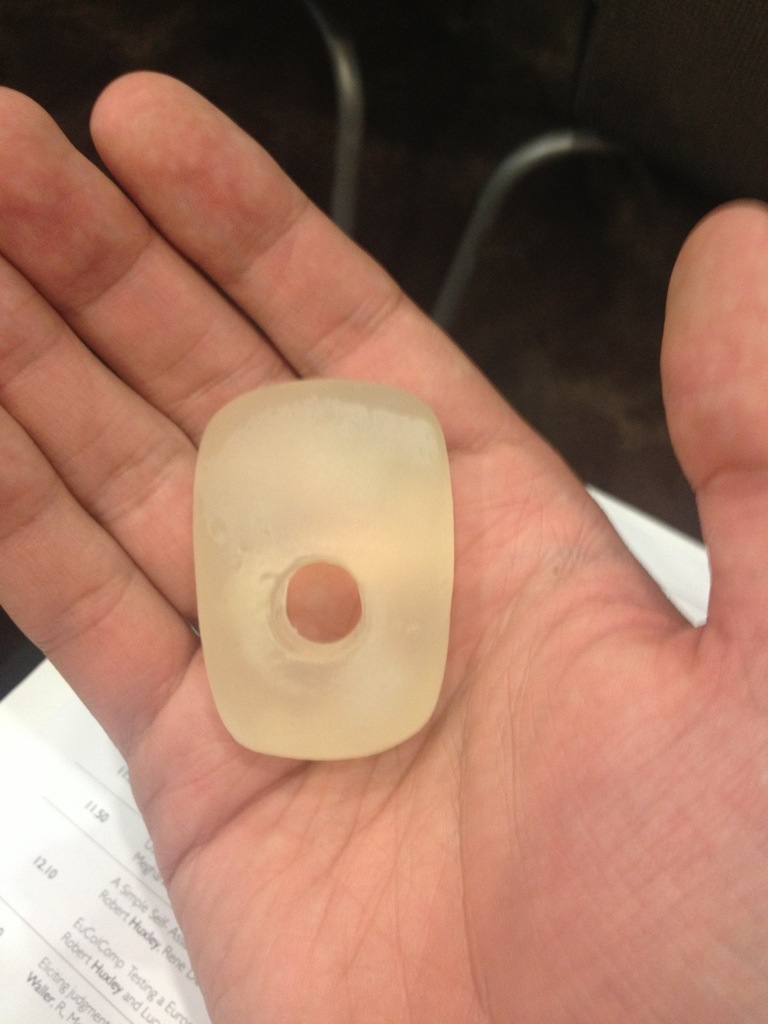
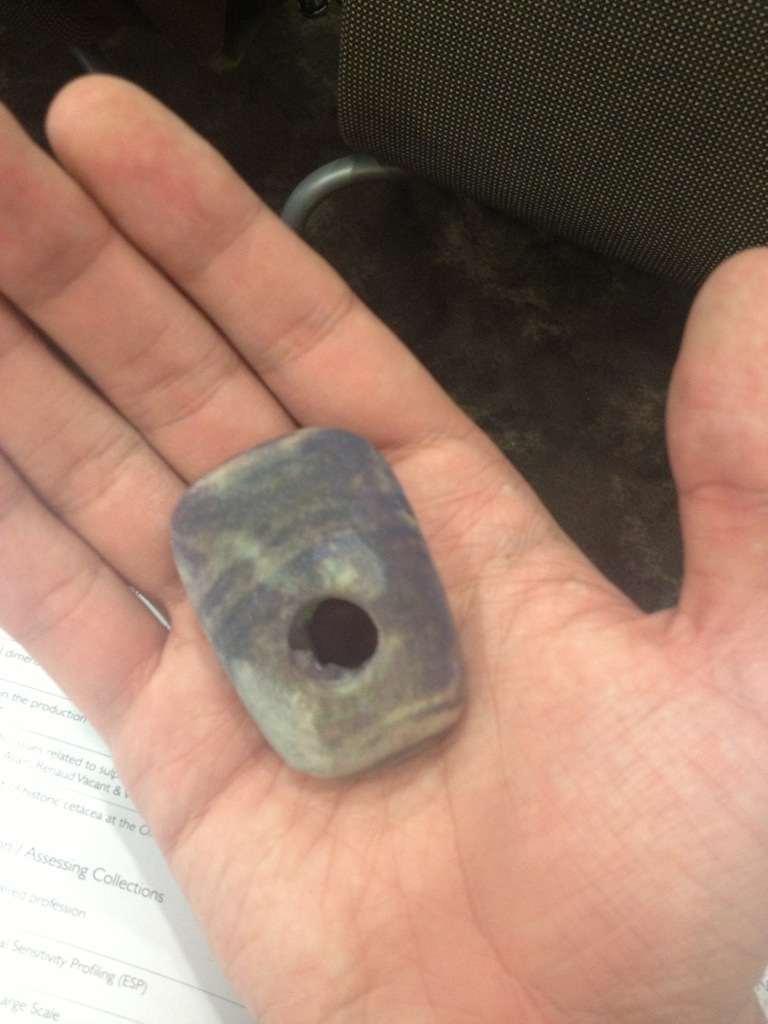
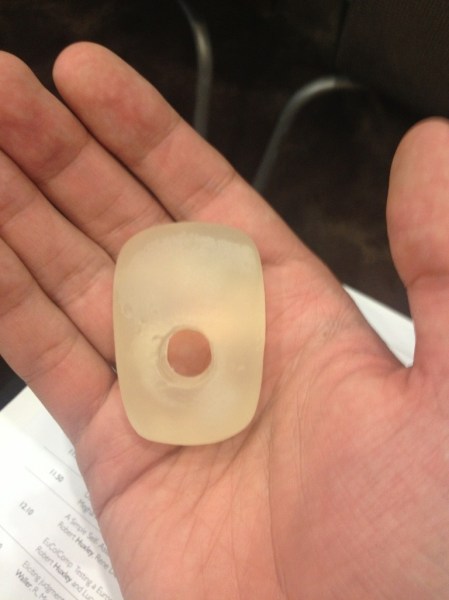
Annette Townsend shared with us her experiences of making teaching specimen replicas of some of the Neolithic tools from Salisbury. Pictured in this post is her mace head in its various incarnations. She started by 3D scanning the original but the printed copy (above) didn’t feel right, so she used this as the basis for making a mould and then recreated it using Jesmonite (below). Comparing it to the original it’s very impressive.

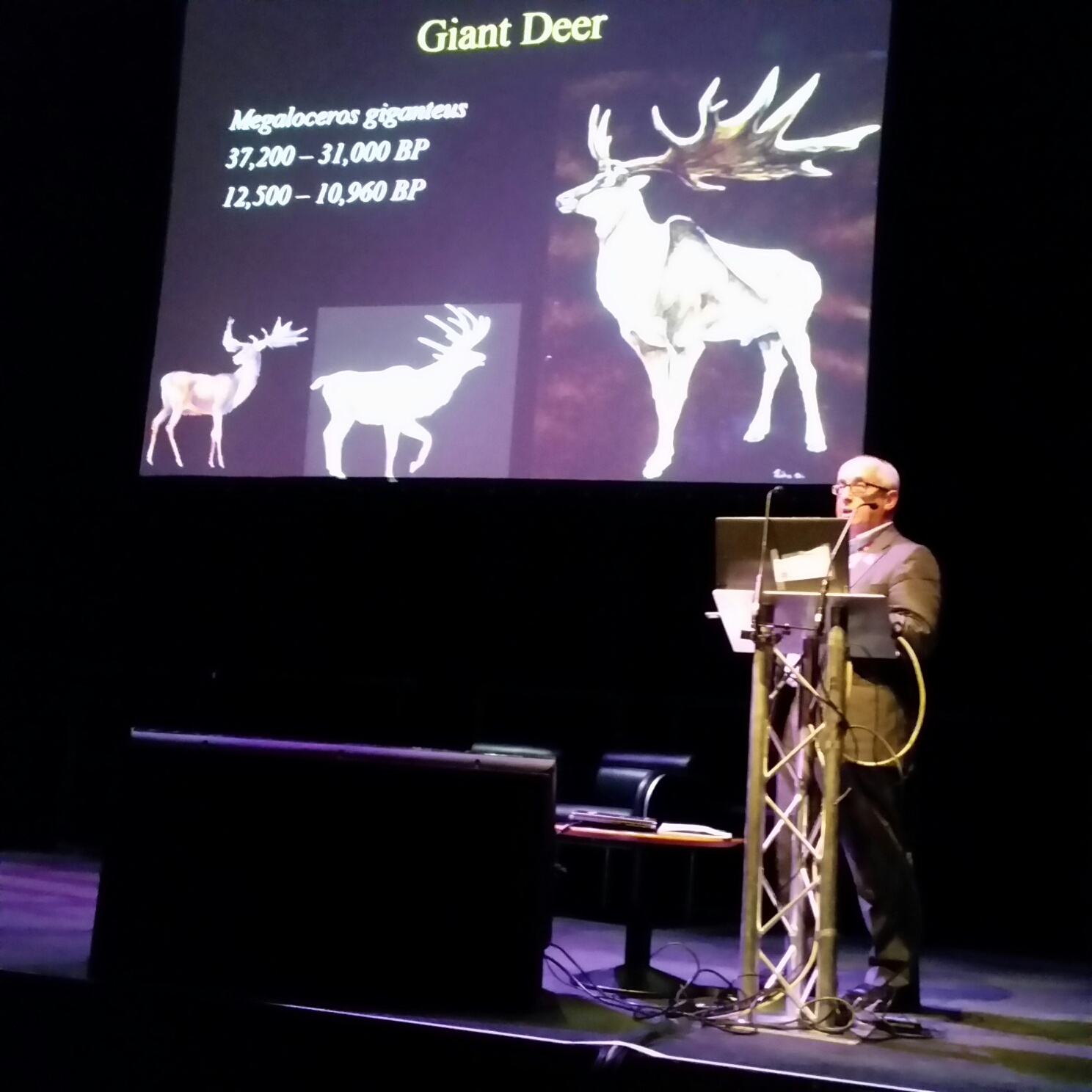
Nigel Monaghan gave us the low-down on the Irish fossil hunting frenzy that resulted in scanning numerous caves across the Republic for their biodiversity. He was very engaging and exactly what we needed at such a late stage in the day. If you ever get a chance to visit his Megaloceros specimens, they’re truly impressive.
image

Pub Quiz

“Work hard and play hard” seems to be the motto of the museum sector and they did not disappoint at the pub quiz: we planned a lynching in case of no food; we groped whale teeth; conducted some fairly serious team espionage and generally had way more fun than one perhaps should. Thanks to all the organisers and participants – it was great!

20140701-093947.jpg

Talks and Workshops Day One – SPNHC2014

20140626-033102.jpg

The SPNHC conference got off to a great start yesterday with a speech from the Welsh Minister for Culture and Sport. This was proceeded by quick intros from representatives of SPNHC, GCG, and our Paolo on behalf of NatSCA.

The keynote was delivered by BBC’s Ben Garrod. He talked about the important role that museum professionals play in associating context and meaning with specimens. Also that museums should be tapping into the amazing resources they already have because organisations like the BBC will go to the ends of the earth to film the right specimen and only museum professionals know where they all are. He gave us a hint of a program on bird evolution coming up (I for one will be riveted to this).

Prof Alice Roberts was next – taking umbrage with something the director general said (a sentiment shared by several): he had referred to Ben, Alice, and Rhys – the next speaker – as “presenters” and made a distinction between them and the “scientists” in the auditorium. She rightly pointed out that the presenters speaking were all scientists and experts. I suspect the blame for this visceral misconception lies with Discovery Channel and similar who portray actors as scientists in their dramatised documentaries (Mermaid: the Body Found, anyone?). Alice Roberts spoke of her recent expeditions to the arctic peninsula of Russia in search of another mummified mammoth specimen. You may recall the review I wrote about the mammoth baby Lyuba. The new mummy was an older individual and the first expedition came home empty handed. The second time, Alice’s Nenet guides tried to hold out for a better offer. The BBC didn’t take the bait and eventually the guides took her to the specimen. They may have taken their pound of flesh first though: the mammoth’s skull had been removed. The Nenet people insisted that it had been removed in antiquity. If so it will be the oldest case of such a practice being done. More likely the skull was removed to sell to ivory traders. Micro CT scans will settle the matter once and for all. Alice also told us about the tusk cross-section project she was involved with, which revealed the huge scientific treasure trove that is ivory: when you cut a tree in half you can see the rings and count them to see how old the tree is in years. The same holds for mammoth tusks, only each yearly band can be viewed under the microscope to reveal 365 DAILY rings – we can literally tell whether a mammoth had a bad day. It can also be used to count the number of offspring a female mammoth had by looking at the pattern of malnutrition in these rings.

Hot on the heels of Alice’s talk came our third BBC presenter: Dr Rhys Jones. I had just heard about mammoths with personal diaries – I didn’t think anything could top that. It did: Rhys has been working with the South Wales police to track down the origin of two rhino horns that found their way onto EBay. What started as an intellectual challenge soon became a labour of love as one of the rhinos – a hefty male named Max – was killed for a pathetic scrap of horn. Somehow the black market marketing team have managed to convince the world that rhino horn is the cure for hangovers, cancer, erectile dysfunction, loneliness, … You name it and people are falling for it. He had to develop a technique for slow drilling into horn, as the DNA cooks very easily. even at slow speeds, drilling horn smells like burnt hair. With a little help from the other museum collections containing rhino horn material, a database was put together cataloging every known rhino haplotype and where it came from. Not only was he able to state categorically that the two horns belonged to the same animal, he also could tell that it was Black rhino and that it came from Tsavo national park – a hugely impressive result!

Workshop

I sat in on most of the afternoon’s Bruker workshop. It was supposed to be led by Mike Dobby but sadly he was called away to Athens and Trevor Emmett stepped in. Looking like the illegitimate child of a 70’s stun gun and a thermos flask, The Artax is an interesting piece of kit. Its main application seems to be in chemical analysis of various substances through targeted spectroscopy. Despite Time Team making it look so easy to just point and shoot, it really does work much better fixed to a stand.

Trevor explained the safety filter and how the Artax was designed to not zap unless there’s something under its sensor. Sometimes you need to scan something that doesn’t completely cover the safety filter so we were told that a label can be stuck across it to fix this. Like the complicated password on a post-it note stuck to the computer, security and safety are only as good as the people that use it.

Other Meetings

I attended a few SPNHC open meetings after, including the Emergent Professionals Group and the Meetings Group. I’m very much looking forward to the signing of the MOU on Thursday and seeing how our three organisations can work together more closely.

20140626-033158.jpg