‘Crap in the Attic?’: the management and use of natural history collections

20 November 2013, 10.30-17.15, Oxford University Museum of Natural History

Oxford University Museum of Natural History, in partnership with Oxford ASPIRE, would like to invite colleagues from organisations with natural history collections in the region to ‘Crap in the Attic?’: a symposium on the challenges facing natural history collections in the region, the role of natural history collections within the wider sector, and what the region needs in order to ensure the future of these significant collections.

Book your free place at http://oxfordnaturalhistory.eventbrite.co.uk/

The best natural history specimen in the world (did not get thrown on a fire)

This article is reposted from the UCL Museums blog.

Last week I saw something that had never occurred to me might be possible to see. Through the years I have learned a lot about this object – I knew where it was, I knew where it came from and I certainly know its place in the pantheon of the history of natural history. We even have a cast of it in the Grant Museum.

If you had asked me what the best natural history object in the UK was, most days I would tell you it was this one. I had just assumed that seeing it wasn’t something that ever happened, even for people who run university zoology museums.

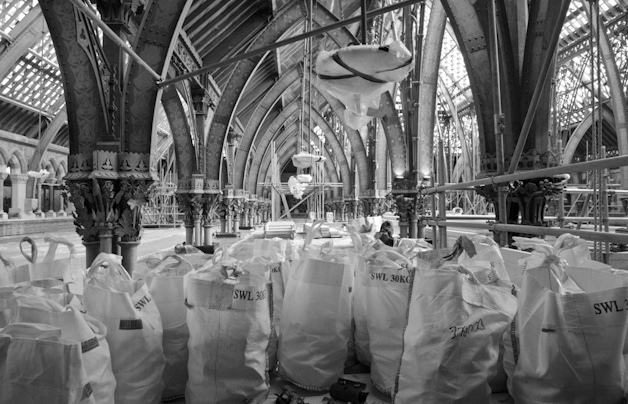
The Grant Museum team an a sperm whale jaw at the OUMNH (they're closed for roof repairs)Last Wednesday the staff of the Grant Museum went on an expedition to the Oxford University Museum of Natural History (OUMNH), which is closed for roof repairs until 2014. On a visit to the zoology section a cupboard was opened before us, it was filled with skulls, dried fish and a couple of boxes. As the history of this cupboard was explained – it was Tradescant’s Museum – the oldest in the country – it suddenly dawned on me what was in those boxes. And that we were going to see it.

We were going to see the only soft tissue of a dodo anywhere in the world. Continue reading →

Caring For Entomology Collections

Seminar series to explore basic entomology collections management, curation and conservation techniques.

NHM (Natural History Museum), South Kensington, London 9.30am – 4.30pm Friday 1st November 2013

Cost £34 for members or £49 for non-members (remember that becoming a member is just £15 a year!).

This course will cover all basic aspects of collections management for entomological collections, including storage and handling of specimens, loans and legislation, and specimen preparation.

There will be specialist sessions including Integrated Pest Management, storage facilities, spirit curation, specimen pinning, molecular collections, basic slide preparation, documentation and databasing. Tours of the collection areas will also occur.

The course will be both theory and practical supported by a booklet covering both aspects.

Schedule (TBC):

9:30 -10:00 Introduction and Coffee

10:00 -10:30 Entomological Storage

10:30 -11:00 IPM

11:00 – 11:30 Morning Coffee

11:30 – 12:00 Digitisation

12:00 – 12:30 Data-basing

12:30 – 2:00 Lunch

2:00 – 2:30 Specimen pinning

2:30 – 3:00 Slide preparation

3:00 – 3:30 Afternoon Coffee

3:30 – 4:00 molecular collections

4:00 – 4:30 Spirit collections

Download booking form

Contacts:

For further information: Erica McAlister – e.mcalister@nhm.ac.uk

For booking & payment: Holly Morgenroth – holly.morgenroth@exeter.gov.uk

To become a member: Maggie Reilly – maggie.reilly@glasgow.ac.uk

The Role of Museums and Collections in Biological Recording

SOURCE: The Role of Museums and Collections in Biological Recording

The Plenary meeting of the Linnean Society’s Taxonomy and Systematics Committee

Wednesday 18th September 2013 11.30-5pm, followed by a wine reception

Museum_Taxonomy and Systematics Gen contNatural science collections have a lasting and irreplaceable value and are highly relevant when defining national biodiversity and conservation goals today. By housing type specimens, vouchers and reference material they are a resource that enables recorders to produce more accurate and reliable data. However, funding for museums is at a critical point, with cuts, closures and the loss of curatorial expertise jeopardizing appropriate care for collections and access for researchers. Without overt use there is a very real possibility that collections will be lost, to the detriment of all. This open plenary meeting will draw on the experience of The Tullie House Museum in Carlisle and the Angela Marmont Centre for UK Biodiversity at the NHM as well as the NBN and NFBR to debate how museums can more effectively engage with recorders and taxonomists for the benefit of all.

Click here to view the programme

Registration for this event is essential, please click here to register now. Please note that lunch is included in the registration fee.