NatSCA Digital Digest

ndd-b-rex

Conferences and Workshops

It’s conference season folks and I’ve been listening to the live feed of the Michigan State University Digital Archaeology Institute. This week they’re looking at how map-related frameworks can help you explain your data visually. There is a step-by-step guide as well as downloadable resources and great advice available at the #msudai tag.

Next week in Portsmouth we’ll have Flugsaurier 2015, the place to be if you love pterosaurs. I am trying to get there myself but, if you go, it would be great to have a chat with you about it. There’s going to be some great new stuff coming out of it. Watch that space.

Immediately after that we have SVPCA of course – this year in neighbouring Southampton. the two conferences are so close in space and time that they’re sharing a field trip between them! I can’t make it to SVPCA but get in touch if you’d like to write a review for us about it.

News

Good news for the California condor: their mortality rate has fallen from 37% in 2000 to an all-time low of 5.4% thanks to the efforts of conservationists. The main threats to condor survival are power lines and lead content in their diets. Aversion therapy has taught the condor to steer well clear of the power lines. You can read all about it here.

It’s take-over day – when the social media accounts of major institutions are taken over by young people. We’re looking forward to seeing what they do with them, it’s going to be a great learning experience for us all.

News from the Blogosphere

The Geological Society have launched a photography competition that is right up the GCG‘s alley. To enter, send in a picture of one of Britain and Ireland’s top 100 geosites. For the list and how to enter, click here. There’s a lot of beautiful landmarks that didn’t make the cut.

Highlights from the Papers

Dave Hone and colleagues have published on a beautiful specimen of Rhamphorhynchus – complete with soft tissue and possibly-associated coprolite. You can read the paper here.

NatSCA Digital Digest

ndd-moon


Conferences and Workshops

Interest in our October Natural materials workshop has boomed and there are only a few places left. If you would like to book a place, do so now before they’re all gone.

We’re also really looking forward to seeing you all at our Osteology workshop in Cambridge in September. It too has received tons of interest and is bound to be excellent.

The subject and speaker’s list for Tetzoocon is coming along nicely – with possible book launch too! All very exciting. Check out the Facebook group for all the latest info.

Former NHM Tring curator and fine artist Katrina Van Grouw will be reprising her avian anatomy art course this year at ZSL London Zoo. I went last year and enjoyed it so much I’m going again. You can find full details and book tickets here.

News from the Blogosphere

The RVC’s John Hutchinson has written a lovely piece on museums from a researcher’s perspective. Delight in the Museum is well worth checking out.

The inimitable Jan Freedman has written a great post on public engagement for Open Quaternary. Read about how an unusual museum enquiry turned into a travel through time and space.

Highlights from the Journals

Poisonous frogs are nothing new. People have been using the toxins in amphibian skin for many purposes. Now though, it appears that at least two species of Brazilian frog need to be classified as venomous. Aparasphenodon brunoi and Corythomantis greeningi both raise interesting questions. Why does A. brunoi need venom 25 times more potent than a pit viper? Why does C. greeningi employ camouflage and venom – an unusual combination? Further research into these species will be most enlightening. You can find the paper here and a very detailed news item here.


It’s a bit of a short one this week as I’m still catching up after the holidays. If you have any items you’d like us to know about, get in touch.


The Most Natural Science Positive Film of Recent Times?

holmes-bee

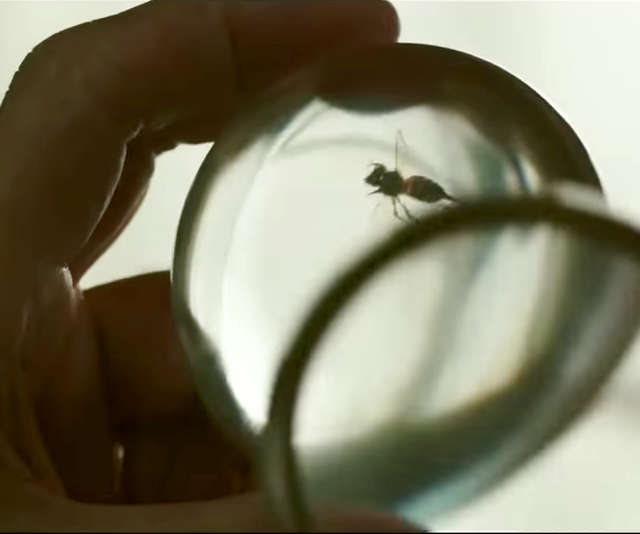
Hollywood hasn’t always portrayed the natural sciences in the best light. From the entomology nerds in Silence of the Lambs to the evil taxidermist in Paddington, the people who live it daily don’t often come off looking good. Even when museums are the star of the show, it is the night watchmen, not the curators and conservators, who steal the glory. Where, then, is cinema’s role in encouraging the next generation to pursue a career in the natural sciences? Some have said they watched the original Jurassic Park and that sparked their interest in genetics. Did you watch a film and think “that’s the life for me?” If so I’d love to hear from you. Nature inspires movies all the time. It behoves the film industry to keep this passion alive.

Enter a new film into the UK top ten (no, we aren’t talking about Jurassic World). Mr. Holmes is the latest adaptation of Sir Arthur Conan Doyle’s famous detective. Set in war-ravaged Sussex, Sherlock Holmes is an old man, retired and trying to cope with the changes in his life. I won’t give away the plot for you but I will say this: The plot depends upon an accurate  understanding of the natural world, specifically botanical and entomological. The film is filled with beautiful species and fascinating facts about nature. I can quite easily see someone leaving the cinema thinking “I want to know more about this world”. Holmes’ personal collection is lovely and I want to know whose skull that is on his desk.

Further refreshing news, if you’re as sick of explosions and CGI as I am right now, this film has the fewest special effects of any new film I’ve seen for a long time. Less definitely is more in Mr. Holmes. The performances are superb – not just Sir Ian McKellen but I don’t think there’s a bad actor in the entire movie. I’d highly recommend you go and see this.

NatSCA Digital Digest

ndd-llama

Conferences, Workshops, and Events

It’s not too late to book tickets for our Osteology workshop in August. The deadline to book is 31st Jul 2015.

When: 8th Sep 2015
Where: University Museum of Zoology, Cambridge

Hot off the press last night, this year’s Tetrapod Zoology Conference (#Tetzoocon) has just been announced. Several NatSCA members attended last year, including myself (here’s the review). It was a great event with lots of interesting talks, ranging in topic from under-appreciated amphibians to future pterosaur literature to speculative zoology – including one by our Paolo. They haven’t announced the speakers this year but they’re sure to be great.

When: 14th Nov 2015
Where: The London Wetland Centre

If you’re in town this evening, come along to the drinks thing at the Horniman Museum in Forest Hill.

And now an appeal to our out-of-town readers: There is some great stuff going on in London almost all the time but I want to hear from you if you have any information regarding natural history related events outside of the London area. Our readers who can’t reach London regularly want to know that these events are. Contact us.

In the News

With applicants rushing to fill the space that Mark Carnall is leaving in the Grant Museum, as he goes off to his new home in Oxford, we thought it would be a good time to tell you about a new email address here at NatSCA Towers. It’s joblistings@natsca.org and, if you have a job that you’d like advertised, this is the best address to send it to.

No news coverage would be complete this week without a hat-tip to Pluto, the little dwarf planet that surprised us all. Although it will take 16 months for all the data to return to Earth, we’ve had some very interesting geological features already, including huge mountain ranges on a par with America’s Rockies; areas with no impact craters, suggesting there may be geological activity resurfacing it (it is unlikely that a large body in the Kuiper belt could be that lucky to avoid impact); and a large reddish brown icecap on Charon nicknamed “Mordor”. We look forward to more information as the data is disseminated. In the meantime, here’s an overview of the changing face of Pluto, by NASA.

In the Blogosphere

The RVC‘s John Hutchinson honours the contributions of R McNeil Alexander in this touching installment of What’s in John’s Freezer.

NatSCA Digital Digest

NDD-EvilEye


In the Blogosphere

Our conference has drummed up a lot of blog interest. The Museums Association and Museums & Heritage Advisor both ran posts on it, written by our wonderful members. Also see Rachel’s piece Tweeting up a Storm on the conference and the power of social media hashtags.

Claire Madge has written an excellent piece on her experience of volunteering. Regular readers will remember Claire from the interview she gave on autism and museums last year.

Upcoming Events

The Cheltenham Science Festival has begun and will be continuing until the 7th June. If you’re free this weekend, pop along. Among the many reasons to go, seeing NatSCA patron Ben Garrod quiz palaeontologist Jack Horner has got to be right up there.

Professor of Zoology Matthew Cobb at Manchester University will be giving a talk with evolutionary biochemist Nick Lane on the 11th June at the Royal Institute called The Story of Life – a look at how genetics has impacted our understanding of biology.


There are some exciting things in the pipeline, which I want to tell you about here but I can’t yet *sits on hands*. Just watch this space.

Content assembled by Samuel Barnett