One of our dinosaurs, birds, crabs…. is missing

Reblogged from the UCL Museums and Collections Blog

One of our dinosaurs, birds, crabs…. is missing

By Mark Carnall, Grant Museum of Zoology

You may have figured from the title of this blog but I’m going to take a bit of time to talk about when specimens go missing from a museum collection. It can be a difficult thing for museums to talk about as most museums operate to care for the specimens and objects that are given in trust to them often for perpetuity, or more practically until the death of our part of the Universe. Currently a lot of my work here involves relocating our specimens following the move of the stores and museum a couple of years ago and trying to work out what happened to a missing specimen involves a bit of detective work, so I thought I’d offer an insight into the process.

Missing Specimens- The Prime Suspects

Collectively, museums look after billions of objects. The Grant Museum contains roughly 68,000 specimens which may sound like a lot but natural history collections regularly number in the millions. Even keeping track of a mere 68,000 of them can be problematic enough. Here’s the mental checklist I go through when a specimen can’t be located.

1. Somebody* put it back in the wrong place. A little known fact about museums is that under English law it is still possible to punish a museum professional with death if they commit this crime. Putting a specimen in drawer 43 instead of drawer 44 may sound trivial, but if it’s one of 200,000 superficially identical butterflies that’s been misplaced….. Of course, naturally you search the nearby area but if it isn’t immediately  findable the next step is to organise a search committee and comb the museum inch by inch until it is located. Sometimes this is how half dodos are rediscovered.
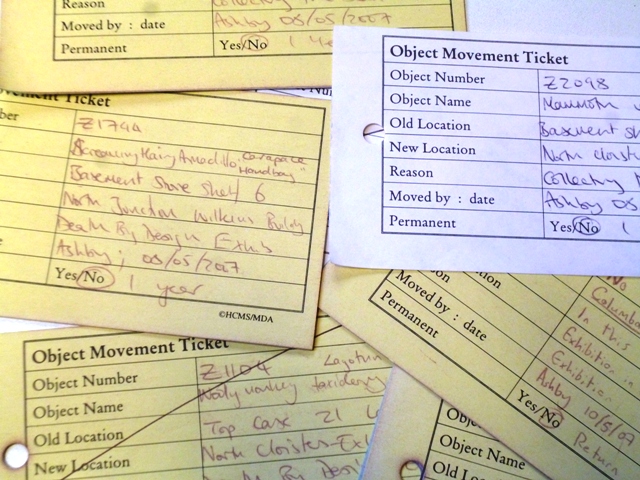
Good old object movement tickets. They still work when the servers don’t. (C) UCL Grant Museum

Good old object movement tickets. They still work when the servers don’t. (C) UCL Grant Museum

2. It’s temporarily somewhere else. At the Grant Museum, we use our specimens a lot. On any given day we’ve got specimens out for researchers, specimens on loan across the department and to other institutions, specimens being photographed and documented and our own rotating and temporary displays. For longer term movements, the ever useful object movement record should be where the specimen normally lives and the temporary location will be recorded on the database. For shorter term movements this won’t be the case and it’s true to say that with higher-than-you’d-expect regularity two people will need the same specimen at once. As for loans to other institutions it used to be common place to loan specimens on ‘permanent loan’ so some specimens have been temporarily somewhere else for 20, 30, 40 and even 60 years and before the current museum good practices and standards the loan agreement may or may not have been written down anywhere… There’s a good reason why ‘permanent loans’ have been all but outlawed in museums.
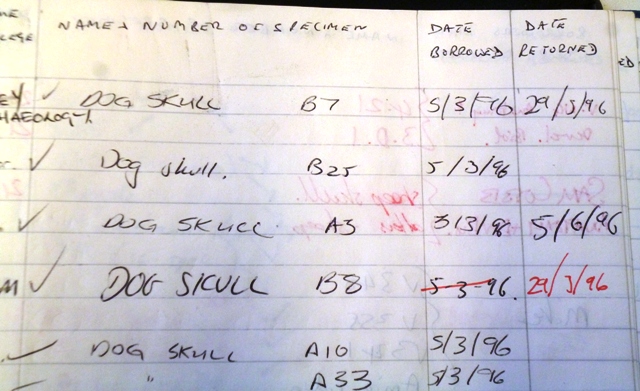
A page from one of the Grant Museum loan books. Note how some of the unnumbered ‘Dog skulls’ don’t appear to have a return date. SAD SMILEY FACE. (C) UCL Grant Museum

A page from one of the Grant Museum loan books. Note how some of the unnumbered ‘Dog skulls’ don’t appear to have a return date. SAD SMILEY FACE. (C) UCL Grant Museum

3. The specimen never existed in the first place. Many museums have gone through a number of phases in the attempt to catalogue every single object and specimen in the collection. Sometimes two or more people are documenting the same objects at the same time. This results in duplicate or ghost records appearing for the same object. Over time, and I can testify to this happening, you can be in the situation whereby you’ve got to try to work out whether the 20 physical dog skulls you have before you are the 20 records on the catalogue or not. Another complication is that we appear to have older catalogues of the collection which were part descriptions of the physical collection and part ‘wishlists’.

4. The specimen has been destroyed. Without constant monitoring and conservation work, sadly specimens may be degraded past the point of being recognisable, safe or otherwise usable. In addition specimens may be actively destroyed for the purposes of sampling or other investigation. Today we’d record a specimen as being disposed of and the method by which it was destroyed but in the past this may or may not have been recorded so you’ll be looking for objects that haven’t existed for a long long time.
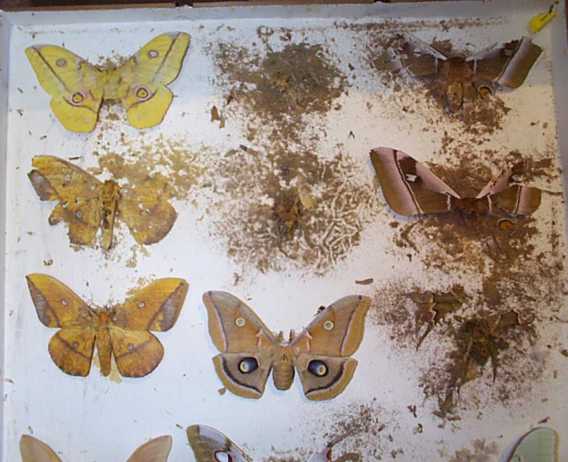
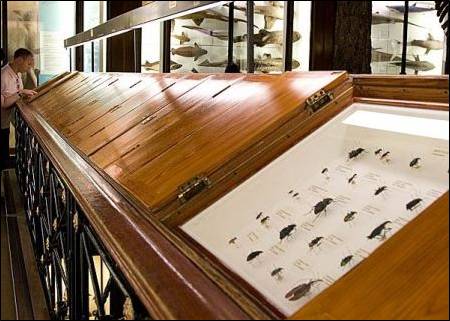
Pest damage to entomology collections results in the disintegration of specimens. (C) UCL Grant Museum

Pest damage to entomology collections results in the disintegration of specimens. (C) UCL Grant Museum

5. The specimen was part of the ‘curator’s collection’. If you’ve been following my colleague Emma’s series on previous Grant Museum curators you will have read how some of our previous curators didn’t appear to leave much of a material trail in the museum. This is because in the past the boundaries between what belonged to the museum and what belonged to individuals was, how shall we say it, very fluid. When the curators moved on to other institutions they sometimes took their own collections with them or donated their important specimens to the Natural History Museum. Frustratingly, they didn’t always record that this had happened.

6. Stolen. Whether it’s innocent 5 year olds pocketing a handling specimen, a professional scientist accidentally retaining specimens sent to them or your organised criminals stealing to order it’s a sad fact of life that museum specimens do get stolen. There’s at least a bookshelf of literature on art thefts over the years, rhino horn thefts are at an all time high and then there’s the more run-of-the-mill smash and grab jewellery thefts. The real issue is at what stage the theft is noticed. Gallery display thefts tend to be obvious but if it’s one of 40,000 specimens in a storeroom that’s gone missing it can be months or years before it’s noticed. More often than not it’s when specimens come onto the open market that it’s realised it’s no longer in the museum.

7. Misidentified. The classification of animals is constantly changing. In older collections you’ll have the full spread of names an animal has ever been known by that may be completely different to the current ‘consensus’ (which can be in a state of flux for 150 years and counting). Furthermore, depending on who has been documenting a specimen, your non specialist may get as far as bones, your generalist natural historian as far as lion and your carnivoran expert down to population you may be looking for a bag of bones labelled lion or looking for a lion labelled as a bag of bones.
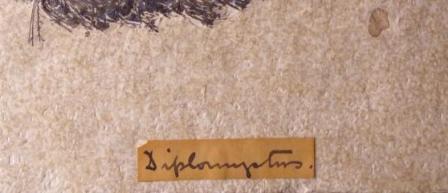
A great example of the kind of handwriting you can expect to find on older specimens. Diplommyotns, Diplomyctus, Diplonijotus, Diplonnystus? Suggestions on a postcard please. (C) UCL Grant Museum

A great example of the kind of handwriting you can expect to find on older specimens. Diplommyotns, Diplomyctus, Diplonijotus, Diplonnystus? Suggestions on a postcard please. (C) UCL Grant Museum

8. Human Error. I don’t know if there’s a ‘background rate’ for errors that people make but when you scale museum staff adding up to 200 different fields of information (number, description, location, etc.) for thousands or hundreds of thousands of different specimens the inevitable fallibility of humans starts to add up. Couple this with the fact that, like GPs, scientists tend to have awful handwriting and you can be looking for a Z300 instead of an S800.

 So that’s the mental checklist I run through when a specimen can’t be located and it can be very heartening to relocate a missing specimen but ultimately some specimens end up recorded permanently as lost in the hope that at some point they’ll be rediscovered.

Mark Carnall is the Curator of the Grant Museum of Zoology

* For diplomacy I use the generic somebody here. In reality it’s always Mr. Nobody who takes responsibility for this.

NatSCA Digital Digest

Welcome to the weekly digest of posts from around the web with relevance to natural science collections. We hope you find this useful and if you have any articles that you feel would be of interest, please contact us at blog@natsca.org

1. Social Media: Museum Week on Twitter

24th to 30th March 2014

Synopsis

Museums across Europe are using the hashtag #MuseumWeek on twitter all this week. The aim is to improve the social media presence of museums by encouraging dialogue between both museums and the public, and between museum professionals. Alongside the weeklong hashtag #MuseumWeek there are individual daily themes, the remaining of which are as follows:

Thursday #BehindTheArt

Friday #AskTheCurator

Saturday #MuseumSelfies

Sunday #GetCreative

Everyone is encouraged to join in all week.

2. Blog: Work Experience from the Dinosaur Isle Museum

Alex Peaker, Dinosaur Isle Museum, Isle of Wight, and Emma Bernard, Natural History Museum, London

Synopsis

Alex Peaker is a curator at the Dinosaur Isle Museum on the Isle of Wight. He recently came to London to work with Emma Bernard, a curator at the NHM, for a week. Bernard begins the blog by talking of how important it is to maintain communications between museum professionals, and seeking help and advice from others when needed. Peaker describes his role at the Dinosaur Isle Museum and explains how invaluable the time he spent at the NHM was to him.

http://www.nhm.ac.uk/natureplus/community/research/earth_sciences_news/fossil_fish?fromGateway=true

Editor5807. Image free from copyright

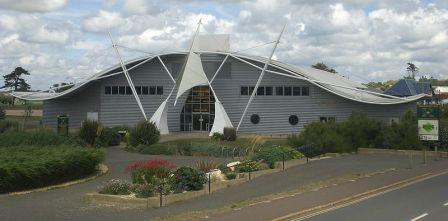
Dinosaur Isle Museum, Isle of Wight. The building was designed to look like a huge Pterosaur. Image by Editor5807

3. Training: British Council – UCL Museum Training School

British Council and University College London

Synopsis

The closing date for applications to the British Council and UCL Museum Training School is 18th April. There are four courses to choose from, or you can register for multiple courses. They are:

How to build local, national and international partnerships
How to develop exhibitions
How to develop a schools and learning programme
How to develop community engagement programmes

https://www.ucl.ac.uk/museums/our-work/international/

Rhino

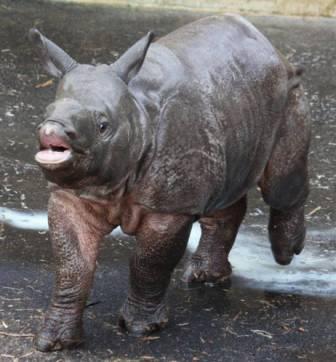
The next post is a bit harrowing, so here is a baby rhino playing to start you off on a high. (C) Emma-Louise Nicholls

4. Blog: Objects Safe After Cuming Museum Fire

Patrick Steel, Museums Association

Synopsis

Cuming Museum in London was struck by fire in March of last year, in which ‘two of three displays were lost’. One year on, Steel reports on the current location of the collections and the status of the Museum. The blog looks at how many specimens were lost and what types of conservation procedures were required for those that were damaged.

http://www.museumsassociation.org/museums-journal/news/25032014-cuming-museum-saves-all-but-30-objects?utm_source=ma&utm_medium=email&utm_campaign=26032014

5. Survey: Testing the European Competency Framework for VET Collections Management

EU Leonardo project, the Royal Belgian Institute of Natural Sciences

A request from the Project:

‘In the EU Leonardo project ‘Testing the European Competency Framework for VET Collections Management’ (EUColComp), the Royal Belgian Institute of Natural Sciences (RBINS) is responsible for WP 2 “Research training needs and stakeholder analysis”.  This 2-year project is coordinated by NHM London and started October 2013.

A  questionnaire to inventory past and present training resources in conservation and care of natural history collections, available in Europe (and beyond) is online at:

https://www.surveymonkey.com/s/survey_training_NHcollections

The results of the survey will be used to develop a ‘Vocational Education and Training’ curriculum to assist staff in developing the appropriate competencies.

If you provide training in the field of natural history collections conservation and care or if you are aware of training others provide, please spare 5 min of your time to help gather this valuable information.

Many thanks for your help with this!
Kind regards,
The EUColComp team

a Leonardo da Vinci Transfer of Innovation funded project’


Compiled by Emma-Louise Nicholls, NatSCA Blog Editor

Jake’s Bones: A Review

By Roberto Portela Miguez

When I was asked to review a book written by a twelve year old, I was slightly uncomfortable with the idea, as I thought that I would have to repress my usual critical and negative self and be gentle and considerate with the effort that this young nature enthusiast has put into such work. Needless to say, I did not want to come across as patronising either.

However, all my silly tribulations dissipated once I tucked into the book, and I actually found the publication not just faultless but truly enjoyable.

Jake McGowan-Lowe’s work is illustrated with beautiful photography and contains a wealth of knowledge and sound advice.

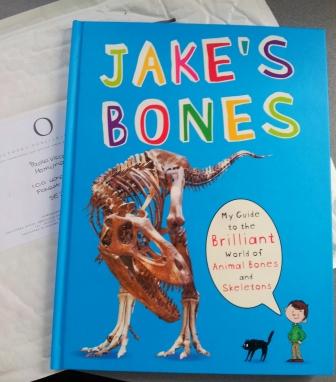
The new book by Jake McGowan-Lowe called Jake's Bones. (C) Paolo Viscardi

The new book by Jake McGowan-Lowe     called Jake’s Bones. (C) Paolo Viscardi


Each chapter has images of specimens from Jake’s very own skeletal collection, which ranges from the common British species to more exotic ones like armadillos and leopards. From the first pages one cannot fail to realise that this work was produced by someone with considerable first-hand experience on the topic. Maybe it was the picture of the more than two hundred skulls decorating his bedroom that gave away that the natural world is not just a pass-time for Jake, but something he is genuinely passionate about.

For each of the species included in the book, we are given details of some of the most significant skeletal adaptations and in specimens where a pathology is visible, Jake provides a well-founded interpretation.

The author does not shy away from using technical names for the different skeletal elements, but do not fear, because if you missed that lesson at school, there is a helpful glossary at the end. It is refreshing to see that Jake uses confidently and comfortably the relevant academic terminology. I was thrilled with this aspect of the editing and hold this as a triumph against those exhibition consultants that underestimate the level of knowledge of museum visitors and keep vanishing academic language from our galleries. You may now picture me taking my hat off to Jake for going boldly where museums used to go.

There is no osteological-related material that this studious naturalist cannot write about. From the basic “what is a bone?” to the more advanced ageing of animals from their bones, Jake displays an astonishing degree of knowledge on everything he presents.

The chapters that pleased me the most were the ones on tips for collectors, your bone collection and golden rules. It is easy to be awed by the natural beauty of the objects and their stories, but Jake wisely reminds all that there are a few important things to consider before we start accumulating our very own skeletal collection. Collection management, Health and safety and legislation are covered in these chapters and the author’s style makes it fun to read, so there is no excuse for accidents or incidents.

This is a great piece of work which I would recommend to anybody of any age and have no doubt that this will not be the last we will hear from such a talented science communicator.

Recreating the Past: In LEGO®

By Christine Taylor, Keeper of Natural Sciences, Hampshire County Council Arts and Museums Service (HCCAMS)

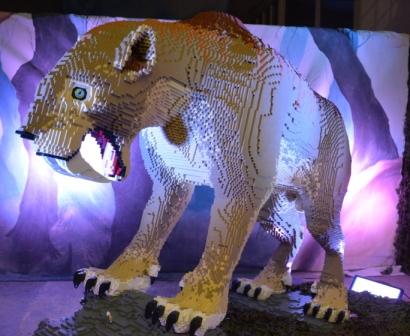
An Ice Age animal, a sabre-toothed cat, made from LEGO bricks. (C) Julian Wright (HCCAMS)

An Ice Age animal, a sabre-toothed cat, made from LEGO bricks. (C) Julian Wright (HCCAMS)

Reaching new audiences for natural science collections is always a challenge, especially if the museum concerned is a network of recreated Victorian and 1930s streets.

However, the opportunity of working with artists from British company ‘Bright Bricks’ has enabled the creation of extinct animals made from LEGO, based on the Natural Science collections of the Hampshire County Council Arts and Museums Service (HCCAMS).

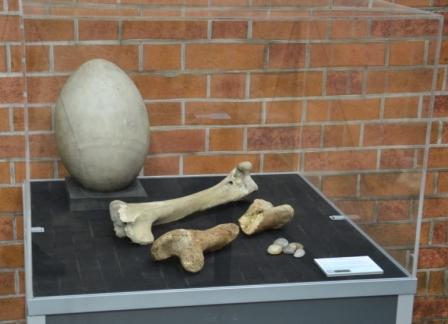
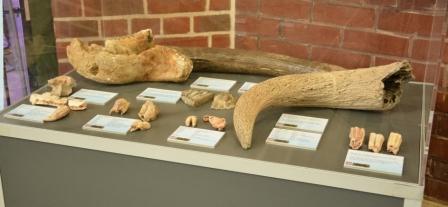
Leg bones, gizzard stones and a replica egg of a giant moa. (C) Julian Wright (HCCAMS)

Leg bones, gizzard stones and a replica egg of a giant moa. (C) Julian Wright (HCCAMS)

The Natural Science collections provided the inspiration for many of the specially commissioned builds for ‘Lost World Zoo’, a menagerie of animals built using LEGO bricks from different periods in time. Original specimens from the collections have been displayed alongside these model animals. The Victorian street settings at Milestones Museum, Basingstoke, enabled a ‘back story’ of a Victorian explorer discovering an uncharted island where the animals still lived.

The railway station at Milestones has been transformed into an aquarium filled with aquatic animals, which provided the opportunity to display Cretaceous marine fossils in bubbles (perspex domes) in the ‘ticket office’. Lamp posts decorated with Meganeura, the giant dragonflies of the Carboniferous and large butterflies and other insects provide an introduction to the origins of insects and an opportunity to display some of the large foreign insect material from the collections.

Bones and teeth of Ice Age animals. (C) Julian Wright (HCCAMS)

Bones and teeth of Ice Age animals. (C) Julian Wright (HCCAMS)

Dodo bones, collected by George Clarke in the mid 19th century, inspired a flock of dodos and the advance marketing campaign featured a dodo made from LEGO, visiting various places around Hampshire and beyond. Other visits included a trip to see the Oxford dodo and a hot air balloon factory in Bristol to investigate flying!

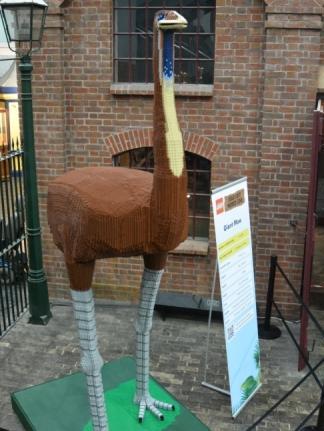
Other models included a sabre-toothed cat, a giant moa bird (full height!), a huge turtle called Archelon made from DUPLO®, a neanderthal, a Megalosaurus head and a woolly mammoth built during the exhibition, as well as displays of smaller models and a spotter trail.

Giant moa made from LEGO. (C) Julian Wright (HCCAMS)

Each of the models have habitat, locality, size and extinction details on banners, with many of the banners displaying a QR code to video podcasts about the Natural Science collections. Throughout the exhibition, which runs until 27th April, and then splits to tour some of the smaller HCCAMS museums, sessions based on fossils, mammoths, giant dragonflies and neanderthals provide visitors with the opportunities to handle collections and to discover more about the collections.

The exhibition has provided a wonderful opportunity for the Keeper of Natural Sciences to exhibit areas of the collections which have rarely been seen on display, to devote time to researching the specimens, enable conservation work to take place and the great excitement of un-wrapping the models made from LEGO!!

NatSCA Digital Digest

Welcome to the weekly digest of posts from around the web with relevance to natural science collections. We hope you find this useful and if you have any articles that you feel would be of interest, please contact us at blog@natsca.org

1. Blog: A Day Out at Tring

Amy Freeborn, Natural History Museum London

Synopsis

This blog covers some of the history of the collections at Tring, and includes some interesting historical photos of the Museum and Rothschild’s estate as it was in the early 1900s. The author had the opportunity to see the preparation lab where beetles are used to clean flesh from carcasses, leaving skeletons fit for mounting. Some ‘wow-factor’ facts regarding the content of Tring Museum’s collections are also outlined.

http://www.nhm.ac.uk/natureplus/blogs/behind-the-scenes/2014/03/14/a-day-out-at-tring

The galleries at Tring Museum. Image by Robert Stainforth. Obtained from http://www.commons.wikimedia.org

2. Blog: Testing a European Competency Framework for VET in Collections Management

National Agency for Lifelong Learning

Synopsis

Access to, and use of, natural history collections are integral in facilitating research in the sector, but the ways in which these are facilitated vary between institutions. This article looks at the application of ‘best practice’ in terms of collections management, care, and conservation and describes a project that utilises the methods developed by the Natural History Museum, London to tackle the task of creating a standard for European collections.

http://www.adam-europe.eu/adam/project/view.htm?prj=10833&projLang=en#.UvpDWvtWsfg

3. Training: Pest Identification and Trapping Study Day

The Horniman Museum, London. 15th May 2014

Synopsis

An introduction to the management of museum pests. The day comprises lectures on subjects such as Integrated Pest Management schemes, as well as practical sessions that will give attendees the skills to identify various pest species. The Horniman Museum is used as a case study to illustrate an active pest management scheme. The highlight (having attended myself previously) is a pest based treasure hunt in the natural history galleries.

There is a limited number of places on this course so please get in touch with Libby Finney for details asap if you are interested. Email: lfinney@museumoflondon.org.uk

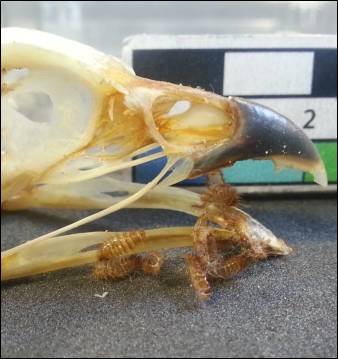
A horde of Anthrenus larvae on a bird skull. (C) UCL Grant Museum

4. Event: Geological Carbon Storage: Meeting the Global Challenge

Two day conference at the Geological Society at Burlington House. 14th-15th April 2014

Synopsis

Fossil fuels will undeniably be a significant component of energy supplies for ‘several decades at least’. This conference will focus on actions required to avoid serious negative environmental impacts caused by the burning of fossil fuels and the subsequent amount of CO2 that is released. Trapping CO2 and storing it underground (CCS) is a method of achieving this aim. Issues and policies will be discussed by delegates including members of government, industry, regulators and NGOs.

http://www.geolsoc.org.uk/carbonstorage14

Compiled by Emma-Louise Nicholls, NatSCA Blog Editor