The John Ellerman Foundation Skills Sharing Initiative

swanslogo

I am currently coordinator of a rather ambitious project developed by Bristol Museum and Art Gallery and the South West Museum Development Programme. The project has been renamed ‘South West Area of Natural Science Collections Project‘ (SWANS), and it aims to identify where knowledge and skill gaps lie across the South West sector via a survey, and then develop training events to help address any losses.

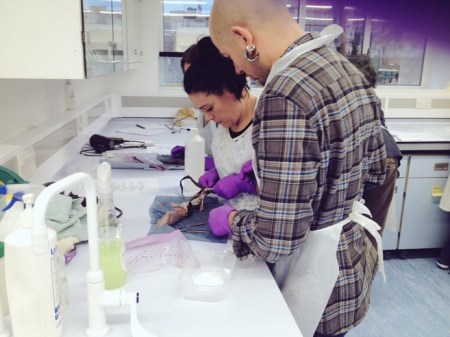
Three intense training courses are being developed for the partner organisations, and these include carcass preparation, fossil preparation, documentation and digitisation of natural science collections. The carcass prep has already been undertaken, and was hugely educational to the attendees.

Rhian Rowson and Matt Williams sharing skills at Carcass Prep training

Rhian Rowson and Matt Williams sharing skills at Carcass Prep training

We have just delivered the first of two introductory seminars on working with natural science collections, and a further four specialised workshops will be developed to target the sector’s needs. Preventative conservation has been highlighted as of particular relevance to the mixed group of collection managers. Four NatSCA committee members are partners of this project, so we can keep you up to date with developments. Follow us on Twitter @SWANS_JEF, and we also have a dedicated webpage for the project: http://www.southwestmuseums.org.uk/projects-grants/john-ellerman-foundation-project/

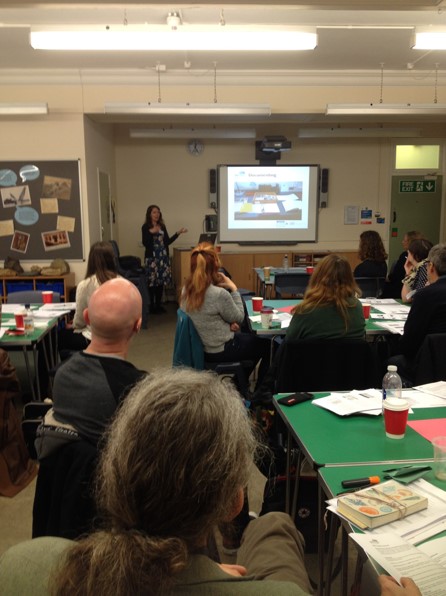
Deb Hutchinson delivering a lecture on documentation at Bristol Museum (© Bristol Culture BMAG)

Deb Hutchinson delivering a lecture on documentation at Bristol Museum (© Bristol Culture BMAG)

I have just touched on a couple of the developments we are working on. There is much more to come!

Victoria Purewal
Senior Curator of Natural Science, Bristol Museum and Art Gallery
NatSCA Conservation Representative


bristolbanner

Natural Science and the Law Seminar

colour-logosmall2.jpgswanslogo


A joint meeting between the South West Area of Natural Science Collections (SWANS) and NatSCA on ‘Natural Science and the Law‘ has been organised for June 15th at Bristol University. Save the date, as it looks to be a very interesting and relevant seminar on law and legislation.

There will be speakers covering asbestos in geology collections, radioactive specimens, and the Nagoya protocol, which is something that we need to be aware of, as well as CITES and the laws regarding collecting and movement of dead animals.

This event is now available to book on Eventbrite. See here for details: https://www.eventbrite.co.uk/e/natural-science-collections-and-the-law-seminar-tickets-24822253027

The Nature of Collections

The Nature of Collections: How Museums Inspire Our Connection to the Natural World

This was the theme for the NatSCA conference, held this week at the Silk Mill and Derby Museum and Art Gallery (21 – 22 April 2016), and the timing could not have been better, as I have been organising a ‘Spring Flower Power’ event at Bristol Museum and Art Gallery (BMAG). With support from the staff and Bristol Naturalists Society we had a really great day, teaching the public about what is in flower at this time of year. I was also able to network with a group and a region I am wholly unfamiliar with, having worked and lived in Cardiff for many years.

The Flower Identification table at Bristol Museum (© Bristol Culture BMAG)

The Flower Identification table at Bristol Museum (© Bristol Culture BMAG)

Flowers have not been in the main hall for many years now, and they really had an impact on the staff and public. Bringing the outdoors in can be inspiring, and it is something museums have been doing for decades. I was sent the picture below by the Bristol Naturalists Society (BNS). It shows Ivor Evans, a keen and well established botanist, admiring the table he helped set up with Ida Roper back in pre-war Bristol, still going strong in the 1960s.

Ivor Evans at Bristol Musuem during the 1960s with the Flower table he helped develop (© Bristol Naturalist Society)

Ivor Evans at Bristol Musuem during the 1960s with the Flower table he helped develop (© Bristol Naturalist Society)

Victoria Purewal
Senior Curator of Natural Sciences, Bristol Museum and Art Gallery
NatSCA Conservation Representative

Vote for the NatSCA Editor

At the end of this week we have our annual conference and AGM, which will be held at the Silk Mill in Derby. The conference is always a great opportunity to mix with other natural history and museum professionals, catch up with what’s going on and elect the committee members who will keep NatSCA on an even keel.

This year, for the first time, we have two people standing for the Editor position so we will be holding a vote. In order to provide you with a bit of background to help make your voting decision, so below is a brief overview from each candidate (in alphabetical order).


Jan Freedman

Jan

I am the curator of natural history at Plymouth City Museum and Art Gallery. One of the most wonderful things about our job is the variety of work we get involved in: from conservation of specimens to using collections to engage with the public. For us, who look after natural science collections, we are constantly improving our knowledge of how best to care for and promote our collections. One way of doing this is by contributing to, and reading, the Journal of Natural Science Collections, which includes the latest up-to-date case studies and information to help.

I have been very proud to have been the Editor for NatSCA for some years now. I was the editor for NatSCA News, which included more informal articles, but I wanted the NatSCA membership to get more from their Journal. Along with the support of the NatSCA committee I have developed a high-quality journal with fully peer reviewed and up to date articles from colleagues in the sector; your Journal of Natural Science Collections.

I really enjoy networking with international colleagues to bring the membership the most useful and interesting articles. For the majority of the time, curators and other museum staff do work alone, and I believe that the excellent work that we are doing should be shared amongst colleagues. As well as articles being sent for the Journal, I have approached people to write articles which will be interesting for others to read. The Journal is for the membership, and I have strived to make your journal as tool you can you in your work.

I enjoy being on the NatSCA committee, with such wonderful committee members. As a committee member, I not only format and edit the journal, but contribute to other areas of NatSCA business. I have been privileged to be involved with some exciting projects over the years, and would be truly honoured to be a part of where NatSCA is going in the future.

I would be delighted if you were to vote for me as the role of Editor on the NatSCA committee.


Rachel Jennings

RachelProfilePic

I have volunteered for NatSCA for the last few years, and would like to join the committee as Editor so that I can contribute more to the organisation, and help give our members a stronger voice to advocate for the importance of our work and collections to the wider museum sector.

As a volunteer, I have acted as Facebook Editor since 2013, advertising NatSCA events and finding natural science-related content to share that is interesting and engaging. During my tenure as Facebook Editor, the number of likes on the page has trebled, increasing our public reach. I set up a Storify account for NatSCA last year, and have created stories for the 2015 Conference and other events, so that those who couldn’t be there can still enjoy them!

I also joined the editorial team on the NatSCA blog last year, responsible for sourcing content, liaising with authors, editing and scheduling posts. I have really enjoyed this role, and I’d love to be able to take the next step and be your new NatSCA Editor!


We hope to see you at the AGM on Thursday, ready to cast your vote!

Bournemouth’s ‘New’ Museum!

The Bournemouth Natural Science Society receives Museum Accreditation

Brighton Natural Science Society's impreesive Victorian building

Bournemouth Natural Science Society’s impressive Victorian building

The Bournemouth Natural Science Society (BNSS) is thrilled to announce its successful application to the Museum Accreditation Scheme. Our Museum Committee has been working hard for a long time to get our documents in order and up to scratch, and it is a credit to them that we are now an Accredited Museum.

The origins of the BNSS actually go back 150 years, with the 19th century passion for collecting natural objects. These early collections are now housed in the Society’s Victorian villa at 39 Christchurch Road, which is open to the public on Tuesday mornings, between 10am and 12.30pm. From archaeology to zoology, the BNSS has something to inspire and amaze!

Accreditation is granted by the Arts Council England (ACE) to museums that meet the stringent requirements imposed by their Accreditation Standard. The BNSS joins the 1,800 other museums participating in the scheme, working to manage their collections effectively for the enjoyment and benefit of users. Our Accreditation status will be renewed every three years to ensure that we are keeping up to standard.

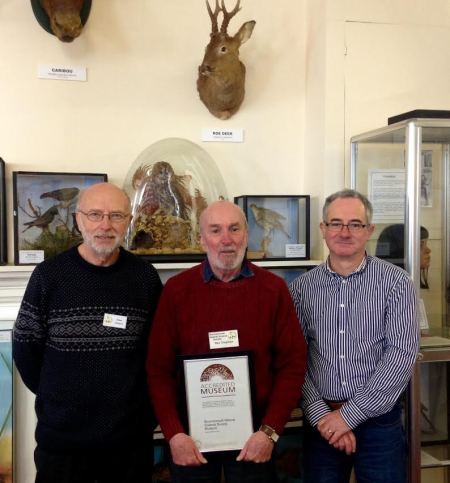
Steve Limburn, Ray Chapman, and Maklcolm Hadley with the BNSS Accreditation certificate

Steve Limburn, Ray Chapman, and Maklcolm Hadley with the BNSS Accreditation certificate

And the work doesn’t stop here! We are continuing to catalogue and photograph our collections and make them more accessible to the community. As well as our regular Tuesday morning sessions, we also run two open days during the year. The next one is coming up on Saturday 16th April, in collaboration with the Dorset Wildlife Trust. Our Young Explorers group meets once a month, and we welcome educational visits from organisations and groups of all ages.

Of course, none of this would be possible without our wonderful and dedicated volunteers and members, who give their time and enthusiasm to make the BNSS what it is. A huge thank you goes out to them for making this success happen.

If you would like to learn any more about the BNSS, visiting times, membership, or volunteer opportunities, please contact Katherine West, Communications Officer at publicity@bnss.org.uk.