Meet the NatSCA Committee: Holly Morgenroth

Name: Holly Morgenroth

What is your role on the NatSCA committee? Treasurer

Job Title & Institution: Collections Officer, Royal Albert Memorial Museum & Art Gallery (RAMM)

Twitter username: @Comet_Moth_HM

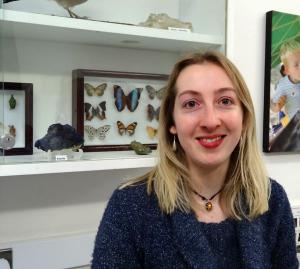
HollyPic

Tell us about your day job:

A bit of everything.

My specialism is natural history (I am a marine biologist by degree), so I am the first port of call for anything that is recently dead (biology) or long time dead (palaeontology) that isn’t human. I deal with public enquiries, write exhibitions, give talks and care for the collections.

As Collections Officer I manage a small team of Assistant Curators and oversee the collections management for all the collections, not just natural history. I help to write policies and funding bids, coordinate team projects and manage budgets. I also manage a few volunteers.

Are you working on any projects that you’re really excited by at the moment?

HMSChallenger.net – check it out!

What do you love most about working with natural science collections?

Dead things in jars. Spirit collections fascinate me.

I have a bit of a thing for glass – currently thinking of Blaschka models and contemporary artist Steffen Dam.

Occasionally coming across specimens from some of the early voyages  – Challenger, Lightning, Beagle, Blossom etc.

Puzzles – piecing together the stories behind the specimens.

What would your career be in an alternate universe without museums?

If my ears would let me dive and boats didn’t make me very sick, then a marine biologist. Otherwise a florist perhaps…

What is your favourite museum, and why? (It can be anywhere in the world, and doesn’t have to be natural science-related!)

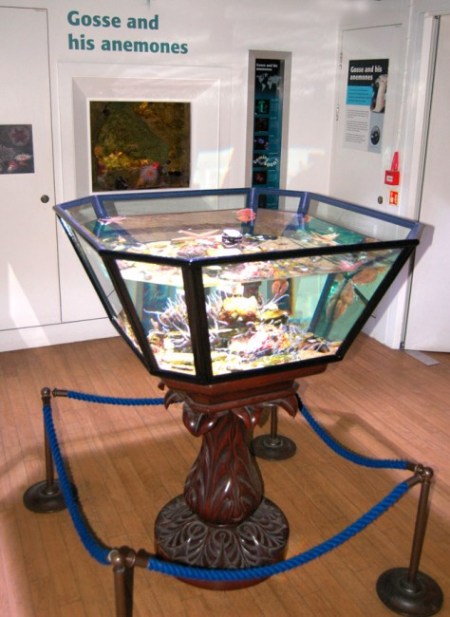
Horniman – I love the aquarium, particularly the tank inspired by Victorian naturalist P. H. Gosse.

Gosse-inspired tank in the Horniman Museum & Gardens aquarium (Image: Horniman Museum & Gardens)

Gosse-inspired tank in the Horniman Museum & Gardens aquarium (Image: Horniman Museum & Gardens)

Art, Nature, Engagement, and Rural Life

On my first visit to a NatSCA conference I didn’t quite know what to expect, but I was in for a treat. Initially planning to write only about Amgueddfa Cymru‘s ‘Museum in a House’ talk, I found myself drawing parallels between all three presentations in the morning’s second session (likely more by design than accident), as well as the new temporary exhibition at my current museum, the Museum of East Anglian Life.

In ‘The Artist and the Dead Zoo’, Nigel Monaghan delivered a selection of somewhat lighthearted accounts of artists of all genres (modern and traditional, writers and musicians) who have used the natural history collections of the National Museum of Ireland as inspiration, as raw material for casts, and the galleries as backdrops and venues – the museum hosts recording slots for artists on Mondays. Suitably relaxed and open-minded to the benefits of establishing strong working relationships with artists, we were treated to Amgueddfa Cymru’s visual log of their ‘Museum in a House’ project in Roath, Cardiff.

Left: giant deer skull and antlers in the Museum of Ireland’s stores [1]. Right: artwork created using a cast of these antlers by artist Paul Gregg [2]

Conceived and designed as part of a local modern arts festival, the idea of deliberately displaying natural history items outside a museum context had unsettled me slightly, given the recent focus at my own museum to saturate an exhibition of historic art with rural life context, at once visual, audible and intellectual. No need to worry, though, as Jen Gallichan and Annette Townsend ably demonstrated great enthusiasm throughout the project, with a non-hierarchical team allowing for freedom of everyone’s ideas on design, content and installation, from volunteers to curators.

Displays from Amgueddfa Cymru’s ‘Museum in a House’. Left: an arthropod-covered snooker table. Middle: Two dung beetles fight over a vital resource. Right: garden windows bring to mind giant microscope slides [3]

This collaborative and fun approach yielded excellent results, and even some context drawn from popular art and culture of recent decades: suspended taxidermy harked back to the mid 20th century, while the family’s DVD collection was carefully arranged to highlight animal- and nature-related films such as Jurassic Park and Madagascar. The aim was to excite the local art world with a playful exhibition, and create new interest in natural history collections. In this they excelled, seeing 600 visitors in 10 hours, with many visitors returning later with friends and relatives. On-the-hoof creation of a ‘nature trail’ proved the value of freedom of ideas, added purpose to a visit and created another layer of engagement with the artistically-minded public.

Left: Flying taxidermy in the stairwell of the museum in a house [3]. Right: porcelain flying ducks in a 1950s living room display at the Museum of East Anglian Life [4]

Speaking immediately afterwards, Kay McCrann further strengthened the case for the role art (this time fine art) can play to increase awareness and popularity of natural history collections. William Jones’ 18th century taxonomic work ‘Icones’ and Jeff Gabel’s modern line drawings were front and centre. Gabel is known for drawing portraits of real and imagined subjects, while naturalists may have to draw specimens arranged in their mind’s eye to portray all pertinent features for taxonomic identification. Both Jones’ and Gabel’s works are confined using borders. These shared aspects of process and composition between modern artists and historic naturalists offer a handle for appreciators of fine art to begin to appreciate the value of natural history collections and connect to the natural world.

Left: ‘Praimus no. 1′ from William Jones’ ‘Icones’ [5]. Right: Jeff Gabel’s work ‘Art Historian Waiting…’ [6]

At the Museum of East Anglian Life (MEAL), 34 historic oil paintings, watercolours, and drawings rub shoulders with rarely-seen objects from the museum’s stores. Each item illustrates a facet of rural life in East Anglia during the last two centuries: horse shoes sit alongside a thatcher’s needle; a lady’s bonnet overlooks a model wagon; a shepherd’s smock stands sentinel over the whole. The artefacts emphasise a specific item or theme in each artwork, offering our reliable visitor base a gateway to the appreciation of the splendid art on offer, while a soundtrack of birdsong and traditional song, of water mills and farriers and farmyards transports the physical displays into their wider natural environment.

Left: a local shepherd’s smock. Middle: an assortment of MEAL’s objects. Right: A birdcage overlooks its corresponding painting [7]

At MEAL, interest in art arises when art is placed in the context of our collections and our 75-acre site, but it’s not a one-way street. Amgueddfa Cymru generated huge excitement and interest in the museum by removing specimens from a museum context, while at the National Museum of Ireland and in fine art research interest in natural history arises through its relationship with art organisations, the creative process and artists themselves.

James Lumbard

Museum of East Anglian Life


References

1. NMING:F7768
Megaloceros giganteus (Blumenbach, 1799)
Skull with antlers, complete, of male giant deer; Jamestown, Co. Tipperary.
Gift: Major Purefoy Poe in 1946 (accession NMINH:1946.14)
O’Rourke 1970, fig. 37 (p. 110). O’Rourke, J. (1970) The fauna of Ireland: an introduction to the land vertebrates. Mercier Press, Cork.
Reynolds 1929, fig. 11 c, p. 29. Reynolds, S.H. (1929) The Pleistocene giant deer. Palaeontographical Society [Monographs] 81 (371): 1-62
2.‘Ancient Ecology Pavilion’ at St. Mary’s CBS. Image copyright Paul Gregg, 2016. Image available from: http://paulgreggstudio.com/stmary.php
3.‘What’s In Store At No. 32?’, Amgueddfa Cymru/National Museum Wales, 2015. J Gallicgan, pers. comm, May 2016
4.‘Home Close’, Museum of East Anglian Life, Stowmarket, Suffolk. Image copyright James Lumbard, 2016
5.‘Praimus’, no. 1, Icones Volume 1, William Jones, 1783. Image available from: http://www.jonesicones.com
6.‘Art Historian waiting…’ #22 of 50, 2nd Series. Jeff Gabel, 2004. Image available from: http://stolperer.blogspot.co.uk
7.‘Life through the Eyes of East Anglian Artists’, The Day Collection and Museum of East Anglian Life, Stowmarket, Suffolk. Image copyright James Lumbard, 2016

NatSCA 2016: Inspiring Connections to the Natural World

Why NatSCA?

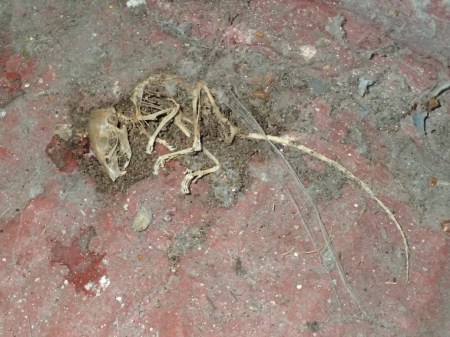
Joining NatSCA, for me, means being part of a group that makes me feel at home. By that I mean, being with others who view nature (living or dead) from a different perspective, and will look at something with a keen interest regardless of its condition – decomposing, or completely expired (like the barn resident below).

Skeleton from a barn (2016). Image: Sarah Scarlet-Farr

Skeleton from a barn (2016). Image: Sarah Scarlet-Farr

Membership of NatSCA also means being part of a support network, closing gaps we feel are limiting in terms of knowledge and skills. No one person can be an expert in everything, and sharing our experience with fellow colleagues helps us to look after and protect the collections we manage for future generations.

Why the NatSCA 2016 Conference?

This year’s conference was my first. The subject ‘How museums inspire our connection to the natural world’ was one everyone could relate to at any age or stage in life. It presented the opportunity to connect with like-minded colleagues sharing their experiences in live presentations, poster contributions, and from trade stands.

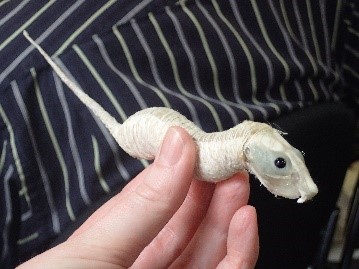
Taxidermy insides: rat form by Jazmine Miles-Long. Image: Sarah Scarlet-Farr

Taxidermy insides: rat form by Jazmine Miles-Long. Image: Sarah Scarlet-Farr

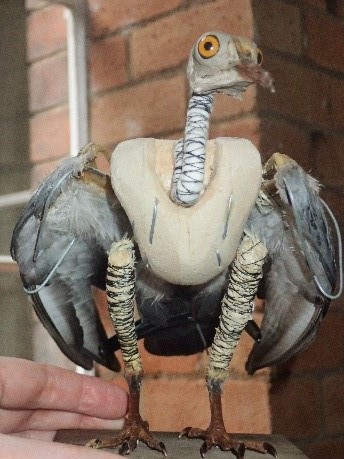
Taxidermy in progress: half-finished pigeon by Jazmine Miles-Long. Image: Sarah Scarlet-Farr

Taxidermy in progress: half-finished pigeon by Jazmine Miles-Long. Image: Sarah Scarlet-Farr

Selected Conference Highlights (for me):

Jennifer Gallichan and Annette Townsend’s ‘Museum in a House: Collections out of context’ contributed an inspirational presentation demonstrating the benefits of enabling practitioners to offer fun, creative and uniquely energising engagements with the public by utilising community support and unique venues.

Tom Hartman’s presentation on ‘Engaging with objects and images: using zoology specimens for outreach and education’ emphasised that having the freedom and opportunity to use collections without restriction, or organisational expectation, can support the development of ideas that better inspire and engage its users.

Sarah Wade’s presentation, ‘The Art of Craftivism in Museums’ demonstrated that problems such as pollution, poaching and extinction can be presented in an approachable and inspired way in tandem with showcasing beautiful ethical artwork (who would believe a Sainsbury’s plastic bag could be so stunning?).

Jazmine Miles-Long’s presentation, ‘How taxidermy can inspire us to view collections in a different light’ reminds us all that, whatever material we have in our collection, we should be fearless in our use of it and derive inspiration by connecting with it in many different ways. I was certainly engaged by the materials demonstrated for taxidermy mounts.

Chris Orgil, Adam S. Smith and Sheila Wrights’s poster, ‘Engaging the Public with Taxidermy Restoration at Wollaton Hall’ provided an illustrative snapshot of how sharing the processes involved in the restoration and colour correction of specimens can provide new forms of public engagements, and so inspire exhibitions and inventive collections’ learning spaces.

Creativity

A creative approach can help present controversial or sensitive topics with impact, yet greater subtlety. It can be used to deconstruct perceptions and create interpretive dialogues about nature between communities, and strengthen peoples’ connections with nature – in ways that suit them and meet their needs. Making room for a connection sometimes means moving out of a comfort zone, but If we retain curiosity we open our minds and so can inspire others.

Free-styling

What I appreciated most was that to inspire connections to nature means we must not control the experience of our visitors. Connecting to nature is not simply about transferring facts and figures.

We should aim to be less prescriptive about the limits of our offers to audiences to enable more artistic, inventive and playful engagements to take place.

As custodians of collections, we need to respond to our public. This means being open to alternative ideas, new ways of thinking, and exploring engagements utilising all our senses.


I am very grateful to NatSCA for supporting my attendance at this year’s conference.

Sarah Scarlet-Farr

University of St. Andrews

NatSCA Digital Digest

ndd-b-rex

May the force of nature be with you! Welcome to another Digital Digest, everybody. It seems people really took home the message of last year’s conference and so the social media enthusiasm for this year’s NatSCA conference was immense – thank you to everybody who tweeted, shared, pinned, and otherwise spread the message of Noticing Nature.

#NatSCA2016

The conference also fell on a designated digest day, so rather than halve our resources to deliver a digest to an already overwhelmed readership, we thought we’d bring you a bumper installment this month instead. Vicky Purewal has recently touched upon the topic of our conference. Write-ups from our bursary recipients will be posted here, and talk write-ups will be published in Notes & Comments and in the next issue of the Journal of Natural Science Collections, due out at the end of this year.

Next year’s NatSCA conference will be held in Cambridge, so start planning your accommodation now, folks! You don’t want to miss this one.

News

Next, I’d like to congratulate both of my fellow NatSCA bloggers on their recent news:

Rachel Jennings, congratulations on joining the committee as our newest Editor. Rachel will be taking on the task of crafting our yearly journal into a thing of beauty. You’ve all seen what she’s done with our Facebook page and this blog, so I’m sure you’ll all agree that she’ll do a terrific job of this too.

Emma-Louise Nicholls, congratulations on becoming the Deputy Keeper at the Horniman Museum. Those of you who have been around a while will know that the former occupant of this position was our very own Paolo Viscardi.

Gina Allnatt has just started at Doncaster Museum this week as their new Natural History Curatorial Assistant, and we’re all really looking forward to learning more about this charming museum.

Events

NatSCA will be holding a seminar on Natural Science Collections and the Law on 15th June 2016 at the University of Bristol. Booking is open now! See here for details: http://natsca.org/event/2256.

Next month on the 1st of June, PubSci will be hearing from guest speaker Katrina Van Grouw on the marriage between art and the life sciences. Katrina is author of the Unfeathered Bird and has an exciting new book in the pipeline. She may even show us some sneak previews if we’re lucky. Do come along if you can, it’s going to be great.

And Finally

Finally, a belated happy 90th birthday to David Attenborough, who first graced our screens in 1952 and is still going to this day! I’m sure I speak for us all when I say that his natural history documentaries have been an inspiration and a delight.

The John Ellerman Foundation Skills Sharing Initiative

swanslogo

I am currently coordinator of a rather ambitious project developed by Bristol Museum and Art Gallery and the South West Museum Development Programme. The project has been renamed ‘South West Area of Natural Science Collections Project‘ (SWANS), and it aims to identify where knowledge and skill gaps lie across the South West sector via a survey, and then develop training events to help address any losses.

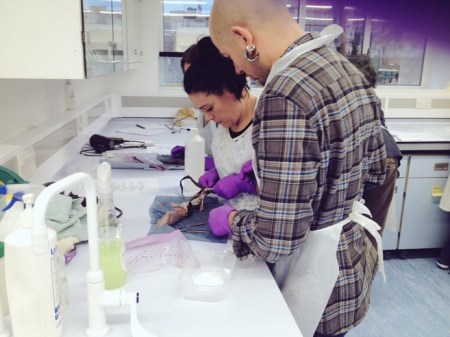
Three intense training courses are being developed for the partner organisations, and these include carcass preparation, fossil preparation, documentation and digitisation of natural science collections. The carcass prep has already been undertaken, and was hugely educational to the attendees.

Rhian Rowson and Matt Williams sharing skills at Carcass Prep training

Rhian Rowson and Matt Williams sharing skills at Carcass Prep training

We have just delivered the first of two introductory seminars on working with natural science collections, and a further four specialised workshops will be developed to target the sector’s needs. Preventative conservation has been highlighted as of particular relevance to the mixed group of collection managers. Four NatSCA committee members are partners of this project, so we can keep you up to date with developments. Follow us on Twitter @SWANS_JEF, and we also have a dedicated webpage for the project: http://www.southwestmuseums.org.uk/projects-grants/john-ellerman-foundation-project/

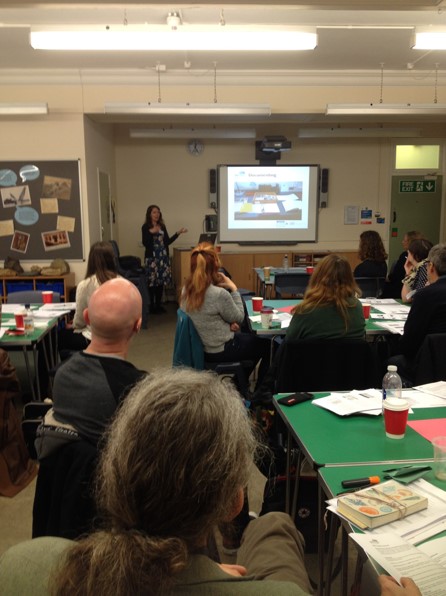
Deb Hutchinson delivering a lecture on documentation at Bristol Museum (© Bristol Culture BMAG)

Deb Hutchinson delivering a lecture on documentation at Bristol Museum (© Bristol Culture BMAG)

I have just touched on a couple of the developments we are working on. There is much more to come!

Victoria Purewal
Senior Curator of Natural Science, Bristol Museum and Art Gallery
NatSCA Conservation Representative


bristolbanner