
NatSCA is the Subject Specialist Network (SSN) for natural science collections in the UK. This means that we provide a mechanism for communicating about advances in theory and practice in the sector, as well as supporting the development of staff – both specialists and those generalists with responsibilities for mixed collections.
In general SSNs are viewed a valuable resource and are seen as intrinsic to Arts Council England’s (ACE) plans for the museum sector – at least that’s what we were told by a representative of ACE at NatSCA’s recent 20th anniversary conference at the Yorkshire Museum.
The conference topic of ‘Policy and Practice’ focused on strategic issues and practical projects that have contributed towards policy and procedure formulation and testing. I won’t go into a blow-by-blow account of the meeting, which ranged from legislation affecting asbestos and radioactive materials in collections, to the practicalities of choosing and implementing a method for collection reviews and the benefits and pitfalls of disposal.
The meeting opened with a call for greater positive advocacy of natural science collections in a talk that can be summarised as “we need to stop bloody moaning and do something positive”. It was a well received sentiment, despite the fact that in some instances it can be hard to be positive.
The buzzing of the grapevine revealed dark deeds in a university (involving a skip and a departmental collection with notable specimens) and mounting clouds over the National Museum of Wales where cuts are looming, with the sciences bracing to take the brunt. Nevertheless, there was a remarkably positive feeling to the meeting as a whole and some healthy discussion arose that continued well into the early hours of the morning.
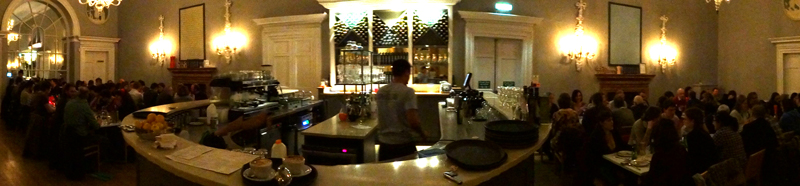
The NatSCA conference meal in York 2013. A lot of people and a lot of discussion!
One particular topic that saw a robust response was an NHM call for a national strategy for collections. After decades of the NHM focussing on their global placement the audience was
sceptical about the factors driving this change of focus. Rob Huxley from the NHM performed well on the spot and may have begun the slow work of winning over a surprisingly hostile crowd when he acknowledged that national museums often have lessons to learn from their smaller counterparts.
The full proceedings of the meeting will be published later this year in the new peer-reviewed Journal of Natural Science Collections. I would recommend taking a look if you want to find out how to non-destructively sample parchment for protein analysis, simplify your loan procedures or conduct a review of a quarter of a million objects in just one year.
This article is based on a piece originally written for the Museums Association website.


 NatSCA